### AI and agents An AI integration that only sends a prompt and returns text is a single action, so it won't start a flow when something changes in the provider. Here are the three counts side by side: *(chart)* 21 integrations separate AI from marketing, so the platform offers unequal support across categories. Another 34 separate marketing from communication. At 71, communication has the fewest of the three. Chat and email integrations usually live or die on triggers, such as new message or new reply. Open the integration and confirm the trigger exists before you plan around it. For CRM, check the field-level actions: create contact is common, but updating a custom property's where a mapping fails. When the app is a database, a spreadsheet or a developer tool, expect it to be action-heavy: "insert row" and "create issue" before you expect a reliable "row changed" trigger. ### Built-in steps for logic and custom calls When an integration lacks the action you need, branches, loops, code and HTTP requests are the fallback. They cost you manual setup, since you handle authentication and payload shape yourself, but they mean a missing action rarely blocks you outright. According to the [project's GitHub repository](https://github.com/activepieces/activepieces), **community contributors wrote 6 of every 10 integrations**. That means most integrations were built by people who needed one app, so depth varies from integration to integration. Treat any integration you depend on as something to test, not assume. 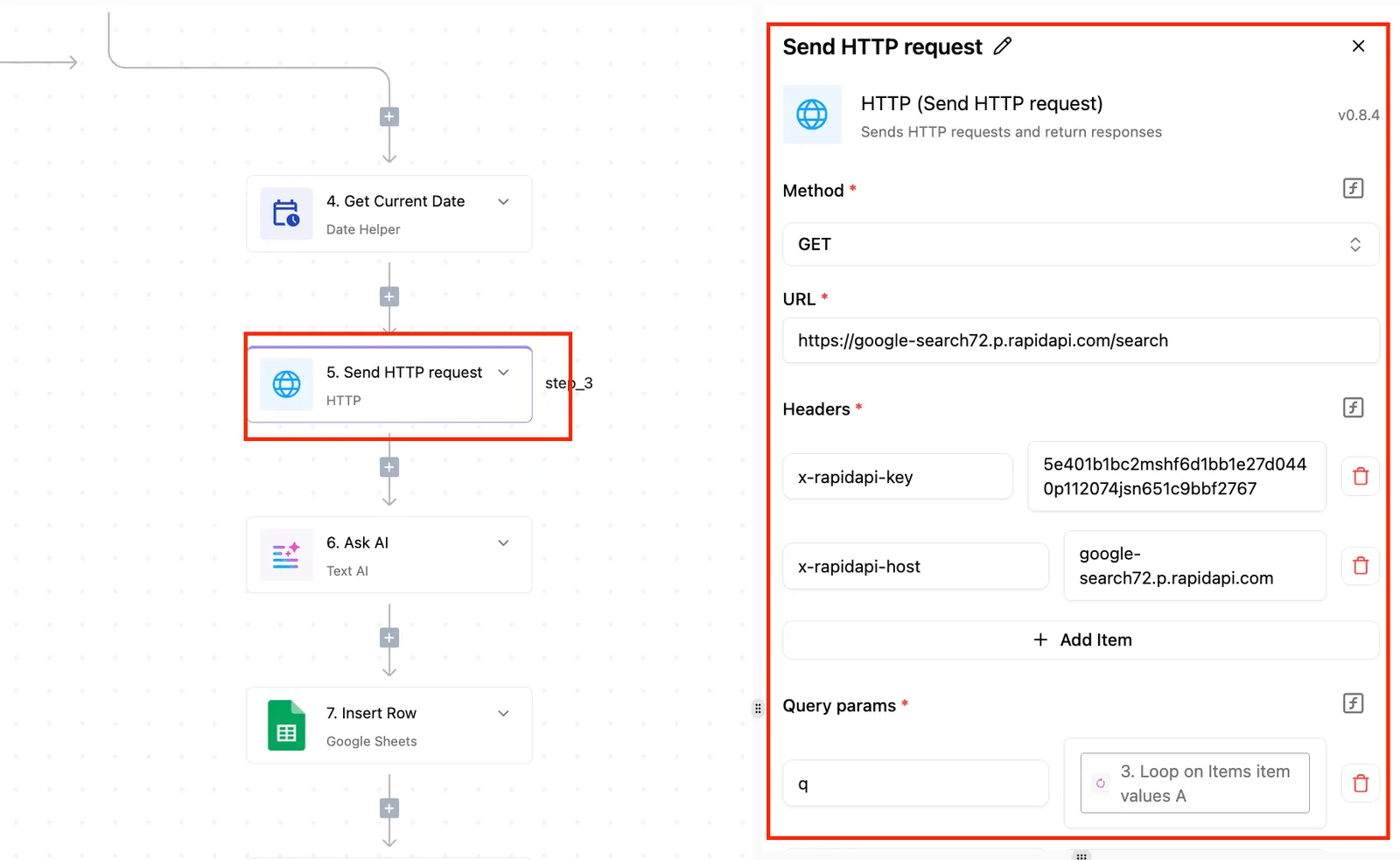 ## The strongest objection: a bigger integration list wins Zapier and Make list far more apps than a 772-app catalog, and a company's stack grows past that catalog as the firm does. According to [Torii's application discovery data](https://www.toriihq.com/blog/full-application-discovery), companies with **up to 100 employees run 324 SaaS apps**, revealing why no integration platform can achieve complete coverage, so you should expect to build custom code for less common applications.  A small team already runs a stack that's a large share of a 772-app list. At 100-500 it's 485 apps, which leaves little slack for the niche tools every department adds. At 500-2,000 employees the figure is 781, already past 772. At 2,000-5,000 it's 1,079. At 5,000+ it's 1,174. | Platform | Apps listed | Source page | Date checked | Open-source status | |---|---|---|---|---| | Activepieces | 772 | Activepieces pieces directory | 2026-10-30 | MIT-licensed Community Edition | | Zapier | 9,000+ | Zapier app directory | 2026-10-30 | Proprietary | | Make | 3,000+ | Make apps page | 2026-10-30 | Proprietary | An app listed by Zapier may have only a single trigger and no write action, which is useless if your job is creating records. When the app you need is missing, someone must build a custom connector that handles authentication, writes each trigger and action, maps the fields, and is maintained when the vendor changes its API. So the objection stands for stacks heavy on long-tail apps. It fails only where your named apps are present with the actions you need. ## Coverage depth and extensibility across integrations You can still get stuck on a listed app, because "supported" only means a connector exists, not that it carries the one trigger or action your workflow needs. The per-integration numbers show how uneven that is. ### Check actions and triggers, not app names Writing to a spreadsheet gives you plenty of routes, but starting a flow from a change there leaves you few: Google Sheets has **27 actions but only 4 triggers**, according to [Activepieces](https://www.activepieces.com/pieces/hubspot).  Per [Activepieces](https://www.activepieces.com/blog/activepieces-credits-pricing-and-usage-2026-guide), Slack lists 29 actions and 14 triggers, which means message events can start flows and not just receive output. In this comparison, HubSpot, the CRM, has 45 actions and 24 triggers, the deepest of the group. Notion sits at 15 actions and 4 triggers, so a flow that has to react to a page change is working with a thin set.  Those four rows say nothing about your stack until you name the event, so their usefulness entirely depends on which event you specify. Write down the exact trigger ("new row," "deal stage changed") and the exact action ("update a custom property"), then look for each on the integration's page. ### Fallbacks when a connector is missing When the action you need is absent, you have three routes, in rough order of effort. Call the app's REST API with a generic HTTP step, catch its events with a webhook trigger, or write a custom integration in TypeScript. ## What Activepieces integrations require and cost Run the Community Edition yourself, or pay for managed hosting and the controls a larger team asks for: that gap, between the MIT-licensed Community Edition and the paid plans on the pricing page, is the subscription difference. Under the MIT license, the [Community](https://community.activepieces.com/t/scaling-pieces-with-ai-a-rolling-announcement/4327) Edition is the open-source core. You can read it, fork it and run it without a subscription, which makes it the baseline for any cost comparison. In a closed catalogue a missing connector waits on the vendor's roadmap, but on Activepieces an AI-generated integration can be kept private to your own deployment, with no vendor release to wait for. Roughly 60% of the integrations in the [public monorepo](https://github.com/activepieces/activepieces/tree/main/packages/pieces/community) were written by contributors outside the company, and MoneyGram, Moneypenny, Alan and FundingSocieties run Activepieces, indicating the platform has achieved both organic community adoption and real production use, so you benefit from both community-sustained development and battle-tested reliability. 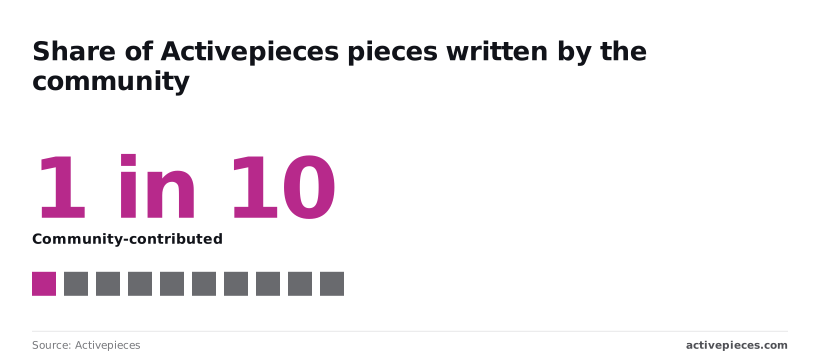 If SSO beyond the Team tier, audit logs or embedding decide your rollout, those are sales-form conversations, not self-serve checkboxes. ### Self-hosting and which connectors come along If you self-host, you run the platform on your own infrastructure and own its upgrades, backups and uptime. The subscription you skip becomes engineering time, so count that cost against the plan price. For this article's argument, the check that matters is narrower. Confirm that the specific triggers and actions you need are available in the build you deploy, not just in the cloud catalog. Open the integration for each app in your stack and look for the exact trigger event and the exact action fields you would map. A connector that lists "create record" but not your custom field is a gap, wherever it runs. ### What does not exist yet Don't assume SOC 2 certification. The programme is in progress, so if your procurement team needs a report today, ask sales what can be shared and don't write it into a vendor questionnaire as done. Likewise, a missing trigger isn't fixed by choosing a plan. The fallback is a webhook or a custom integration you build and maintain, and that cost belongs in the same comparison as the subscription. For plan details, use the [pricing page](https://www.activepieces.com/pricing). For self-hosted enterprise, SSO, audit logs or embedding, use the [sales form](https://www.activepieces.com/sales). ## How Activepieces handles a missing integration When your app isn't in the catalog, you work through four options in order, from cheapest to most expensive, and **only the last one costs developer time**. 1. Search the catalog for the app by name, then open its piece and read the list of triggers and actions. 2. Test the trigger you need in a free cloud account. 3. If no integration exists, or it lacks the action you need, use the HTTP step to call the app's API directly. 4. If the HTTP step is too clumsy for the job, build a TypeScript integration and contribute it. ### Search the catalog and test a trigger Being listed tells you the app exists, not that it has the trigger you need. Open the integration and look for the specific event: "new row in a sheet" and "new invoice paid" are different triggers, and an app can offer one without the other. With ten actions and no triggers, an integration can only be called by something else; it can't start your flow. Then test it. Sign up for a [free cloud account](https://cloud.activepieces.com/sign-up), add the trigger, connect a real or sandbox account, and use the test step to pull a sample record. Check that the fields you plan to map, such as the customer email or the order ID, appear in the sample. If they are missing, the integration won't do the job as it stands, whatever the catalog says. ### Build or request a integration If the integration is missing or thin, the HTTP step is the fastest route. You supply the endpoint, the method, the headers and the body from the app's API documentation, and the response feeds later steps like any other output. You handle authentication and pagination yourself, so it suits a handful of calls better than a large surface area. Anything that must start a flow needs a webhook the app can send, because the HTTP step also gives you no polling trigger. When you need a trigger, or you'll reuse the app across many flows, build an integration in TypeScript. Integrations are open source, so you can contribute yours back and let others maintain it with you. Plan for real developer time: authentication, each action, each trigger and its testing are all yours to write. For a one-off need, the HTTP step is almost always the better trade. Start with the [free cloud account](https://cloud.activepieces.com/sign-up) and test the trigger before you plan anything bigger. ## Frequently asked questions ### How many integrations does Activepieces have? Trust the live catalog, because the number changes as integrations are added and it says nothing about depth. An integration can list dozens of actions and triggers, or one action and no trigger. Open the catalog, search for each app in your stack, and check whether the specific trigger and action you need are there. ### What the free and paid plans cover You can self-host the MIT-licensed Community Edition for free, and the integrations are open source. Paid plans cover things like SSO beyond the Team plan, audit logs and embedding, so check the pricing page for what each tier includes before you plan a team rollout. ### Adding an integration that isn't listed You can add an integration that isn't on the list. Integrations are written in TypeScript and the project is open source, so you can build your own for an app that is missing. That costs engineering time, though, so first check whether the app's generic HTTP or webhook route covers your trigger and action. If it does, you may not need a custom integration at all. ### MCP and AI provider support MCP is supported, and AI providers connect through the integrations. Support for a given provider or tool still comes down to the individual integration, so confirm that the model and the action you want are in the catalog before you build a flow around them. ### Where to test and where to ask To test your own apps in the live catalog, [start a free cloud account](https://cloud.activepieces.com/sign-up). For plans, read the [pricing page](https://www.activepieces.com/pricing). For self-hosted enterprise, SSO beyond Team, audit logs or embedding, use the [sales form](https://www.activepieces.com/sales). ## Related reading - [FedRAMP Authorized Vendor List for Secure Integrations](https://www.activepieces.com/blog/fedramp-authorized-vendors-list-2026-integration-guide) - [8 Essential Marketing Automation Integrations for 2026](https://www.activepieces.com/blog/marketing-automation-integrations) - [3rd Party Integrations: Meaning, Types and How They Work](https://www.activepieces.com/blog/third-party-integrations) ## References - [Activepieces](https://www.activepieces.com/pieces/hubspot) - [Torii](https://www.toriihq.com/blog/full-application-discovery) - [Activepieces](https://github.com/activepieces/activepieces)An app count, whoever publishes it, says how many adapters exist, not how deep any one of them goes.