Versely’s shortlist represents the primary ecosystem of tools that have successfully bridged the gap between isolated generation and integrated production pipelines. The 2026 Professional Creative AI Shortlist includes Midjourney for high-fidelity imagery, Runway for cinematic video, Jasper for brand-voice copy, Canva for design layouts, and [Activepieces](https://www.activepieces.com/pieces) for workflow automation. If you are a procurement officer, this list is a map for balancing specific creative outputs against the technical overhead of managing disparate API keys and seat licenses. ### Midjourney pricing and usage limits explained Midjourney operates on a subscription model where higher tiers provide "Relax" GPU time. You can continue generating assets at a slower priority level after you exhaust your monthly "Fast" hours. Their Pro and Mega plans include a "Stealth Mode" feature: your proprietary concept art remains hidden from the public community gallery during the development phase. Usage monitoring and asset organization happen in a centralized dashboard now that the tool has transitioned from a Discord-centric interface to a dedicated web platform. ### Best for: Photorealistic and conceptual imagery Lighting consistency and textural detail are maintained by the platform, which reduces the time your digital artist spends fixing anatomical errors or lighting artifacts in post-production. Its "Style Reference" and "Character Reference" parameters allow you to pin specific visual traits across a series of images. A campaign look stays unified without manual prompting for every frame. Because the tool can interpret complex lighting instructions, you'll frequently use it to create high-fidelity storyboards that require minimal verbal explanation during stakeholder reviews. ## Zapier for broad ecosystem connectivity and legacy support Enterprise teams often prioritize the breadth of a library over the depth of specific AI logic. Zapier maintains the largest collection of third-party integrations in the market, supporting over 7,000 different applications. This makes it the standard choice for organizations that need to connect niche legacy software or obscure CRM platforms to their creative stack. The platform utilizes a task-based pricing model where your monthly costs scale directly with the volume of data moving through your pipes. The Professional plan starts at $29.99 per month, but high-volume creative departments may find themselves pushed into higher tiers as automation frequency increases. Multi-step Zaps are restricted on the free tier, meaning you must upgrade to build the complex, multi-stage workflows required for modern asset management. The Enterprise tier offers advanced features like single sign-on and team collaboration tools, which are essential for large-scale deployments. ### Best for: connecting diverse software ecosystems If your production pipeline relies on a highly fragmented set of tools, the sheer volume of available connectors is a significant advantage. The platform excels at simple, linear automations that move data from point A to point B without requiring deep technical configuration. Marketing teams often use it to sync lead data across multiple platforms or to trigger simple notifications when a new asset is uploaded to a shared drive. While it may lack the granular AI-specific controls of newer competitors, its reliability and massive integration library make it a safe bet for general business automation. For creative teams focused on workflow integration, this massive library ensures that brand guidelines can be pushed simultaneously to every legacy content repository. When a creative director approves a master asset, the platform instantly updates brand portals, local servers, and external agency folders without manual intervention. This universal reach prevents outdated or unapproved iterations from leaking into active marketing campaigns. ## Runway for AI video generation and camera control Precise motion control is the primary requirement for maintaining visual continuity across a sequence of AI-generated shots. While basic generators produce unpredictable movement, Runway's Gen-3 Alpha model allows you to define specific camera trajectories and localized motion brushes. These tools keep a character's movement consistent from the storyboard to the final render. Runway operates on a credit-based subscription model where higher tiers provide the network priority necessary for teams working against tight delivery windows. The "Standard" plan restricts you to a set number of monthly credits. This means you must strictly ration high-resolution exports to avoid mid-project work stoppages. Access to "Explore Mode" comes with the "Pro" or "Unlimited" tiers. This allows for generation without credit consumption at a slower processing speed, so that your designers can iterate on visual styles without depleting your production budget. ### Best for: Video production and visual effects Visual effects teams utilize Runway to bridge the gap between static concept art and high-fidelity motion assets. The platform’s strength lies in its ability to interpret structural references, such as using a depth map to guide the generation of a complex environment, which reduces the time spent on manual rotoscoping. The "SEO Blog Writer" configuration screen shows the structure of these creative agents. A system prompt defines the persona, and the "Tools" menu allows the agent to pull data directly from your existing production flows. ## Jasper for brand-consistent marketing copy and strategy Jasper maintains long-form brand consistency by anchoring its generative engine to a permanent repository of your style guides, product catalogs, and strategic pillars. This architectural shift prevents the "voice drift" common in general-purpose models. Your writers in London and designers in Singapore produce assets that share the same tonal DNA. The platform operates on a seat-based model where the Pro tier starts at $59 per user per month, meaning costs scale predictably with your team size rather than fluctuating based on word counts. The entry-level Creator plan restricts you to a single Brand Voice.  Three voices are available on the Pro plan, so your small agency can separate the identities of three distinct clients without upgrading to Enterprise. The Enterprise tier removes these caps but requires a custom quote, which shifts the procurement burden from monthly expenses to a negotiated annual contract. ### Best for: Enterprise marketing teams Large-scale teams utilize the platform to bridge the gap between high-level strategy and high-volume execution across fragmented channels. **73.9% of AI use cases** are led by content generation, according to data from [WebTonic](https://www.webtonic.io/blog/ai-marketing-advisory-benchmarks-kpis-statistics), indicating that most organizations are prioritizing volume over strategic integration. 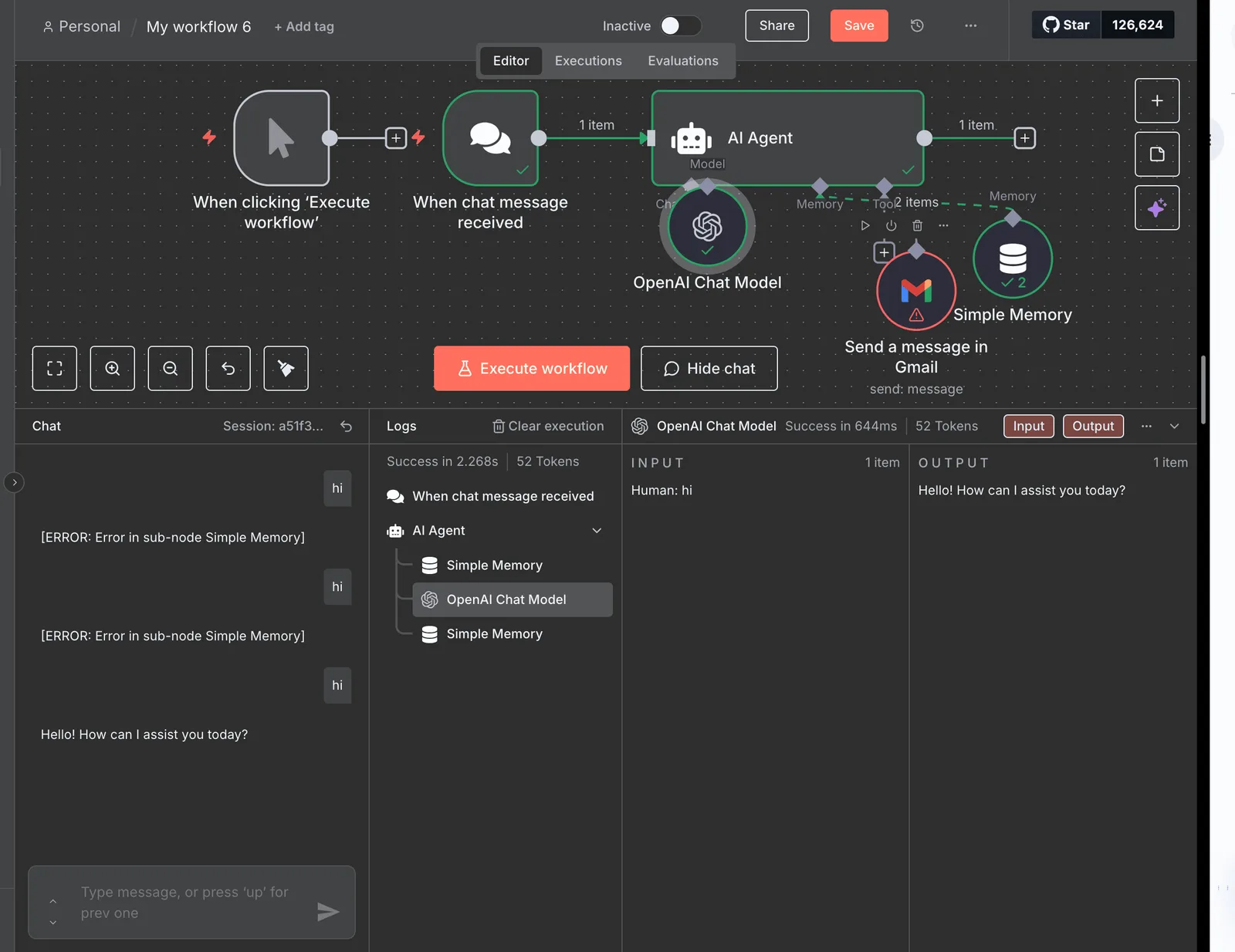  The same study highlights that personalization sits at 65.4%, meaning more than half of marketing leaders are moving away from generic broadcasts toward targeted messaging. Automation accounts for **48.9% of use cases** beyond pure creation, WebTonic reports, so nearly half of all operations are shifting away from manual intervention. Nearly half of all implementations are focused on reducing manual hand-offs. Audience targeting follows at 45.2%, meaning you're increasingly relying on AI to segment the very databases you're writing for. ## Activepieces for automating the creative production pipeline Activepieces automates the movement of assets between generative AI models and project management tools across 735 integrations to keep your creative supply chain moving. Treating an AI agent as a user rather than just code allows you to apply the same governance you use for employees. Activepieces subjects every agent to your existing RBAC and SSO policies, while logging each tool call as a distinct event with its own inputs and outputs.The true expense of the software is often higher than the sticker price suggests.
You can see this in the run detail view, where every step is audited separately rather than being hidden in a single result. ### Zapier for connecting AI tools to your software The platform is a visual orchestrator that bridges the gap between isolated AI prompts and the rest of your organization’s software ecosystem. Instead of your designer manually downloading an image from a generator and uploading it to a cloud drive, Activepieces triggers these actions automatically based on specific events in your workflow. With roughly 60% of integrations built by the community, the platform connects your creative tools to the rest of your stack without manual file handling, meaning you rely heavily on the ongoing support of external developers. A chat-based trigger feeds into an AI agent equipped with memory in this specific configuration. The system can recall brand guidelines established earlier in the session without you re-entering them. Once the logic is finalized in this canvas, the resulting output can be routed directly into your downstream distribution channels. The platform has distinct deployment models to suit different security and budget requirements. The cloud-hosted version is a managed environment where the provider handles the infrastructure. Installing the self-hosted open source version on your own servers gives your IT department total control over data residency and privacy. Companies like MoneyGram and Moneypenny run Activepieces in production to manage these complex environments. With an MIT-licensed core and 735+ integrations, the platform provides **unlimited flows on every plan** to ensure that scaling your creative pipeline does not lead to unpredictable licensing costs. 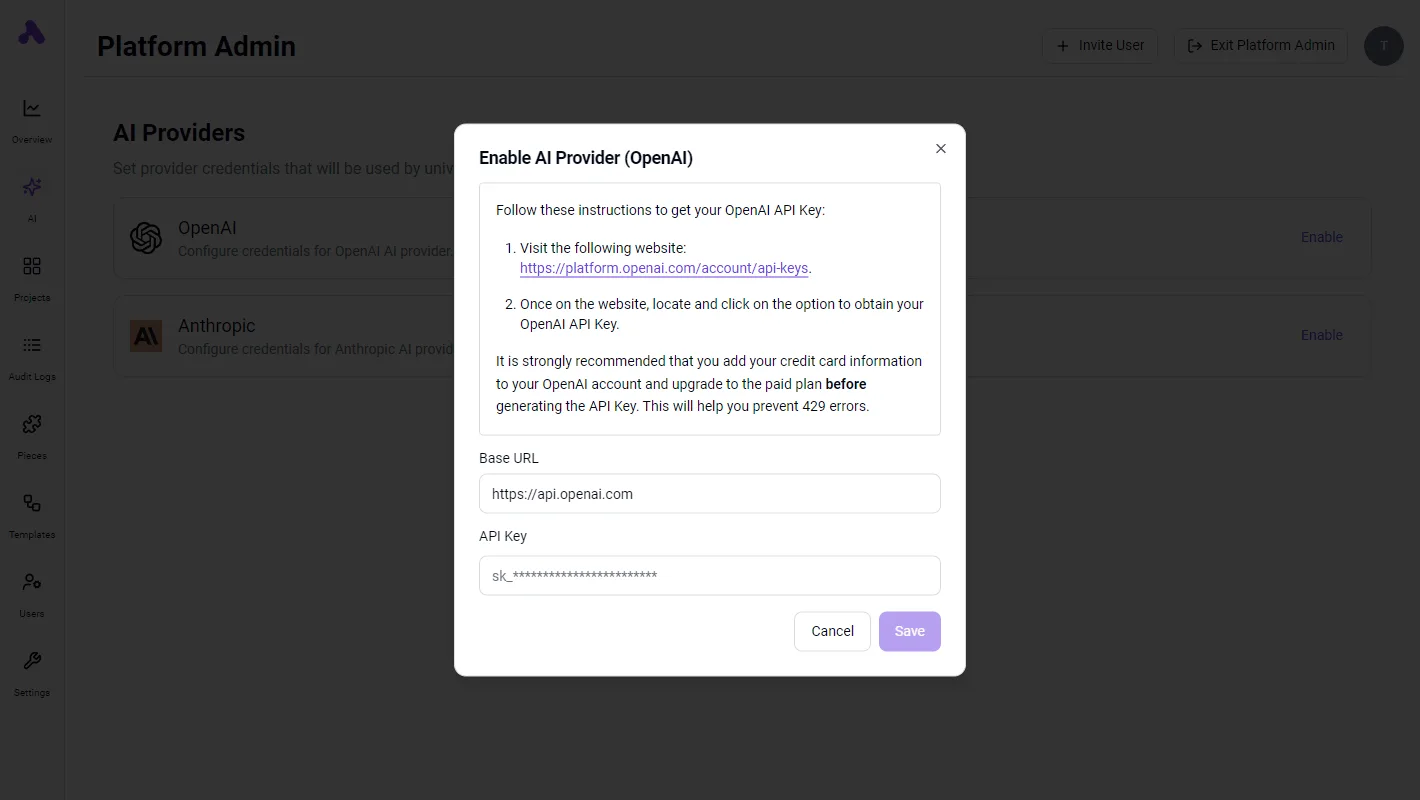 By prioritizing a Bring-Your-Own-Key model, Activepieces ensures that organizations retain full control over their AI strategy rather than being locked into a vendor's resold markup. Activepieces is the better choice for teams requiring transparent governance and cost efficiency, as it allows for direct model integration without the hidden overhead of platform-mediated pricing. ## How to select your creative stack ### Audit your current production bottlenecks Identify whether your delay occurs during initial asset generation or during the manual refinement required to make those assets brand-compliant before you select a tool. A team producing high-volume social copy faces different constraints than a studio producing short-form video. The former loses time to factual verification while the latter loses time to temporal consistency across frames.  Text-heavy workflows typically stall at the editorial review stage, meaning your stack must prioritize citation accuracy to reduce the time spent by your human fact-checkers. Image-centric pipelines often bottleneck at the "last mile" of localized resizing, so the chosen tool must support batch processing to prevent your designers from performing repetitive exports. ### Prioritize interoperability over standalone features The most effective platform is the one that functions as a background utility within your existing project management and version control systems. A creative tool that lacks a robust API or native hooks into common repositories creates a data silo, forcing your staff to manually download and upload files between environments. | Integration Requirement | Operational Consequence | | :--- | :--- | | Adobe Creative Cloud Plugins | Allows your designers to pull AI-generated layers directly into Photoshop without leaving the application. | | GitHub Repository Sync | Ensures that all prompt versions and model weights are version-controlled alongside your product code. | | Slack or Microsoft Teams Webhooks | Notifies your creative lead the moment a heavy rendering task is complete so they can begin the review immediately. | Adobe Firefly has deep integration with Creative Cloud for direct layer manipulation. Midjourney remains primarily accessible through Discord, requiring a manual bridge to move assets into a professional DAM (Digital Asset Management) system. Selecting a tool based on how it talks to your current stack ensures that the adoption of AI speeds up your total delivery cycle rather than just the ideation phase. ## Frequently asked questions about creative AI tools? ### Who owns the copyright of AI-generated images? Legal ownership of AI-generated output remains a volatile jurisdictional issue. You can't currently claim federal copyright protection for works produced solely by an algorithm. Only the "human-authored" portions of a work are eligible for registration under current U.S. Copyright Office guidelines. A designer who relies entirely on a prompt without significant manual transformation lacks the legal standing to sue for infringement if that image is scraped by a competitor. ### Can i use these tools for commercial client work? Commercial usage rights depend entirely on the specific Terms of Service of the platform, which dictates whether your production house is shielded from intellectual property claims. Adobe Firefly provides enterprise users with IP indemnification for content generated using its standard workflows. This lowers the legal risk for your agency when delivering assets to high-profile brands. Only the "Pro" and "Mega" plans for Midjourney grant you general commercial usage rights. A freelancer on a lower-priced plan is technically violating the service agreement by selling those renders to a client. Stable Diffusion allows you broad freedom to use outputs commercially under a Creative ML OpenRAIL-M license, but you must comply with specific usage restrictions regarding the generation of illegal or deceptive content. ### Which creative AI platforms offer a free trial? Free access tiers serve as a sandbox for testing API latency and prompt adherence before you commit to a full seat migration. Canva has a limited number of "Magic Media" uses for free accounts. Your social media manager can test the interface without an upfront budget approval. Microsoft Designer provides DALL-E 3 access at no cost. This enables you to benchmark the model's quality against your internal brand standards before paying for OpenAI's direct API credits. Leonardo.ai provides a daily allowance of tokens that resets every twenty-four hours, so your technical lead can prototype different fine-tuned models over a week without triggering a billing event. ## Related reading - [Best Data Automation Tools of 2026 for Analytics Teams](https://www.activepieces.com/blog/best-data-automation-tools-of-2026-for-analytics-teams) - [Reverse Logistics Automation Tools for Operations Teams](https://www.activepieces.com/blog/reverse-logistics-automation-tools-for-operations-teams) - [Top 3 Banking Automation Software Tools for Finance Teams](https://www.activepieces.com/blog/top-3-business-automation-tools-for-banks) ## References - [WebTonic](https://www.webtonic.io/blog/ai-marketing-advisory-benchmarks-kpis-statistics) - [Deevid Review](https://deevidreview.com/research/ai-video-pricing-2026/)Treating an AI agent as a user rather than just code allows you to apply the same governance you use for employees.