The software vendor assumes the legal risk if a third party challenges a generated image in court. This isolation from web-scraped datasets prevents the accidental generation of trademarked characters or celebrity likenesses that could trigger a cease-and-desist order during a campaign rollout. ### Generative Fill in the Creative Cloud workflow Firefly is most effective when used as a functional tool within the existing Photoshop interface. The Generative Fill feature allows users to select specific pixels and extend or replace them using natural language, which eliminates the need to manually clone stamp complex textures. By keeping the AI inside the standard .PSD file format, designers maintain a non-destructive workflow where generated layers can be toggled or masked without leaving the application. ### Adobe Firefly content restrictions and limitations The strict safety filters required for legal compliance result in a model that is more conservative than its open-source counterparts. Firefly will frequently block prompts that include public figures or anything deemed high-risk, so users looking for gritty, hyper-realistic, or subversive aesthetics will find the output leans toward a polished, "stock photo" look.  ## GPT-Image-2.5 Sunburst prompt adherence and language understanding GPT-Image-2.5 Sunburst serves as the primary choice for users who prioritize precise prompt adherence and natural language comprehension over the abstract artistic flair found in Midjourney. ### GPT-Image-2.5 Sunburst natural language understanding By utilizing a dense semantic understanding of complex instructions, this model eliminates the need for technical shorthand. In practical terms, this means a user can describe a specific scene and the model will reliably maintain those spatial relationships. Other tools frequently "bleed" colors between objects or ignore positioning keywords, whereas GPT-Image-2.5 Sunburst treats the prompt as a literal blueprint rather than a thematic suggestion. ### Automating image generation with Activepieces Integrating image generation into a broader business logic requires a connector that can handle dynamic data without manual intervention. The following workflow demonstrates how an automated sequence can move from a data trigger to a refined AI output: [Screenshot here: A five-step workflow builder showing a "New Product in Airtable" trigger connected to a "Generate Image" step using DALL-E 3. The DALL-E step is configured to create a marketing visual using the "Product Name" and "Category" variables from Airtable, which then connects to a "Slack" step to notify the creative team. The configuration panel shows a "Tested Successfully" status.] 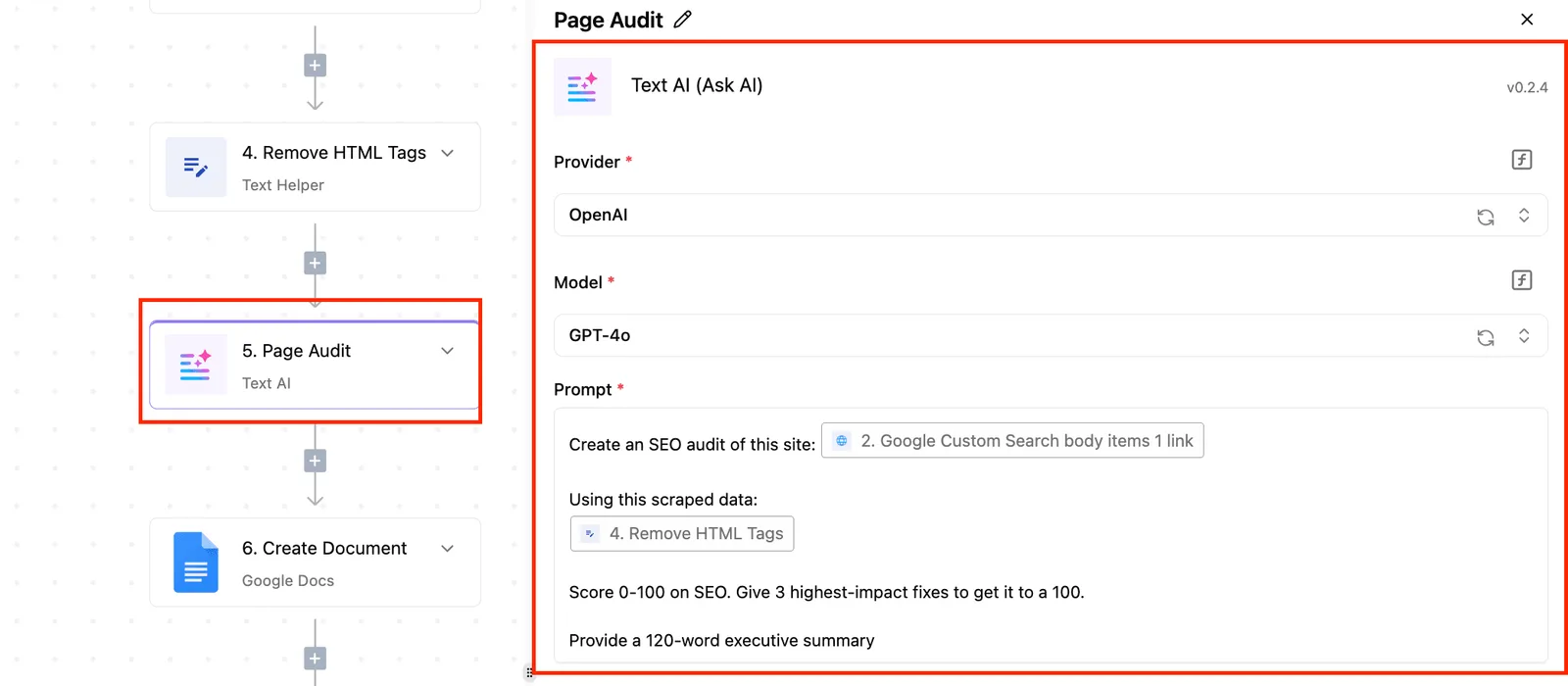 The screenshot illustrates the necessity of a unified canvas where one AI model handles the logic while another handles the output, ensuring that variables like customer names or product types are passed correctly through the chain. Activepieces provides this by running Agent steps and deterministic automation steps within a single execution engine, rather than bridging two products with a callback. You can verify this by placing an Agent step alongside an automation step in the flow builder and checking the run trace, which logs the entire sequence as one continuous event. This structure prevents the fragmentation that occurs when staff have to copy-paste prompts between different browser tabs. Following this step, the generated asset is immediately available for distribution via the connected mail or storage modules.  ### GPT-Image-2.5 Sunburst safety filter limitations The guardrails that make this model viable for corporate environments also limit its utility for specific creative edge cases. * Public Figures: The model blocks the generation of recognizable celebrities or politicians to prevent deepfake creation. * Artist Styles: Requests to mimic the specific aesthetic of living artists are redirected into generic stylistic descriptions. * Brand Assets: Strict enforcement against trademarked logos means designers cannot use the model to iterate on existing corporate iconography. ## How to transition your image workflow Transitioning to a new image generator requires a systematic mapping of existing style parameters to the specific syntax of the new engine to prevent visual drift across your brand assets. ### Auditing your generation volume and costs A successful migration begins by identifying which specific workflows consume the most credits to ensure you don't accidentally blow your budget. Review your monthly billing statements and API usage logs to categorize generations into "disposable drafts" and "production assets." ### How to update prompts for new AI models Because modern models like Grok Imagine Image 2.0 or Nano Banana 2 prioritize natural language over technical "keyword soup," you must rebuild your prompt library to focus on intent. The four steps to migrate a style guide: 1. Audit current Midjourney /settings and --sref codes to document the specific lighting and composition variables that define your brand. 2. Generate a 'Master Aesthetic' image in the new tool using a detailed descriptive prompt to establish a baseline for the new engine’s interpretation of your style. 3. Extract the new tool's style seed or reference ID to create a reusable configuration file for the rest of the team. 4. Update the centralized prompt library with "Before and After" examples so designers understand how to translate old technical tags into the new model’s preferred syntax.  ### Setting up automated backups for generated assets Relying on a generator’s internal history tab is a significant risk because these platforms often flush their temporary storage or change their gallery access policies without notice. Platforms that resell you a model have already decided your AI strategy and pricing before you open the tool, whereas Activepieces allows you to run your chosen models on your own provider keys. This ensures that your model spend lands on your own account at your own rates, a flexibility that MoneyGram and FundingSocieties use to maintain control over their production automation. ## Frequently asked questions about Midjourney alternatives ### Do I own the copyright to images generated by these alternatives? Copyright ownership for AI-generated imagery is determined by the specific terms of service of the provider and current regional legal precedents, which generally deny authorship to non-human entities. When using Adobe Firefly, the terms grant you the right to use outputs commercially, but the United States Copyright Office maintains that purely AI-generated work lacks the "human authorship" required for a registered copyright. If you deploy a local instance of Stable Diffusion, you hold the rights to the output as far as the software license is concerned, yet you still face the same legal hurdle regarding federal copyright protection. This means while you can use the images in your marketing materials without paying royalties, you may lack the legal standing to sue others for using those same images unless you have significantly modified them through manual digital artistry. ### Which AI image generator is best for creating logos? Vector-based outputs and precise typography handling are the primary requirements for professional logo design, making tools with native SVG export or advanced text-rendering engines the standard choice. * Adobe Firefly: This tool integrates directly with Illustrator, allowing designers to convert generated shapes into editable vector paths for scalable branding. * Flux.1: This model utilizes a flow-based transformer architecture that accurately renders specific characters and words, preventing the "gibberish" text common in older diffusion models. * Ideogram: The platform focuses on typography and layout, providing specific controls for font styles and letter placement within a graphic composition. ### Can I run these tools without a high-end GPU? 1. Cloud API Integration: Services like Fal.ai or Replicate host models like Flux and Stable Diffusion on their own servers, so your local machine only needs to handle a basic web request. 2. Quantized Models: Using "pruned" versions of Stable Diffusion through interfaces like ComfyUI allows the software to fit into the smaller VRAM buffers found in standard consumer laptops. 3. Browser-based Platforms: Tools like Leonardo.ai or Midjourney’s own web portal execute all rendering on remote clusters, meaning the age of your processor does not impact generation speed. ### Which alternative is best for realistic human portraits? Realistic portraiture requires a model that understands skin texture, light refraction in the iris, and complex anatomical geometry, which is currently the specialty of the Flux.1 model family. While older versions of Stable Diffusion often struggle with "uncanny valley" effects like fused fingers or mismatched eyes, Flux utilizes a larger parameter count to maintain anatomical consistency across different camera angles. For those requiring a commercial safety net, Nano Banana Pro provides high-resolution skin detailing and realistic lighting while ensuring the training data remains within a licensed, ethical dataset. These tools allow you to generate headshots or lifestyle photography that bypasses the plastic, overly-smoothed look often associated with early AI art. ## Related reading - [9 Best Business Process Automation Tools in 2026](https://www.activepieces.com/blog/best-business-process-automation-tools) - [7 Best AI Tools for Business: Tested, Compared in 2026](https://www.activepieces.com/blog/best-ai-tools-for-business-operation) - [Business Workflow Management: A 2026 Guide](https://www.activepieces.com/blog/workflow-automation-for-small-business) ## References - [Apatero](https://apatero.com/blog/dalle-vs-midjourney-vs-flux-comparison-2026)Commercial peace of mind is the core value of Firefly, provided by its training methodology which excludes the unlicensed intellectual property of artists found on the public internet.