Replacing basic chat loops with structured pipelines is the next step in this adoption curve. In these pipelines, models like Gemini 3.8 Flash handle high-volume classification tasks while routing complex agentic work to Claude Opus 5.5. ## The case for starting with Ollama Ollama remains the industry standard for individual developers because it eliminates the friction of environment setup. By bundling the model weights, configuration, and inference engine into a single package, it allows a user to go from a clean install to a running model like Llama 3.3 in **under sixty seconds**. The platform excels at local prototyping where the developer needs to verify a prompt's behavior without managing complex dependencies. Its library of pre-configured models is the most extensive in the ecosystem, ensuring that new releases are available for local testing almost immediately after their weights are published. ### Ollama's pull-and-run model management The tool uses a simple pull-and-run syntax that mirrors the Docker workflow, making it instantly familiar to software engineers. This abstraction hides the complexity of GGUF quantization levels and tensor splitting, allowing the user to focus on the output rather than the underlying math. When a model like Mistral Small 4 receives a performance update, a single command refreshes the local copy. This ease of maintenance is unmatched by more manual alternatives that require users to hunt for specific file versions on community forums. ## LM Studio for desktop model exploration LM Studio is the primary gateway for teams transitioning from cloud-based interfaces to local execution without requiring command-line proficiency. While Ollama operates as a background service, LM Studio functions as a dedicated desktop application that centralizes model discovery, hardware configuration, and inference testing into a single visual environment. This approach allows departmental leads to validate model performance on local hardware before committing to infrastructure changes. The following table compares the leading local LLM runners based on their primary distribution methods and intended operational environments. | Tool | Interface Type | Licensing | Primary Use Case | | :--- | :--- | :--- | :--- | | LM Studio | GUI-first Desktop | Proprietary | Desktop Discovery & Experimentation | | LocalAI | API-focused Container | MIT | OpenAI-compatible Middleware | | vLLM | CLI-first Library | Apache 2.0 | High-Throughput Production Serving | | Jan.ai | GUI Desktop | AGPLv3 | Local Personal Assistant & RAG | ### Searching and downloading Hugging Face models The platform integrates a direct search interface for Hugging Face, the central repository for open-weight machine learning models, to eliminate the manual complexity of managing file paths and quantization formats. Users can search for specific releases, such as Mistral Small 4 or Gemini 3.1 Flash-Lite, and view a compatibility list tailored to their specific system RAM and GPU VRAM. By filtering these results, the system ensures that a non-technical researcher does not attempt to load a model that exceeds their hardware limits. This prevents system crashes during the evaluation phase.  ### Local Server mode for third-party app integration LM Studio includes a built-in inference server that mimics the OpenAI API specification, allowing desktop applications to communicate with local models as if they were hitting a cloud endpoint. By toggling this server, a developer can point their local IDE or internal tools toward a local port to test agentic workflows with Claude Haiku 4.5 or GPT-6 Luna without data leaving the machine. You can use this local bridge as a zero-cost sandbox for verifying that custom prompts and tool-calling logic function correctly. It allows testing before deploying the code to a high-concurrency production environment like vLLM. ## VLLM for high-throughput production serving vLLM is the high-concurrency serving layer required when local developer sandboxes transition into shared enterprise services. While Ollama facilitates individual experimentation, vLLM manages memory fragmentation with a specialized kernel, preventing the crashes that typically occur under heavy user load. ### VLLM's PagedAttention KV cache technique PagedAttention manages Key-Value (KV) cache memory by partitioning it into non-contiguous blocks, mirroring how operating systems handle virtual memory. In standard inference setups, memory for these caches must be allocated in large, contiguous chunks based on the maximum possible sequence length. Internal fragmentation becomes a major issue here, where reserved memory sits idle if a request is shorter than the limit. By allowing the KV cache to be stored in scattered memory slots, vLLM lets the engine fit more concurrent requests into the same hardware footprint. The following workflow demonstrates the necessity of generating sample data to validate these high-concurrency paths before they are committed to a live environment. The "Data to Insert" panel displays a two-step sequence: "New Customer" via Stripe followed by "Send Email" via Gmail. Below these steps, a "Test step" warning indicates that the workflow requires execution to generate the sample data needed for mapping variables between the payment event and the communication output.  Before runtime errors can hit the production queue, this validation step ensures that when a flagship model like Gemini 3.8 Flash processes these requests, the data structure is already confirmed. ### Scaling to multi-GPU and distributed environments Distributed serving allows teams to deploy frontier models that exceed the VRAM capacity of a single workstation by partitioning the model across multiple accelerators. vLLM implements tensor parallelism to split the computation of individual layers, which reduces the per-device memory pressure for massive parameter counts. NVIDIA Triton Inference Server wraps vLLM backends to standardize the environment. This setup supports model ensembles and versioning within a Kubernetes cluster. Ray acts as the distributed execution framework that vLLM uses to coordinate memory sharing and task scheduling across a multi-node GPU cluster. SkyPilot automates the provisioning of these distributed vLLM instances across various cloud providers to ensure high availability for global API consumers. Once the hardware layer is abstracted, the infrastructure team can swap a budget-friendly Gemini 3.5 Flash-Lite for a high-reasoning GPT-6 Astra without reconfiguring the underlying network protocols. ## LocalAI for self-hosted OpenAI API compatibility LocalAI is a drop-in replacement for OpenAI’s REST API, allowing teams to redirect existing agentic workflows to local hardware without modifying the underlying application logic. By mimicking the specific request and response structures of the OpenAI specification, it allows a seamless transition for organizations that have already standardized their prompts around models like GPT-6 Astra but require air-gapped security for sensitive datasets. ### Replacing OpenAI endpoints with local hardware Shifting to a local inference stack requires a gateway that translates standard API calls into instructions that open-source model engines can execute. LocalAI performs this function by exposing a unified endpoint that accepts the same JSON payloads used by commercial providers. By changing only the base URL, any tool designed for OpenAI can interface with models like Mistral Large 3 or deepseek-v4-pro, according to [Localllmchecker](https://localllmchecker.com/models/llama-3-3-70b-instruct/). This architecture prevents vendor lock-in and allows the infrastructure team to maintain a single internal API gateway while swapping the backend models to meet specific departmental performance requirements. The integration architecture relies on directing the application's outbound traffic to a local IP address where the inference server resides. The diagram below illustrates an automation block configured to send a standard chat completion payload to a LocalAI instance running on a private server. Because the automation engine treats the local server as a native intelligence source, this configuration bypasses the need for public internet egress. ### Connecting LocalAI to business apps via Activepieces Automating high-reasoning tasks across a software stack requires a bridge that can move data between private inference nodes and third-party business applications. Enterprise adoption of Activepieces ensures that the logic governing an agent sits in an MIT-licensed core rather than a black-box config panel. Every tool call made during a run appears in the run trace, providing the auditability required when local models interact with external CRMs or project management tools.  Proprietary data never leaves the controlled environment during the reasoning phase in this setup. The orchestrator handles the secure handshake between the local model and the external API of the destination app. ## How to migrate from Ollama runners Transitioning from Ollama requires moving beyond a local-only CLI toward infrastructure that supports concurrent requests and centralized model management. While Ollama simplifies the initial download of weights, its design limits the ability of technical leads to audit model usage or share hardware resources across a department. These constraints become visible as soon as a team attempts to move from a single-user prototype to a shared internal service. The three primary limitations of Ollama include the lack of a native graphical interface for model management and a single-user architecture that prevents team sharing. The platform also lacks support for complex multi-agent workflows. As request volume grows, this architectural ceiling forces a migration toward tools like vLLM or LM Studio to maintain performance. ### Locating your existing model weights Migrating starts with reclaiming the multi-gigabyte blobs stored in the default directory to avoid redundant downloads of large models like Gemini 3.8 Flash or Mistral Large 3. Ollama stores these as manifest-linked blobs rather than standard GGUF or Safetensors files.  1. You must identify the specific hash in the `~/.ollama/models/blobs` directory that corresponds to the model version you intend to port. 2. Mapping these hashes to the original model name ensures that your new runner points to the correct binary, preventing the accidental deployment of an older parameter set to a production endpoint. ### Testing API compatibility with Curl Validating the new environment requires verifying that the replacement runner mimics the OpenAI-compatible endpoint structure used by most orchestration frameworks. You can confirm the transition by sending a JSON payload to the new local port to trigger a response from a high-reasoning model like Claude Sonnet 5.5 or GPT-6 Astra. When the header returns successfully, it indicates that the local inference server is correctly parsing the request body. It also shows the server is managing the VRAM allocation for the specific model architecture. ### Running local LLMs as a system service Moving to a production-grade runner involves wrapping the inference engine in a system service to ensure it restarts automatically after a hardware failure or a host reboot. This step shifts the responsibility of model availability from a manual terminal command to a managed background process, allowing multiple team members to hit the endpoint simultaneously. Once the service is active, the local API acts as a stable target for agentic workflows. It maintains uptime expectations similar to a managed cloud provider without the associated data egress. ## What Activepieces does about this Activepieces provides the orchestration layer that transforms a standalone local model into a functional business agent by connecting it to over **100 apps**. While Ollama or vLLM handle the raw inference, they cannot natively read a customer’s ticket in Zendesk or update a row in Google Sheets. By deploying the Activepieces MIT-licensed self-hosted edition alongside your local inference server, you create a secure loop where sensitive data moves from your internal databases to your local LLM and back without ever touching a third-party cloud. The platform solves the "black box" problem of local AI by providing a visual designer where every step of a model's reasoning is visible and auditable. When a high-reasoning model like Mistral Large 3 is tasked with analyzing a private financial report, Activepieces allows the operations team to see exactly which data points were extracted before the final summary is sent to Slack. This transparency is why organizations like the Pennyworth team use Activepieces to maintain strict data sovereignty while automating complex document processing. To ensure that local hardware is used efficiently, Activepieces allows you to route tasks based on complexity within a single workflow. You can configure a lightweight model like Gemini 3.8 Flash-Lite on a local LocalAI endpoint to handle initial intent classification, only triggering a more resource-intensive model for final decision-making. This multi-step logic is managed through a drag-and-drop interface, removing the need for developers to write custom Python wrappers for every new model they want to test. Because the software is designed for high-concurrency environments, it matches the production capabilities of backends like vLLM. You can point the Activepieces OpenAI integration to your local vLLM URL, allowing the orchestrator to manage hundreds of simultaneous tool-calling events across your department. This setup ensures that your local AI strategy scales from a single developer's CLI experiment to a robust, automated infrastructure that serves the entire enterprise. By allowing users to connect their own local inference servers or API keys directly to a visual orchestration layer, the platform prevents vendors from dictating a company's AI strategy through resold models. Activepieces is the better choice for organizations prioritizing data sovereignty and cost transparency, as it ensures sensitive information remains within a self-hosted loop while avoiding the hidden markups of third-party model reselling. 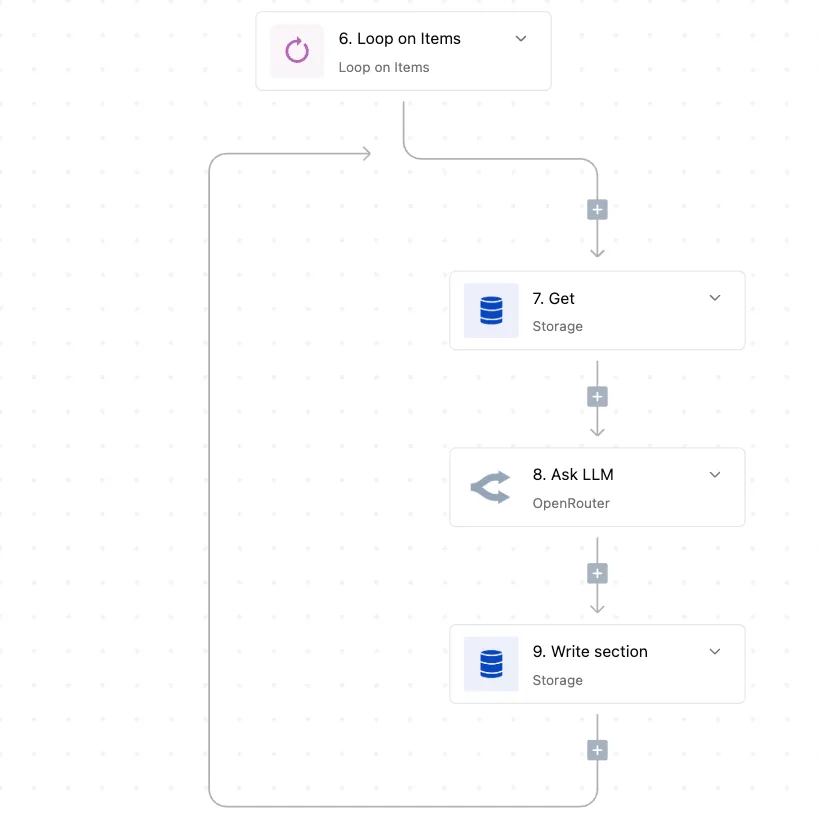 ## Frequently asked questions about local LLM runners ### Which Ollama alternative is best for Apple Silicon? LM Studio integrates directly with macOS by leveraging local Metal performance for immediate hardware acceleration. Because it is distributed as a signed universal binary, the engineering team can bypass the manual environment variable configuration often required to force GPU offloading in CLI-based tools. Native support ensures that unified memory on M-series chips is automatically allocated between the CPU and GPU. When a developer runs a heavy reasoning model like Gemini 3.1 Pro via local GGUF files, they do not experience the system-wide UI lag associated with unoptimized memory swapping. ### Can I run multiple models simultaneously? vLLM, a high-throughput serving library, is the standard for concurrent execution because it utilizes PagedAttention to manage KV cache memory efficiently across multiple request streams. While basic runners often lock the GPU to a single model instance, vLLM allows a DevOps lead to host a flagship model like GPT-6 Luna alongside a specialized utility like Mistral Moderation 2 on the same hardware.  By supporting this concurrency, a single server can process a high-volume support queue and a real-time safety filter at the same time. This avoids forcing requests into a linear bottleneck that increases latency for the end user. ### Do these alternatives support OpenAI-style function calling? Local inference engines now prioritize compatibility with the OpenAI Chat Completions schema to ensure that agentic frameworks can trigger external tools without custom middleware. LM Studio exposes a local server that mimics the OpenAI /v1/chat/completions endpoint. Existing Python scripts using the official OpenAI library require only a base_url change to function. vLLM supports structured output and tool use for models with native function-calling capabilities, such as Claude Haiku 4.5 or Gemini 3.8 Flash. This ensures that JSON schemas are strictly followed. To define how the system should interpret function calls, Ollama uses a dedicated "template" field in its Modelfile. The model knows exactly when to stop generating text and start emitting a tool request. ## Related reading - [Best ElevenLabs Alternatives in 2026 Compared](https://www.activepieces.com/blog/best-elevenlabs-alternatives-in-2026-compared) - [8 Best Monday.com Alternatives for 2026 Compared](https://www.activepieces.com/blog/8-best-monday-com-alternatives-for-2026-compared) - [Zapier Alternatives: 7 Best Competitors Compared (2026)](https://www.activepieces.com/blog/zapier-alternatives) ## References - [GitHub](https://github.com/ollama/ollama)Reselling you a model is deciding your AI strategy for you, which is why Activepieces runs whichever local or cloud model you already chose on your own provider key.