# Bluehost Pricing: Plans, Renewal Rates (2026 Guide)
By Ines Kovač · 2026-11-23 · Source: https://www.activepieces.com/blog/bluehost-pricing-plans-renewal-rates-2026-guide
---
According to [Bluehost](https://www.bluehost.com/help/article/renewal-price-faq), shared plans start at 3.99 to 13.99 dollars a month and renew at 9.99 to 20.99.
The first invoice is the cheapest one you'll ever receive, so it's worth tracking renewal dates, whether on a calendar or in a simple [Activepieces](https://www.activepieces.com) reminder flow, before the higher rate lands. Figures below were checked on 2026-11-23.
The failure is predictable: you budget on the checkout page, the first term ends, and the card is charged at a rate you never planned for. **Budget on the renewal column.**
### Shared and WordPress hosting plans
Read the right-hand column, because it's the amount your monthly bill grows when the intro term ends. The table shows each shared plan's intro and renewal monthly price, per [HostingPickers](https://hostingpickers.com/blog/bluehost-renewal-prices).
| Plan | Intro price per month | Renewal price per month | Increase per month |
|---|---|---|---|
| Starter | $3.99 | $9.99 | $6.00 |
| Business | $6.99 | $13.99 | $7.00 |
| Pro | $9.99 | $16.99 | $7.00 |
| Premium | $13.99 | $20.99 | $7.00 |

According to Bluehost, Starter has the steepest jump: 3.99 becomes 9.99, which is two and a half times the advertised price and 72 dollars more per year. Business, Pro and Premium each add 7.00 a month, or 84 dollars a year.
That means Starter's headline price tells you least about what you will pay, while Premium's is the closest to its renewal rate in proportional terms (a 50 percent rise).
### VPS and dedicated hosting plans
I have no confirmed VPS or dedicated rates for this check date, so they're not in the table and I won't estimate them. Treat those tiers as unpriced until you have read both the intro and renewal figures on Bluehost's own pricing page.
### Does Bluehost have a free plan?
You will find no free plan in the figures confirmed here. The only reduction is the intro rate, which is a first-term discount and not a free tier, so it has no limit you can stay inside.
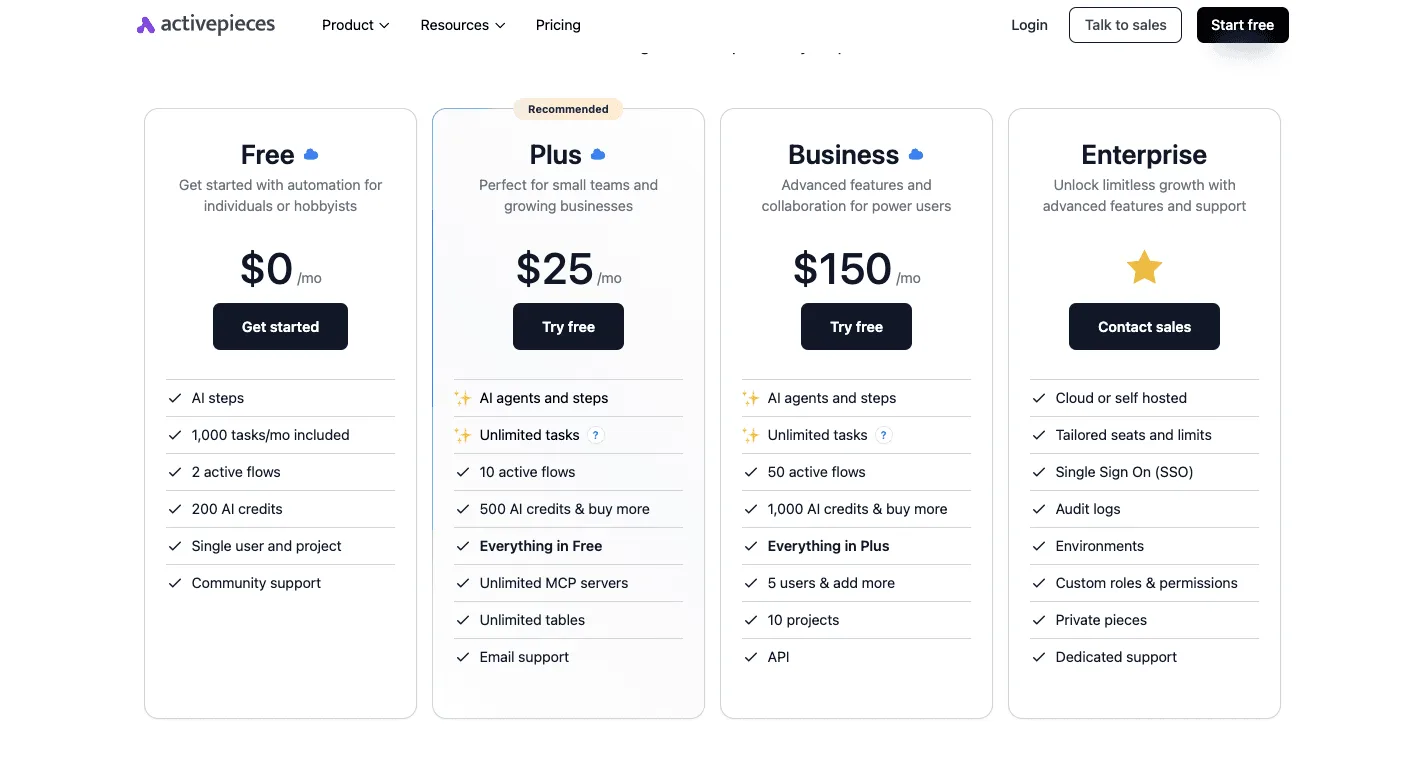
The promotional term is the date this sheet depends on, and you don't hire anyone to watch it: describe a reminder for that date to the built-in chat in [Activepieces](https://www.activepieces.com) and it builds and publishes the flow in your account, the same flow a person would have wired by hand.
It sits under the same RBAC and audit logs as every other flow, each run leaves a trace anyone can read, and MoneyGram and Moneypenny run it in production. Either way, record the date you read each price.
## Real Monthly Bills at Three Site Sizes
Priced from the renewal lines, a Basic brochure site with backups and domain privacy costs about 14.95 $ a month, not the checkout figure. The date you recorded matters for the bill three years out. The sources below are [Hostm's pricing comparison](https://www.hostm.com/compare-pricing).
### Bluehost three-year cost for a brochure site
The brochure site is the baseline. [Hosting renewal is 359.64 $ over three years](https://www.hostm.com/compare-pricing), which is 9.99 $ a month, so hosting alone is two-thirds of the bill.
Hosting dominates, but 178.62 $ of the total sits outside the hosting line, and that is the part a headline price never shows. The table breaks the three-year renewal bill into its parts.
| Line on the three-year Basic renewal bill | Cost over 3 years |
|---|---|
| Hosting renewal | 359.64 $ |
| CodeGuard backups | 107.64 $ |
| Domain privacy | 45 $ |
| Domain renewals | 25.98 $ |
| Total | 538.26 $ |
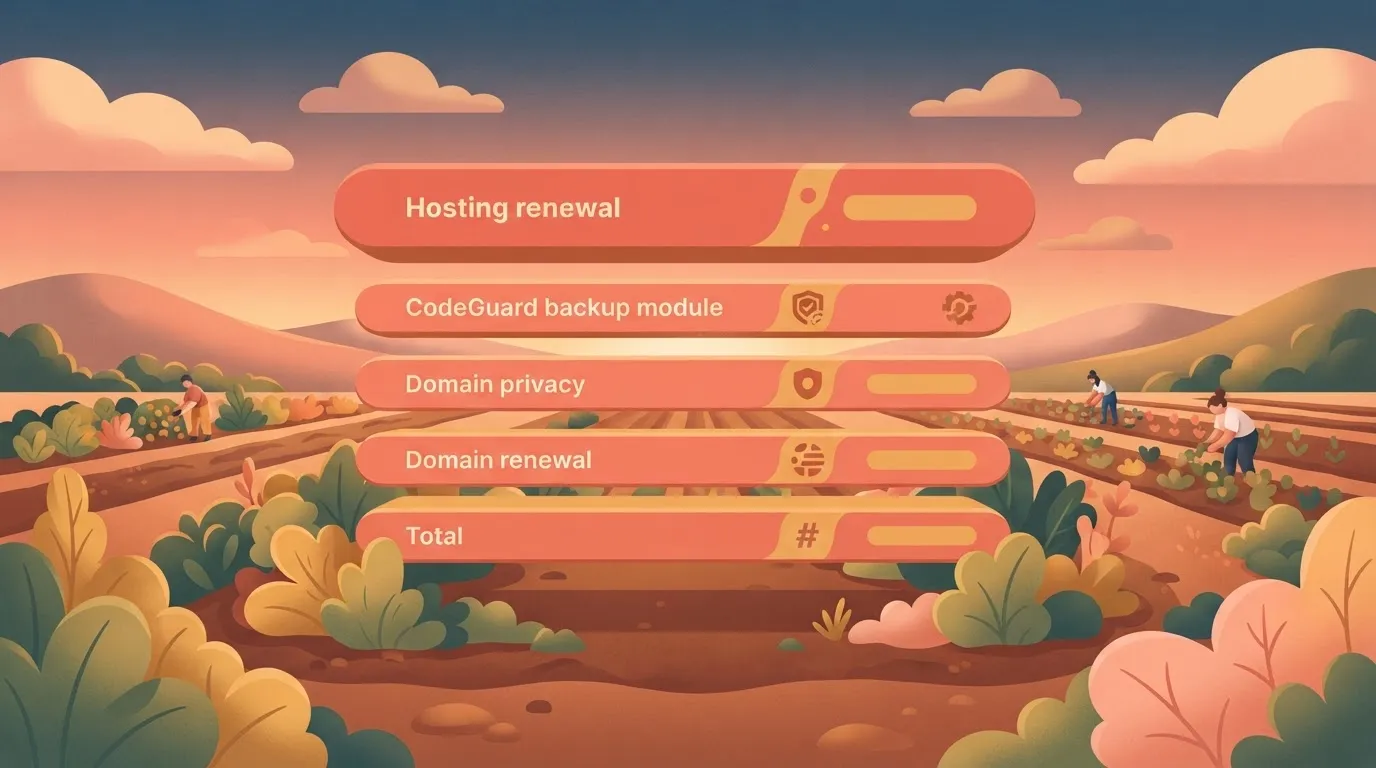
Read the table as a checklist: if your site needs a line you didn't price, the total moves.
### Bluehost three-year cost for a store
With a store the same four lines apply, but different ones grow. CodeGuard backups cost 107.64 $ over three years according to Hostm, about 2.99 $ a month, and a store with orders arriving daily is where losing a day of data costs real money.
Treat that line as mandatory, then price a higher hosting tier from the plan page on the day you read it.
Moving to a VPS replaces the hosting line and leaves the rest. Domain privacy at 45 $ over three years (1.25 $ a month) and domain renewals at 25.98 $ (8.66 $ a year) don't shrink when the server gets bigger.

A VPS sheet therefore starts with those 70.98 $ already spent.
Build the sheet with every line above, dated, for each of your three site sizes, and compare totals rather than monthly teasers.
## Hidden Bluehost Costs and Limits People Hit
The costs that break a Bluehost budget are the renewal rate and the domain's own renewal fee. The add-ons offered at checkout and the resource ceilings that push you to a bigger plan do the rest.
The first bill looks fine, and the failures arrive twelve to thirty-six months later, when the invoice no longer matches the sheet.
### Renewal price jump
At signup you pick a term, the promotional rate applies to that term only, and the next invoice uses the standard rate. That is where the failure chain starts.
The renewal-by-term chart shows that the renewal rate depends on the term you bought, so the term belongs on your sheet as its own column. Budget on the renewal figure, because that's what you pay for every term after the first.
Billed separately from hosting, the domain renews at its own rate, which varies sharply by extension. A cheap-looking name can become one of your larger recurring lines.
Domain Privacy, which hides your registration details from public lookups, is an extra charge. Price it before you decide you can go without.
During checkout, backup and security products appear as pre-selected or suggested items. CodeGuard handles automated backups and SiteLock handles malware scanning. If you accept them by default, they sit on every renewal. Decide per site whether you need them, and write the answer down.
### Bluehost shared plan limits and upgrade triggers
Once traffic or a heavier plugin load slows the site, the fix is a higher plan at a higher renewal rate. Shared plans cap storage, site count and server resources.
Check each limit on the plan page for your site size before purchase, because the upgrade is the line most sheets omit.
Treat the checklist below as a pre-purchase audit. These figures come from our notes and weren't rechecked against Bluehost's live pages for this draft, so confirm each one on the checkout page and date it before relying on it.
- Starter renewal is $9.99 against a $3.99 intro rate, so the real monthly cost is more than double the advertised one.
- Domain renewal runs from $22.68 for.org to $93.48 for.store, **so your extension can outweigh the hosting difference**.
- Domain Privacy is $15 per year, which recurs at every domain renewal.
- CodeGuard starts at $47.88 per year, so skipping it means arranging your own backups.
- **The refund window is 30 days**, which ends long before the first renewal, so you can't test the renewal price risk-free.

## Bluehost Compared With Hostinger, SiteGround and IONOS
Of the three entry plans I could price, Bluehost has the lowest renewal price, while [Hostinger](https://www.hostinger.com/shared-hosting:) has the lowest introductory price. The order flips the day the first term ends, so you can't choose based on price alone without knowing your timeline.
The chart shows each plan's promotional rate beside its renewal rate; read the gap, not the left bar.
The order flips the day the first term ends, so you can't choose based on price alone without knowing your timeline.
Bluehost Starter runs [$3.99 a month rising to $9.99](https://www.bluehost.com/help/article/renewal-price-faq), so the bill rises 2.5 times. Hostinger Premium goes [from $1.99 to $10.99], more than five times, which means you should weight the renewal cost heavily in your decision.
SiteGround StartUp goes [from $2.99 to $17.99](https://www.bluehost.com/help/article/renewal-price-faq), six times, so customers renewing get billed $17.99 instead of their intro price. A budget built on any left-hand bar will be wrong by the second invoice.
### Bluehost intro and renewal prices compared
| Entry plan | Intro, per month | Renewal, per month | Jump |
|---|---|---|---|
| Bluehost Starter | $3.99 | $9.99 | +$6.00 |
| Hostinger Premium | $1.99 | $10.99 | +$9.00 |
| SiteGround StartUp | $2.99 | $17.99 | +$15.00 |
Per year after renewal, Hostinger costs $12 more than Bluehost and SiteGround costs $96 more. IONOS is absent because I found no dollar figures for it; check its pricing page before you rule it in or out.
I also have no confirmed figures here for storage, backups, email or free domain, so confirm those on each vendor's page before you build the sheet.
Choose Bluehost if you'll stay past the first term and want the smallest shock: its $6.00 rise is the mildest of the three, and its $9.99 renewal is the lowest.
The cost is a higher entry price than the other two, so you give up savings in the first term to get predictability later.
### When Hostinger costs less than Bluehost
Hostinger can win, but only if the intro rate covers enough of the 36 months, since intro length effectively determines your total three-year cost.
It saves $2.00 a month against Bluehost and costs $1.00 more afterwards, meaning **early savings evaporate once the rate hike** kicks in.
If the promo covers 12 months, **Hostinger starts out cheaper than Bluehost**, but the savings shrink once the renewal rate applies. If your term locks the intro rate for longer, Hostinger is cheaper, and if shorter, Bluehost is. Check the term required for the $1.99 rate on Hostinger's page before you rely on it.
At $8.00 a month above Bluehost's, SiteGround's $17.99 renewal needs a specific reason to justify it.
For a site you'd move after one term, though, the $2.99 intro rate is still cheaper than Bluehost's $3.99, and you'll pay that intro price only, which means you're never charged a renewal rate.
## Track Bluehost Renewals With Activepieces
That comparison holds only until the renewal date. The cheapest way to catch the date is a reminder that fires 45 days ahead, which Activepieces, a workflow automation tool, can send on a schedule.
Bluehost exposes nothing to connect to for this. The workflow only watches a date you type in, so its accuracy is exactly your data entry.
When the intro term ends, the renewal rate bills and nobody had the new figure written down. That is the usual failure chain. Finish the sheet before you build anything, with each value copied from Bluehost's own pricing and checkout pages.
- The intro rate and the term length it applies to, so you know which months are discounted.
- The renewal rate for the same plan, which is the figure to budget on for every term after the first.
- Each add-on your site needs, at its own renewal price, since an add-on can renew at a different rate than the hosting.
- The exact renewal date from your Bluehost account, because the reminder is only as good as this cell.
Lay these out across three years. A reader who sees only the first-term total will underbudget every year after it.
A reminder 45 days out leaves time to compare hosts and move the site before the charge instead of after it, letting you avoid the renewal charge if you migrate, so you can methodically research your options.
The workflow below sends it, and each step names the field to fill in.
1. Create a new flow and choose the Schedule integration, then the Every Day trigger. Set the hour you'll actually see a message.
2. Add a Code step that holds your renewal date, subtracts today's date from it, and returns the number of days remaining. Keeping the date inside this step means one place to edit after you renew.
3. Add a Branch step with one condition: days remaining equals 45. Without the condition, the flow messages you every morning and you'll learn to ignore it.
4. On the true path, add a Gmail Send Email action or a Slack Send Message action. For Gmail, fill in the recipient, a subject such as "Bluehost renews soon: review the cost sheet", and a body that states the renewal date and points to your sheet. For Slack, pick the channel and put the same text in the message field.
5. Run the test, confirm the message arrives, then publish. An unpublished flow never runs on its schedule, and you'd find that out only on the renewal date.
After you renew, update the date in the Code step. Then the workflow is ready for the next term.
## Frequently asked questions
Five questions remain after the cost sheet, and each answer below is something to confirm on Bluehost's own pages before you pay, because the plan names and terms change.
Four of them leave the sheet incomplete if you skip them:
- Where the Basic, Plus, Choice Plus and Pro names went, since an old comparison table may describe plans that are no longer sold.
- Whether the money-back guarantee covers domains and add-ons, which decides how much of your first invoice is recoverable.
- What monthly billing costs, which sets the price of keeping your options open.
- Whether renewal can be locked, which decides whether the renewal column of your sheet is a quote or a forecast.
On Bluehost's pricing page the hosting plans are all paid, and I found no free hosting tier there. The cheapest entry is a promotional first-term rate, so budget on the renewal figure and not on the headline.
If a free tier appears on the page when you check, compare its limits before you use it for a live site.
### Can I pay monthly instead of for a full term?
If you want monthly billing, it is offered on some plans and costs more per month than the long-term rate. You pay that premium for flexibility.
Open the checkout page, switch the billing term, and enter the monthly total in your sheet next to the three-year total. If the gap is small relative to your uncertainty about the project, monthly can be the cheaper decision.
### Is the free domain really free?
In the first year of eligible plans the domain is included, and it's billed at the standard rate after that. Add the domain's renewal price to year two and year three of your sheet.
Check the checkout summary for any privacy or protection line that is added separately, because those lines are where a "free" domain picks up a charge.
### What happens to my price after the first term?
After the first term the price moves to the renewal rate listed for your plan, and that rate is higher than the intro price. The renewal rate is the figure to budget on.
Read it from the plan's pricing details, not from the banner. I found no published way to lock the current rate for later terms, so treat your renewal column as a forecast until Bluehost states otherwise in writing.
Before you buy, read the guarantee terms for domains and add-ons: hosting plans carry a money-back window, and those terms say what falls outside it.
Anything excluded stays on your bill after you cancel. If the terms are silent on an item, ask support and keep the reply.
## Related reading
- [Camtasia Pricing 2026: Plans, Costs and Renewals](https://www.activepieces.com/blog/camtasia-pricing-2026-plans-costs-and-renewals)
- [Managing Klaviyo Pricing Plans to Prevent Budget Overruns](https://www.activepieces.com/blog/managing-klaviyo-pricing-plans-to-prevent-budget-overruns)
## References
- [Hostm](https://www.hostm.com/compare-pricing)
- [Bluehost](https://www.bluehost.com/help/article/renewal-price-faq)
- [HostingPickers](https://hostingpickers.com/blog/bluehost-renewal-prices)