## The AI governance gap in enterprise deployment A structural disconnect currently stalls enterprise AI adoption, where your desire for control far outstrips your technical ability to enforce it. While leadership teams mandate oversight, the underlying infrastructure lacks the deterministic gates required to stop an agent from executing unauthorized API calls or exceeding budget limits in real-time. ### The disparity between policy and implementation Nearly every major firm views ungoverned agents as a potential liability to their operations, with 92% of enterprises ranking AI governance as a critical priority according to data from [NHIMG](https://nhimg.org/articles/building-reliable-ai-agents-requires-harness-level-controls/). NHIMG reports that, however, the same study shows that only 44% have actually implemented a formal AI governance policy, which leaves more than half of these organizations operating in a "governance gap" where agents may be deployed without any standardized safety protocols. 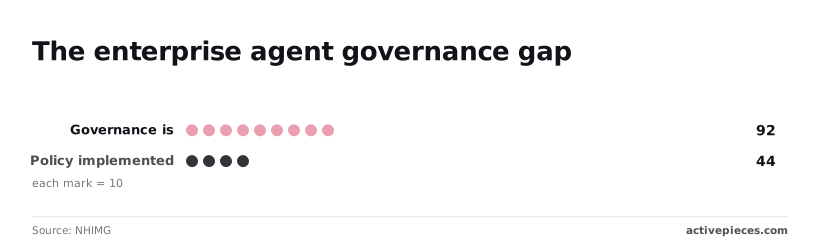 You're failing to secure half of your digital infrastructure because the execution of governance is lagging by nearly 50 percentage points behind the intent. This data highlights a specific failure in the transition from board-level requirements to engineering reality, as shown in the enterprise agent governance gap chart. ### Hard technical constraints for AI governance Reliability requires hard technical constraints: 1. Token and Cost Quotas: Fixed limits at the API gateway level that kill a process once a dollar threshold is hit. 2. Human-in-the-loop (HITL) Triggers: Mandatory pauses for high-privilege actions, such as deleting database records, so a human must sign off. 3. State Machine Validation: A non-AI controller that checks the agent's output against a schema, ensuring the system can't proceed if the agent returns natural language instead of JSON. ### Bridging the gap with automated guardrails Moving the enforcement layer out of the prompt and into the runtime environment is the only way to bridge the governance gap. When guardrails are embedded in the code (using tools like Pydantic for data validation or Open Policy Agent (OPA) for authorization) governance becomes an automated byproduct of the architecture. This shift ensures that even if an agent hallucinates, the harness rejects any action outside predefined parameters.The value of a multi-agent system isn't derived from the LLM's creativity, but from the harness's ability to suppress it when a task requires standard execution.
## Step 1: Building a supervised two-agent research workflow Reliability is achieved by decomposing a complex goal into a sequence of discrete, supervised hand-offs between specialized LLM instances. By forcing each agent to operate within a narrow functional scope, you'll monitor the transition points where errors typically propagate. The following workflow demonstrates this control via a two-agent handshake: 1. User submits prompt to Router. 2. Router assigns 'Researcher' role. 3. Researcher fetches external data via tool. 4. Router passes findings to 'Writer'. 5. Writer generates final response based on Researcher output. ### Configuring the Researcher agent for data retrieval Restricted to executing specific API calls, the Researcher agent functions as a data-gathering probe. In a standard implementation using LangChain, the agent is equipped with a search tool like Tavily, which limits the LLM's output to a structured JSON object containing verified URLs and snippets.  The handshake between these steps is executed by a hard-coded routing script. This deterministic router reads the explicit status codes returned by the Researcher to trigger the next phase. Relying on a non-probabilistic code block ensures the system never hallucinates the path forward. ### Setting the Writer agent to process raw findings Forced to rely exclusively on the context passed from the Researcher, the Writer agent is a secondary instance with a system prompt that forbids it from accessing external information. By using a "context-window injection" method, the router feeds the Researcher’s findings into the Writer’s memory as the sole source of truth. ### Testing the hand-off to ensure data integrity A trace-level audit of the router is required to confirm that the Researcher’s output wasn't corrupted before reaching the Writer. Tools like Arize Phoenix allow you to inspect the exact string passed between the two agents to identify where information loss occurs. A successful test confirms that the Writer’s output contains a specific percentage of the Researcher’s keywords. ## Implementing the supervisor as system gatekeeper ### Building a supervisor agent feedback loop By comparing the output of worker agents against a predefined schema, the supervisor agent functions as a deterministic filter to ensure the data remains structured. In a standard LangGraph implementation, this agent evaluates the "State" object for missing keys. If the Researcher agent fails to populate the "source_url" field, the supervisor rejects the state transition and routes the token back to the Researcher with a specific error string. Activepieces provides the visual engine to build this harness without writing custom coordination code, placing an Agent step alongside deterministic automation steps in a single flow. The platform logs the entire sequence in one run trace, rather than bridging two separate execution engines with a callback. This allows a business user to enforce the rules of the agentic system through a unified interface where judgment and fixed rules run on the same engine. ### Setting recursion limits to control AI costs To stop agents from entering a "hallucination loop" where they repeatedly attempt and fail the same task, you must use a hard-coded recursion limit. Without this constraint, an agent encountering a 404 error might retry indefinitely. | Model Accuracy | 1 Step | 5 Steps | 10 Steps | | :--- | :--- | :--- | :--- | | 95% Accuracy | 95.0% | 77.4% | 59.8% | | 90% Accuracy | 90.0% | 59.0% | 34.8% | This decay necessitates a supervisor that monitors the "step_count" variable and terminates the run if it exceeds a threshold. The chart visualizes how even a high-performing model with 95% individual step accuracy sees its total system success rate plummet to roughly 60% after just ten handoffs. If your individual agent accuracy drops to 90%, the probability of a five-step chain completing without error falls to 59%, leaving you with a coin-flip chance of failure before the task is even halfway done.  ### Validating agent output with business rule schemas A non-LLM layer, such as a Pydantic model, is required for final validation to enforce business logic that an agent might otherwise ignore. * Pydantic: A data validation library that enforces type hints, ensuring the agent doesn't return a string where the system expects an integer. * Guardrails AI: A framework for adding structural and quality checks, which prevents the system from serving responses that contain banned competitor names. * Regex Patterns: String matching rules that confirm that generated IDs follow the specific alphanumeric format required. ## Managing agentic complexity with Activepieces visual workflows By mapping every LLM call to a discrete, visual step that can be manually interrupted or hard-coded, Activepieces runs stochastic agents within a deterministic AI automation platform. This structure replaces the "black box" execution of code-based frameworks with a linear flow where the logic governing the agent is physically separated from the agent’s own reasoning, utilizing an MIT-licensed core to maintain transparency. ### Visualizing the hand-off between LLM nodes A distinct boundary between the output of one model and the input of the next is forced by the visual canvas in Activepieces. In Activepieces, the transition is a literal line connecting two nodes, meaning you can see exactly which variable was passed without digging through logs. This visibility is critical given that [Inkog](https://inkog.io/labs/ai-agent-security-gap-2026) identified 11,705 total findings related to agentic failure modes, implying that nearly twelve thousand specific vulnerabilities now exist for you to track across your deployments. 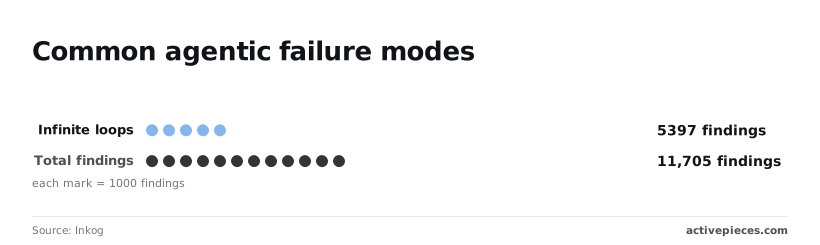 ### Using built-in conditions as the logic harness The "Router" and "Branching" integrations act as the rigid harness preventing agents from operating outside of defined business rules. Roughly 46% of all agentic failures result in runaway compute cycles that continue until the API credit limit is hit or the system crashes, according to [Inkog](https://inkog.io/labs/ai-agent-security-gap-2026), which identified 5,397 findings of infinite loops, meaning these errors often incur significant financial costs. 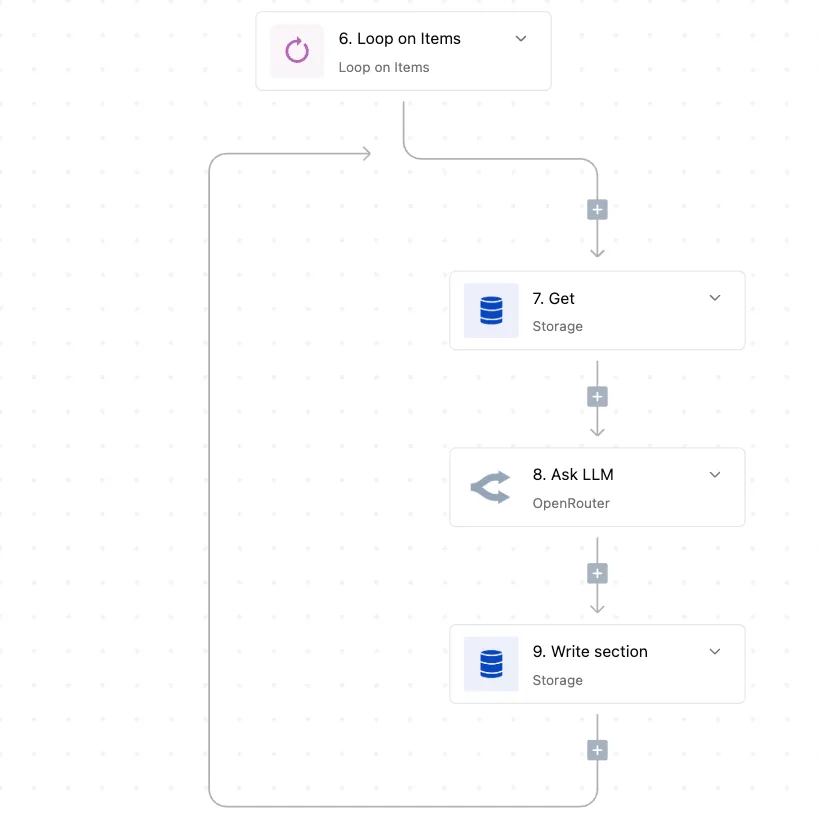 Activepieces manages these specific operational risks by providing a structured harness that enforces deterministic boundaries. | Question | Technical Requirement | Business Impact | | :--- | :--- | :--- | | How do we stop loops? | Max retry counter | Cost control | | Is it expensive? | Self-consistency scaffolding | Reduced hallucination waste | ### Auditing agent history to debug 'hallucination loops' The exact state of every variable at the moment of failure is captured in the "Runs" tab in Activepieces. When an agent enters a hallucination loop, the platform highlights the specific node where the logic diverged.  Every agent decision and the fixed workflow steps running next to it are recorded in the per-step agent decision trace within the Run Details. These records export as audit logs and event streams into existing SIEM tools, allowing companies like MoneyGram and FundingSocieties to review agentic decisions with the same rigor as standard automations. ## The Monday morning audit for agentic stability Recovery time drops from hours to minutes with granular visibility. This allows you to move from reactive firefighting to a structured hardening phase, ensuring the agentic harness is tight enough to prevent the recursive logic errors that drive up API costs. ### Finding expensive tool-calling loops in AI workflows Audit logs reveal that the highest financial risk lies in "semantic loops," where an agent attempts to solve a task by repeatedly calling the same tool with slightly different parameters. When an LLM receives a "Tool Error" response, its default behavior is to hallucinate a new parameter, leading to a cascade of tokens that provides zero utility. By filtering logs for identical tool calls occurring within a single execution ID, you'll identify which specific prompts lack the exit conditions necessary to stop an agent from burning through a monthly budget. ### Hardening the supervisor agent's rejection criteria A supervisor agent is only effective if its rejection logic is more rigid than the creative logic of the agents it oversees. Hardening this layer requires moving away from vague "Is this good?" prompts toward deterministic validation checks:  * Regular expression filters for brackets or missing variables to catch incomplete templates. * Schema validation against the JSON output to ensure the agent didn't drop required fields. * Sentiment analysis thresholds to reject responses that exceed a specific "aggression" score. ### Setting up real-time alerts for agent failures When the agent returns a technically valid JSON object that is factually incoherent, you are facing a "Silent Failure." These failures don't trigger standard 500-series HTTP errors, meaning traditional monitoring tools will report a healthy system while the agent is actually hallucinating. Monday Morning Hardening: 1. Review logs for 'Silent Failures' where no tool error occurred. 2. Set hard 'Max Retries' to 5 for all loops. 3. Github recommends implementing majority-vote (N=10) self-consistency checks on high-stakes outputs. This sequence ensures that the "Monday Morning" review translates raw execution data into a more resilient governance layer. By treating every agentic interaction as a potential point of failure, the system moves closer to the autonomy promised by the marketing, but only because the human-designed harness has been sufficiently reinforced. ## Frequently asked questions about agentic harnesses ### Do multi-agent systems cost more than single LLM calls? Because every internal handoff between specialized agents requires a new prompt completion and token exchange, multi-agent systems incur higher operational costs. While a single LLM call terminates after one response, an agentic workflow may trigger a recursive chain of reasoning steps, meaning a single user query can generate an order of magnitude more token usage on the backend. This increased volume shifts the cost profile from a predictable transaction to a variable expense that scales with the complexity of the task rather than the number of users. ### Can a harness prevent 100% of LLM hallucinations? A harness functions as a deterministic filter that catches non-compliant data before it reaches the production environment, though it cannot eliminate the probabilistic nature of LLM outputs. Instead of preventing the model from generating a false statement, the harness uses hardcoded validation rules (such as schema checks or regular expression filters) to reject any response that doesn't match the expected format. If a response fails these programmatic guardrails, the system triggers a retry or an error state, ensuring that the end user sees a "system unavailable" message rather than a confidently delivered falsehood. ### Do I need a developer to build an agentic harness? You will need a developer to write the state management logic and error-handling protocols that low-code platforms often abstract away. Without a developer to implement custom logging and interceptors, the system remains a "black box," leaving you with no way to audit why a specific agentic sequence failed or how to prevent it from repeating the same error. ## Related reading - [What Is Harness Engineering? Building Reliable AI Agents](https://www.activepieces.com/blog/what-is-harness-engineering-building-reliable-ai-agents) - [AI Agent Development: What It Takes to Build Agentic Systems](https://www.activepieces.com/blog/ai-agent-development) - [CRM Workflow Automation 101: Build Systems That Sell for You](https://www.activepieces.com/blog/crm-workflow-automation) ## References - [Inkog](https://inkog.io/labs/ai-agent-security-gap-2026) - [NHIMG](https://nhimg.org/articles/building-reliable-ai-agents-requires-harness-level-controls/)Moving the enforcement layer out of the prompt and into the runtime environment is the only way to bridge the governance gap.