## Why Claude Max limits drain fast Because Claude meters work in tokens processed inside a five-hour session and a weekly cap, not in messages sent, habits that quietly multiply tokens drain even a top plan fast. One heavy morning can empty a session, and a run of heavy mornings can empty the week, since [Anthropic](https://www.anthropic.com/research/april-23-postmortem)'s [pricing page](https://claude.com/pricing) describes usage "every 5 hours and every week". Anthropic doesn't publish an exact token allowance per window, so nobody can budget to the digit. Budget the habits instead. ### What drains usage fastest Turn after turn, the whole conversation gets re-sent. According to [Nanocalcs](https://nanocalcs.com/en/chat-conversation-cost-calculator/), turn 10 carries 8,500 input tokens, turn 30 carries 22,500 and **turn 50 carries 36,500**. 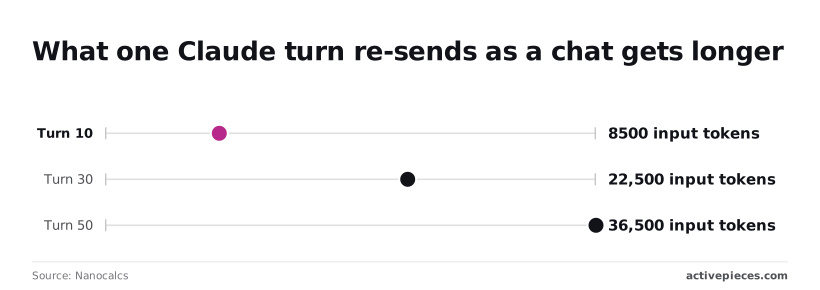 Ask the same question at turn 50 and it costs about four times what it did at turn 10. - Account managers keep one thread per client open for weeks, so every reply re-reads the entire history. - Designers re-attach the same brief PDF to each new message, so the file is processed again every time. - Everything runs on the largest model, though [Claude Haiku 5.5](https://docs.claude.com/en/docs/about-claude/models/overview) is built for classification, extraction and routing. - Extended thinking stays switched on for routine edits, spending tokens on reasoning nobody needed. - Developers run Claude Code all day on the same plan the writers use. That makes five habits, and only the first four multiply the cost of chat. The fifth adds a second consumer to the same pool. ### Shared usage across chat and Claude Code Because Claude Code draws on the same plan limits as chat, a long coding session leaves less for everyone else. **Those limits have also moved**. Taking the pre-promotion weekly limit as 100, a promotion added 50, and a September cut then removed 25, leaving a permanent limit of 125, per [BleepingComputer](https://www.bleepingcomputer.com/news/artificial-intelligence/anthropic-is-cutting-claude-codes-current-weekly-limits-by-17-percent/). 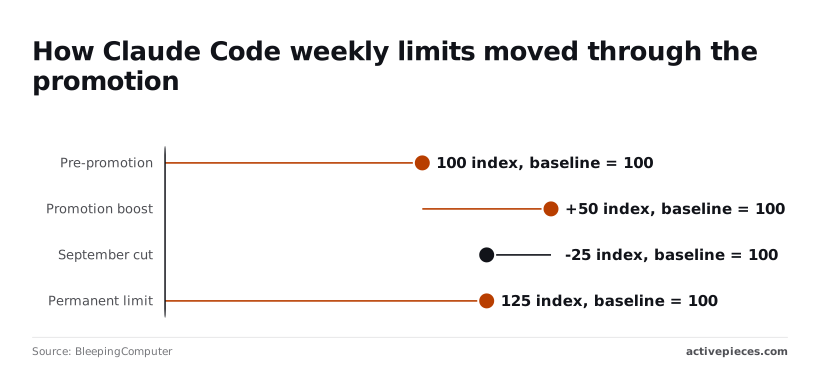 Against the pre-promotion limit, the permanent one is a quarter more, but it sits about a sixth below its peak of 150. A team that planned around the peak was planning around a number that no longer exists, so check current figures before writing the routine. ## What clears Claude Max errors Five of the six messages we hit clear without a reset; only one requires waiting. They clear with a change in what you send, when you send it, or how you pay. The table below lines each message up against its cause, the fix Anthropic's help documentation gives, and whether a reset is required. Record the date you check it, because the wording of these messages and their fixes can change. | Message | Cause | Official fix | Wait for reset | |---|---|---|---| | Limit reached | The usage window is spent | Wait for the window to reset, or use extra usage if it's enabled | Yes | | Approaching-limit warning | The window is nearly spent | Finish the current task, move to a lighter model, start a fresh session | No | | Conversation too long | Accumulated history exceeds what the model can hold | Start a new conversation with a short summary | No | | File or context size | Attachment or pasted input is too large | Trim or split the input | No | | Overloaded error | Demand on Anthropic's side, not your usage | Retry shortly | No | | Extra-usage prompt | The window is spent and paid overage is on offer | Enable it or decline it in settings | No | Only on the limit-reached row does the clock decide. Our routine says what to do while waiting: switch to non-Claude work or the fallback tool, rather than retrying and burning the clock. When a conversation or file size error appears, people mistake it for a limit problem. Our first reaction was to wait, and waiting changed nothing, because the input was the problem. Open a clean session, paste a summary, split the file, and carry on.  Don't log an overloaded error as a limit hit, because it is not your usage running out. The extra-usage prompt is a spending decision, so one named person owns it in the routine instead of whoever happens to be at the keyboard. ## Team's Claude Max workflow steps Eight steps came out of it, each written against a failure we reproduced, and one person owns the spending decision at the end of them, so approvals cannot proceed without that person's consent. Before anyone types a prompt, do steps 1 to 4, once per piece of work. Together they stop the usage window being spent on repetition. 1. Put recurring work in a Project with written instructions. Without them, every conversation re-pasted the style guide and brief, and the output drifted between people. 2. Pick the model per task. Haiku 5.5 takes classification and extraction, Sonnet 5.5 takes drafting, and Opus 5.5 is kept for long agentic work. Running everything on the heaviest model drained the window on jobs that never needed it. 3. Start a fresh conversation for each deliverable. A long thread carries its whole history into every reply, so one report's context was quietly taxing the next. 4. Schedule heavy work early in the window. A large refactor started late hit the limit halfway through and left a half-finished diff. Steps 5 to 8 run every working day, so any failure shows up by the next business day. They cover the moment the window runs short, which is where the old workflow failed. 5. Check usage before starting anything large. We used to find out we were nearly out by being cut off mid-task. 6. Use the official extra-usage option, and only through it. Workarounds like sharing logins broke the terms and left no record of what was spent. 7. Give the extra-usage prompt one named owner. Whoever was at the keyboard clicked yes, and nobody could say afterwards who had approved the spend. 8. Name the fallback in advance. When the window closed, people improvised, and the deliverable moved to whichever tool each person opened first. Now the fallback model and the handover note are written down. ## Automating the hand-offs around Claude with Activepieces The usage window that limits Claude is out of Activepieces' reach, but it does automate the steps that surround Claude (receiving the brief, filing the draft, notifying the client, logging the deadline), and a run of those hand-offs costs 1 credit however many steps it has. 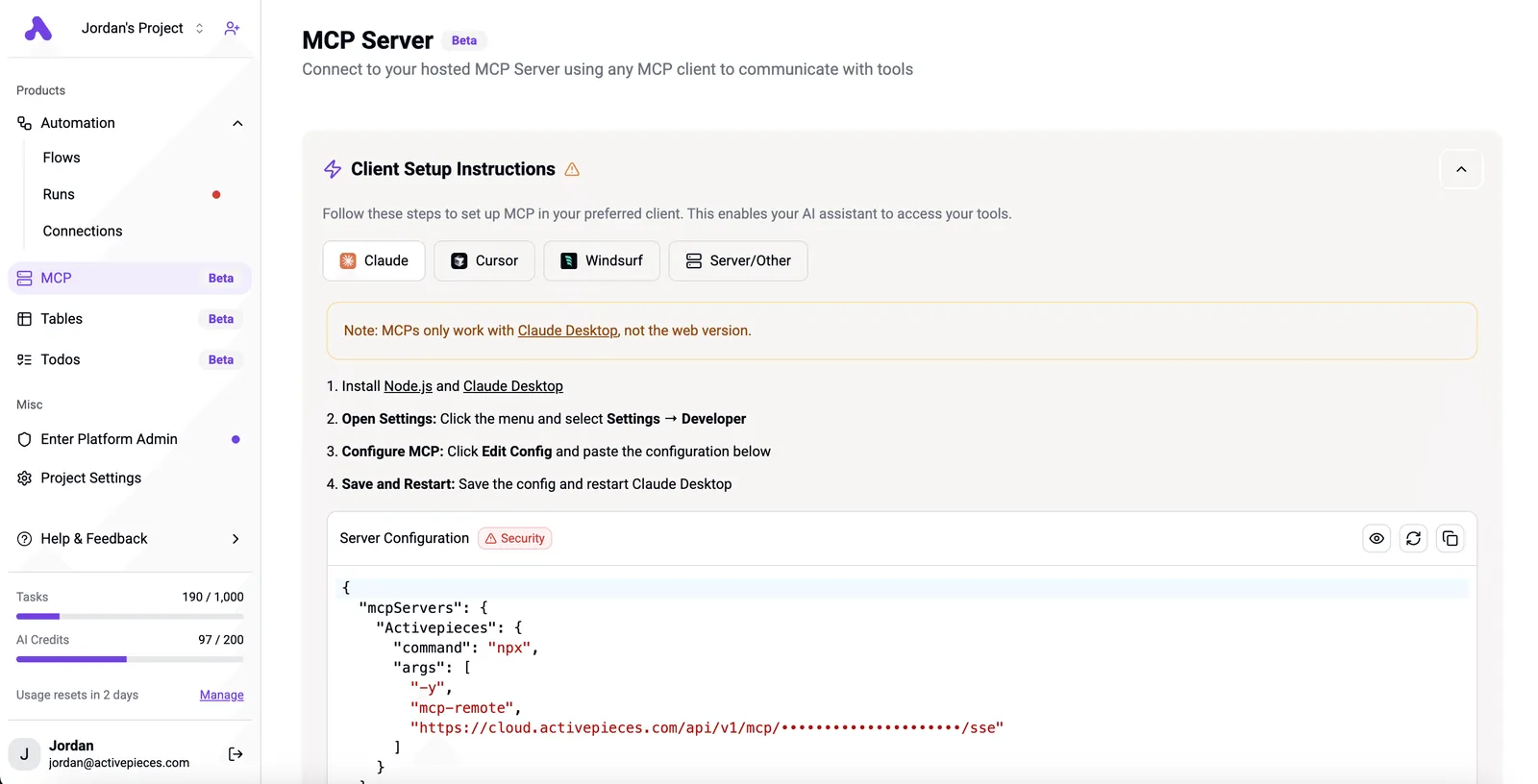 That boundary decides what to hand it. In the Activepieces flow builder, an Agent step sits next to the deterministic filing, notifying and logging steps inside one flow. The run trace for a single brief then shows one execution, from the brief arriving to the deadline being written down, with no webhook joining two products. MoneyGram, Moneypenny, Alan and FundingSocieties run it in production, and the core is MIT-licensed. When a draft goes missing mid-morning, that one trace is where you look. ### What to automate and what to leave manual If a person does a step the same way every time and no judgment is involved, it belongs in the automation. That is the test for any step. Moving a brief from an inbox or form into a working folder passes. So does saving the finished draft to the right client folder, sending the "draft ready" message, and writing the deadline into a tracker.  Each is a hand-off, and hand-offs are where work gets dropped when a session runs out mid-task. Leave manual anything that needs a decision. Whether a draft is good enough to send is one. Whether to spend the remaining window on this client or the next is another. Switching to the named fallback when the window closes also stays with a person, because the routine you wrote says who does it, and a flow can't see that you're out of room. Be clear about one limit. [Activepieces](https://www.activepieces.com/pricing) doesn't raise Claude Max limits. Its own meter is separate: the Free plan gives 1,000 credits a month with unlimited flows. If a step calls Claude through the API rather than through your Max session, that use is billed separately from Max. Check Anthropic's pricing page before you build it, because it changes what the flow costs. ### How the workflow is built Left to right, the flow runs: brief arrives, Claude drafts, draft filed, client notified, deadline logged. The illustration below shows the flow wrapping the outer hand-offs, with Claude as a separate box that has its own usage meter.  What to take from it is that the meter sits outside the automation. A flow can start a run, but it can't refill the window the draft step draws on. Build it in that order. Test each hand-off with an input that has broken things before: a brief with an attachment, a client name with an accent, a deadline with no date. A flow that works on a tidy demo brief proves nothing. Next, keep the Claude step easy to pull out. When the window closes, that one box should be replaceable by the fallback, while the filing, notifying and logging around it keep running unchanged.  ## Frequently asked questions Each answer below is based on Anthropic's own plan and help pages. Where a page doesn't say, the answer says so. ### Daily message limits Does Claude Max have a fixed number of messages per day? No. Anthropic describes Max usage as limits that reset over time windows, not a daily message count. Your capacity depends on message length, attachments, conversation length and model, so two people on the same plan can hit the wall at different times. Plan around the window, not a count. Source: Anthropic's Max plan page and its usage-limits help article. ### Team use Is Claude Max enough for a whole team? Not as a shared login. **Max is sold as an individual plan, and Anthropic's terms for it don't cover several people on one account.** A team needs its own seats, and Anthropic sells Team and Enterprise plans for that. Source: Anthropic's plans and pricing page. ### Claude Code usage Does Claude Code usage count against my Max limit? Yes. Claude Code on a Max login draws from the same usage allowance as chat, so a long agentic run can leave you with less for the rest of the day. This is why session hygiene matters: a bloated session spends the shared allowance faster. Source: Anthropic's help article on using Claude Code with a Max plan. ### Paying for extra usage Can I pay for more usage when I hit the limit? Anthropic offers optional extra usage for subscribers, billed after you opt in, but I couldn't confirm from the vendor pages how it's priced or capped for your account. Check your account's billing settings before relying on it as the fallback. Source: Anthropic's help centre pages on extra usage. ### API access Does Claude Max include API access? Partly. Max includes $100 a month in API credits to build on the Claude Platform, and usage beyond that is billed separately through Anthropic's developer console. If your routine calls the API from an automation, that spend sits on a different bill from your subscription. Source: Anthropic's API pricing and Max plan pages. ## Related reading - [SAP S/4HANA Purchase Order Workflow for MS Teams](https://www.activepieces.com/blog/sap-s-4hana-purchase-order-workflow-for-ms-teams) - [Content Creation Workflow: How Successful Teams Do It](https://www.activepieces.com/blog/content-creation-workflow) - [Claude Max Workflow: How to Set It Up (2026 Guide)](https://www.activepieces.com/blog/claude-max-workflow-how-to-set-it-up-2026-guide) ## References - [BleepingComputer](https://www.bleepingcomputer.com/news/artificial-intelligence/anthropic-is-cutting-claude-codes-current-weekly-limits-by-17-percent/) - [Nanocalcs](https://nanocalcs.com/en/chat-conversation-cost-calculator/)A late integration is a scheduling problem, but a notified client is a trust problem the agency has to spend time repairing.