## What Contentful costs at realistic team sizes Past the smallest site, Contentful costs whatever the sales quote says, and the first limit you hit decides which tier writes it. The table sets out three scenarios, so read the last column first: it names what ends each plan's usefulness, which matters more than the plan name. | Scenario | Locales | Environments | Users | API calls | Plan | Monthly cost | Annual cost | Limit forcing upgrade | |---|---|---|---|---|---|---|---|---| | Small marketing site | 1 | 1 | 5 | Low | Self-serve tier | Listed price | 12 × listed price | Second locale or staging environment | | Mid-size multi-locale site | 5+ | 2–3 | 25 | Moderate | Upper tier | Quoted | Quoted | Locale and environment caps | | Multi-brand enterprise | 10+ | 4+ | 100+ | High | Enterprise | About $4,514 at median | $54,173 at median | Spaces, roles, SSO | With one locale and one environment, you fit the entry tier. The first add-on, a staging environment or a second language, is the point where the listed price stops being the bill. In a mid-size company with several locales, each added locale multiplies content to translate and store, so the locale cap arrives before the user cap. Environments are the second squeeze: separate staging and testing means each one counts against the plan. If you run a multi-brand enterprise, you need several spaces, finer roles and single sign-on, which are gated to Enterprise. [Vendr](https://www.vendr.com/marketplace/contentful) puts **the median contract at $54,173 a year**. That's the number to budget against, because list price won't get you near it.  ## Spot hidden Contentful costs and bandwidth limits When a Contentful Lite account starts to grow, the first extra charge is overage on two meters, API calls and asset bandwidth, and bandwidth is the larger one. 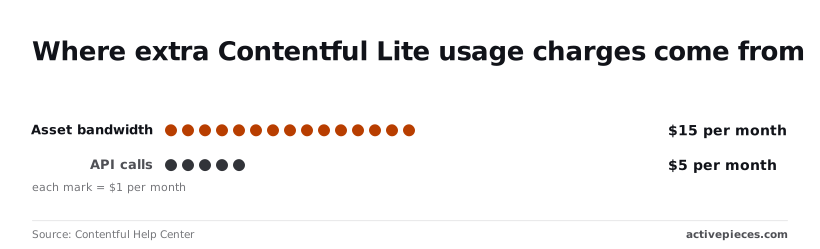 ### Usage overage and rate limits Per the [Contentful Help Center](https://www.contentful.com/help/admin/usage/usage-limit/), asset bandwidth adds $0.15 per additional GB per month and API calls add $5 per additional 1 million. Bandwidth is billed per GB and API calls per million, so images and video, not content queries, are the first thing to cache or compress. ### Features locked to higher tiers If your team needs roles, SSO or workflow tooling, you are looking at a tier above the entry plan. The cost isn't a line item. It's the tier jump you make when a security review or an editorial approval process requires one feature. Record caps, locale caps, seats and extra environments work the same way. Each is a ceiling, and crossing any one pushes you to the next plan. ### Contentful developer time and implementation costs Nobody lists the largest cost on the pricing page: developer hours. Modeling content types, wiring up a front end, building preview and migrating existing content all take engineering time before the first page ships.  Each added locale or environment adds more modeling, testing and migration work on top of its fee. The handoffs around publishing, such as a Slack alert, a CRM update or a translation request, are where that time tends to go on custom code. [Activepieces](https://www.activepieces.com) covers that part, and its meter is the run, not the steps inside it: a publish flow costs 1 credit whether it has two steps or ten. Zapier bills per task and Make per module, so on those pricing pages every extra step adds to the bill, while here you can split the flow into smaller, easier-to-test steps for free.  Count those hours at your own loaded rate, and put them in the same budget as the subscription. ## How to cut a Contentful bill without switching You can cut the bill without leaving by shrinking the units Contentful meters (API calls, bandwidth, stored content, locales and environments) and only then negotiating the rate. Spend those engineering hours in this order, because each step changes what the next one is worth. 1. Measure API calls and bandwidth by endpoint. The invoice shows one total, but your logs show which endpoint and which page generate it. Without that split, every later step is a guess about where the overage comes from. 2. Move reads to the CDN API. Published content that visitors read doesn't need the Management or Preview endpoints. Preview traffic left in production code is metered usage with no audience behind it. 3. Add a cache or CDN in front of the content. Each cache hit is a request Contentful never counts. The saving grows with traffic, so this is where a high-read site gains most. 4. Prune unused entries and assets. Stale drafts, orphaned images and old campaign content still count against record and storage limits, and they push you toward the next tier for content nobody sees. 5. Cut spare locales and environments. A locale nobody publishes in, or a sandbox nobody has opened since the last release, still occupies an allowance you pay to expand. 6. Negotiate annual terms last. Commit only after steps one to five, so you're signing for the smaller usage you now have rather than the bloated usage you started with. Done in this order, the first five steps change your usage, and the sixth fixes the price of that smaller usage, which is the one number worth locking in, so your costs are now predictable. ## Contentful against Sanity, Storyblok and Strapi on price Once limits are counted, Contentful **is usually the most expensive of the four**, but not for every team. The gap depends on which unit each vendor meters. Read the metering and enterprise columns first, because those decide whether the entry price holds. The table below shows how each vendor sets its floor and what it meters on top. | | Free tier | Entry paid price | Seat model | Usage metering | SaaS or self-hosted | Enterprise-only features | Check date | |---|---|---|---|---|---|---|---| | Contentful | Yes, small | Flat monthly plan, then a custom quote | Capped users per plan | Records, locales, environments, API calls | SaaS only | SSO, extra environments, higher limits | October 2026 | | Sanity | Yes | Per-seat monthly plan | Per seat | API requests, bandwidth, assets | SaaS backend, open-source editing studio | Advanced access control, SSO | October 2026 | | Storyblok | Yes | Per-seat monthly plan | Per seat | Traffic, assets | SaaS only | SSO, extra spaces | October 2026 | | Strapi | Free to self-host | Cloud plan, or infrastructure cost alone | Per seat on cloud and enterprise | Cloud resources; none when self-hosted | Both | SSO, audit logs | October 2026 | When many locales, several environments and strict editorial workflows are real requirements, Contentful is worth the premium. Building those yourself on a cheaper tool costs engineering time, and that cost usually exceeds the subscription difference. 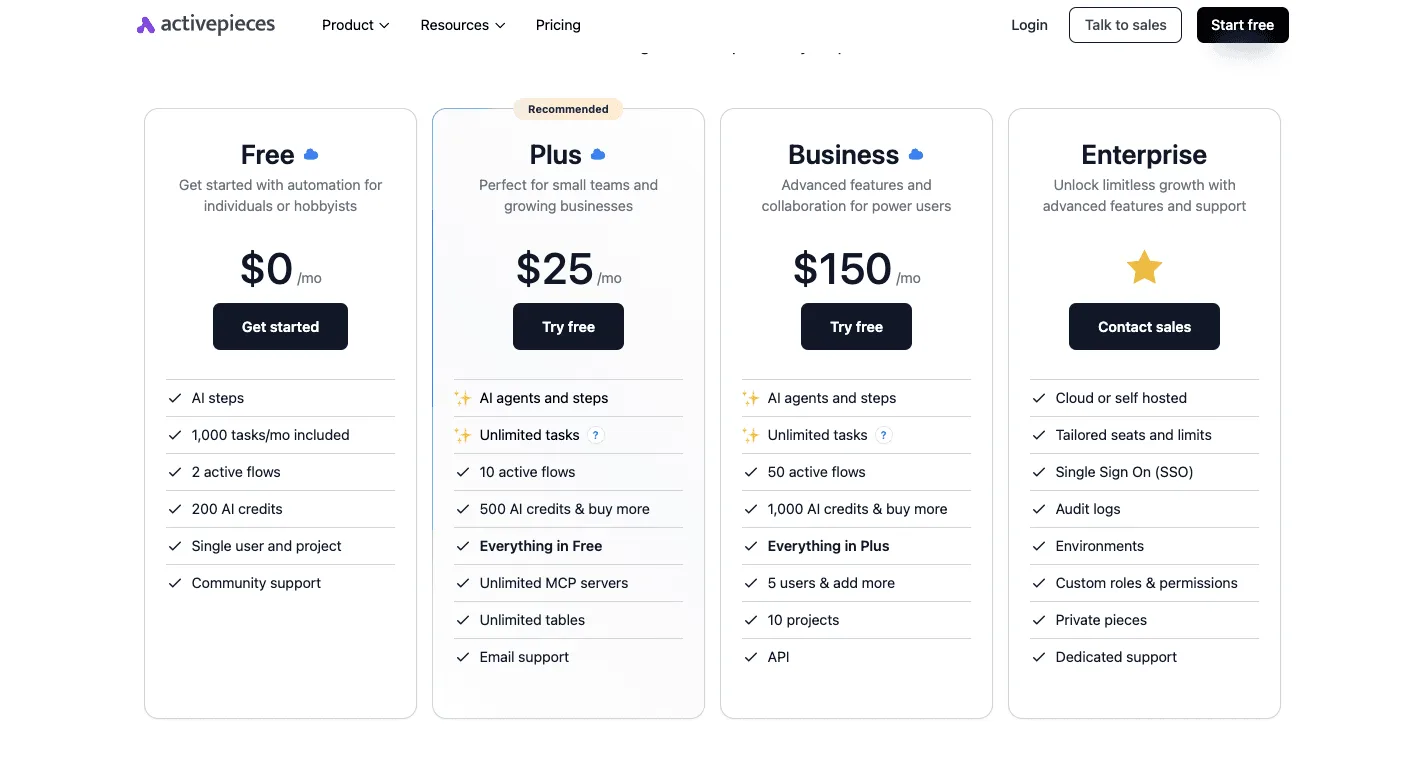 A cheaper alternative fits in two cases. Choose Strapi if your team can run its own servers, since self-hosting removes usage metering entirely. Choose [Sanity](https://www.sanity.io/pricing) or [Storyblok](https://www.storyblok.com/pricing) for a small team with few locales, where per-seat pricing stays predictable. Either way, price the limit you'll hit first, not the plan name. ## Fix Contentful content handoffs with Activepieces ### Automate handoffs to reduce labor costs Don't expect Activepieces to lower Contentful's bill. It can automate the handoffs around it, such as publish notifications, translation requests and syncing, so you stop paying people to do that work by hand. It's an automation tool that sits beside Contentful, not a replacement for any part of it. ### How a publish workflow works When an entry is published, Contentful can send a webhook, and an Activepieces flow can catch that call and act on it. Activepieces also has a Contentful integration for flows that need to read or write entries directly. 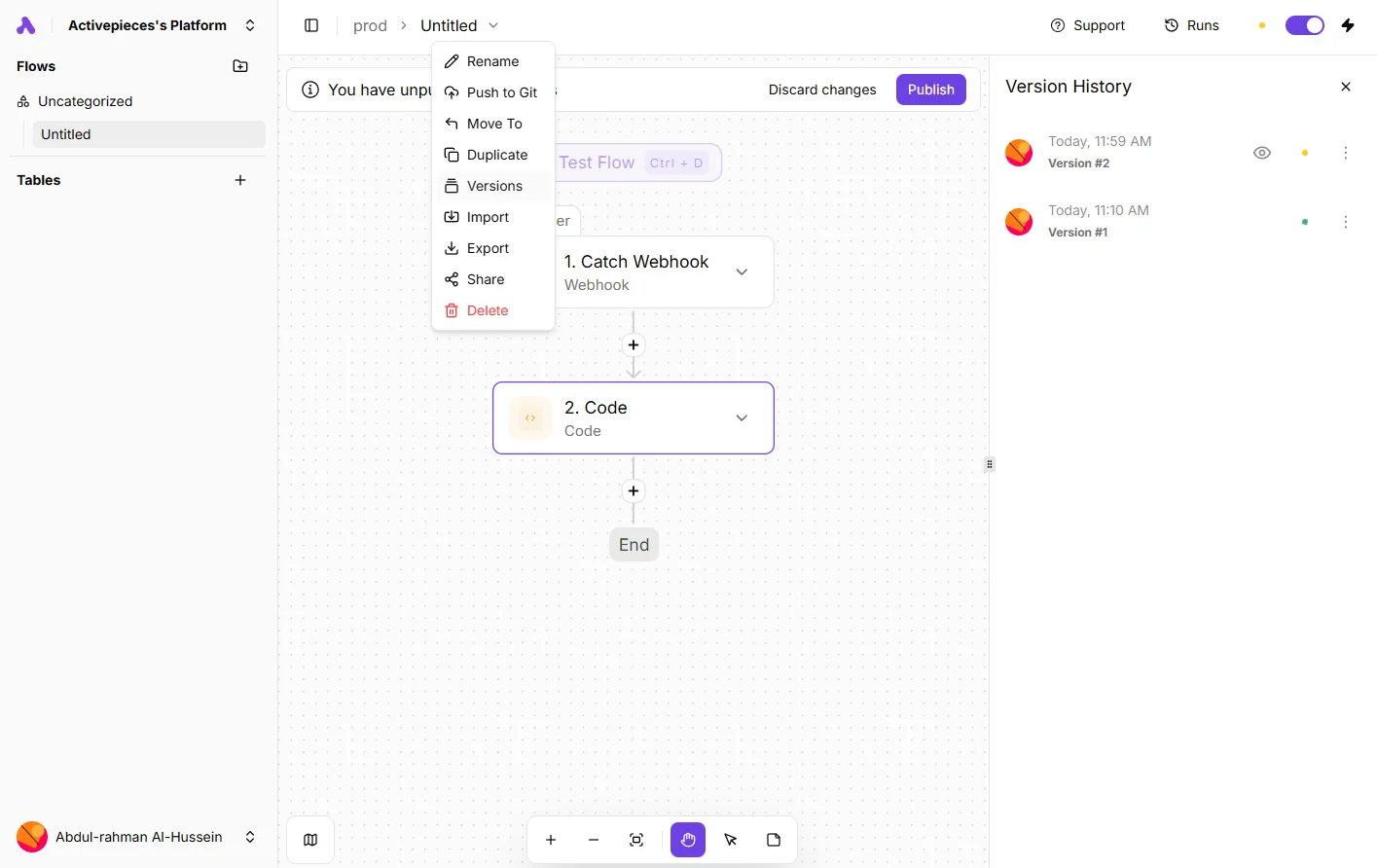 A typical flow starts with a "Catch Webhook" step and passes the payload through a "Code" step to pick out the locale and entry ID. It then posts a message or opens a translation request. Because the flow reacts to publish events, a translator hears about new source content when it goes live rather than whenever someone remembers to tell them. ### Version history and source control In the screenshot, a flow sits in the builder with its Version History panel open. It lists two saved versions with timestamps, so you can see which edit changed behavior and go back to an earlier one. That matters here because these flows sit on your publishing path. A bad edit to a notification step should be traceable and reversible, not a guess. On the left, the menu also includes "Push to Git", which lets a team keep flow definitions under source control alongside the rest of its work. None of this changes how Contentful meters locales, environments or usage. It only makes the process around those limits less manual. ## What to check before buying Contentful Count what you'll actually use, then test it against the plan table before anyone from sales speaks to you. The six steps below turn the limits into a quote you can defend: 1. Count your locales, environments and users, including contractors who need their own seats. 2. Pull your monthly API calls from your current CMS or CDN logs, since calls are the metered unit. 3. Check each count against the plan table and note which limit you cross first. 4. Run the free plan on a real content model, not a demo one, so entry types and references behave as they'll in production. 5. Request an enterprise quote with those counts attached. 6. Re-verify pricing on the day you sign, because tiers and limits change. The first limit you cross decides your tier, and how you cross it depends on your shape. If you are a five-person team with one site, you will probably stay inside the free or lowest paid tier on users and locales. Your risk is API traffic, so measure calls before a launch or campaign, and check whether a second environment for staging fits without forcing an upgrade. For a mid-size company with several locales, locales are your first ceiling. Count every market you plan to add in the next year, not just today's, because each one can push you into a higher tier while your traffic barely moves. At a multi-brand enterprise, you will likely need enterprise-only features, so the plan table stops being useful. Bring your counts for spaces, environments, users and calls to the quote conversation, and ask which of them the quote prices separately. ## Frequently asked questions ### Cost and billing questions Is Contentful free to use? Contentful has a free tier, but it's a floor for small projects, not a plan you can assume will cover production. Its limits on users, locales, environments and API calls are the ones you'll hit first, so read its terms on commercial use before you build a client's site on it. Does Contentful charge per user? Inside each plan, users are one of the metered limits, not a separate seat price you can add up on your own. Past the number your tier includes, the next step is usually a tier change or a negotiated quote. Count editors, developers and contractors separately, because each draws on the same allowance. Does Contentful offer a discount for annual billing? Annual contracts are the normal basis for paid plans above the entry level, and any discount is set in the quote rather than on a public page. Ask for monthly and annual figures side by side, and ask what the annual commitment locks in if your usage grows mid-term. ### Overages and leaving Contentful What happens if I exceed my Contentful API limits? It depends on your plan and contract: some usage is billed as overage, and some is capped until you upgrade. Get the overage rate and the behavior at the cap in writing, because a traffic spike on a launch day is when you find out. Can I move off Contentful if costs rise? Yes, your content can be pulled out through its APIs, so the data isn't held hostage. The real cost is rebuilding what sits around it: the content model, references between entries, rich text, webhooks and every front-end query written against its API. Price that rebuild before you commit, not after the renewal arrives. ## Related reading - [How Much Does UiPath Pricing 2026 Cost?](https://www.activepieces.com/blog/how-much-does-uipath-pricing-2026-cost) - [How Much Does DocuSign Pricing 2026 Cost?](https://www.activepieces.com/blog/how-much-does-docusign-pricing-2026-cost) - [Twilio Pricing 2026: What Drives the Cost?](https://www.activepieces.com/blog/understanding-twilio-workflow-pricing) ## References - [Dardo Studio](https://dardo.studio/en/blog/contentful-pricing/) - [Contentful Help Center](https://www.contentful.com/help/admin/usage/usage-limit/) - [Vendr](https://www.vendr.com/marketplace/contentful)**If you move to Lite because you're near the record cap, you have bought nothing against that cap.