# Deepinfer (2026 Guide)
By Ossian Kettunen · 2026-10-21 · Source: https://www.activepieces.com/blog/deepinfer-2026-guide
---
DeepInfer is an inference framework from DeepSeek's GitHub organisation, deepseek-ai. Its initial commit landed on October 20, 2026, the same day these facts were checked. It's **a day-old repository, not an established tool**.
You should not repeat a claim you cannot trace to a page, so the table shows only what the maker's repository states. Anything it leaves out stays out of the table.
## What deepinfer is and when it was released
| Fact | What the maker's page says | Source |
|---|---|---|
| Maker | Repository owned by the deepseek-ai organisation | [GitHub](https://github.com/deepseek-ai/DeepInfer) |
| What it is | Inference framework powering DeepSeek's large-scale production services | [GitHub](https://github.com/deepseek-ai/DeepInfer) |
| Initial commit | Oct 20, 2026, by beginlner | [GitHub commit](https://github.com/deepseek-ai/DeepInfer/commit/d585e6542c0571176272d703f03c4807ae901284) |
_Prices and plan limits checked against [github.com](https://github.com/deepseek-ai/DeepInfer) and [github.com](https://github.com/deepseek-ai/deepinfer/tree/main/deepinfer) and [deepinfer.org](https://deepinfer.org) on October 20, 2026._
The repository does state an Apache License 2.0 licence and lists DeepSeek-V4.1-Flash as a supported model, but it gives no version row, so the table has none. Check the repository for those before you plan around them.
"The high-performance inference framework that powers DeepSeek's large-scale production services" is how the README describes it. The open-source release provides offline inference. That scope matters: it's a framework you run yourself, not a hosted endpoint you call.
One trap: [deepinfer.org](https://deepinfer.org) is a different project, a model store for medical image analysis, and its "DeepInfer 1.2" is not the DeepSeek release.
Trying it means wrapping it yourself, since no native integration exists. The code lives in the GitHub repository, and I found no pricing on the maker's pages, so any cost today is your own compute.

## Deepinfer's value for teams automating work
For most teams, what goes in the AI steps is still undecided, and a wrapped inference framework becomes one more candidate. That is why [Deepinfer](https://deepinfer.org) matters.
[McKinsey's State of AI survey](https://www.mckinsey.com/capabilities/quantumblack/our-insights/the-state-of-ai) puts 33% of organisations using AI at the scaling stage, 31% at piloting and 23% at experimenting. That means **54% are still piloting or experimenting**, which is the group that trials a new release.
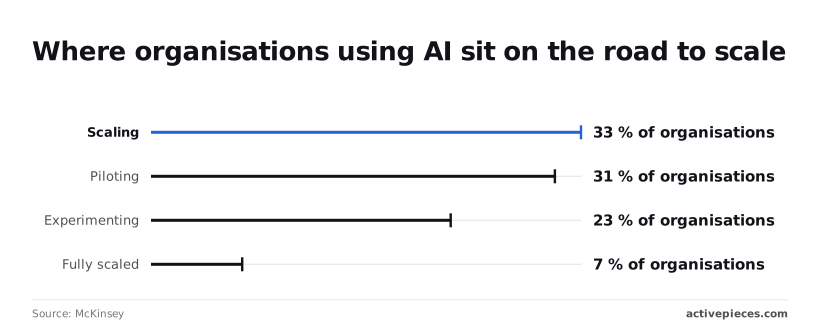
**Only 7% have fully scaled**, so for almost everyone the choice of tool behind each step is still open.
Where a wrapped step touches the framework, five things matter, and you should answer each from the maker's pages before you build:
- Which model answers a request, and whether the pages name it or leave the choice to you
- Where it runs: your hardware or the maker's, which decides what data leaves your flow
- What a single step costs, if the pages state a price at all
- How fast it replies, since a slow step stalls every action after it
- The licence, which governs whether you can run it inside a client's workflow
Any of those the pages leave blank stays unknown until someone tests it.
## Measurably new claims from the maker
Until someone outside reproduces them, all five measurably new claims stay labelled as the maker's own, because every one of them comes from the maker.
Nobody has to negotiate terms to run it in production, because the repository states an Apache 2.0 licence, which allows commercial use and modification.
The first commit is dated Oct 20 2026, which means the project has no history yet, no issue backlog and no release track record.
Anyone planning around DeepSeek-V4.1-Flash should check the exact supported version before building on it, since the repository lists support for that model.
The first tells you nothing about your hardware or prompt length, and the second's a volume claim, not a quality or reliability one.
We checked all of them on 2026-10-20, and the table lists each claim against where it appears.
| Claim | Source | Checked | Independently verified |
|---|---|---|---|
| Apache 2.0 licence | Maker's repository | 2026-10-20 | No |
| DeepSeek-V4.1-Flash support | Maker's pages | 2026-10-20 | No |
| Initial commit Oct 20 2026 | Maker's repository | 2026-10-20 | No |
| TTFT ~400 ms average | https://deepinfer.org | 2026-10-20 | No |
| ~155 trillion tokens/day | https://deepinfer.org | 2026-10-20 | No |
Nothing beyond these five is claimed here, and no independent numbers exist yet.
## Deepinfer connections in current workflows
Because **no native deepinfer integration exists**, any workflow tool can reach it by three ordinary routes. The [public pieces catalog](https://www.activepieces.com/pieces) grew from 280+ integrations to 400, then 500, and now 768, and still lists nothing for deepinfer (checked 2026-10-20).

Check for the specific connector before counting on it, because a bigger catalog doesn't mean your tool is covered.
Read the table by what deepinfer itself must offer, since that is where the routes differ mainly. Setup effort follows from that.
| Route | Setup effort | What deepinfer must expose | Where the output goes |
|---|---|---|---|
| HTTP request step | Moderate: you map fields by hand | A documented HTTP endpoint | The step's response, passed to later steps |
| AI step, OpenAI-compatible provider | Low, if the endpoint matches | An OpenAI-compatible endpoint | The AI step's text output |
| MCP server | Higher: needs a running server | An MCP server | Tool results inside an agent step |
Fallback first: the HTTP request step. You set the URL, headers and JSON body yourself, so it works only if deepinfer publishes a documented endpoint. Expect to map each response field by hand.
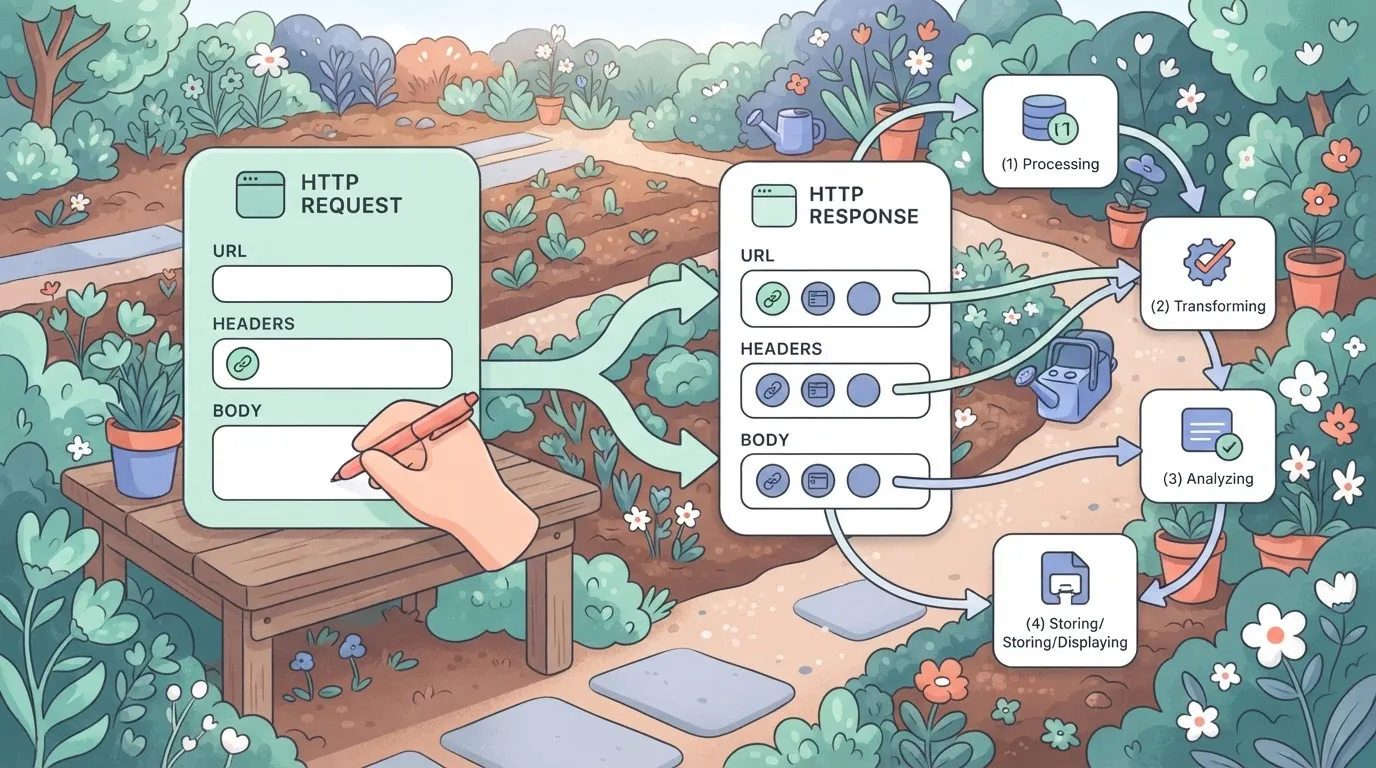
If deepinfer's endpoint doesn't copy the OpenAI request format, the AI step with an OpenAI-compatible provider fails on the first call. When it does copy it, this is the shortest path.
For agent steps that choose tools themselves, the MCP server route fits. It requires deepinfer to run an MCP server, and nothing in the maker's pages is cited here to show one exists.
Once deepinfer is connected in [Activepieces](https://www.activepieces.com), an agent can call it, because the same piece runs as a step in your flow and as a tool on each project's own MCP server, which Claude, ChatGPT, Cursor or an agent of your own can use.
That spares you a second round of integration work for the agent side, and the mechanism is readable in packages/integrations in the open source repo. MoneyGram, Moneypenny, Alan and FundingSocieties run it in production.
Whichever route you pick, test it with one request before wiring in downstream apps.
## Deepinfer measurements and testing gaps
We haven't run deepinfer, so we have no accuracy, speed or cost-per-task results against the model you use today. That one test request only proves the connection works. Before switching, measure it yourself, in this order:
1. Pick 20 real tasks from a workflow you run now, not invented samples.
2. Run them on your current model and record accuracy.
3. Repeat the same 20 on deepinfer.
4. Log latency for every run.
5. Work out cost per task from what each run actually billed.
6. Compare the two models on all three measures.
Run those steps and you have the numbers this article cannot give you.
We're not repeating a maker's claims about its track record, because we haven't confirmed them. Check the maker's announcement for both.
Treat the maker's description as a claim to test, not a result. **Until your 20 tasks come back, "better" or "faster" is marketing copy.**
Read the maker's pricing page for current access terms and rates. Cost per task depends on your prompts and output lengths, so only your own runs can settle it.
**Until your 20 tasks come back, "better" or "faster" is marketing copy.
## Deepinfer cost and speed against current options
On price and speed, no comparison is possible yet: the maker's pages give no figures to set against other options, so your own runs have to fill that gap.
Cost is unlikely to be the barrier for most teams. In McKinsey's [State of AI survey](https://www.mckinsey.com/capabilities/quantumblack/our-insights/the-state-of-ai), **1% of respondents are cost-constrained**, which means running costs hold back very few organisations.
Even then, a published rate would not replace the per-task measurement above, because it can't account for your prompt and output lengths.
Read the table below for what is known, not for a ranking.
It sets Deepinfer beside the two usual routes, and it shows that the rows differ mainly in how you obtain the model, and that every price and speed cell is empty of a maker figure.
| | Price | How obtained | Stated speed claim |
|---|---|---|---|
| Deepinfer | not published | not published | not published |
| Hosted model APIs | not published | API key from the provider | not published |
| Self-hosted open model | not published | Download weights, run on your own hardware | not published |
Empty cells for hosted APIs and self-hosted models don't mean they lack numbers. Each maker sets its own, and none is a figure we can give for the category as a whole.
Until Deepinfer publishes its own, any rate or latency quoted for it is a guess, so treat the same test task as your yardstick across all three.

## What to watch next with deepinfer
Watch five pages on the maker's side, because only they can change what you are allowed to claim about Deepinfer. Your fixed test task is how you judge any change.
To see who ships it and how often, read the releases page. A tagged release with notes is a dated, attributable fact. Anything said about the project elsewhere is secondhand.
If a capability isn't described in the documentation, don't promise it to a client; the documentation sets the scope of what you may repeat.
The licence file matters just as much. A changed licence can alter whether you may run it inside a client's workflow at all.
Until the pricing page states a cost, budget nothing against it. It is the only place a cost can be confirmed. Here's the full set to check:
- The releases page on the project's GitHub repository
- The documentation site
- The licence file in that same repository, for changes between releases
- The pricing page on the maker's site
- The [Activepieces](https://www.activepieces.com/pieces) integration catalog, or the packages/integrations/community folder of its open source repo, which holds 768 integrations, searched for a deepinfer entry
If the last one comes back empty, that's the answer for now. On Monday, build one small trial: a webhook trigger, an HTTP request step calling Deepinfer, and a message sent onward. Run your test task through it and record what comes back.
## Frequently asked questions
### Is deepinfer free to use?
Don't assume it's free, because this article has no confirmed pricing. Deepinfer is new, and the maker's pricing page is the only source worth trusting.
Read it before you put the tool in a flow that runs on a schedule, because a free trial and a metered API behave very differently at volume.
### Does Activepieces support deepinfer?
You reach it the way you reach any service without a piece: through an HTTP request step or an MCP step. That works, but you build the field mapping yourself instead of picking it from a dropdown.
### Can I call deepinfer without writing code?
Yes, provided the maker publishes an endpoint you can call. An HTTP request step asks you to fill in a URL, an authentication header and a request body, not to write a program.
The maker's documentation supplies those three things. If the documentation doesn't, stop there and wait.
### Who makes deepinfer?
For that, the maker's own pages are the source, and this article doesn't name a company beyond what they state. Check the about or documentation pages directly instead of a third-party listing. A tool this new gets described secondhand quickly, and secondhand descriptions drift.
## Related reading
- [Best Data Automation Tools of 2026 for Analytics Teams](https://www.activepieces.com/blog/best-data-automation-tools-of-2026-for-analytics-teams)
- [Reverse Logistics Automation Tools for Operations Teams](https://www.activepieces.com/blog/reverse-logistics-automation-tools-for-operations-teams)
- [Top 3 Banking Automation Software Tools for Finance Teams](https://www.activepieces.com/blog/top-3-business-automation-tools-for-banks)
## References
- [McKinsey](https://www.mckinsey.com/capabilities/quantumblack/our-insights/the-state-of-ai)
- [Activepieces](https://www.activepieces.com/pieces)