You can verify this Bring-Your-Own-Key availability by tier on the pricing page, ensuring the strategy remains yours to set rather than a vendor's to sell back to you. ### Air-gapped deployments for maximum data security The highest level of security is provided by air-gapped environments, which **physically disconnect the model** and its data from the outside world. In air-gapped environments, this is the only way to guarantee that a compromised network gateway can't exfiltrate sensitive IP used with GPT-6 Astra. Sovereign clouds follow a similar logic but are managed by local entities to comply with specific national data laws. Data remains under domestic jurisdiction even if a vendor is subpoenaed. ## The economics of data sovereignty: Cloud vs. Local Adopting AI in the cloud is a trade-off between the convenience of integrated ecosystems and the long-term financial burden of premium compute margins. ### The hyperscaler premium: AWS, GCP, and Azure Hyperscalers charge a premium for the infrastructure required to run high-reasoning models to cover the cost of their integrated security and networking layers. Google has a free tier for Gemini 3.1 Flash-Lite at $0/month with a Google Account, but professional-grade access through Google AI Plus costs $4.99/month for 2x higher usage limits, forcing users to decide if their workflow requires the paid tier's increased capacity, as they must balance the need for performance against the necessity of minimizing monthly subscriptions, which means individuals must weigh the financial impact of recurring costs against the risk of hitting operational bottlenecks. A department scaling from a pilot to full production effectively doubles its per-seat licensing costs under this tiered pricing just to maintain current performance levels. ### Renting GPU capacity from specialized cloud providers By stripping away the secondary software services found in major clouds, specialized GPU providers offer a lower-cost alternative focused strictly on raw compute. These providers allow businesses to rent H100 capacity for fine-tuning open-weight models like Mistral Large 4 without the overhead of a general-purpose ecosystem. ### Balancing compute cost with data residency requirements Regulatory or internal security mandates determine the final cost of sovereignty based on where the data must physically reside. Localized deployments on private hardware eliminate recurring API fees for high-volume tasks using Claude Haiku 5.5, but they require a massive upfront capital investment in specialized chips. ## Total cost of ownership for private AI infrastructure Moving to private AI infrastructure shifts the financial burden from unpredictable monthly usage fees to a predictable, upfront investment in hardware and power. ### Capital expenditure vs. operational flexibility Physical silicon replaces the elasticity of the cloud when you move to private infrastructure. A private cluster is limited by physical VRAM. If a workflow exceeds the 80GB capacity of an H100 card, the process simply crashes rather than scaling up. For teams used to the [OpenAI](https://openai.com/chatgpt/pricing) "Go" plan (which historically offered a 54K token context window for GPT Instant), moving to local hardware means that same 54K window now consumes a fixed slice of your server's memory 24/7.  ### Engineering overhead of maintaining a private LLM Public API users never see the dedicated engineering overhead required to maintain a private model. In a sovereign setup, your team is responsible for the "cold start" latency of loading weights into memory and the security patching of the inference engine itself. ### Break-even cost analysis for local LLM inference The financial viability of private AI is determined by reaching a specific threshold of daily message volume. **While the upfront costs are high, the per-unit savings on large-scale deployments are significant when compared to premium API tiers.** $0.0001 is the cost for on-premise input according to data from [MyAIHardware](https://www.myaihardware.com/deep-dive/economics-of-running-70b-405b-671b-on-prem), which is **ten times cheaper than the $0.001** charged by public APIs. 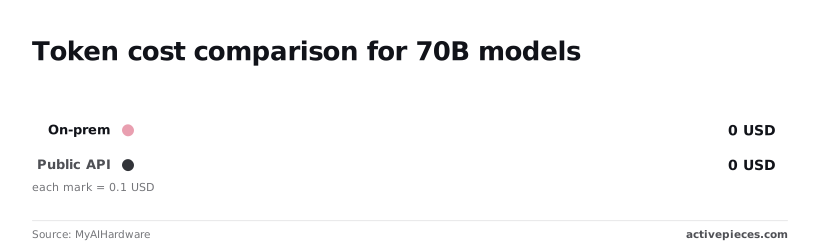 Similarly, the on-premise output cost of $0.0005 means a company saves $0.0025 on every thousand tokens compared to the $0.003 public rate. ## Comparing the leading private LLM providers Choosing a private LLM provider requires balancing the immediate availability of frontier models against the long-term autonomy of managing your own weights and infrastructure. ### Hyperscale private instances: Azure and AWS Managed environments where data doesn't leave the platform’s boundary are offered by cloud providers like Microsoft Azure and Amazon Web Services (AWS). Azure OpenAI Service has instances of GPT-6 Astra with enterprise-grade encryption. 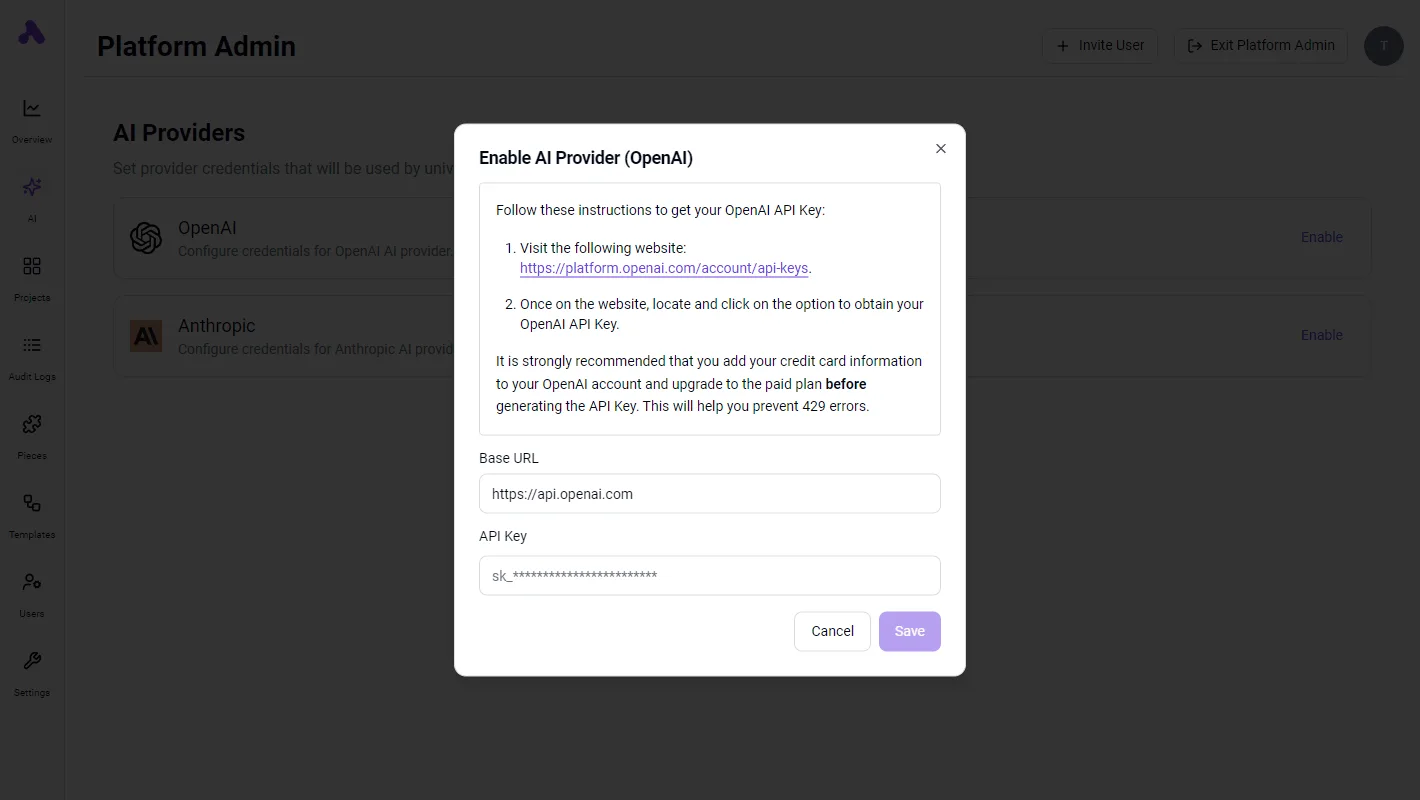 Amazon Bedrock allows users to deploy Anthropic’s Claude Fable 5.1 or Claude Sonnet 5.5 through an API that keeps data within the AWS network. | Feature | Azure OpenAI (GPT-6 Astra) | AWS Bedrock (Claude Fable 5.1) | Self-hosted (Llama 3) | | :--- | :--- | :--- | :--- | | Data Retention | 0 days (with exemption) | 0 days | None | | Admin Control | Configuration only | Model-level settings | Full kernel & weight access | | Infrastructure | Microsoft Managed | Amazon Managed | User-owned (Docker/K8s) | _Prices and plan limits checked against [docs.claude.com](https://docs.claude.com/en/docs/about-claude/models/overview) and [openai.com](https://openai.com/chatgpt/pricing) and [gemini.google](https://gemini.google/subscriptions) on October 12, 2026._ ### Deploying open-weights models like Llama and Mistral Governance reaches its highest level when you deploy open-weights models like Llama 3 or Mistral Large 4 on your own hardware because it removes the vendor as a middleman. ### Proprietary local AI providers DeepL and Aleph Alpha Organizations that need proprietary performance without the exposure of American hyperscale clouds can look to specialized providers. DeepL has translation and linguistic models that can be integrated into local workflows so that internal communications remain within jurisdictional boundaries for legal compliance. Aleph Alpha focuses on industrial and governmental use cases, offering models designed for transparency and traceability. ### Managed automation with Zapier For organizations that prioritize speed of deployment over total infrastructure control, Zapier offers a managed alternative for AI orchestration. It provides a massive library of pre-built connectors that allow teams to link public AI models to their existing software stack in minutes without writing code. This approach is ideal for rapid prototyping where the immediate business value of the automation outweighs the need for data sovereignty. By handling the server maintenance and security updates on their own cloud, Zapier removes the operational burden from the customer's internal IT team. However, this convenience comes with a trade-off in long-term governance and cost. Because Zapier functions as a closed platform, users are locked into their pricing tiers and cannot easily move their workflows to a private environment if security requirements change. ## Connecting private models to business workflows with Activepieces Activepieces reaches every model provider a company uses among its 739+ integrations, and pushes the combined spend into the sheet finance already reads. Every credential the platform touches (from API keys to the connection secrets for your internal apps) can be routed to your own secret manager instead of a vendor database. In the self-hosted edition, you can configure an external secret manager and inspect the database yourself to verify that no vendor, including us, holds the credentials your business runs on. ### Self-hosting the automation layer on Docker Every execution of a workflow remains behind the corporate firewall when you deploy Activepieces on local infrastructure via Docker or Kubernetes. The MIT-licensed core allows for unlimited runs on a single virtual machine. This isolation is demonstrated in practice by the screenshot of a successful flow run. It shows an "Instance Stopped" trigger successfully firing a "Revoke Token" action, which sends a POST request to a specific endpoint. Authorization headers and JSON payloads visible in the Run Details panel never leave the local network because this entire sequence is managed by a self-hosted instance. ### Securing API secrets in a private vault Activepieces allows every connection secret to be routed to your own external secret manager rather than the platform's database. This ensures that sensitive keys remain under your exclusive control, a configuration that can be verified by inspecting the database of a self-hosted instance to confirm no credentials are stored locally. ### RBAC and audit logs for AI governance The enterprise tier provides Role-Based Access Control (RBAC) and SSO/SCIM integration. IT managers can use this to restrict access to specific departments. Comprehensive audit logs track every model call and configuration change.  MoneyGram and Moneypenny run Activepieces in production to maintain this level of governance across their automated environments. These enterprise features, including custom RBAC and audit logs, ensure that even complex AI agent deployments remain compliant with internal security architectures. By allowing organizations to manage their own credentials through external secret managers and run unlimited workflows behind a private firewall, this platform ensures that AI strategy remains an internal decision rather than a vendor-controlled one. Activepieces is the better choice for security-conscious enterprises that require full ownership of their API spend and data sovereignty. Choosing this self-hosted approach prevents the hidden costs and strategic limitations associated with resold model access. 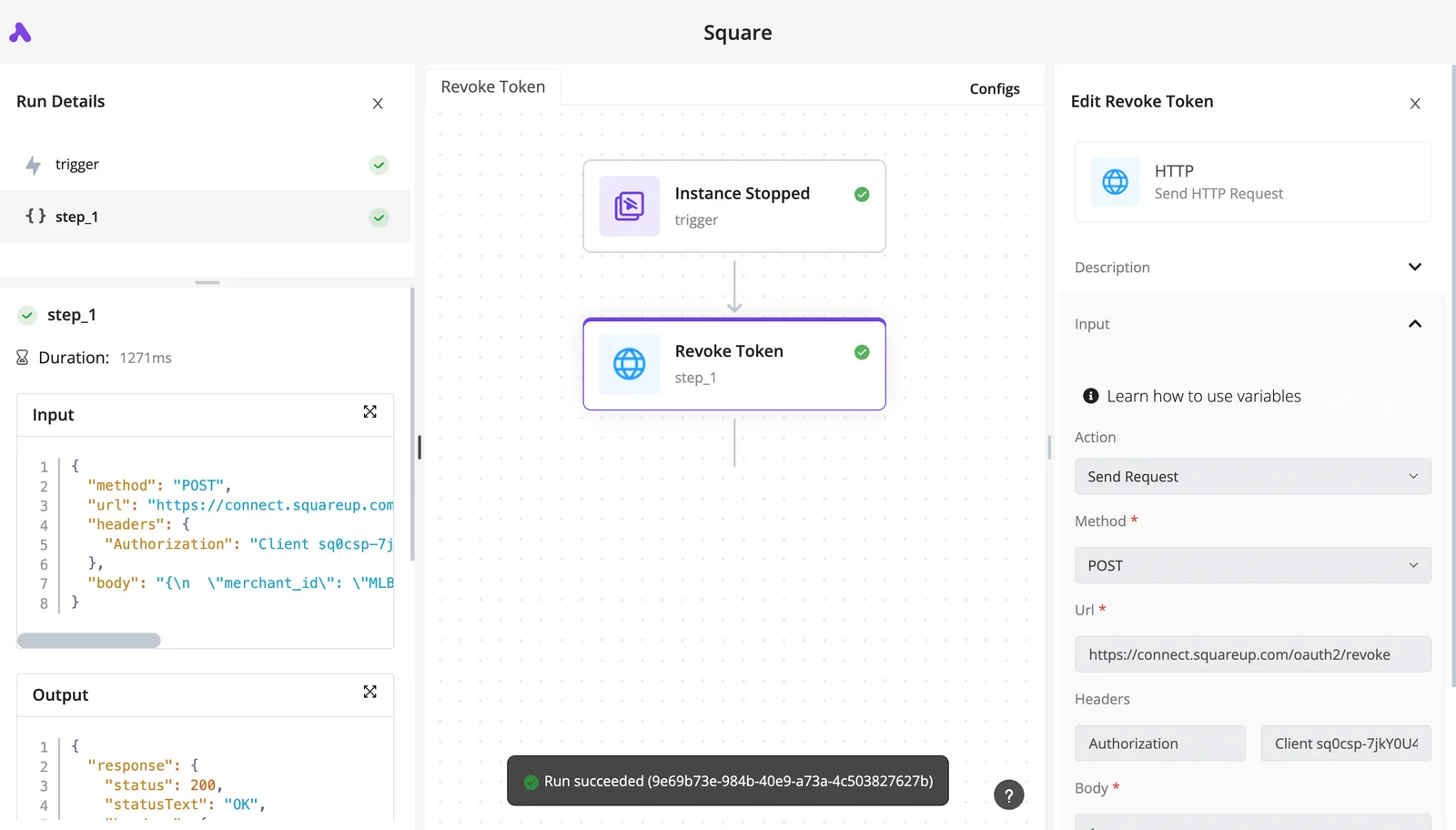 ## Common pitfalls in private LLM implementation 1. The first request must wait for the model weights to load into VRAM when a private model like Claude Haiku 5.5 is deployed on internal clusters that scale to zero to save power. 2. A secure deployment is only as private as its weakest link. If a team uses a high-reasoning model like Claude Fable 5.1 behind a firewall but connects it to a third-party vector database hosted on a public cloud, they're leaking document metadata. 3. Dedicated engineering time is required for private deployments for versioning, health monitoring, and prompt evaluation. A16Z finds these ongoing maintenance efforts typically consume between **3% and 8% of the initial build cost**. ## Frequently asked questions about private LLMs? ### Can I train a private LLM on my own data? Because the computational cost is prohibitive for most non-research organizations, training a model from scratch is rarely the starting point for private deployments. Instead, businesses typically use Retrieval-Augmented Generation (RAG) to connect a model like Mistral Large 4 to their internal documentation. Specific company policies can be cited by the AI without the permanent weight of a full training cycle. For deeper behavioral changes, fine-tuning an open-weight model on a curated dataset can adjust its tone or industry-specific vocabulary. This requires a frozen snapshot of data that may become outdated as soon as the business pivots.  ### What hardware is required for a 70B parameter model? Multiple high-memory enterprise GPUs are required to run a model of this scale, such as a large-parameter variant of the Llama family, to hold the model weights in active VRAM. If the memory capacity is insufficient, the system will offload tasks to the CPU, which slows the generation speed to a crawl that's unusable for real-time chat. Low-latency responses for multiple concurrent users are ensured by a dedicated GPU cluster. High-speed NVMe storage reduces the time it takes to load the model into memory after a system reboot. Sufficient system RAM prevents the host OS from crashing during heavy context processing. ### Is a VPC-hosted model truly private? Network isolation is provided by a Virtual Private Cloud (VPC), but the model remains subject to the underlying infrastructure provider’s terms of service and physical access. While your traffic is shielded from the public internet, using a managed service like Google Antigravity Agent within a VPC still means your data travels through the provider's backplane. This may not satisfy strict air-gap requirements for highly regulated industries. ### How do private LLMs handle SOC2 compliance? By keeping the data lifecycle within the boundaries of your existing, audited infrastructure, private LLMs simplify SOC2 audits. You manage permissions through your own Identity Provider, so no third-party vendor has a backdoor to your sensitive prompts. Every interaction is recorded in your local database, providing a complete trail for auditors without requesting logs from an external API provider. You set the deletion schedules on your own disks, ensuring that no training data persists longer than your internal privacy policy allows. ## Related reading - [A Postmortem on Data Leaks and API Failures](https://www.activepieces.com/blog/meta-ai-third-party-app-connections-for-businesses) - [A Postmortem on Data Leaks and Secure Automation](https://www.activepieces.com/blog/a-postmortem-on-data-leaks-and-secure-automation) - [Self-Host Mistral Small for Private Business Automation](https://www.activepieces.com/blog/self-host-mistral-small-guide-for-private-automation-2026) ## References - [Intuition Labs](https://intuitionlabs.ai/articles/h100-rental-prices-cloud-comparison) - [MyAIHardware](https://www.myaihardware.com/deep-dive/economics-of-running-70b-405b-671b-on-prem)Reselling you a model is deciding your AI strategy for you, often at a significant markup.