Enterprise deals require a formal support contract where a vendor is contractually obligated to provide a fix within a specific window. This guarantee prevents a technical glitch from turning into a permanent loss of stakeholder trust. ### The risk of amateur-led technical advice Unverified advice from public contributors frequently ignores the complex governance layers that govern enterprise environments, such as SOC2 compliance or data residency laws. Implementing a "quick fix" suggested by a community member might solve a functional bug but simultaneously open a cross-site scripting vulnerability. ## Public transparency exposes the limits of automation platforms Community signals provide a more accurate diagnostic of platform stability than Service Level Agreements because public issue trackers reveal the specific edge cases where vendor support typically stalls. ### Auditing build history through public repositories A vendor’s integration library often includes "ghost" connectors that exist as marketing placeholders. By auditing the GitHub repository, which is a hosting service for software development, a manager can see if the developer has not updated a connector for a specialized tool like the NetSuite ERP in six months. While most roadmaps are static slide decks that require blind belief, an open-source repository allows an architect to audit the actual build history through release tags, merged pull requests, and the live status of every open issue. 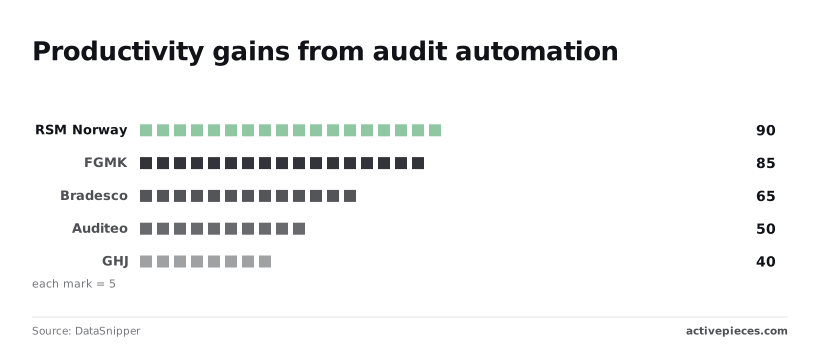 This level of transparency ensures that a team buys into a verified track record of ships rather than a vendor's future promises. ### Finding recurring software bugs docs won't mention Public forums expose the **persistent technical debt** that sales teams rebrand as "upcoming features." ### Automation ROI for professional services firms The transparency of a platform’s architecture directly impacts the bottom line for professional service firms and financial institutions. These organizations use open-source automation to bypass the hidden bugs found in closed-source alternatives, allowing them to scale audit and compliance workflows without increasing technical debt.A community-led support model offers no legal recourse or guaranteed response times.
**90% productivity gains were reported by RSM Norway, which allows their team to reallocate hundreds of hours from manual verification to high-level risk analysis.** FGMK achieved an 85% gain, meaning their auditors can finalize engagements days ahead of traditional deadlines. These accounting and advisory firms utilize the platform to automate the ingestion of client data, a process that typically breaks in proprietary tools due to unaddressed edge cases in API handling. Bradesco saw a 65% increase, which reduces the operational cost of their internal compliance checks, allowing the firm to reallocate significant resources toward strategic growth initiatives, meaning the bank can now prioritize long-term expansion over routine administrative overhead. Auditeo and Maner Costerisan both hit 50%, effectively doubling their output per staff member. These gains are only possible because the community-vetted connectors they use for financial reporting are more stable than the "black box" integrations sold by legacy vendors. GHJ realized a 40% gain, which is the minimum threshold required to justify the annual licensing seat cost. By auditing the source code of the automation tool, these firms ensure that the productivity statistics are not inflated by manual workarounds required to fix recurring software bugs. ### How steep is the learning curve for non-developers The difficulty of implementing these tools is best measured by the volume of basic syntax questions in public Slack channels. When a firm moves from a manual 5-8% response rate to an automated 22-34%, it can collect necessary evidence four times faster without increasing headcount, effectively scaling their data gathering capacity without the burden of additional payroll. ## Community health predicts long-term automation ROI A robust user ecosystem lowers the total cost of ownership by providing **ready-made logic** and troubleshooting that your internal team doesn't have to bill for. ### The value of user-contributed workflow templates Pre-built templates act as a hedge against implementation delays by allowing managers to import proven logic rather than building from a blank canvas. While a [CostBench](https://costbench.com/software/ai-automation/activepieces/discounts/) analysis shows entry-level Pro tiers for popular workflow tools start at 19.99 USD, that price only covers the infrastructure. The real savings come from the thousands of community-verified templates that reduce the time-to-value from weeks to hours.  ### Reducing developer headcount through peer-to-peer support Peer-to-peer support forums lower the burden on internal senior engineers by shifting basic debugging to the public domain. According to CostBench, the automation platform Make prices its Pro tier at 16 USD. The developer-centric tool Pipedream sits at 49 USD, which represents a significant monthly overhead if your team cannot rely on a community to solve integration quirks. 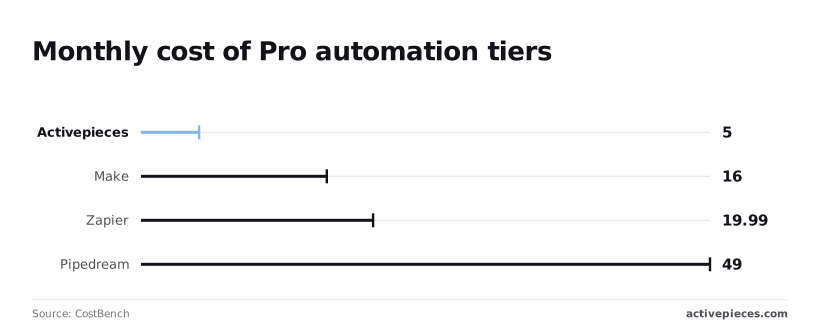 ### How active communities influence the product roadmap Public discourse dictates the development trajectory. This pressure forces the tool to evolve to meet market demands rather than vendor whims. ## Leveraging Activepieces for transparent automation scaling Activepieces provides an MIT-licensed AI automation platform that exposes its entire codebase and development cycle to public scrutiny. This transparency allows architects to verify how the system handles 732+ integrations before committing to a deployment. ### Auditing the public roadmap and GitHub activity Because the roadmap is public, stakeholders can see exactly which features are currently being developed. The visibility of the Activepieces repository on the GitHub version control platform allows an architect to verify the velocity of bug fixes. Reviewing the commit history reveals how frequently the core engine is updated, meaning a team can predict whether the tool will keep pace with security patches. ### Using the Discord community for immediate technical validation Engaging with the Activepieces community on the Discord chat server is a way to get direct access to the engineers building the tool. MoneyGram, Moneypenny, Alan and FundingSocieties run Activepieces in production, benefiting from a model where roughly 60% of integrations are community-contributed, ensuring the platform evolves rapidly through the collective expertise of its users, so these companies gain access to a constantly expanding library of tools without needing to build them in-house. This real-time interaction allows a developer to ask about specific edge cases and receive answers from peers who have already implemented similar patterns. ### Building custom integrations in open-source automation tools The open-source nature of the platform allows teams to inspect the logic of every integration. These modular connectors are used to build automations. The flow builder illustrates this modularity by allowing users to define specific triggers, such as the "new flavor created" trigger from a custom ice-cream integration. This confirms that the system can ingest niche data points without requiring a proprietary middleware update. 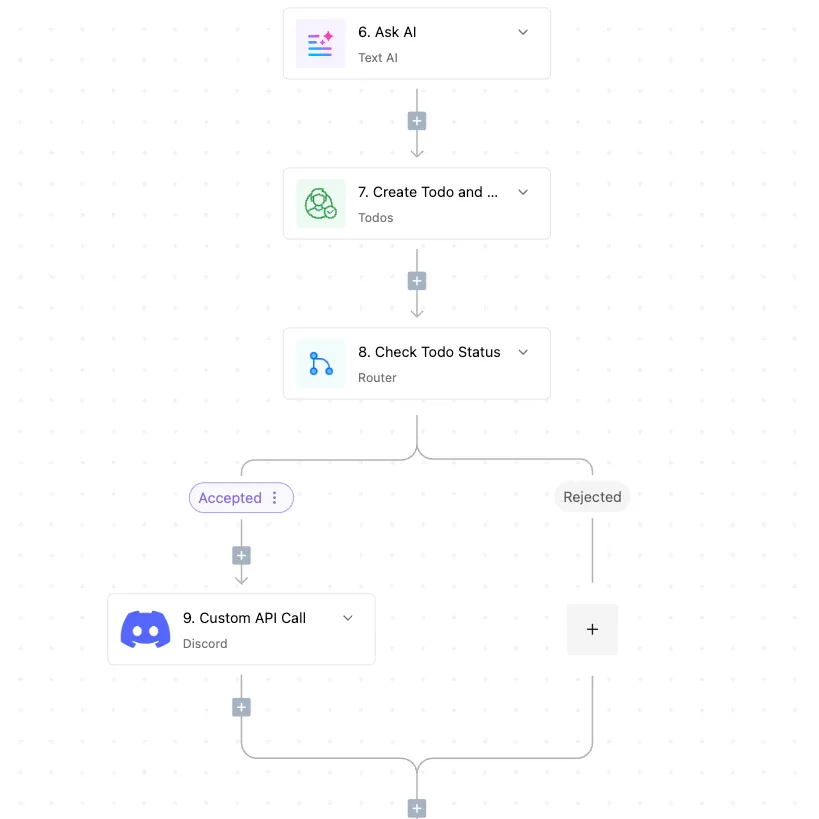 ## The Monday morning community audit checklist Validation through community sentiment is a high-fidelity signal of how a tool behaves under the stress of production environments. ### Search the 'bugs' channel for your specific tech stack Searching the official Discord or discourse forum for your primary database or language reveals the persistent edge cases that will inevitably stall your implementation. ### Check the timestamp on the last five community-made connectors Evaluating the recency of user-contributed modules indicates whether the ecosystem is expanding or stagnating. 1. Search the community forum or the GitHub repository, which is the primary hosting site for the project's source code, for your "must-have" integration to see if it exists outside the official marketing materials. 2. Check the timestamp of the last five bug reports to determine if the development team is actively triaging issues or if the project has entered a maintenance-only phase. 3. Verify if staff or experienced power users answer technical questions, which dictates whether your internal support tickets will be resolved in hours or languish for weeks. ### Ask one specific technical question to gauge response time Posting a query regarding a complex requirement tests the depth of the available support network before you commit capital. An example query is "How do I implement mutual TLS for this specific API node?". If the response comes from a staff member with a code snippet, you have verified a functional support path. ## Frequently asked questions about automation communities ### Where do I find the 'real' community for a specific tool? The most reliable technical insights live in the issue trackers of version control platforms like GitHub or the official support channels of real-time communication tools like Discord. ### Is it safe to share my workflow logic in a public forum? Public forums are only safe for discussing generic architectural patterns, as sharing specific JSON payloads or script snippets can inadvertently expose internal business logic or API endpoint structures. To maintain security while seeking assistance: 1. Scrub all unique identifiers and proprietary URLs from the code. 2. Replace real data schemas with generic placeholders. 3. Use abstract examples to describe the logic rather than pasting the raw configuration file. ### What if the tool I want has no public community? A tool without a public community requires a deeper audit of the vendor’s internal documentation and support SLAs. You will be entirely dependent on their private engineering team for every edge case. ### How do I distinguish between a fan club and a helpful community? A helpful community prioritizes technical documentation and error resolution over brand advocacy and speculative feature praise. You can identify a functional community by looking for these specific traits. Detailed threads documenting why a specific update broke existing integrations are common. Contributed code snippets solve limitations not addressed in the official manual. Active participation from the vendor’s own engineers in technical troubleshooting rather than just sales-led moderation is also present. ## Related reading - [How to Automate SEO Site Audit With Activepieces](https://www.activepieces.com/blog/how-to-automate-seo-site-audit-with-activepieces) ## References - [CostBench](https://costbench.com/software/ai-automation/activepieces/discounts/) - [ContextWindows](https://www.contextwindows.ai/case-study/fgmk-audit-documentation) - [DataSnipper](https://www.datasnipper.com/resources/rsm-norway)Public forums expose the persistent technical debt that sales teams rebrand as "upcoming features.