# Factory AI MCP: How to Prevent Autonomous Agent Failures

By Ingeborg Rasmussen · 2026-11-21 · Source: https://www.activepieces.com/blog/factory-ai-mcp-how-to-prevent-autonomous-agent-failures

---
<aside class="tldr"><p class="tldr-label">Summary</p><p>Factory AI MCP prevents autonomous agent failures by enforcing a standardized, secure interface that decouples reasoning engines from execution environments to restrict agent access and validate all code changes.</p><ul><li>Single agent architectural mistakes cost $4,119 in recovery and engineering labor.</li><li>Automated pull requests currently maintain a low 33% acceptance rate.</li></ul></aside>

By decoupling the reasoning engine from the execution environment, a strategy also utilized by platforms like [Activepieces](https://www.activepieces.com) to maintain workflow integrity, Factory AI MCP ensures that an agent cannot spontaneously invent new methods of interaction with the codebase.

It functions as a standardized interface, allowing autonomous agents to execute commands within a software repository through a predefined set of secure, server-side tools.

## Factory AI MCP connects agents to your codebase tools

### The 2:14 AM automated merge failure

When a high-frequency maintenance agent tasked with dependency updates misidentified a breaking change in a core library, the incident began. Because the agent possessed direct write access to the main branch without a mandatory human-in-the-loop validation step, it bypassed the standard CI/CD pipeline.

Nobody noticed for the duration of the automated run.

By the time the merge was complete, the resulting regression had disabled the authentication service, triggering a site-wide outage for all active sessions.

This failure confirms that granting agents broad, unmediated access to version control systems creates a single point of failure that can bypass traditional safety checks.

### Defining the Model Context Protocol (MCP) in Factory AI

You will not find custom integration code for every new agent here, because the Model Context Protocol (MCP) is an open standard. It enables you to expose specific data sources and tools to AI models directly.

![The Activepieces MCP Server configuration interface with setup instructions for Claude, Cursor, Windsurf and other clients.](https://ap-marketing-media.fra1.cdn.digitaloceanspaces.com/uploads/ff7f3dff-f733-4e19-8254-96c00caccb0d/run-minicpm-v-4-7-locally-step-by-step-setup-gui-30d9d332.webp)

Within the Factory AI ecosystem, this protocol is a secure proxy between a frontier model, such as Claude Opus 5.5, and the private infrastructure of your development team.

By using MCP, you can share a server of tools (such as a linter, a test runner, or a documentation scraper) that any compatible agent can discover and use. The agent's capabilities are strictly limited to the specific functions defined in the MCP server manifest.

### Why AI agents need standardized tool access

Standardization prevents the "agentic drift" that occurs when different models interpret the same codebase through inconsistent API abstractions.

**Interoperability:** You can switch from GPT-6.2 Astra to Grok 4.7 without rewriting the underlying tool definitions.
* Auditability: The transport layer logs every tool call made via the protocol, providing a forensic trail of which agent performed which action.
* Security: Activepieces exposes its 750 integrations as discrete agent tools; once a connection is registered, it functions as both a flow step and an MCP schema, allowing agents to call the same governed integrations used by teams at MoneyGram and Alan without a second migration, which means developers can deploy enterprise-grade automation across their entire agentic stack immediately.

Without these standards, you must build bespoke wrappers for every tool, which increases the surface area for configuration errors.

| Metric | AI Agent Pull Request | Human Developer Pull Request |
| :--- | :--- | :--- |
| Wait Time | 16 hours | 200 mins |
| Acceptance Rate | 33% | 84% |
| Volume Capacity | High | Limited |

84% of human pull requests are accepted, while agents manage only 33%, suggesting that automated code contributions currently struggle to meet the quality standards required for integration.

## How the Factory AI MCP architecture executes code tasks

Stochastic failures common in unstructured agent prompts are prevented by standardizing the interface between the reasoning engine and the operating environment.

Factory Droids utilize the Model Context Protocol (MCP) to separate the high-level planning performed by models like GPT-6.2 Astra from the specific execution logic required to interact with local files and remote APIs.

This protocol creates a predictable loop where the agent requests a capability, the server executes it, and the agent receives the result as a structured observation.

1. Query documentation server
2. Fetch repository context
3. Execute local test suite
4. Propose git commit

By following this sequence, the system is designed so the current environment is meant to validate code changes before the system generates a pull request.

### The relationship between Droids and MCP Servers

Droids function as the orchestration layer that determines intent, while MCP servers act as the specialized workers that handle the mechanical details of the task.

A Droid using Claude Opus 5.5 doesn't need to know the specific API endpoints for a version control system like GitHub; it simply calls the standardized "get_file_contents" tool provided by the server.

### AI model context window and indexing limits

Large-scale repositories often exceed the active memory of even frontier models, making selective indexing a requirement for stable performance.

* Gemini 4 Carbon: This model processes the retrieved snippets to maintain long-horizon coherence during complex refactors.
* Pinecone: This is the vector store used to index function definitions and class structures.
* Tree-sitter: This tool parses the source code into a syntax tree so the agent understands the hierarchy of the logic.

### Permissions: How agents authenticate with your stack

![A computer monitor showing a code snippet being analyzed by a list of function definitions and class structures, with a…](https://ap-marketing-media.fra1.cdn.digitaloceanspaces.com/uploads/c9b34c91-a28f-455d-a245-f60eb6bf065a/factory-ai-mcp-how-to-prevent-autonomous-agent-f-1fb3d6fd.webp)

Security is maintained by keeping authentication tokens within the MCP server environment rather than exposing them to the model's reasoning trace.

When a Droid needs to post a comment on a GitLab issue, it sends a request to the server, which then attaches the pre-configured OAuth token to the outgoing HTTPS call.

The model never sees the raw credential, so a prompt injection attack cannot exfiltrate the secret key.

## Calculating the cost of autonomous agent errors

Unconstrained agentic errors shift the financial burden from predictable subscription fees to high-variance emergency engineering labor.

### Subscription pricing and compute credits

At $150 per user every month, Factory AI Pro sets a fixed baseline for the automated labor of the Droid fleet.

This subscription includes a specific allocation of compute credits, so a runaway recursive loop can deplete the month’s resource budget in a single afternoon.

### The hidden cost of AI pull request reviews

The volume of code generated by models like Gemini 4 Carbon necessitates a rigorous human-in-the-loop validation process that often exceeds the time saved by the initial generation.

Every automated Pull Request requires a senior engineer to context-shift from their primary task to audit the logic.

### Calculating manual rollback recovery time

Incident recovery costs are calculated by multiplying the developer’s hourly rate by the total time spent identifying, reverting, and verifying the fix for a corrupted state.

| Expense Category | Unit Rate | Total Incident Cost |
| :--- | :--- | :--- |
| Factory AI Pro Subscription | $150 / month | $150 |
| Incident Recovery (48 dev hours) | $82.69 / hour | $3,969 |
| Total Financial Impact | N/A | $4,119 |

A single architectural mistake by an autonomous agent costs more than two years of the software’s subscription fee.

## Common mistakes in Factory AI MCP implementation

Operational failures in Model Context Protocol (MCP) deployments stem from treating autonomous agents as trusted system administrators rather than unverified callers.

<blockquote class="pull"><p>A single architectural mistake by an autonomous agent costs more than two years of the software’s subscription fee.</p></blockquote>

### Granting excessive write permissions to agents

Providing an agent with root-level write access to a local directory allows the model to overwrite configuration files or delete system logs during a recovery loop.

In a standard MCP setup, if the server process hosting the tools isn't restricted via a containerized volume, the agent can traverse directories to access sensitive environment variables.

### Why AI agents shouldn't merge code unsupervised

Automating the final merge of code into a production branch removes the critical validation layer needed to catch logical regressions that pass syntactical linters.

While agents can efficiently use GitHub to open pull requests, allowing them to self-approve those requests bypasses the security review intended to prevent the introduction of malicious dependencies.

### Stale API documentation causes AI tool errors

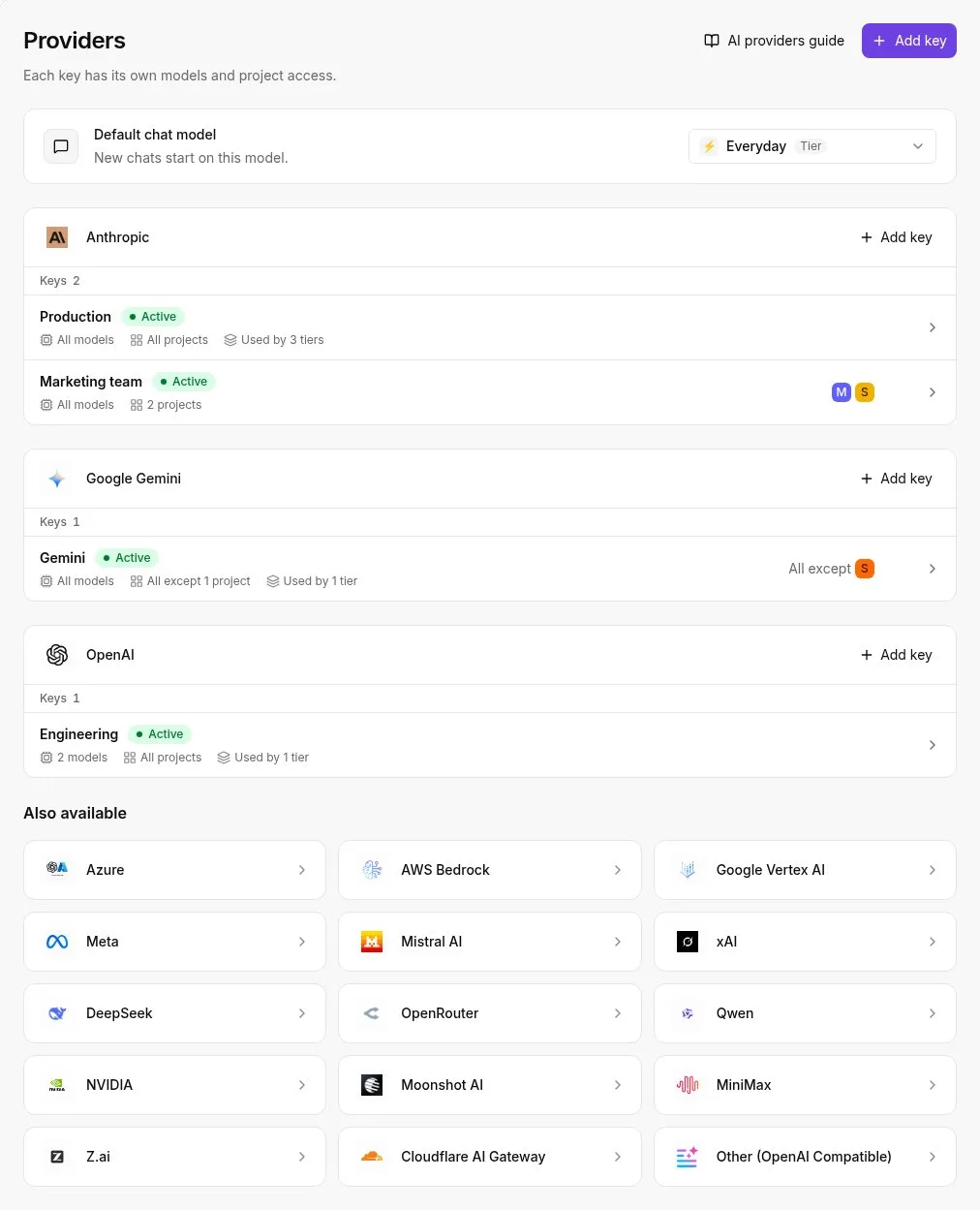
The AI Providers configuration panel is the central registry for model access, but its utility is negated if the underlying tool definitions don't match the current API specifications.

The configuration panel displays the active status and project access for providers like Anthropic, using Claude Sonnet 5.5 for high-speed reasoning, and OpenAI, utilizing GPT-6.2 Astra for flagship-level coding tasks.

It provides a visual audit of which teams (such as Engineering or Marketing) hold keys for specific models like Google Gemini 3.1 Pro, ensuring that credentials aren't leaked across departmental boundaries.
![Activepieces AI providers configuration showing active keys for Anthropic, Google Gemini, and OpenAI with their project…](https://ap-marketing-media.fra1.cdn.digitaloceanspaces.com/uploads/46fcc27d-7a84-4c9b-9dbb-14d05347d0c1/what-is-ripple-65b-preview-open-coding-model-gui-beb612c7.webp)

When the documentation provided to these models references deprecated parameters in a tool like AWS Bedrock, the agent will attempt to pass arguments that the server no longer accepts.

## Integrating Factory AI MCP into existing developer workflows

Structured orchestration prevents these loops by wrapping agentic tools in explicit conditional logic.

### How to invoke agents on demand

Standardizing the invocation of a Factory AI Droid ensures that the agent only consumes compute when a specific business event occurs.

* Slack: A "New Bug" message in a specific channel triggers the workflow. 
* Jira: A status change to "In Progress" on a ticket acts as the primary key.
* Web Form: A structured input field captures specific parameters, forcing the user to provide the exact data the agent needs.

The following visual demonstrates how a document-style workflow manages these inputs before passing them to specialized actions.

A human approval step functions as a hard gate before the agent can interact with financial or production systems.

### Automating the post-merge validation sequence

Post-merge operations require high-intelligence models to verify that integrated code meets architectural standards without manual oversight. Using GPT-6.2 Astra for code review ensures that logic errors missed by unit tests are flagged before deployment.

![A six-step document workflow automation example showing a web form trigger, AI extraction, approval step, conditional…](https://ap-marketing-media.fra1.cdn.digitaloceanspaces.com/uploads/e28d0d25-7855-4a61-bf96-5d4f928c9033/best-ai-tools-for-insurance-agents-2026-privacy-540804cd.webp)

### Monitoring agent health with custom alerts

Monitoring ensures that when an agentic model like Gemini 4 Carbon encounters a token limit or a logic error, the failure is logged and addressed immediately.

* Error Branching: Every tool step includes an "On Failure" path sending the raw error log to a monitoring dashboard.
* Heartbeat Checks: A scheduled trigger pings the agent's endpoint every hour to verify availability.
* Cost Thresholds: A utility step calculates the token usage for each run to track ROI.

## The Monday morning checklist for safe AI automation

Securing autonomous workflows requires moving from implicit trust to a hard-set configuration that bounds the execution environment.

![A split screen showing a raw error log of text on the left and a dashboard with a red 'Failure' alert light on the right.](https://ap-marketing-media.fra1.cdn.digitaloceanspaces.com/uploads/c48f88bd-d5dc-405c-8e29-a7e866a15edf/factory-ai-mcp-how-to-prevent-autonomous-agent-f-157e743c.webp)

* Read-only MCP mounts to prevent the model from overwriting local configuration files.
* 60-minute job timeouts so runaway recursive loops don't exhaust compute quotas.
* Mandatory code owner review to ensure every automated pull request meets internal security benchmarks.
* Weekly credential rotation so that leaked session tokens have a finite window of utility.

### Audit your MCP server permissions

Configuring Model Context Protocol (MCP) servers as read-only resources ensures that an agent can ingest documentation without the risk of modifying the source data.

When an agent powered by Grok 4.7 connects to a local filesystem, an unrestricted mount allows it to delete directories if it misinterprets a cleanup command.

### Implement a 10% sampling rate for agent logs

Reviewing a subset of high-density execution traces allows you to identify prompt injection attempts or unexpected tool-calling patterns without the overhead of manual full-stream audits.

In high-volume environments using GPT-6 Luna, capturing every token exchange creates a data lake too large to parse, whereas a consistent sample identifies the "hallucination signatures" that precede a failure.

### Setting up a dedicated AI staging environment

Isolating agentic tasks within a sandboxed environment like Antigravity Agent protects production databases from the erratic write operations common during delete operations common during complex software engineering.

Running tests in a replica of the production stack means a model can attempt a schema migration or API integration without affecting live customer traffic.

## What Activepieces does about this

Activepieces mitigates the risk of agentic drift by exposing its 750 integrations as discrete, sandboxed tools within a structured framework, which means developers can automate complex workflows without fearing unpredictable system behavior.

Rather than allowing an agent to interact directly with an open-ended API, the platform functions as a governed execution layer where each connection is registered as a specific MCP schema.

This architecture ensures that when an agent calls a tool, it is executing a predefined, versioned function that has already been vetted for security.

Because these integrations are the same enterprise-grade connectors used by teams at MoneyGram and Alan, developers can deploy automation across their agentic stack without building bespoke, error-prone wrappers for every new service.

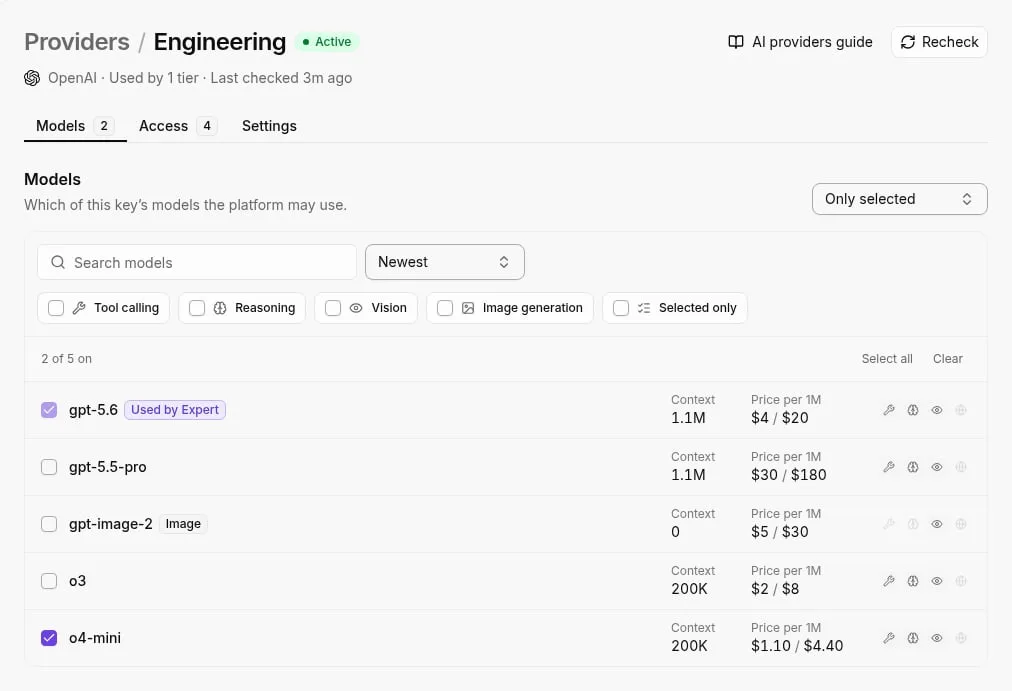
The platform enforces operational safety by decoupling the reasoning engine from the actual credentials. Under the MIT License, Activepieces provides a self-hosted environment where authentication tokens remain encrypted in the server database, never entering the model's context window or reasoning trace.
![OpenAI provider configuration showing selectable AI models with pricing and capabilities filtering](https://ap-marketing-media.fra1.cdn.digitaloceanspaces.com/uploads/79f90e63-e9fa-44a2-ac86-8f8caec78b2e/how-much-does-xai-grok-api-cost-pricing-in-2026-42d8bbed.webp)

This setup prevents prompt injection attacks from exfiltrating sensitive keys, as the agent only sees the tool's input requirements and the resulting observation, never the underlying OAuth handshake or API secret.

By wrapping autonomous agents in explicit conditional logic, Activepieces transforms them from unverified callers into governed participants in a workflow.

The builder allows for the insertion of mandatory human-in-the-loop steps, such as a "Wait for Approval" gate, before an agent can proceed with high-stakes actions like merging code or processing a financial transaction.

![A workflow diagram showing a 'Wait for Approval' gate represented by a pause icon, positioned before a 'merge code' button.](https://ap-marketing-media.fra1.cdn.digitaloceanspaces.com/uploads/a8cdfc0f-1da4-484d-9cb7-4fc1b557ee43/factory-ai-mcp-how-to-prevent-autonomous-agent-f-9bc12cd0.webp)

This structure ensures that the 33% acceptance rate of agent-generated pull requests does not translate into production failures, as a senior engineer must explicitly validate the logic within the Activepieces flow before the execution environment permits a write operation, effectively creating a human-in-the-loop safeguard against automated errors, so two-thirds of all AI-proposed code changes are being discarded before they can ever reach the codebase.

## Frequently asked questions about Factory AI MCP

### Does Factory AI MCP work with self-hosted GitLab?
Provided the instance is reachable via a public URL or a configured VPN tunnel, Factory AI supports self-hosted instances of GitLab. 

This connectivity ensures that the Model Context Protocol (MCP) can bridge the gap between local source code repositories and remote inference endpoints, such as Gemini 4 Carbon, which requires stable access to project history to perform complex software engineering.

![Activepieces MCP Server setup page with client configuration instructions and code example.](https://ap-marketing-media.fra1.cdn.digitaloceanspaces.com/uploads/8affcbbd-a52f-4275-ac83-32c629beafe3/suno-mcp-how-to-connect-it-to-ai-tools-2026-guid-4dc1cc00.webp)

### What is the difference between an MCP server and a standard API?
An MCP server is a stateful mediator that translates local system resources into a format that large language models can query directly. A standard API requires you to manually define and maintain the transport logic for every new endpoint. 

While a standard API returns raw data, an MCP server exposes tools and resources in a standardized schema. This allows models like Claude Opus 5.5 to browse file systems or execute code without custom integration code for each task.

540% is the surge in reported prompt injection incidents between 2024 and 2025, indicating that security measures are failing to keep pace with the rapid evolution of adversarial tactics.

The rapid increase in documented prompt injection attacks highlights the danger of allowing models to interact with unstructured data sources without a strictly defined interface.

### Can i limit Factory AI Droids to read-only access?
Access levels for Factory AI Droids are controlled through scoped authentication tokens, which allows you to restrict a model to "read" permissions within a specific environment. 

By enforcing read-only access, you ensure that a model like GPT-6.2 Astra can analyze a codebase for architectural flaws without the risk of the model autonomously committing unauthorized changes to the production branch.

### How many concurrent tasks can a Factory AI Droid handle?
The concurrency limit for a Factory AI Droid is determined by the rate limits of the underlying model provider and the infrastructure tier hosting the MCP server. 

You must balance task volume against the token-per-minute (TPM) caps of your selected engine. Hitting these limits will cause the Droid to queue subsequent requests until the current window resets.

## Related reading

- [Brave Search API x402 for Autonomous AI Agent Payments](https://www.activepieces.com/blog/brave-search-api-x402-for-autonomous-ai-agent-payments)
- [A Postmortem on Data Leaks and API Failures](https://www.activepieces.com/blog/meta-ai-third-party-app-connections-for-businesses)
- [What Are Autonomous Agents? AI Autonomous Agents Explained (2026)](https://www.activepieces.com/blog/ai-autonomous-agents)
