For you, this delta represents a measurable reduction in execution errors. ### Multi-step workflow extraction Successful extraction of specific entities from a long document is shown in the illustration of a multi-step workflow. It then queries a SQL database to validate those entities and wraps the final result in a valid JSON schema. 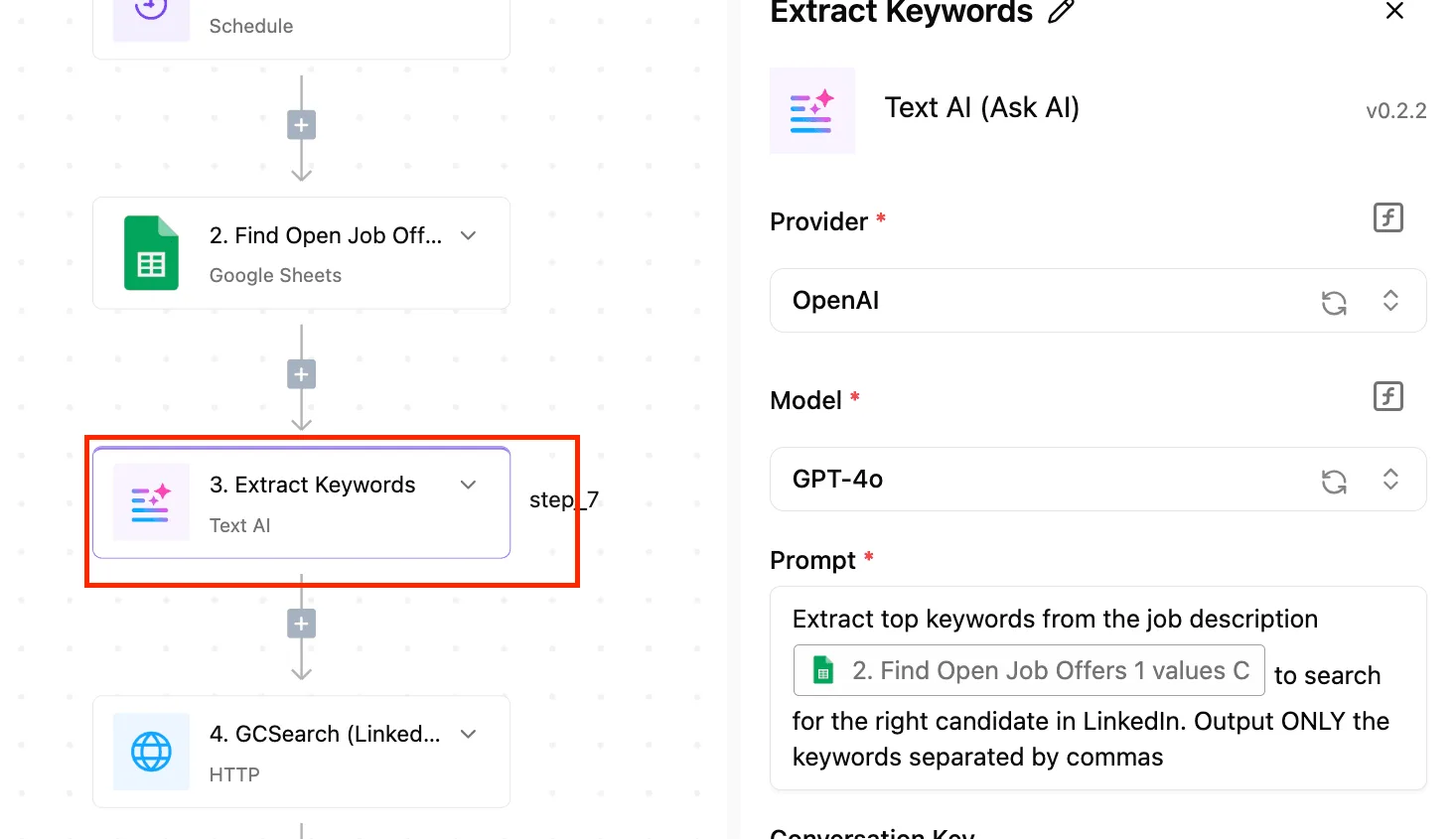 This visualization demonstrates that the model doesn't lose the original "Long Document" context even after external tool execution, preventing the "forgetting" behavior common in smaller models. Because the model anchors its reasoning in the tool's return value, the subsequent JSON output remains syntactically perfect and ready for the next step in the stack. ### GLM-5.3 context window and token limits Ingestion of entire technical repositories or legal archives is possible with GLM-5.3, without the need for aggressive RAG filtering that often strips away necessary nuance. Processing these large volumes at the edge or via dedicated API endpoints is cost-effective. Premium pricing tiers carried by these models can bankrupt a high-volume automation project. By supporting a deep history, the model ensures that an agent can reference earlier decisions in a conversation. The final output remains consistent with the initial user constraints. ## Performance benchmarks from our internal automation tests **GLM-5.3 matches or exceeds the reliability of Western equivalents in high-throughput automation tasks while maintaining lower latency for complex reasoning steps.** Sustaining a consistent context is useless if the model fails to format the final JSON correctly or takes several seconds to decide on a tool call. ### Test methodology: GLM-5.3 vs GPT-6 Luna To verify production readiness, we conducted a head-to-head evaluation between [GLM-5.3](https://openrouter.ai/z-ai/glm-5.3) and GPT-6 Luna using three distinct automation patterns. We used OpenRouter to test both models under identical network conditions. The evaluation focused on three workflows: sorting customer support tickets by sentiment and urgency, extracting structured line items from unstructured PDF-text invoices, and generating concise summaries of multi-participant email threads. Logical accuracy, rather than simple pattern matching, was the focus of this measurement. Each task required the model to reason through the data before providing a structured response. ### GLM-5.3 speed and accuracy benchmark results Without sacrificing the precision required for autonomous workflows, GLM-5.3 has a measurable speed advantage according to internal data. In our testing across support ticket sorting, invoice extraction, and email summarization, GLM-5.3 achieved a 100% success rate with a **0.6s median latency**, ensuring that automated tasks are both perfectly accurate and nearly instantaneous, which means workflows can scale without sacrificing speed or reliability. GPT-6 Luna reached the same 100% success rate but with a slightly slower 0.7s median latency. You will save a full second of execution time per run in a sequential chain of ten API calls because of this 0.1s difference. For real-time user interfaces or high-frequency data processing, this reduction in overhead directly translates to a more responsive application. ### Cost-per-task comparison for high-volume workflows Activepieces added Z.ai, the maker of the GLM model family, as one of its AI providers, alongside xAI, DeepSeek, Qwen, MiniMax and Moonshot AI. You can reach the model from any MCP client while maintaining your own strategy, as seen in the Bring-Your-Own-Key availability on the pricing page. This ensures that even at high volumes, your automation costs scale at the model provider's direct rates. Lower total cost of ownership will be seen by an enterprise running thousands of invoice extractions per hour. This efficiency ensures that scaling an automation from a pilot program to a global deployment doesn't result in an exponential increase in the monthly API bill. ## Deploying GLM-5.3 within Activepieces workflows Immediate deployment in production workflows is possible because Activepieces added Z.ai, the maker of the GLM model family, as an AI provider. This integration allows you to bridge high-reasoning models with over 200 third-party applications without writing custom middleware. ### Authenticating GLM models via Zhipu AI connector Activepieces, an open-source automation engine with an MIT-licensed core, has a native Z.ai connector that simplifies the authentication process for the GLM model family. By including Z.ai as one of its core AI providers, Activepieces ensures that API keys are managed within a secure, encrypted credential vault rather than being hardcoded into scripts, a capability utilized by companies like MoneyGram and FundingSocieties to maintain production security.  Security teams can rotate keys across hundreds of active automations from a single dashboard thanks to this architecture. A single-step workflow where a "new flavor created" trigger from the Ice-cream integration is selected is illustrated in the screenshot of the Activepieces flow builder. This shows how GLM-5.3 reacts to real-time data events.  Once the connection is validated, the model can be inserted into any logic branch to handle complex classification or decision-making tasks. ### Configuring the GLM-5.3 model endpoint Selecting the specific model identifier within the Z.ai integration is required to configure GLM-5.3 and ensure the workflow utilizes the latest reasoning capabilities. Because Activepieces treats model selection as a dropdown configuration across its **735+ integrations**, switching between model versions doesn't require rewriting the underlying JSON payload or headers. 1. Selecting GLM-5.3 ensures the workflow utilizes the 1M token context window for processing large datasets. 2. The System Message field defines the model's operational constraints, such as limiting output to valid JSON for downstream steps. 3. Adjusting the Temperature Control value dictates the balance between predictable logic and creative synthesis in the automation's output. ## GLM-5.3 cost and speed vs market leaders By offering frontier-level reasoning at a fraction of the overhead required by Western market leaders, GLM-5.3 establishes a competitive price-to-performance ratio. If you're running high-volume autonomous workflows, this model is a strategic hedge against the compounding costs of proprietary API calls from US-based providers. ### Pricing tiers for GLM-5.3 tokens High-throughput automation is favored by the tiered consumption volume on which the model operates. Scaling a workflow doesn't lead to linear cost explosions. By providing a significant discount for batch processing and long-context inputs, the pricing structure allows you to maintain deep-reasoning agents without the financial penalties usually associated with large-scale data ingestion. Unpredictability of "hidden" token costs is eliminated by this transparency in billing, unlike models that require aggressive system prompting to remain stable. ### Latency comparisons with GPT-6 Luna and Claude Sonnet 5.5 GLM-5.3 has a distinct advantage in time-to-first-token for users routed through Asia-Pacific data centers, while flagship models like Claude Sonnet 5.5 and GPT-6 Luna offer exceptional reasoning. This geographic proximity reduces the round-trip latency that often plagues Western models when accessed from Eastern business hubs, resulting in snappier tool-calling and more responsive agentic loops. The model matches the performance of Gemini 3.8 Flash in head-to-head execution speed for standard JSON extraction and API orchestration. Automated sequences complete fast enough to avoid the timeout errors common in complex, multi-step integrations. The result is a more resilient automation pipeline that maintains high velocity without sacrificing the logical rigor needed for enterprise tasks. ## Frequently asked questions about GLM-5.3 Z.ai’s international developer platform provides global access to GLM-5.3. This platform has the necessary infrastructure for you to integrate high-reasoning capabilities without geographic restrictions. This availability ensures that you can deploy the model into production environments regardless of your physical headquarters, avoiding the need for localized server clusters or complex VPN workarounds. ### Is GLM-5.3 available outside of China? Via the Z.ai global API endpoint, GLM-5.3 is available to international developers. This endpoint is a gateway for you if you're outside of mainland China to access the model. This means you can authenticate and receive inference results through standard web protocols. By utilizing global edge nodes, the service reduces the latency typically associated with cross-border data transfers. An application remains responsive even when querying the model from a different continent. ### Does GLM-5.3 support OpenAI-compatible API calls? OpenAI-compatible chat completions format is supported by the model, which allows you to swap GLM-5.3 into existing codebases by changing only the base URL and the API key. This compatibility eliminates the need to rewrite the logic for handling message objects or tool-calling structures. In minutes, a project currently running on GPT-6 Luna can be benchmarked against GLM-5.3. Because the response schema follows the industry standard, existing parsing scripts for JSON outputs will function without modification. ### What are the rate limits for the GLM-5.3 free tier? Constrained by a fixed number of requests per minute and a total daily token ceiling, rate limits on the GLM-5.3 free tier prevent a single trial account from monopolizing shared compute resources, thereby guaranteeing fair access for all users on the platform, so heavy-duty production workloads will require a paid subscription. These restrictions mean you can validate a proof-of-concept or debug a tool-calling sequence, but you can't sustain a high-volume production load without upgrading to a paid plan. At the start of each new day, the limits are reset. A testing cycle that exhausts the quota only pauses development until the next window opens. ## Related reading - [Updating Automation Templates When a Connected App Changes](https://www.activepieces.com/blog/updating-automation-templates-when-a-connected-app-changes) - [How Sales Automation in CRM Changes the Way Your Teams Work](https://www.activepieces.com/blog/sales-automation-in-crm) - [SAP Business One AI Assistant: Edit Automations](https://www.activepieces.com/blog/sap-business-one-ai-assistant-edit-automations) ## References - [WillItRunAI](https://willitrunai.com) - [LLM Stats](https://llm-stats.com/models/compare/glm-5.3-vs-llama-3.1-405b-instruct) - [Activepieces](https://github.com/activepieces/activepieces)A single hallucinated parameter in a database query halts the entire sequence, making reliability in tool calling the primary bottleneck for autonomous agents.