# Gorgias Pricing (2026): Plans, Tickets and Overages
By Petra Vlk · 2026-11-02 · Source: https://www.activepieces.com/blog/gorgias-pricing-2026-plans-tickets-and-overages
---
Gorgias prices its plans by billable tickets per month, so the number on the pricing page is rarely the number on your invoice. Each plan includes a set ticket allowance, and once a busy season pushes you past it, overage charges apply per extra ticket.
Automated replies and some channel interactions can count toward that total as well. Before you pick a tier, pull a few months of support volume, including the spikes around sales and holidays, and compare it with the limits.
Many teams also trim their ticket counts by moving repetitive work like order lookups and tagging into background workflows, whether through built-in rules or a tool such as [Activepieces](https://www.activepieces.com), which can keep a plan from creeping upward.
Then add the cost of extra seats and add-ons to find your real monthly spend.
Gorgias pricing is a subscription model for the Gorgias customer support platform in which cost is set by the number of billable tickets handled each billing cycle, rather than by the number of agents, with each plan including a ticket allowance and charging overage fees beyond it.
TITLE: Gorgias Pricing 2026 Plans, Ticket Limits and Real Costs
TITLE: Gorgias Pricing 2026 Plans, Ticket Limits and Real Costs
According to Kaspian Fuad, [Gorgias](https://www.gorgias.com/blog/pricing-update-2022) charges a monthly fee set by billable ticket volume, not agents.
Starter is $10 for 50 tickets, Basic is $60 for 300, Pro is $360 for 2,000 and Advanced is $900 for 5,000. Headcount never moves your bill; ticket count does.
### The plan table, checked against Gorgias's pricing page
It lists the four plans with a confirmed monthly price and ticket allowance.
| Plan | Monthly price | Included tickets |
|---|---|---|
| Starter | $10 | 50 |
| Basic | $60 | 300 |
| Pro | $360 | 2,000 |
| Advanced | $900 | 5,000 |

Starter and Basic both work out to $0.20 per included ticket, and Pro and Advanced to $0.18, per [Messageagent](https://messageagent.ai/gorgias-pricing), meaning there's no per-unit savings between the first two tiers. Moving up buys only a small discount per ticket.
Under two tickets a day is all Starter's fifty allows. Gorgias bills the tickets after that as overage. Enterprise is not in the table because I have no confirmed figures for it.
### What Gorgias counts as a billable ticket
Anything that opens one adds to the count, whether it's a customer email, a contact-form submission or a record created by an automated workflow.
Before you trust a plan's allowance, read Gorgias's own definition of "billable" and compare it with your inbox. The gap between the two is where surprise invoices come from.
Don't assume an annual saving. Every price above is a monthly rate, and I have no confirmed annual figures.
The plan price in the table is the floor of your invoice, not the total, because Gorgias prices the AI agent, voice and SMS apart from the plan. Each add-on you switch on raises it.

## Four-agent store hitting ticket limits
On the 28th, two days before the cycle closes, a modelled four-agent store reaches its included tickets, and Gorgias bills **every ticket after that at the overage rate**. This scenario is built from published rates; it's not a real customer.
At 9:40 pm on the 28th, ticket 1,001 arrives. It's a customer asking where a parcel is, and it looks like every ticket before it.
Unless someone has set a usage alert, the store never learns of the crossing.
### What the overage rate did to the invoice
Past the limit, Gorgias charges each ticket individually at the overage rate. Because the rate is per ticket, the extra cost scales with the volume of the final two days, and those are often busy ones: end-of-month orders, delayed shipments.
Come invoice day, the bill sits above the planned one, the gap made of tickets the store couldn't have turned away.
Automated replies, spam and merged duplicates may count as well, so the count can climb faster than the support team's own sense of its workload.
### The upgrade that would have been cheaper
In this model, the next tier up would have cost less than the overage, because tickets inside a larger allowance are cheaper than tickets billed past the limit. The cheaper plan on the pricing page was the more expensive choice.

**The practical lesson is to compare the overage rate against the next tier's price before the cycle ends, not after the invoice arrives.**
## Why invoices exceed plan pricing
When tickets get created, reopened and billed without anyone on the team deciding to, the invoice runs higher than the plan price, and the pricing page never lists those routes. The table below sorts the causes by how well each is documented.
| Cause | Status |
|---|---|
| Rule replies | Documented |
| Automated-reply Rules | Documented |
| Spam and notification emails | Documented |
| Reopened conversations | Confirm with Gorgias |
| Mid-cycle changes | Confirm with Gorgias |
| Add-ons | Confirm with Gorgias |
| Annual-commit rules | Confirm with Gorgias |
Plan around the documented rows.
### Tickets nobody on the team wrote
A reply sent by a Rule can make a ticket billable even though no human touched it. Rules are Gorgias's automation: conditions that fire on incoming tickets and can send a reply with no agent involved.
Your volume includes machine traffic, so count it before you size a plan. Spam and automated notification emails, such as shipping alerts or no-reply receipts forwarded into the help desk, can open tickets too.
Check add-ons and channel limits against the plan you are comparing, or the cheap tier stops being cheap once you configure it the way you actually work.
Gorgias prices add-ons separately, and channel limits can push you toward a higher tier when you connect another inbox or chat.
When a customer replies to a closed conversation, it may reopen, and whether that counts again is something to confirm. Mid-cycle changes raise a similar question: does an upgrade or downgrade prorate, or does it apply from the next cycle?
Under an annual commitment, a prepaid ticket allowance may not shrink when you downgrade, which adds a third question. Get each answer in writing, because a mistaken guess here shows up on the invoice as a charge you can't reverse.
## Gorgias against Zendesk, Freshdesk and Re:amaze on cost
At 300 tickets a month Gorgias is the cheapest of the three, and **at 2,500 it is the most expensive**. Its bill follows ticket volume, while Zendesk's and Re:amaze's follow headcount.
For a four-agent store, [Kaspian Fuad's comparison](https://kaspianfuad.com/blog/gorgias-vs-zendesk-vs-gladly-vs-reamaze/) puts the monthly bill at three volumes. Only the Gorgias row moves, so that's the row to watch on your invoice.

| Helpdesk | Pricing unit | 300 tickets | 1,000 tickets | 2,500 tickets |
|---|---|---|---|---|
| Gorgias | Billable ticket | $60 | $340 | $540 |
| Zendesk | Agent | $196 | $196 | $196 |
| Re:amaze | Agent | $276 | $276 | $276 |
Hire a fifth agent and the per-agent rows change. A busy month changes the Gorgias row, and nobody has to approve it.
### Where each alternative is cheaper, and where it is not
At 300 tickets, Gorgias costs $60 a month.
That's less than a third of Zendesk's $196, and it's the figure that makes the pricing page look so friendly, obscuring what you'd actually pay if your volume climbs beyond 5,000 tickets, at which point growing businesses must contact sales for actual pricing.
Growth takes that advantage away, though. At 1,000 tickets Gorgias costs $340, so you pay $144 more than Zendesk and $64 more than Re:amaze for the same four seats. Somewhere between 300 and 1,000 tickets, the per-ticket plan stops being the bargain.
At 2,500 tickets Gorgias reaches $540. That's $344 above Zendesk and $264 above Re:amaze, and the gap comes entirely from volume.
### What flat per-agent pricing costs you
Across every volume in the chart, Zendesk and Re:amaze stay at $196 and $276. That predictability has a limit: you're paying for four seats whether the inbox is quiet or busy, so a very quiet store pays more than it needs to.
Re:amaze costs $80 more than Zendesk at the points modelled, so it only wins if its features are worth that premium to you.
I make no cost claim about Freshdesk here, because the chart doesn't cover it. Before you commit, ask each vendor for its Shopify integration depth, its AI add-on pricing and its overage rules in writing, since none of those figures appear in this comparison.
## Cutting avoidable tickets with Activepieces beside Gorgias
What Activepieces changes is not what Gorgias charges but how many billable tickets reach Gorgias in the first place.
Its core is MIT-licensed, with 746 integrations counted in the open source monorepo on GitHub, and if you describe an order-status lookup across Shopify and Slack in its built-in chat, what comes out is a live flow in your account, the same kind a builder would assemble by hand, with a run trace for every execution showing exactly what it did to each message.
Its flows run on triggers, branches and schedules across connected apps such as Shopify, Slack and email, and each run costs 1 credit however many steps it has.
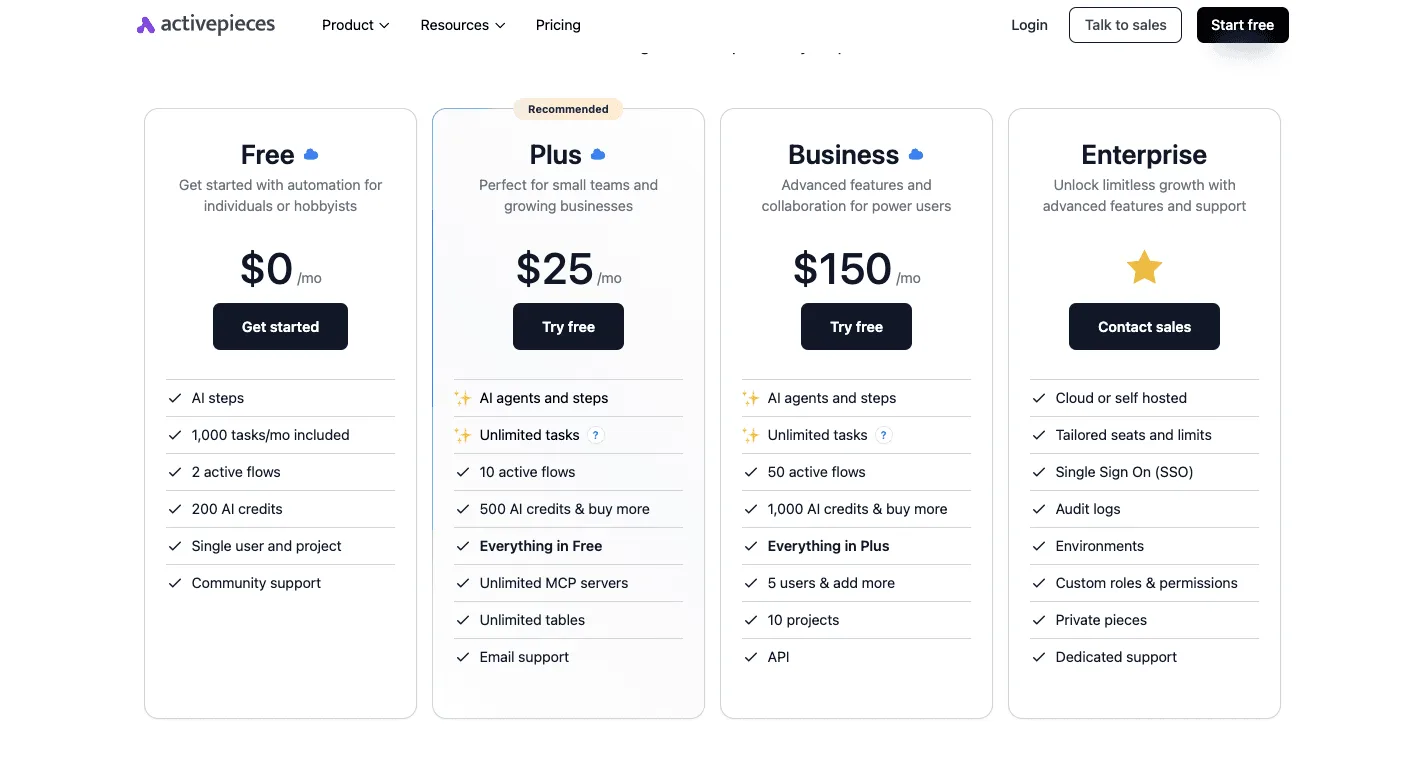
The whole arrangement is one flow among the unlimited flows every Activepieces plan includes, the free one too.
What's worth catching depends on where contacts come from.
According to [Open](https://www.open.cx/blog/ai-for-ecommerce), **order status accounts for 35% of ecommerce contacts**, which means more than a third of your volume is customers asking where a parcel is, a question your Shopify data can answer without an agent.

One in five contacts needs a process, not a conversation: returns and refunds make up 20%, so you'll need a second system for one-fifth of your support work. Shipping adds 10%, and everything else is the remaining 35%.
That last group is the only part that reliably needs a human, so roughly 65% of contacts are candidates for deflection or enrichment before Gorgias counts them.
### A ticket-count alert before the limit
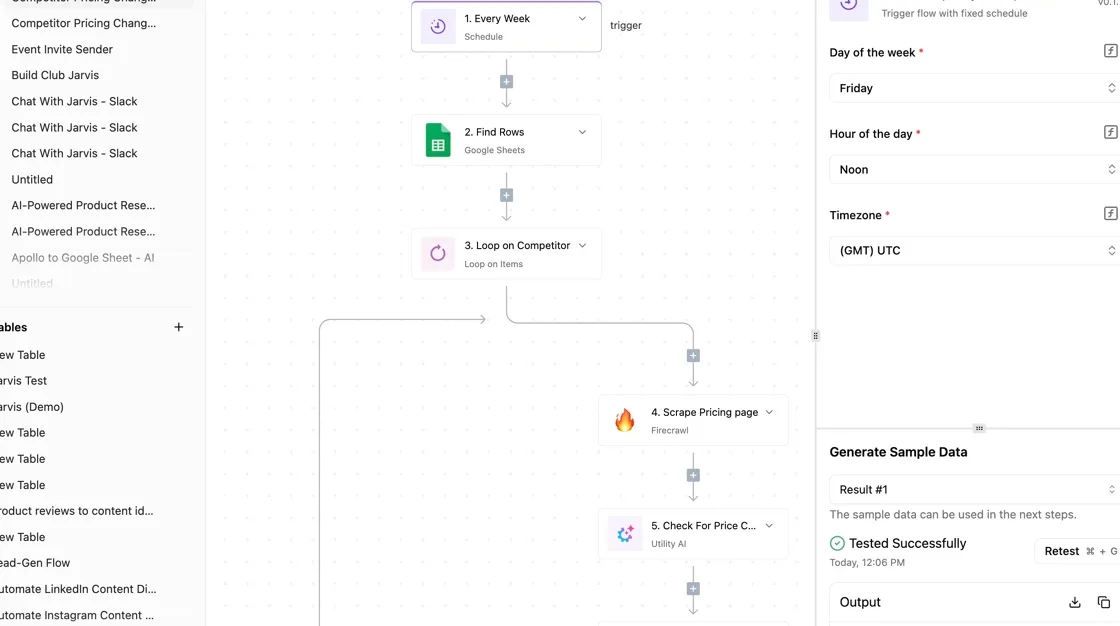
Gorgias bills per ticket, and the invoice arrives after the cycle closes. Where Gorgias's API allows it, an Activepieces flow can call the Gorgias API on a schedule, count tickets created since the cycle began, and post the running total to a Slack channel.
Run once a day, that is about 30 runs a month, or roughly 30 of the 1,000 credits the Free plan includes.
Set the alert at a share of your plan's included volume, such as 80%, and you learn about the overage while there's still time to act, preventing mid-month cost surprises. Without it, the first signal is the invoice.
### Routing noise before it becomes a ticket
Email is where avoidable tickets multiply. A flow can read the inbound message, look up the order in Shopify and, for an order-status question, reply to Slack or the customer with tracking details instead of opening a ticket.
Email is where avoidable tickets multiply.
Only messages that match nothing are forwarded to Gorgias. Given that order status is 35% of contacts, even a partial catch rate takes a visible share off the count, leaving your contact count dependent on order status completion.
It needs maintenance, and that is the limit of this approach: each rule you write is one more thing to check when a message is misrouted.
What follows is a decision about which categories you trust a flow to answer, and which must always reach a person.
## Set five cost-control rules
To stop a ticket nobody meant to pay for from reaching the invoice, the store set five rules.
None of the five needs a developer, only an admin login and a calendar. The list below is the whole Monday agenda in the order it should be done.
1. Alert at 80 percent of included tickets
2. Auto-close notification and spam mail
3. Compare the next plan up, monthly
4. Review every add-on
5. Put a date in the calendar to re-read the pricing page
The first three carry the weight, so they get explained here. The last two are housekeeping that keeps them honest.
Eighty percent of the included tickets is the line where a warning still leaves time to act. An alert at the limit tells you about overage after it has started billing, which is a receipt, not a warning.
Send it to a shared inbox, not one person, so a holiday doesn't silence it.
### Auto-close non-customer emails to cut Gorgias tickets
Email becomes a ticket, and carrier notices, payment-processor receipts and spam all arrive as email. If the helpdesk counts it as billable, you're paying to read mail that no customer wrote.
Add a rule that auto-closes these senders on arrival, then check the closed view weekly for a real customer caught by mistake. Rules written once and never reviewed drift, and the drift costs a customer, not a charge.
### Price the next plan up every month
On the first of each month, put this month's billable count beside the included allowance on the next plan. If overage fees would have exceeded the price gap, you've been **paying a premium for staying small**.
While you're in the billing page, read every add-on line and cancel the ones nobody can name a user for.
Finally, set one date, a quarter out, to re-read the pricing page. Plans are rewritten without a warning, and the contract you agreed to is only the one in force on the day you checked.
## Frequently asked questions
Check the live pricing page before you rely on any of these answers, because each is only as current as the day someone read the page it came from. Nothing here was verified against a confirmed figure, so none is quoted.
### Does Gorgias offer a free plan or free trial?
Whether a free tier or trial exists is a question for the pricing page on the day you sign up, not for this article. Offers like this are the first thing to change without notice.
If a trial exists, ask what happens to tickets created during it and whether they carry into your first paid cycle. A trial that ends with an unexpected billing start is how a first invoice goes wrong.
Does Gorgias charge per agent? No. The argument of this article is that billing follows billable tickets, not the number of people answering them.
Adding a teammate doesn't move the invoice, but a busy week does. A small team on a cheap plan can therefore still receive the largest bill, because the meter counts what customers send, not who replies.

### Can I cancel or downgrade Gorgias mid-cycle?
Read the current terms before you assume you can.
The safe assumption is that tickets already counted in the cycle stay counted, so a downgrade made late doesn't erase usage you have already generated.
If you plan to change plans, do it before the cycle is far along, and get the effective date in writing from support, with a timestamp.
### Is the Gorgias AI agent included in the plan price?
Don't assume the answer is yes. The question to put to Gorgias is whether conversations handled by the AI agent count as billable tickets, and whether they're priced separately from your plan.
If the answer is unclear on the pricing page, ask support and keep the reply. An automated conversation that counts toward your ticket total is exactly the kind of line item that appears only on the invoice.
## Related reading
- [AI Agents for Ecommerce: What Online Stores Need](https://www.activepieces.com/blog/ai-agents-for-ecommerce)
- [13 Best AI Tools for eCommerce in 2026](https://www.activepieces.com/blog/best-ai-tools-for-e-commerce-2024)
- [eCommerce Automation: What It Is and How It Works](https://www.activepieces.com/blog/ecommerce-automation)
## References
- [Kaspian Fuad](https://kaspianfuad.com/blog/gorgias-vs-zendesk-vs-gladly-vs-reamaze/)
- [Open](https://www.open.cx/blog/ai-for-ecommerce)
- [help-desk.reviews](https://help-desk.reviews/en-us/pricing/gorgias)