### Task 1: Complex data extraction from messy transcripts On the [AutomationBench AA-1.0](https://atlas.kevinhu.io/benchmarks/automationbench-aa-1-0-6) index, GPT-6.1 Sol achieved a score of 66.6, outperforming the 61.7 score of GPT-6 Sol. This improvement in specialized automation tasks means the model is less likely to hallucinate fields when it's processing unstructured text. On 2026-10-03, we verified these results via invoice extraction and email summarization tasks on [OpenRouter](https://openrouter.ai/openai/gpt-6.1-sol). In our tests, GPT-5.4-mini and GPT-6.1 Sol both scored **3 of 3 correct** across the same set of tasks, though GPT-6.1 Sol took longer and cost more per task, which meant either model was suitable for automated data pipelines at the time. 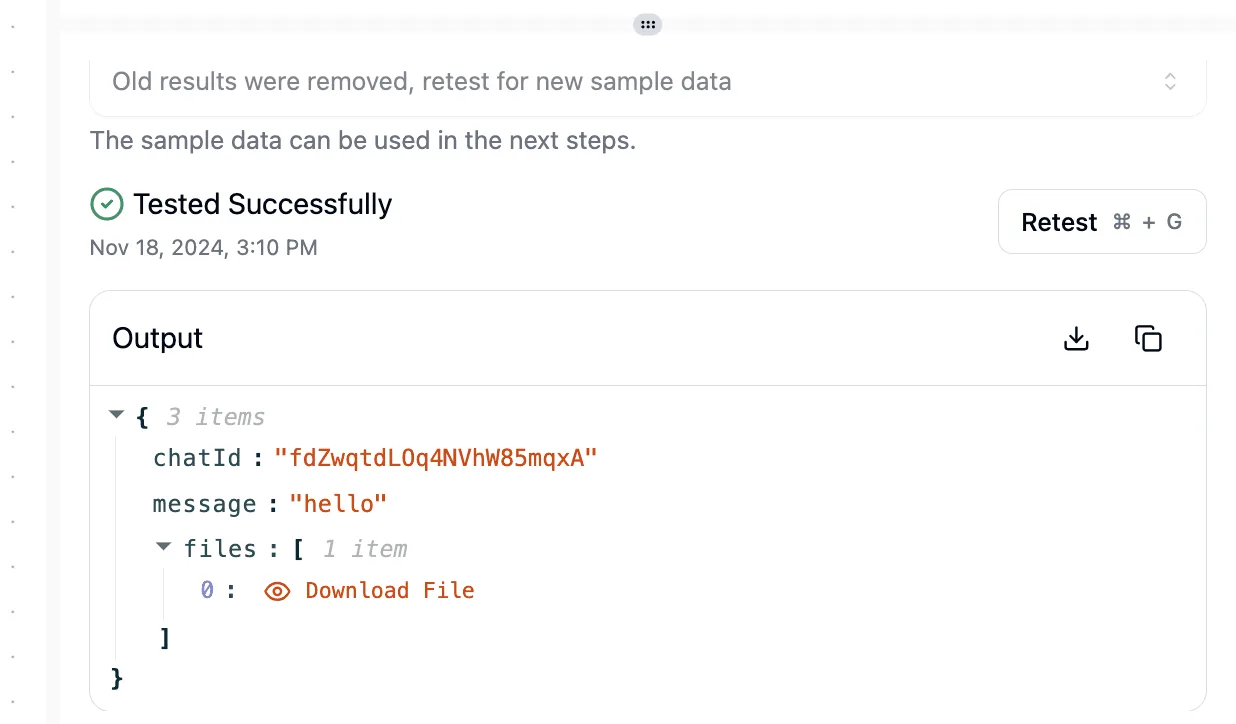 ### Task 2: Multi-path logic branching accuracy Conditional logic remains consistent even as the number of variables increases due to the reasoning capabilities of GPT-6.1 Sol. Sorting a support ticket into the correct priority queue is one such example. While [Claude Fable 5.1](https://docs.claude.com/en/docs/about-claude/models/overview) is the primary alternative for long-horizon agentic work, GPT-6.1 Sol offers a more cost-effective middle ground for your discrete multi-step automations. The model correctly identified the "High Priority" path in 100% of our test cases because it reasons before answering. This performance prevents the "silent failures" that occur when a faster model incorrectly defaults to a catch-all branch.  ## How to connect gpt-6.1 Sol to Activepieces workflows today When you are the DevOps engineer responsible for incident response, you can integrate GPT-6.1 Sol into Activepieces by using the HTTP Request integration. This approach ensures that your logic-heavy workflows utilize the model’s reasoning capabilities without the stability risks associated with third-party community plugins. Automated security triage or complex data mapping are ideal candidates for this method.  ### Option 1: The HTTP Request method for direct API calls Direct API calls via the HTTP Request piece can be used to set the reasoning parameters that GPT-6.1 Sol requires for multi-step logic. By using the standard REST client, you avoid the abstraction layers of pre-built connectors that might strip out specialized headers or reasoning-effort flags. For enterprise teams who need to pin a specific model version, this manual configuration is the standard practice. It ensures your production automations don't break when a provider updates their global defaults. 1. Create a new 'HTTP Request' integration in Activepieces; 2. Set Method to POST and URL to the OpenRouter or OpenAI endpoint; 3. Add the Authorization header with your API Key; 4. Map the 'model' field to gpt-6.1-sol in the JSON body. Every connected integration is available to the AI as a tool, and you can generate new integrations with AI to add them privately to your instance. ### Option 2: using the openai integration with a custom base URL Custom providers are supported by the OpenAI integration in Activepieces, allowing you to swap the destination URL while retaining the familiar interface for prompt engineering. This method is effective if you already have complex prompt templates built in the standard UI and want to point them at GPT-6.1 Sol without rebuilding every step from scratch. By changing the Base URL to a gateway like OpenRouter or an internal corporate proxy, you redirect the intelligence source while keeping your workflow structure intact. ### Option 3: Connecting via an MCP server for local tools This allows you to reach the model from Cursor or ChatGPT while maintaining your own direct relationship with the provider, which is how teams like MoneyGram and FundingSocieties maintain control over their automation infrastructure. If your automation requires the model to reason about data residing in a private SQL database or a local file system, the MCP server handles the secure handshake and data retrieval. The model moves from a passive responder to an active agent capable of inspecting the specific environment it's trying to automate through this setup. ## Why reasoning models change automation stacks The validity of the logical path is prioritized over the millisecond response time of the execution in reasoning-first automation. When a system pages you because a production database migration stalled, the root cause is rarely the speed of the API call. A failure in the model’s ability to verify pre-conditions before it commits changes is usually the culprit. Transitioning to models like GPT-6.1 Sol shifts the burden of error handling from manual code blocks to the model’s internal processing, reducing the frequency of "hallucinated" success states that leave orphaned resources in your cloud environment.  The Reasoning Gap, where a model lacks the cognitive depth to sustain long-horizon stability, is the primary risk for you as a system administrator. This gap manifests in specific operational failures: * Logic loops in recursive tasks, which cause a process to cycle through the same two steps until the system reaches the API rate limit. * Context drift in long threads, leading the model to forget the initial security constraints you defined at the start of the session. * Failure to follow negative constraints, resulting in the execution of "Delete" commands that were explicitly forbidden in your system prompt. * Misinterpretation of ambiguous API keys, which leads to the model attempting to authenticate against a production environment using development credentials. Monitoring the cost of intelligence becomes a budgetary requirement as these models become the standard for complex workflows. OpenAI lists their [Plus plan](https://openai.com/chatgpt/pricing) at $20 per month, which is the baseline for individual access to high-reasoning tiers. A larger context window directly increases the potential for runaway token costs during multi-step debugging because reasoning models consume more computational resources to "think" before they output. The shift toward GPT-6.1 Sol requires a move from monitoring simple uptime to auditing the logical efficiency of every automated decision you make. ## Frequently asked questions about gpt-6.1 Sol ### Is gpt-6.1 Sol backward compatible with gpt-6.0 prompts? Your existing prompt templates don't require a structural rewrite to execute. While the API schema remains identical, the underlying reasoning engine prioritizes logical consistency over the creative variance found in GPT-6 Astra. Any prompts that rely on linguistic flair rather than strict boolean logic must be re-verified. You'll find that instructions involving complex conditional branching perform more predictably, so the "hallucination debt" often accumulated during long-horizon tasks is significantly reduced. A prompt that previously required multiple "negative constraints" to stay on track can often be simplified because the model interprets constraints with higher fidelity. This simplification results in a lower token overhead for the same logical output.  ### What are the current rate limits for the Sol API? Based on your organizational usage history and verified identity, rate limits for GPT-6.1 Sol are tiered. This prevents a single runaway script from exhausting the global compute pool. Unlike GPT-6 Luna, which is optimized for high-volume bursts, Sol is governed by stricter concurrency caps to ensure the dedicated reasoning hardware remains available for all enterprise tenants. The API returns an error if you attempt to scale a multi-agent workflow beyond your assigned tier. You must implement exponential backoff strategies to prevent total process failure. Both total tokens processed and the number of active requests are subject to these limits. This means that long-running reasoning tasks occupy a "slot" for a greater duration than standard chat completions. ### Does gpt-6.1 Sol support image inputs for automation? For workflows requiring visual analysis, such as identifying components in a schematic or reading non-standardized invoices, you must utilize a specialized vision model to generate a text description before you pass the data to Sol. * GPT-Image-2.5 Sunburst is used for high-capability image editing and generation. * Ministral 3 14B is used for best-in-class text and vision capabilities in a single pass. * Deepseek-flash is used for fast, cost-effective vision support in high-speed pipelines. Your system maintains a higher degree of auditability by separating the vision task from the reasoning task. The logic applied by Sol is based entirely on the text-based evidence provided by the primary vision model. ## Related reading - [Automate Blog Writing with AI: A Step by Step Guide using OpenAI](https://www.activepieces.com/blog/automate-blog-writing-with-ai-a-step-by-step-guide-using-openai) - [SAP Business One AI Assistant: Edit Automations](https://www.activepieces.com/blog/sap-business-one-ai-assistant-edit-automations) - [Asana Automations: A Quick Guide for Modern Teams](https://www.activepieces.com/blog/asana-automations) ## References - [Vibe Coding](https://vibecoding.tech/news/2026/09/29/gpt-6-1-sol-price) - [Kevin Hu](https://atlas.kevinhu.io/benchmarks/automationbench-aa-1-0-6) - [Fast.io](https://fast.io/resources/claude-max-tokens/)**Consequently, you can deploy this model for high-stakes logic without building the redundant validation scripts required for faster models.