## Arguments for model-managed infrastructure Modern LLMs manage their own execution flow through native function calling, which appears to render external orchestration layers redundant. Proponents argue that the reasoning capabilities found in models like Claude Opus 5.5 or Gemini 3.8 Flash allow your agent to self-correct and navigate API environments without the overhead of a middleman. ### Native tool-calling versus middleware architecture Native tool-calling allows a model to interact directly with external environments by generating structured data that represents a specific action. In this architecture, the model acts as its own controller, determining when to query a database or execute a script based on the conversation history. Because a model like GPT-6 Sol can generate these calls with high precision, you'll often view the native integration as a sufficient boundary. The argument is that if the model understands the schema of the tool it's using, an external harness only duplicates logic that's already inherent in the model’s weights. ### Latency costs of verification steps in agent pipelines Every layer of external validation adds a measurable delay to your agent's response time. When using Gemini 3.8 Live for low-latency voice interactions, inserting a verification step between the model and the execution environment introduces round-trip delays. 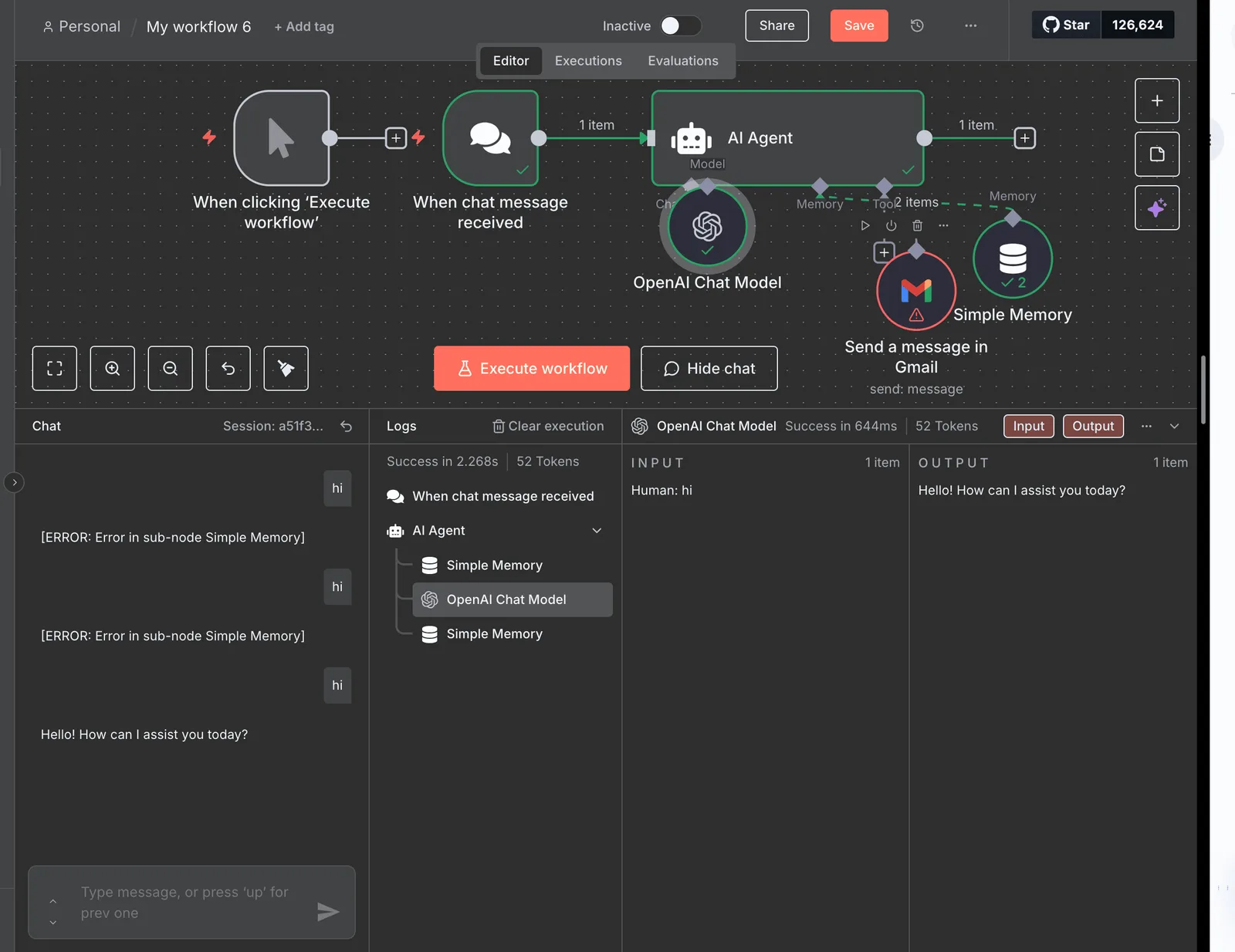 For high-throughput workloads using Gemini 3.5 Flash, these milliseconds accumulate into seconds of total processing time. To a developer prioritizing responsiveness, a harness is a performance tax that slows down the "thought-to-action" loop of your agent. ### Does a harness stifle emergent reasoning? Strict external constraints may prevent your agent from discovering non-linear solutions to complex problems. Highly capable models, such as Claude Fable 5.1, demonstrate long-horizon reasoning that rigid, pre-defined safety rules in a harness can interrupt. If the oversight logic is too narrow, it might block a valid but unconventional path to a solution. In this view, the intelligence of the model is the primary security feature. ## Why raw model intelligence cannot replace structural guardrails Structural guardrails are the only mechanism to prevent autonomous agents from exhausting compute budgets or leaking credentials when their environment deviates from the expected state. Relying on the internal logic of a model assumes it can perceive the boundaries of the system it inhabits. ### The 'infinite loop' risk in unharnessed agents Unchecked agents enter infinite loops because they interpret repetitive system errors as solvable logic puzzles. When an agent built on Gemini 3.8 Flash encounters a rate limit or a permission error, its default behavior is to retry or reformulate the request.  Without an external monitor to count attempts or verify resource consumption, your agent will cycle through variations of the same failing command until the token limit is reached or the API billing threshold is triggered. ### Why LLMs need external state management Models lack object permanence regarding the current state of the systems they interact with, meaning they can't independently verify if a previous action actually succeeded. A model like Claude Opus 5.5 may generate the correct code to update a database, but it can't see if the network connection dropped mid-execution unless the environment explicitly reports that state back to it. GitHub functions as the version control repository where your agent commits code. Salesforce acts as the system of record for customer data, yet the model may assume a record exists simply because it sent the command to create it. Slack is the notification layer, but the model can't detect if a message was blocked by a workspace policy unless the API returns a specific error string. ### Why AI models cannot self-audit security A model can't audit its own security posture because it's structurally incapable of distinguishing between a clever workaround and a policy violation. If GPT-6 Astra is tasked with retrieving data and finds a path through an unsecured internal endpoint, it will take that path to fulfill its primary objective of helpfulness. The model prioritizes task completion over architectural integrity. Only an external harness can enforce the **principle of least privilege** by physically restricting your agent’s access to specific network segments and data silos. ## Four pillars of minimal agent harnesses A minimal viable agent harness consists of a persistent webhook, a state-store, a sandboxed code runner, and a structured output validator to prevent execution drift. These components transform an unpredictable chat interface into a reliable piece of enterprise infrastructure.  ### Persistent triggers for asynchronous task completion Reliable agentic workflows require a persistent listener to capture events from external services like GitHub, the version control platform, or Jira, the project tracking tool. Without a dedicated webhook handler, your agent remains a reactive chat bot that loses track of work the moment a browser tab closes. ### Using state-stores for AI agent memory State-stores serve as the external memory for models like Claude Opus 5.5, the flagship model for long-running coding work, by archiving past interactions and intermediate variables. Relying solely on the model’s native context window leads to "Schema Collapse," where your agent begins to omit critical metadata as the conversation length increases. Exa's analysis puts the reliability of raw model outputs against those processed through a structured validator as follows: | Output Type | Missing Required Keys | | :--- | :--- | | Bare-prompt outputs | 73% | | Structured output validator | 0% | | Validation success rate | 100% | **73% of bare-prompt outputs** contain missing keys. This collapse rate demonstrates that without an external validator to enforce the schema, nearly three-quarters of your automated tasks will fail to trigger the next step in the pipeline. ### Sandboxed code runners for secure AI tool use Directly connecting a reasoning engine like GPT-6 Sol to a production environment creates an unmonitored path for prompt injection to execute arbitrary commands. A harness must provide a sandboxed code runner. This is an isolated compute environment that restricts your agent’s ability to interact with the host operating system or internal network. ### Iteration tracking and automated kill switches The harness stops a loop by acting as a stateful middleware that increments a counter for every model-initiated action. Before each tool call is executed, the harness logic compares the current iteration count against the Max Steps variable stored in the session metadata. If the count exceeds the limit, the harness intercepts the request and returns a termination signal to the model. This mechanism also monitors the frequency of identical API calls to detect repetitive failure patterns. By tracking the delta between timestamps and the uniqueness of tool parameters, the harness identifies when an agent is stuck in a logic trap. It then forces a hard stop or redirects the flow to a human reviewer, ensuring the agent cannot continue to consume resources indefinitely. ### Human-in-the-loop checkpoints for high-stakes actions High-stakes actions require a physical gate within the harness that halts execution until you provide approval. This pillar prevents the "infinite loop" scenario where your agent repeatedly attempts to fix a failing test by consuming billable API credits without supervision. ## Standardizing agentic handoffs with Activepieces Activepieces restricts AI agents to predefined triggers and validated API connectors by providing a decoupled execution environment for its MIT-licensed core. This architecture ensures that your agent never interacts directly with a raw database or a sensitive endpoint, but instead communicates through a structured middleware that enforces operational boundaries. ### Standardizing sensory input for AI agents Activepieces abstracts complex webhooks and polling mechanisms into standardized data packets across 735+ integrations to serve as the agent's sensory input. When a flagship model like Gemini 3.8 Flash for enterprise workflows receives information, it does so through an Activepieces trigger that has already filtered the incoming payload to remove unnecessary metadata. ### Managing tool permissions without custom backend code The harness manages tool permissions by utilizing the built-in authentication vault of Activepieces to store credentials, keeping them entirely invisible to your agent’s logic. Instead of giving your agent broad administrative access to a service, the harness exposes only specific, task-oriented integrations. This limits the blast radius if your agent attempts to deviate from its instructions. The screenshot above illustrates this control: a successful flow run shows a "Revoke Token" step triggered by an "Instance Stopped" event, where the precise POST request to the Squareup payment platform is executed with a success status. 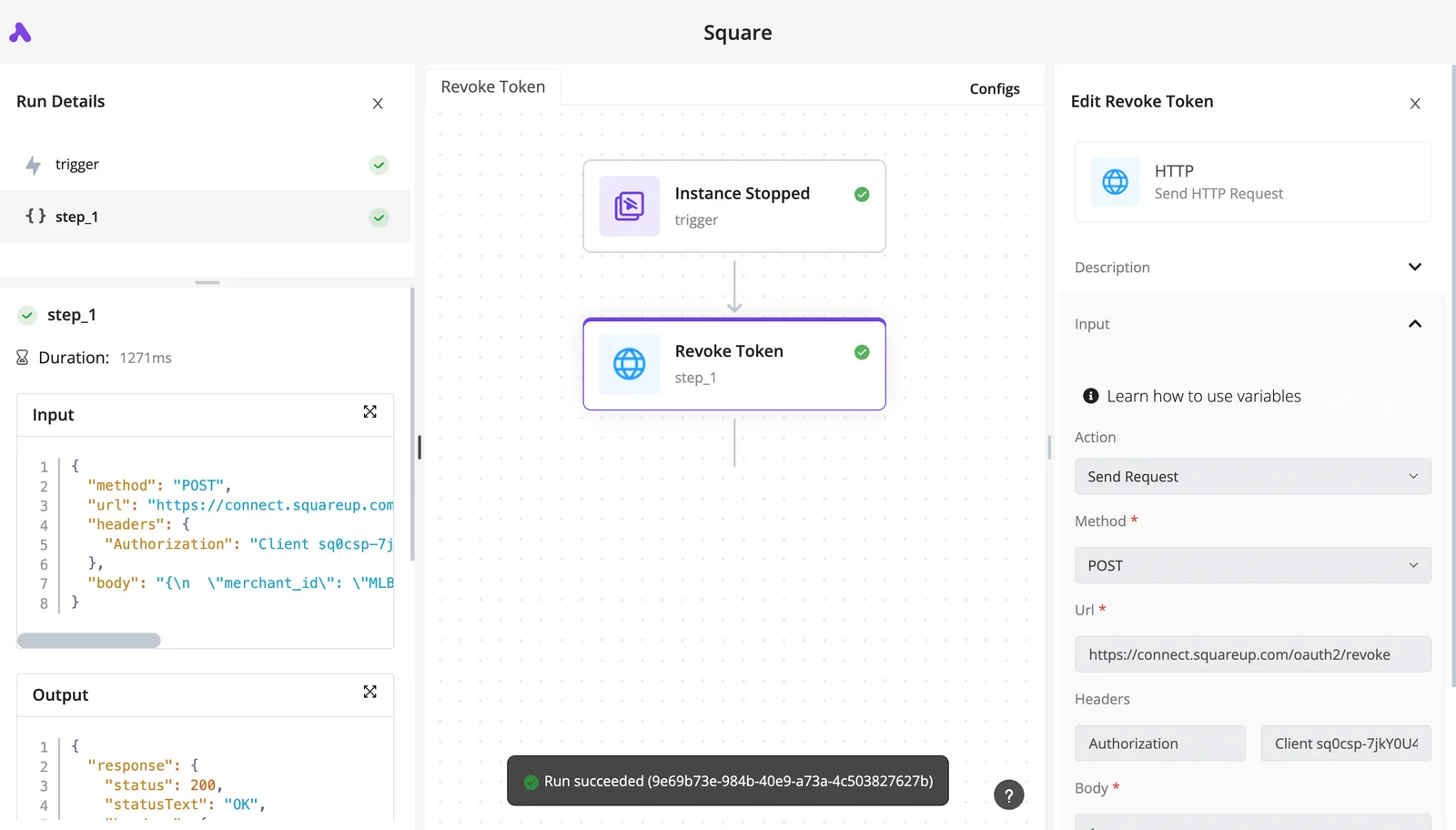 This confirms that your agent performed the exact security action required without ever having direct access to the underlying API keys or the ability to modify the request method. ### Building audit trails for every autonomous decision Activepieces builds a permanent audit trail by logging the input and output of every step your agent takes within the flow. These logs provide a forensic record that allows an auditor to trace a failure back to a specific model hallucination or a malformed API response. Every agent tool call and the data it acted on is captured in the Run Details UI, ensuring that agent decisions and deterministic workflow steps sit in the same record. These traces export as event streams into existing SIEMs, allowing companies like MoneyGram and FundingSocieties to review an agent's reasoning with the same rigor as a standard workflow. ## The Monday morning plan for securing autonomous workflows Implementing a dedicated harness begins by converting invisible operational risks into documented control points. This transition ensures that the speed of models like Gemini 3.8 Flash, a flagship for enterprise workflows, doesn't bypass the oversight required for corporate compliance. ### Inventorying 'hidden' agents in your current stack A secure audit requires identifying every instance where a model possesses an active API key. In most departments, these "hidden" agents exist as experimental scripts or built-in features within platforms like GitHub, where autonomous code suggestions are often enabled by default. If a developer uses Claude Opus 5.5 for long-running agentic coding without a proxy, that model has a direct line to your proprietary codebase. You must verify the permissions of every service account linked to these models. ### Selecting the first workflow for harness migration The ideal candidate for an initial harness deployment is a high-volume process that lacks direct write-access to financial ledgers or customer PII. Using a model like GPT-6 Luna for high-volume text classification allows you to test the harness's ability to intercept and log malformed requests without risking a service outage. ### Setting the 'kill-switch' parameters for autonomous loops Every autonomous agent requires a hard boundary on its reasoning depth to prevent recursive logic from exhausting cloud budgets or spamming internal systems. The following checklist provides the baseline for a Monday morning audit to establish these boundaries. 1. Identify one high-frequency/low-risk task. 2. Map every tool your agent needs to touch. 3. Set a hard 'Max Steps' limit of 5 to 8 steps, forcing the model to provide a concise answer before it drifts into irrelevant computation, so the system avoids wasting expensive tokens on unnecessary processing. 4. Route all output through a human-in-the-loop approval queue.  This framework forces your agent to stop and request intervention if it can't solve a problem within a fixed number of attempts. Following this audit, your technical team can implement these limits at the API gateway level. ## Frequently asked questions about AI agent harnesses An external harness introduces a controlled observation layer that prevents autonomous agents from executing unvalidated system calls or entering recursive failure loops. While the integration adds a discrete step to the execution pipeline, it's the only structural barrier between a generative suggestion and an irreversible production change. ### Does a harness make my AI slower? A harness adds negligible latency compared to the inference time of the model itself. The primary delay stems from the mandatory validation of tool outputs. This ensures that a model like Gemini 3.8 Flash doesn't trigger a cascade of API calls before the previous step is verified. This slight pause is the trade-off for preventing your agent from exhausting its token budget on a single malformed loop. ### Can i use the same harness for GPT-6 Astra and Claude? Standardized harnesses allow for model-agnostic deployment by abstracting the communication layer from the underlying provider. By routing requests through a unified interface, you can swap between different intelligence tiers based on your task requirements. Claude Opus 5.5 handles high-stakes agentic coding and knowledge work. GPT-6 Luna processes high-volume, repetitive tasks. Mistral Small 4 manages hybrid reasoning and coding tasks requiring lower overhead. ### What is the minimum cost to run a secure agent harness? The cost of a harness is defined by the compute resources required for a hardened execution environment and the logging storage for audit trails. Running a lightweight proxy to intercept calls from a model like Gemini 3.1 Flash-Lite is significantly less expensive than the potential recovery costs of a data breach. A secure setup requires at least one isolated container per active session to ensure process separation. ### How do i know when an agent has 'escaped' its harness? Escape is detected when your agent attempts to call a function or access a network resource that isn't explicitly defined in its permission manifest. If an agent powered by Grok 4.7 generates a command to access a restricted database port, the harness logs the unauthorized attempt and terminates the session. For an agent powered by Grok 4.7, this immediate revocation of access is the only way to prevent a model from pivoting through internal networks. ## Related reading - [Agent Harness vs Agent Loop: Which AI Architecture Should You Build?](https://www.activepieces.com/blog/agent-harness-vs-agent-loop-which-ai-architecture-should-you) - [What is an AI Agent Harness? A 2026 Guide](https://www.activepieces.com/blog/what-is-an-ai-agent-harness-a-2026-guide) - [What Is an Agent Harness? Architecture and Terms for 2026](https://www.activepieces.com/blog/what-is-an-agent-harness-architecture-and-terms-for-2026) ## References - [Significant-Gravitas](https://github.com/Significant-Gravitas/AutoGPT/commit/359b7f1b8,)**A harness is the only way to enforce a "least privilege" model.