$158,952 is the average annual salary for a senior software engineer according to [Indeed](https://www.indeed.com/career/senior-software-engineer/salaries), which sets the baseline cost for manual code maintenance, meaning companies are paying a premium for human-led development. 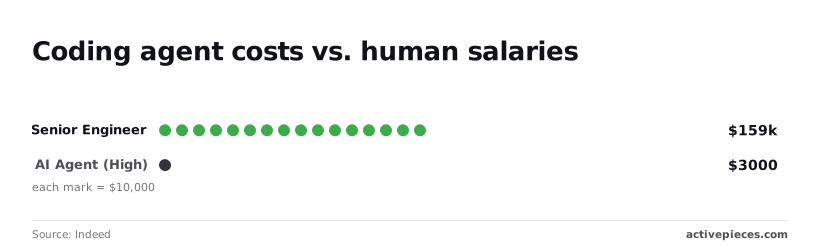 A high-tier AI agent costs roughly $3,000 per year, so organizations can automate significant workloads for a fraction of a typical engineering salary. Shifting tasks to agents represents a 98% reduction in direct labor spend, which effectively transforms a major operational expense into a negligible line item. Based on McKinsey data via [Geta](https://blog.geta.team/100-ai-agents-for-every-employee-inside-jensen-huangs-1-trillion-vision/), early-adopter firms show a ratio of 25,000 agents to 40,000 human staff. The infrastructure must support concurrent search operations without linear cost scaling.  Between Jevgrep 0.4.2 and 0.4.3, a 25.8% reduction in total costs was observed, evidencing the efficiency of this approach, indicating that iterative updates are compounding the financial benefits for users. Refining the search tool directly lowers the model's billable overhead. This trend suggests that as retrieval becomes more precise, the cost per task will continue to decouple from the size of the underlying repository. ### Who built Jev Agent and why it exists Jevgrep, the CLI underlying Jev Agent, was built by [dzhng](https://github.com/dzhng/jevgrep) to solve the context-bloat issues encountered by coding agents — it is a separate project from the jev-chat organization's Jarvis chat co-pilot. The framework was born from the necessity to feed relevant files to coding agents without exceeding the practical limits of models like [Claude](https://claude.com/blog/claude-team-updates) Sonnet 5.5. Activepieces makes every connected integration available as an agent tool instantly, so registering a connector once allows it to run as a flow step or a tool schema on a per-project MCP server.  This eliminates the need for a second migration or manual catalog re-integration when exposing jevgrep to Claude or ChatGPT. Check the Integrations Framework in the open-source repo to see how the same MIT-licensed code powers both deterministic flows and agentic tools. This architectural choice moves the industry away from brute force context and toward a model of informed, surgical retrieval. ## Why Jev Agent matters for teams scaling AI automations By replacing broad context ingestion with targeted data extraction, Jev Agent eliminates the overhead of high-latency reasoning. When an automated workflow breaks, the site reliability engineer usually finds a log full of "context window exceeded" errors or astronomical API bills caused by sending thousands of irrelevant lines to a model. The Jev architecture addresses this by ensuring the LLM only receives the specific data points required for the immediate task. ### How Jev Agent avoids the context window trap Engineering teams often default to stuffing entire codebases or document stores into a prompt instead of filtering first, which forces the model to process noise that dilutes the accuracy of the final output. Even with a large context window, models can suffer from "lost in the middle" phenomena. This is where they miss critical instructions buried in the center of a massive data dump. By using a surgical approach, developers can utilize models like Claude Haiku 4.5 or Gemini 3.1 Flash-Lite without hitting token limits. This helps keep inference costs lower while maintaining the same level of task performance. This shift moves the burden of relevance from the expensive inference engine to a cheaper, local retrieval layer. ### Jev Agent benchmark results and efficiency gains Reducing the volume of data sent to the model directly shortens the time-to-first-token. Users spend less time waiting for an agent to think through irrelevant files. In production environments, this efficiency translates to lower compute costs per execution, as the system avoids the quadratic cost increases associated with processing massive prompts. Because the agent only processes what is strictly necessary, teams can run higher volumes of concurrent automations without hitting rate limits on providers like OpenAI or Anthropic. This predictability allows infrastructure leads to forecast monthly AI spend based on task volume rather than fluctuating context sizes. ### The role of jevgrep in surgical context retrieval Jevgrep sits at the core of this efficiency. This specialized search utility scans local directories to identify the exact lines of code or documentation relevant to a user’s query. Instead of the agent guessing which files to read, jevgrep provides a filtered stream of data. This prevents the LLM from hallucinating details based on outdated or unrelated files in the same folder. So the model never sees the boilerplate code surrounding them, Semantic Filtering isolates specific functions or blocks. Token Conservation strips away whitespace and comments before transmission, so the payload is optimized for the smallest possible footprint. Dependency Mapping identifies only the linked files required for a specific bug fix, which stops the agent from wandering into unrelated modules. ## Building Jev Agent into automated workflows today Shifting from monolithic prompts to modular API calls is required to integrate Jev Agent into existing infrastructure. This architectural choice ensures that the DevOps lead responsible for the stack isn't troubleshooting a black box but rather a predictable sequence of GET and POST requests. ### Step 1: Setting up an HTTP Request to the Jev API Connecting a workflow to the Jev API begins by configuring a standard HTTP request action to point at the Jev Agent listener. Because the agent is a stateless utility, each request must explicitly define the scope of the search to prevent the system from wandering into irrelevant directories. The screenshot below illustrates a successful execution where an automated trigger successfully initiates a downstream token revocation. This confirms that the API handshake is complete and the request-response cycle is closed. 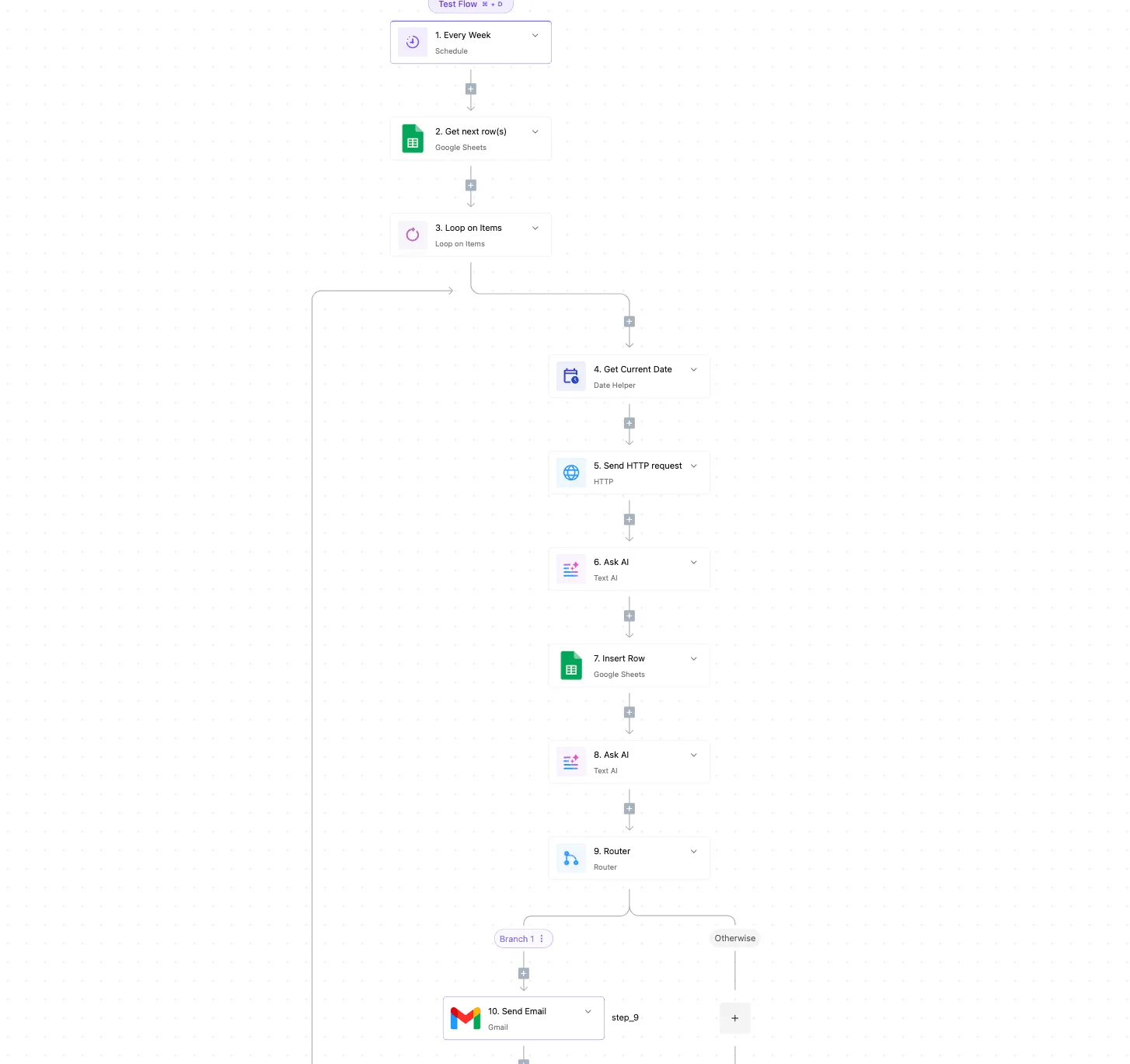 The right panel shows the "Edit Revoke Token" configuration for an HTTP Send Request action with Method set to POST and Url field populated. Once the connection is verified, the workflow moves from simple connectivity to intelligent processing. ### Step 2: Configuring OpenAI-compatible endpoints in Activepieces By mapping Jev Agent to an OpenAI-compatible interface, teams can swap between reasoning models like GPT-6 Astra or Claude Sonnet 5.5 without rewriting the entire workflow logic. This compatibility layer acts as a translator. It ensures that the structured output from jevgrep is formatted correctly for the LLM’s context window. Directing an LLM to use Jev Agent as a tool involves swapping the standard provider URL for a local or proxied endpoint that supports the OpenAI chat completions schema. This redirection ensures that a model like Gemini 3.8 Flash can call the Jev Agent functions using standardized syntax, reducing the need for custom-coded wrappers. Standardizing these endpoints allows a systems auditor to verify that the data flowing into the model is strictly limited to the search results. This eliminates the risk of the model processing unauthorized sensitive files. ### Step 3: Leveraging MCP servers for local agent execution Executing Jev Agent through Model Context Protocol (MCP) servers provides a secure bridge between cloud-based orchestration and local file systems. This setup allows the agent to run jevgrep locally, so the raw source code never leaves the company firewall. The orchestration tool sends a search command to the local MCP server, which executes the Jev Agent binary against the local repository and returns only the relevant code snippets to the cloud-based LLM.  This isolation ensures that the retrieval promise is kept without compromising data sovereignty. Executing the Model Context Protocol (MCP) allows the agent to interact with local file systems and databases that are otherwise inaccessible to cloud-based automation platforms. By running a local MCP server, you provide a secure execution environment where Jev Agent can perform surgical searches on sensitive data without the latency or privacy risks of a full dataset upload. 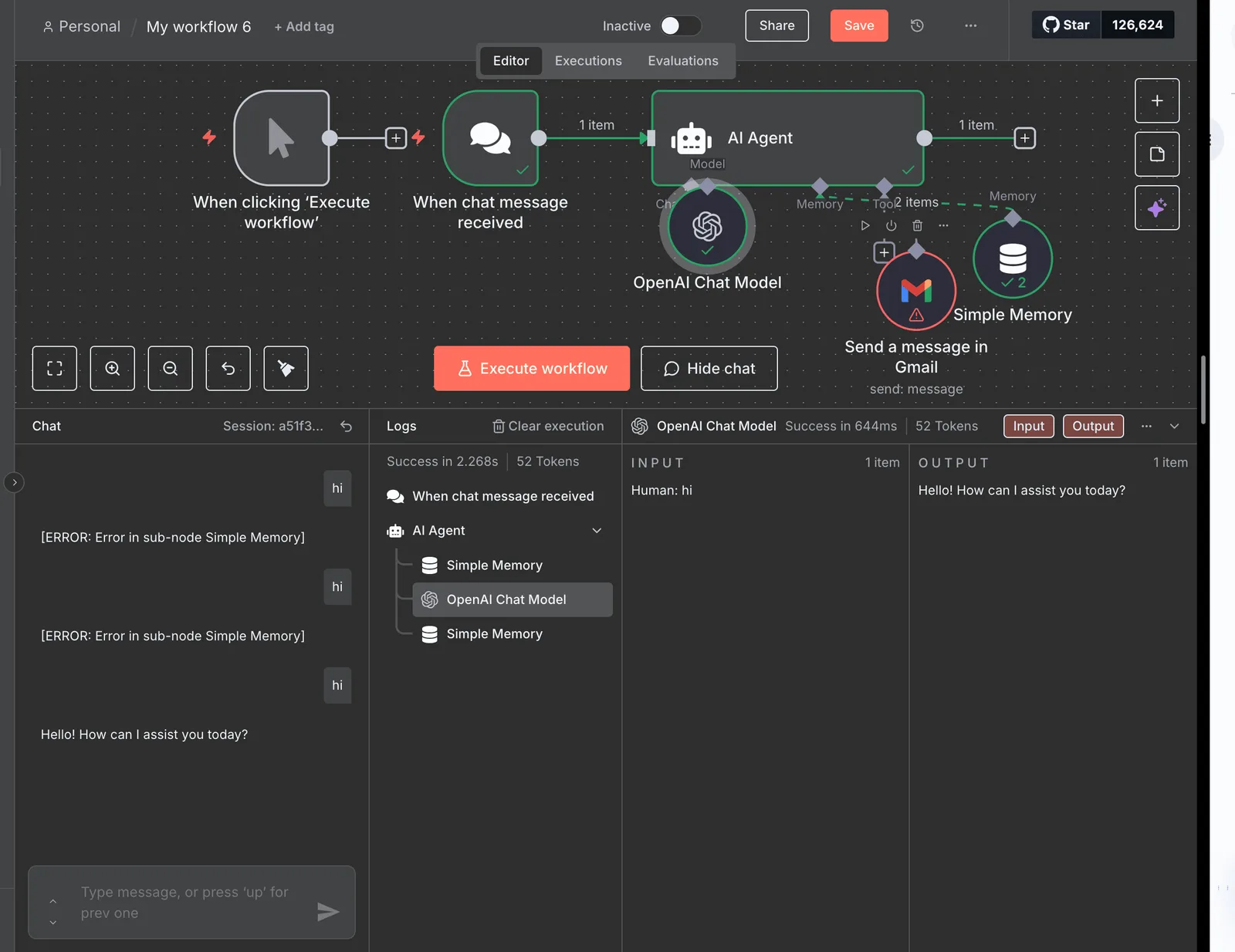 ## What to watch next for Jev Agent and automated agents Configuring generic connectors to bridge the gap between the agent’s specialized retrieval engine and standard workflow triggers is necessary for integration. Because no native integration exists, the site reliability engineer must manually define the interface to ensure that failures result in traceable logs rather than silent drops. Connecting a workflow to the Jev API begins by configuring a standard HTTP request action to point at the Jev Agent listener. This manual bridge allows the workflow to pass specific search parameters, such as file paths or repository IDs, directly to the jevgrep engine without exposing the entire codebase to the cloud. 1. Select the HTTP request tool in your automation builder to act as the primary bridge. 2. Define the POST method and endpoint URL so the workflow knows exactly where the Jev Agent service is listening. 3. Map your authorization headers using secure environment variables so credentials aren't stored in plain text within the workflow logic. 4. Construct the JSON payload to include the specific query strings that jevgrep requires to filter data. 1. Set the Endpoint URL to your Jev-hosted proxy to intercept model calls before they leave the network. 2. Use the specific string for a reasoning-heavy model, such as Claude Opus 5.5, for the Model Identifier so the agent understands complex retrieval instructions. 3. Activepieces runs your chosen models on your own provider key, so the model spend for these surgical calls lands on your own account rather than being resold at a markup. 1. Install the MCP host on a machine with direct access to your internal version control system. 2. Register the Jev Agent as a tool within the MCP configuration file to make its retrieval capabilities visible to the protocol. 3. Connect the automation platform to the MCP bridge so the cloud-based workflow can trigger local search commands. 4. Verify the return path of the filtered data to ensure only the retrieved snippets, not the whole file, are sent back to the model. ## Frequently asked questions about Jev Agent? ### Is Jev Agent available for self-hosting? Jev Agent is available for self-hosting via a containerized local Model Context Protocol server, which ensures that your proprietary source code never leaves your internal network. By deploying the agent within your own infrastructure, you eliminate the risk of third-party data retention. Your security team doesn't have to audit external cloud storage policies. For self-hosted Jev Agent, this posture is the only deployment method that supports direct integration with local development environments. This means your developers can run agentic workflows against uncommitted code without breaching air-gap protocols. ### How does Jev Agent compare to standard RAG? Jev Agent replaces the broad, fuzzy matching of standard Retrieval-Augmented Generation with surgical search tools like jevgrep to provide precise code snippets to the model. While standard RAG often retrieves irrelevant but semantically similar text that bloats the context window, Jev Agent identifies exact functional matches. The LLM receives only the code it needs to solve a specific bug. Thanks to this precision, you can use cost-efficient models like Gemini 3.8 Flash or Claude Haiku 4.5 for complex tasks. These tasks would otherwise require expensive, long-context models. This directly reduces your monthly API spend. | Feature | Standard RAG | Jev Agent | | :--- | :--- | :--- | | **Retrieval Method** | Vector similarity search | Surgical grep and AST parsing | | **Context Density** | High noise, low signal | Low noise, high signal | | **Primary Cost Driver** | Large token counts | Targeted tool executions | _Prices and plan limits checked against [github.com](https://github.com/jev-chat/jev-chat-jarvis) and [github.com](https://github.com/dzhng/jevgrep) on October 3, 2026._ ### What are the hardware requirements for running Jev Agent? Rather than the inference needs of the LLM, the size of the codebase being indexed determines the hardware requirements for Jev Agent. Because the agent offloads heavy reasoning to remote language models, the local machine only needs sufficient memory to maintain the search index and handle file system I/O. This allows the agent to return search results fast enough to prevent the LLM from timing out during a multi-step debugging loop. ## References - [McKinsey](https://blog.geta.team/100-ai-agents-for-every-employee-inside-jensen-huangs-1-trillion-vision/) - [Futu News](https://news.futunn.com/en/ja/post/72695643/overseas-research-selection-goldman-sachs-agents-are-expected-to-drive) - [Indeed](https://www.indeed.com/career/senior-software-engineer/salaries)Inefficient retrieval will eventually bankrupt unoptimized projects.