# Insight7 Voice AI Agents for User Research Workflows
By Jennifer Park · 2026-11-14 · Source: https://www.activepieces.com/blog/insight7-voice-ai-agents-for-user-research-workflows
---
[Insight7](https://insight7.io/blog) Voice AI Agents automate the entire user research lifecycle by conducting, transcribing, and synthesizing customer interviews without manual intervention. **This release transitions user feedback from a periodic, labor-intensive project into a continuous data stream that populates product backlogs automatically.**
## Launch insight7 voice AI agents for research
### The shift from manual to autonomous interviewing
Traditional user research creates an operational bottleneck. The time required to recruit, interview, and tag sessions scales linearly with the number of participants. By moving these tasks to autonomous agents, teams can **run fifty concurrent interviews** as easily as one.
Product decisions then rely on a high volume of qualitative data rather than a handful of anecdotal conversations.
[Activepieces](https://www.activepieces.com) manages these agents as digital workers that trigger downstream actions, such as updating a Jira ticket or alerting a Slack channel based on specific sentiment triggers.
To manage these digital workers, users access a centralized dashboard for oversight and deployment. The Agents dashboard displays a list of active AI agents, featuring a "New" badge and the subtitle "Build and manage your team of digital workers."
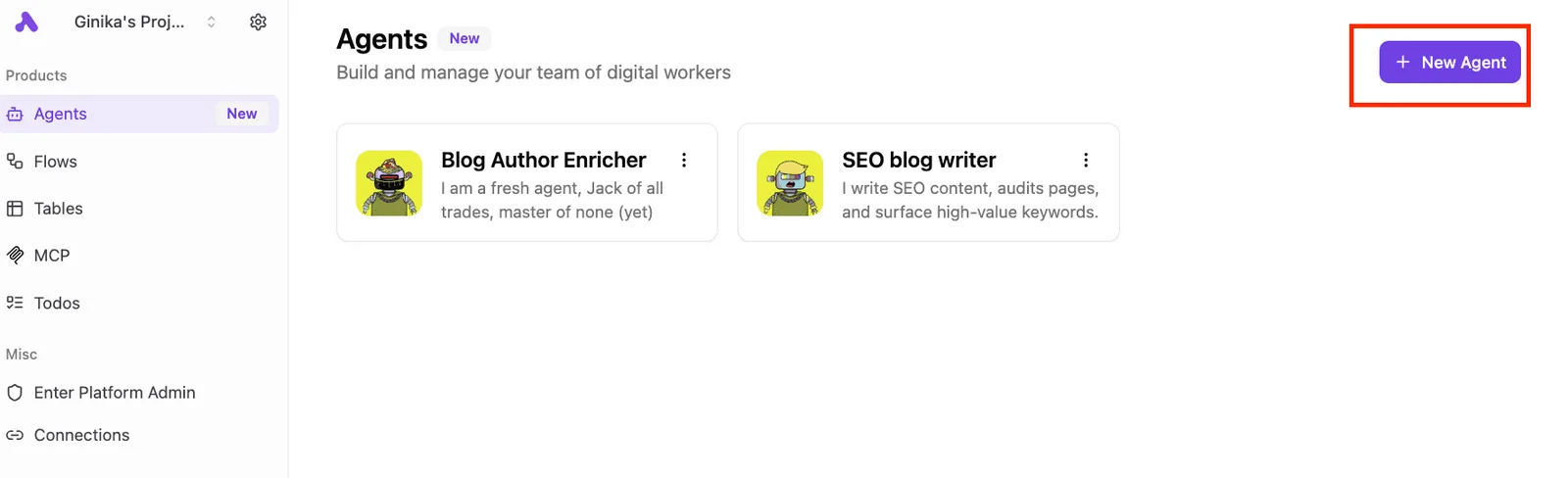
Yellow robot icons represent agent cards like the "Blog Author Enricher" and the "SEO blog writer," each accompanied by specific functional descriptions. In the top right corner, a "+ New Agent" button allows for rapid scaling of the research team.
As a research library grows, this centralized management ensures that the underlying logic remains visible to the entire product organization.
### Insight7 Voice AI Agents launch date and availability
On October 15, 2026, [Insight7](https://insight7.io/blog) officially launched its Voice AI Agents, making autonomous customer interviewing available to its global user base. The platform has tiered access to its intelligence features, allowing teams to test the technology before committing to enterprise-scale deployments.
**$0 per month** is the cost of the Free plan for basic intelligence tasks, which means users can explore core functionality without any financial commitment.
At the top tier, the Plus plan is $20 per month for higher capacity and advanced research capabilities, allowing power users to handle more demanding workflows, so those with heavy processing needs can avoid frequent rate limits.
## Autonomous moderation and synthesis capabilities in Insight7
Insight7 Voice AI Agents conduct end-to-end user interviews. They combine proprietary conversational logic with frontier reasoning models to moderate discussions and probe for deeper context.
Furthermore, they synthesize findings into actionable reports without human intervention. This shift moves user research from a synchronous task managed by a researcher’s calendar to an asynchronous service that scales alongside participant availability.

### How the voice AI agent starts interviews
The agent enters the conversation through a variety of flexible deployment methods tailored to the participant's environment. For web-based research, teams can embed a specialized chat-to-voice widget directly into their product dashboard or landing page.
This allows users to opt into a research session with a single click, triggering the agent to open a high-fidelity audio channel immediately.
Alternatively, the agent can initiate outbound communication by calling a participant's phone number at a scheduled time. This telephony integration uses standard VoIP protocols to bridge the AI's reasoning engine with the global telephone network.
For scheduled video conferences, the agent joins as a virtual participant via a provided Zoom or Google Meet link, where it listens and speaks just like a human moderator.
### Real-time conversational intelligence
The platform functions as a specialized AI call center for both human and AI agents, using the [Insight7](https://insight7.io) engine to manage the nuances of verbal discovery. For complex reasoning, these agents utilize models like Claude Fable 5.2 from [Anthropic](https://docs.anthropic.com/en/docs/about-claude/models) rather than relying on static surveys.
### How the AI agent asks follow-up questions
The AI follows a participant’s unique narrative thread while staying aligned with the research goals.
When a participant gives a brief or vague response, the agent identifies the gap in data and generates a relevant follow-up question in real-time to ensure the session yields high-quality qualitative data.
How these agents sit within a broader automation framework is shown in the following visual, which tracks the logic flow from a user’s initial chat message to the AI agent’s reasoned response.
The workflow builder canvas shows an AI agent workflow with three connected steps, meaning the user can visualize the logical progression of their automated process.
These include a trigger "When clicking 'Execute workflow'", a chat message receiver "When chat message received", and an "AI Agent" step configured with OpenAI Chat Model and Simple Memory.
Input and output data appear in the right panel execution logs, displaying a chat interaction where a user sent "hi" and the AI agent responded "Hello! How can I assist you today?".
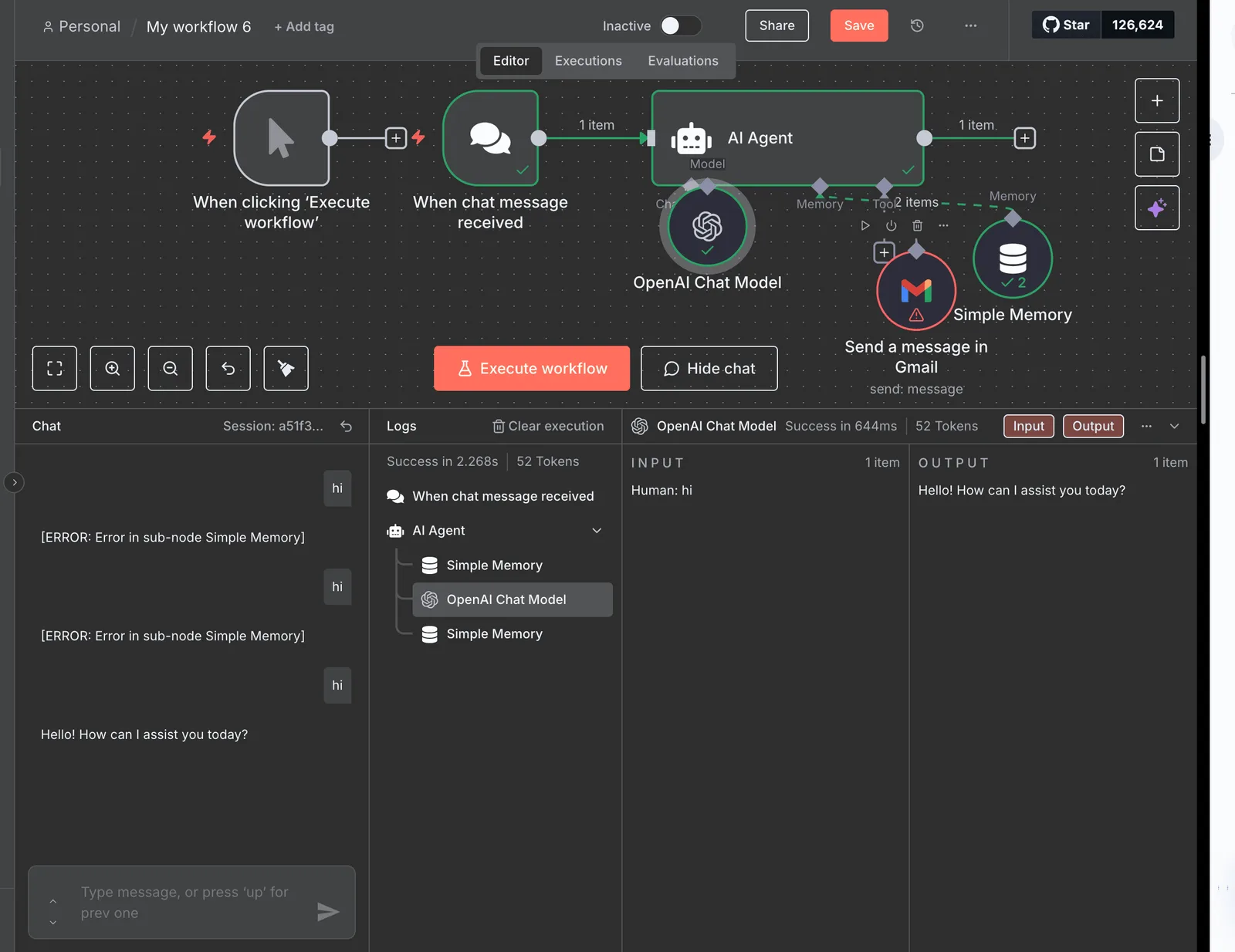
The left sidebar shows a chat interface with conversation history and error messages from the Simple Memory sub-node.
With this architectural clarity, research ops teams can verify that the agent is maintaining context through its memory sub-nodes before deploying the agent to live participants. Once the conversation concludes, the platform transitions from active moderation to data processing.
### Automated insight extraction and reporting
Claude Haiku 5.5 handles the post-interview analysis for high-volume needs. These models are built for latency-sensitive tasks like classification and routing. This stage of the workflow transforms raw audio into structured data by executing three distinct operations:
1. Transcription and Diarization involves converting multi-speaker audio into text while correctly attributing statements to the participant versus the AI moderator.
2. Thematic Tagging maps specific quotes to pre-defined research pillars or emerging trends to identify recurring pain points across a cohort.
3. Executive Summarization distills hours of dialogue into concise briefs so that product managers can act on user feedback without listening to every recording.
By automating these steps, Insight7 removes the manual bottleneck of coding transcripts, allowing teams to move directly from data collection to strategy.
## Automating research workflows with Activepieces and Insight7
Activepieces moves Insight7’s autonomous research outputs into your existing production environments via 748+ integrations without requiring a custom-coded backend.
By treating Insight7 as a standardized node within an automation flow, you ensure that raw interview data never sits idle in a silo where stakeholders will likely ignore it.
### Connecting via the HTTP request integration
Activepieces uses the HTTP Request integration to send interview transcripts to Insight7 for immediate analysis, a capability used by companies like MoneyGram and Moneypenny to bridge disparate data sources.
Because Insight7 supports standard REST API protocols, you can trigger an analysis the moment a recording finishes in a meeting tool like Zoom or Google Meet.
This connection eliminates the manual export-import cycle that typically delays research synthesis by several days. The following steps outline the configuration required to bridge these two environments, which means the user must follow this sequence to ensure data flows correctly between the systems.
Configure the Insight7 API endpoint within the HTTP Request integration to define where the system processes the data.
Map JSON fields to Google Sheets to ensure the system logs every insight in a structured format. Set a Slack notification trigger to alert the product team as soon as the synthesis is complete.
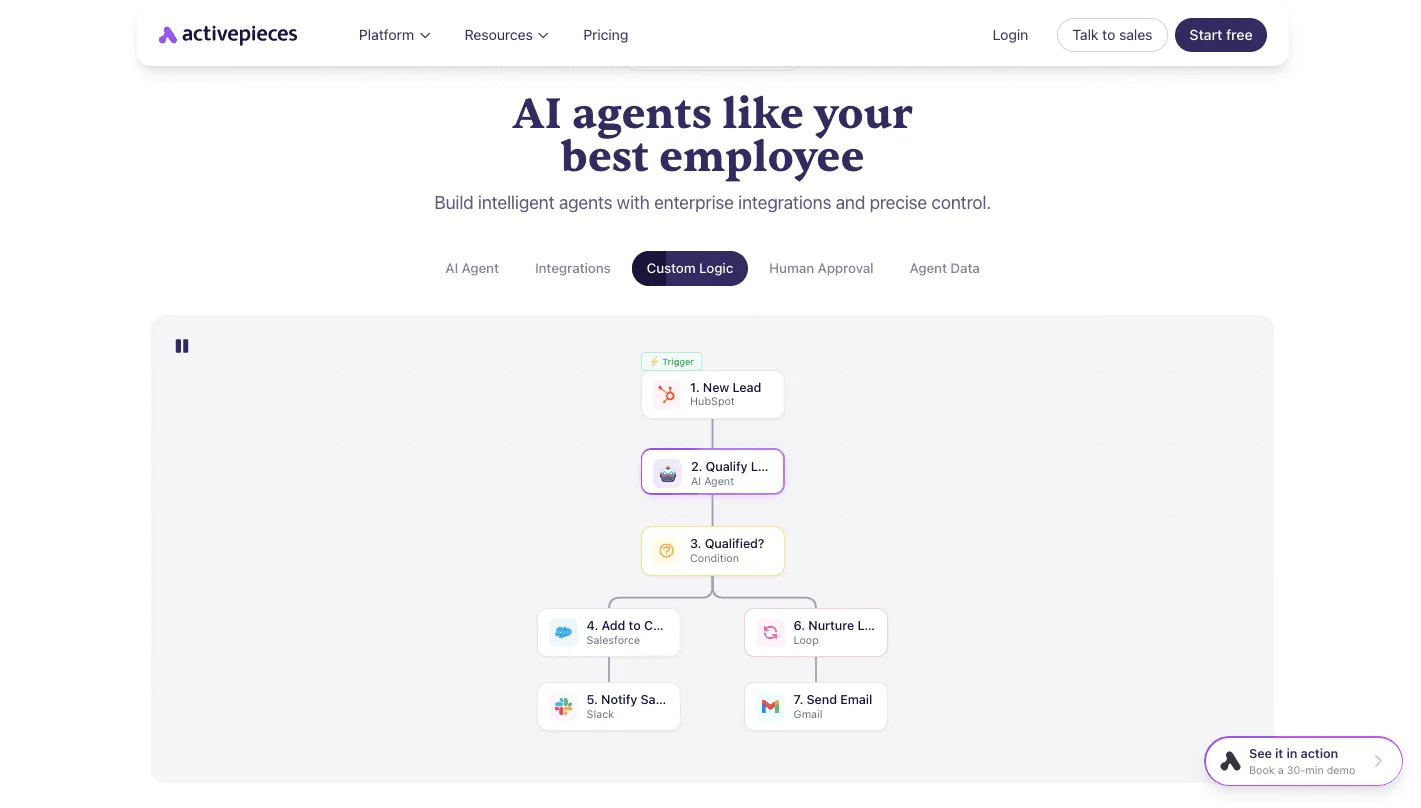
Activepieces makes every connector used in these flows instantly available as an agent tool.
As defined in the Integrations Framework and the MCP Server documentation in the open source repo, the same integration action that runs in a flow is the one exposed as an MCP tool for your research agents.
This unified catalog means you never have to wire up the same Insight7 integration twice to use it across both deterministic flows and autonomous agents.
This sequence transforms a static file into a live data stream. The research team becomes the engine of the organization rather than its bottleneck.
### Using OpenAI-compatible providers for custom logic
Insight7 integrates with the OpenAI-compatible provider framework in Activepieces. This allows teams to layer advanced reasoning models like Claude Fable 5.2 or GPT-6 Astra over their research data.
By selecting the "OpenAI" integration in Activepieces and swapping the base URL to point to your Insight7 environment, you can use these frontier models to perform specialized tasks such as sentiment scoring or feature request categorization.
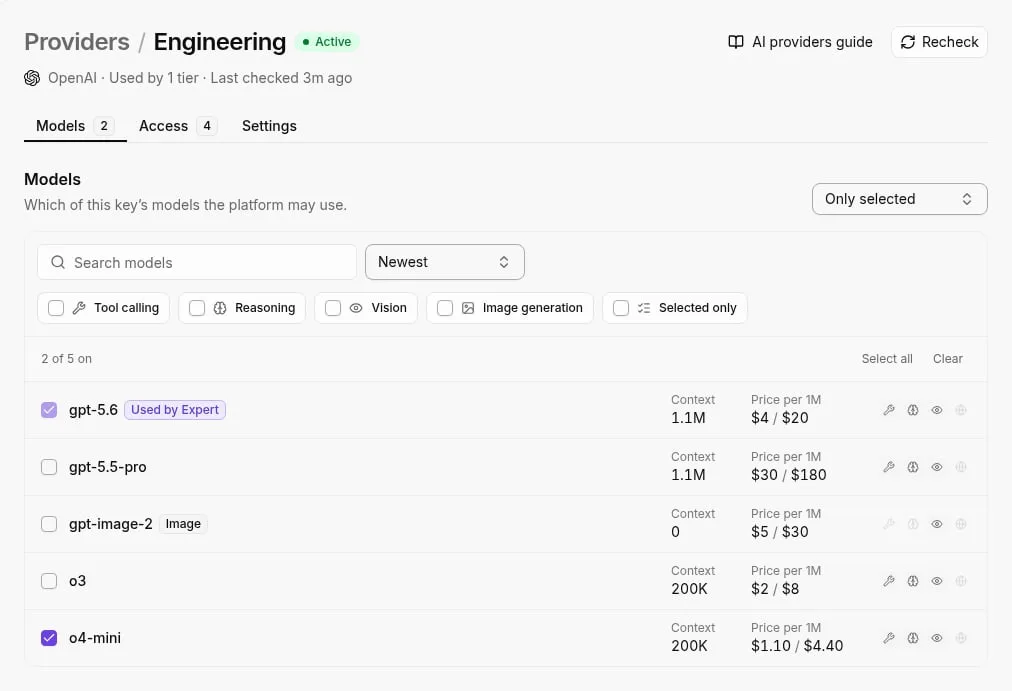
Patterns across hundreds of interviews that a human researcher might miss are easier to identify when you leverage the reasoning capabilities of Claude Fable 5.2.
Using a standardized endpoint means you can swap between different reasoning engines as your project requirements change without rebuilding your entire automation logic from scratch.
### Scaling research data to your CRM
Sending synthesized insights directly to a CRM like Salesforce or a project management tool like Jira ensures that customer feedback is visible to the people building the product.
When Insight7 identifies a recurring pain point, Activepieces can automatically create a new record or update an existing lead. Sales and engineering teams receive direct quotes and validated evidence.
While an SDK provides the code for these transfers, Activepieces provides the governance. The platform treats each AI agent as a distinct user, applying Enterprise RBAC and SSO policies to control which CRM records an agent can access or modify.
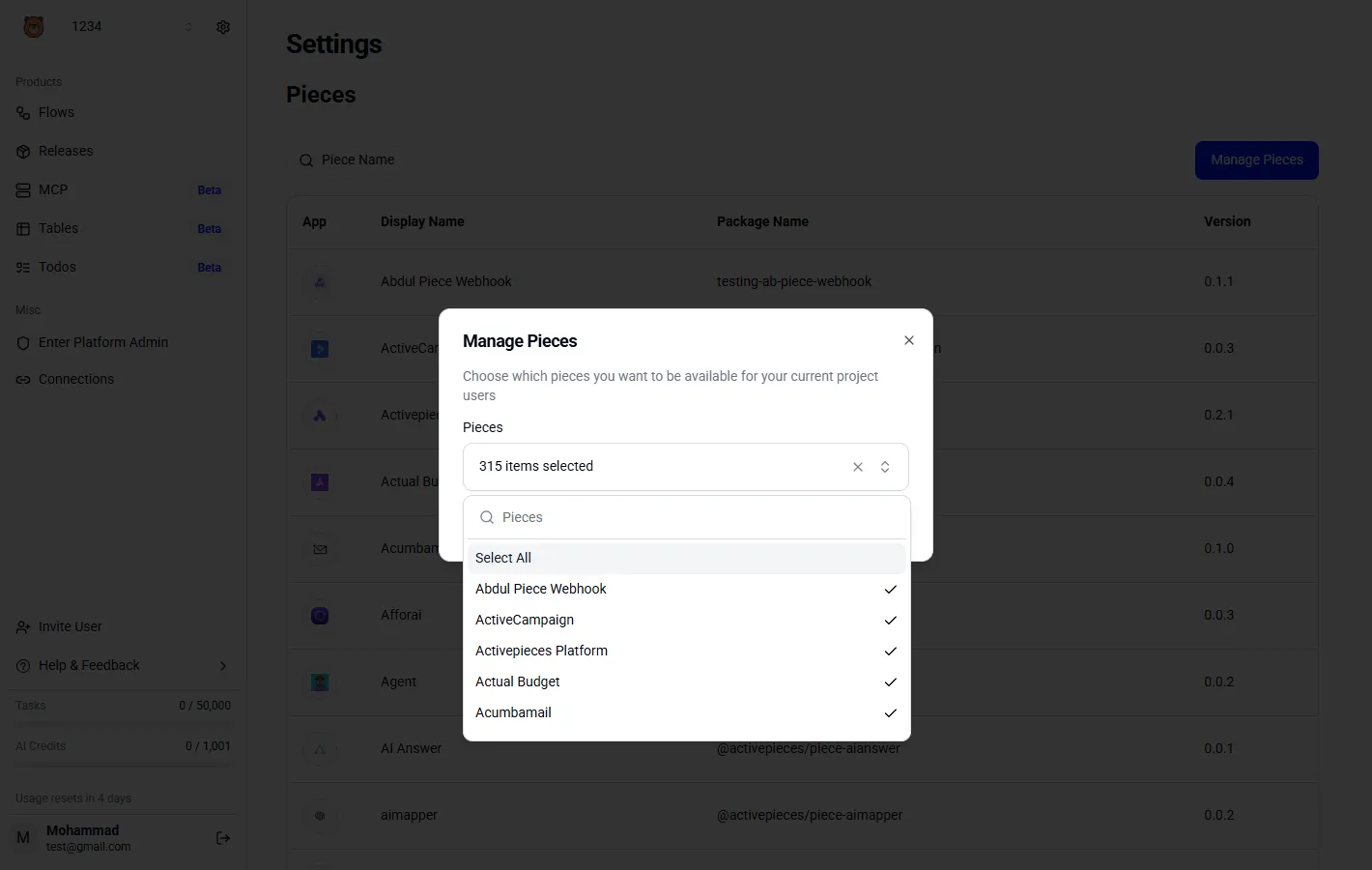
By checking the run detail view for any research step, teams can audit every individual tool call and its specific input-output payload, ensuring the agent operates within the same security model as a human researcher.
Valuable user feedback is often buried in PDF reports, creating "research debt." By syncing these outputs to the tools your team already uses, you turn qualitative research into a high-velocity signal that informs every sprint and sales call.
## Improve research speed and operational costs
AI agents eliminate the linear relationship between headcount and research volume by automating the entire interview lifecycle from scheduling to synthesis.
In a traditional manual workflow, the physical hours available in a week cap a single researcher. Every additional study requires either a new hire or a delayed product roadmap.
AI agents eliminate the linear relationship between headcount and research volume by automating the entire interview lifecycle from scheduling to synthesis.
By deploying Insight7 Voice AI Agents, teams move from a model of human endurance to one of parallel processing.
The shift in output capacity is visible when comparing the three primary modes of qualitative data collection. Manual research is constrained by synchronous scheduling.
AI-assisted research speeds up the analysis of recorded files but still requires a human to conduct the session. Autonomous research allows for hundreds of simultaneous, unmoderated conversations.
The following data illustrates how moving to an autonomous agentic workflow removes the ceiling on monthly user touchpoints:
| Research Mode | Interviews per Month |
|:--- |:--- |
| Manual | 30 |
| AI-Assisted | 200 |
| Agentic | 4,000+ |
_Prices and plan limits checked against [insight7.io](https://insight7.io/blog) and [insight7.io](https://insight7.io) and [docs.claude.com](https://docs.claude.com/en/docs/about-claude/models/overview) and [openai.com](https://openai.com/chatgpt/pricing) and [gemini.google](https://gemini.google/subscriptions) on November 14, 2026._
In a single afternoon, a product team can validate a new feature across their entire global user base. They no longer wait weeks for a statistically significant sample of manual interviews.
### AI models powering Insight7 voice agents
To maintain high reasoning quality at this scale, these agents utilize advanced logic models to handle complex user redirects and follow-up questions. Claude Fable 5.2 manages complex reasoning.
Throughout a twenty-minute session, the agent remains focused on the research objective.
Gemini 3.5 Transcribe handles the immediate diarization of the conversation. The resulting data is structured for analysis the moment the call ends.
By offloading the repetitive labor of interviewing to these specialized models, researchers stop acting as data collectors and start acting as strategic analysts.
This transition prevents the "research debt" that typically accumulates when teams have more questions than the capacity to answer them. No product decision is ever made in a data vacuum.
## Frequently asked questions about Insight7 Voice AI Agents
### Does Insight7 support live multilingual interviews?
Insight7 uses Gemini 3.5 Live Translate to bridge language gaps during active participant sessions. This model provides instantaneous speech-to-speech conversion. a researcher can probe for deeper insights in their native tongue while the participant hears and responds in theirs.
To ensure the system preserves the nuance of these conversations, it employs Voxtral Small Transcribe 3 to generate high-accuracy, diarized scripts.
This dual-model approach means teams can recruit from international markets without hiring local moderators for every territory. It effectively removes the geographical constraints that typically limit sample diversity.
### How does Insight7 handle data privacy and GDPR?
Data governance is managed through a combination of strict SOC2 Type II compliance and automated PII (Personally Identifiable Information) redaction workflows.
The system also runs incoming audio through Mistral Moderation 2, which provides moderation with jailbreak detection.
Participant identities are protected by default rather than by manual oversight. The platform adheres to the following infrastructure standards:
Users can select specific AWS (Amazon Web Services) regions for data at rest to meet regional sovereignty requirements.
All research assets are secured using AES-256 encryption, so intercepted data remains unreadable to unauthorized parties. Role-Based Access Control (RBAC) restricts interview recordings to specific team members, preventing internal data leaks.
These technical safeguards ensure that every automated interview meets the rigorous audit requirements of legal and security departments.
### Can i export Insight7 data to my own database?
Teams can move structured insights into their own environments using standard Webhook listeners or a REST API (Application Programming Interface).
This connectivity allows for the immediate synchronization of research findings with internal tools, such as a Snowflake data warehouse or a customer sentiment dashboard in Tableau. The export process follows a structured sequence:
The Voice AI Agent completes the interview and triggers a "session.completed" event. Claude Haiku 5.5 extracts specific entities, such as feature requests or pain points, into a JSON (JavaScript Object Notation) format.
The API pushes this structured payload to the user’s endpoint. The data is formatted for immediate ingestion.
This automated pipeline eliminates the need for manual CSV (Comma Separated Values) uploads, so product teams can act on user feedback the moment a session concludes.
## Related reading
- [ElevenLabs Realtime Speech to Text for Voice Agents](https://www.activepieces.com/blog/elevenlabs-realtime-voice-agents-speech-to-text-guide)
- [Notion Agents vs Workflows: What Each Costs in 2026](https://www.activepieces.com/blog/notion-agents-vs-workflows-what-each-costs-in-2026)
- [HR Agent Guide: How AI Agents for HR Improve Workflows](https://www.activepieces.com/blog/ai-agents-for-hr)