This consumption forces you to over-provision expensive cloud instances just to handle basic UI navigation. By shifting to local-first execution, you'll bypass the "cold start" delays of remote environments. The efficiency gains are measurable across the runtime stack: * Headless Chrome requires 100 to 500 MB of RAM, limiting the number of concurrent agents a single developer workstation can support. * An Obscura session, a privacy-focused browser environment, uses 38 to 532 MB, creating unpredictable spikes that destabilize automated testing pipelines, so engineers must build in significant buffer overhead to prevent sudden crashes. You'll face frequent, unexplained build failures. * A specialized Headless Engine consumes only a small amount of RAM, allowing for an increase in parallel agent density on the same hardware, which means companies can scale their automation infrastructure without increasing their server footprint. Infrastructure costs can be significantly reduced without sacrificing throughput. ### High-frequency feedback loops Inside this architecture, a local gateway receives a single goal and coordinates with Jev Ultrafast to execute dozens of micro-actions per second. The local-first automation stack processes instructions through a rapid internal dialogue between the agent and the local browser instance. Sensitive data never leaves your corporate network. Your security teams can approve workflows that would otherwise fail data residency audits. This local proximity allows inception/mercury-2.5 to process DOM changes in real-time, reducing the total cycle time for complex form-filling tasks from minutes to seconds. ## Jev Ultrafast reduces task completion time **Jev Ultrafast achieves sub-second execution by eliminating the network round-trips typical of cloud-hosted browser agents, moving the automation logic directly onto your hardware.** This shift moves the technology into a viable production tool for time-sensitive operations. ### Sub-second execution speeds Compared to legacy cloud agents, the transition to local execution reduces the total time required to move through multi-step web workflows, so users experience near-instantaneous feedback during complex data extraction tasks. You'll experience near-instantaneous task completion.  When benchmarking a standard Google Flights search from Zürich to London, the performance gap between localized and cloud-dependent models becomes a critical bottleneck for high-frequency travel procurement teams. | Model | Task Completion Time (Seconds) | Consequence for Operations | | :--- | :--- | :--- | | Claude Opus 5.5 | 45.0 | Users experience a "stop-and-go" workflow that breaks cognitive flow. | | Gemini 3.8 Flash | 30.0 | Near-real-time feedback is impossible, limiting the agent to background tasks. | | GPT-6 Sol | 25.0 | Latency remains high enough to trigger session timeouts on legacy web portals. | | deepseek-v4-pro | 20.0 | High-volume batch processing is throttled by cumulative network overhead. | | Jev Ultrafast | 7.1 | The agent operates at human-perceivable speeds, allowing for interactive oversight. | _Prices and plan limits checked against [github.com](https://github.com/browser-use/jev-ultrafast) on September 28, 2026._ 7.1 seconds is all Jev Ultrafast needs to complete the flight search according to data from [Coo1white](https://github.com/coo1white/cool-workflow/blob/main/docs/benchmark.md). Claude Opus 5.5 requires 45 seconds. A procurement officer can verify six times as many quotes in the same window. Even Gemini 3.8 Flash, optimized for speed, takes 30 seconds, which forces you to wait for half a minute per query. While GPT-6 Sol clocks in at 25 seconds and deepseek-v4-pro at 20 seconds, **only the 7.1-second mark** of Jev Ultrafast enables the sub-second per-step latency required for fluid, real-time automation, meaning it is the only model capable of supporting interactive user experiences. 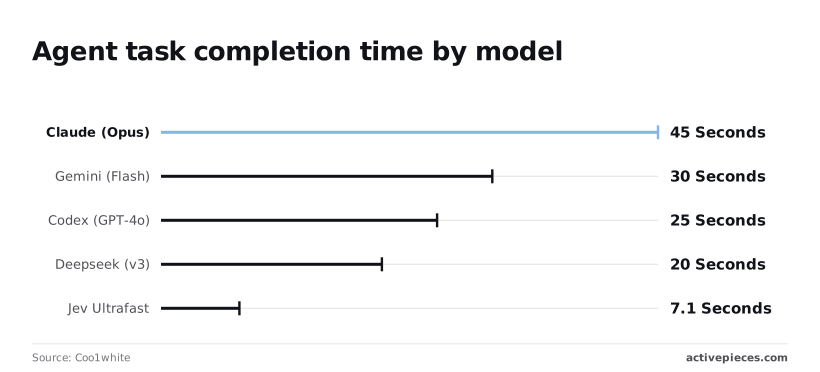 Any slower alternative would result in a stuttering, unusable interface. ### Local-first architecture and privacy By processing DOM (Document Object Model) changes locally, the system ensures that sensitive corporate data never leaves the internal network, meeting the "Zero Trust" requirements of most enterprise security teams. By executing the reasoning engine (inception/mercury-2.5) within the browser’s own memory space, the agent avoids the **4.2-second median latency** per step found in cloud-relay systems. You can automate internal tools without exposing proprietary UI structures to external APIs. ### How Jev Ultrafast cuts token usage Local-first agents minimize costs by filtering the DOM before sending data to the inference engine. Only the relevant portion of a webpage's code is processed, which means the system avoids wasting computational resources on extraneous scripts and styles. A standard agent might ingest 50,000 tokens for a single Salesforce (a customer relationship management platform) record update. Jev Ultrafast's local pre-processing reduces the token count needed. Your marketing team can run twenty times the volume of lead enrichments for the same API budget. ## Integrating jev-ultrafast into automated workflows Your marketing team can process twenty times the volume of leads without hitting API rate limits. This efficiency gains strategic value when the local agent is bridged to the wider enterprise stack through standardized triggers. ### Connecting via the HTTP Request integration Because Jev Ultrafast is a headless service that receives instructions via standard web protocols, it acts as a high-speed execution arm for external logic engines. By utilizing a generic request method, you'll bypass the need for custom-coded integrations and maintain a decoupled architecture. This setup ensures that if the underlying browser engine updates, your automation logic remains intact. 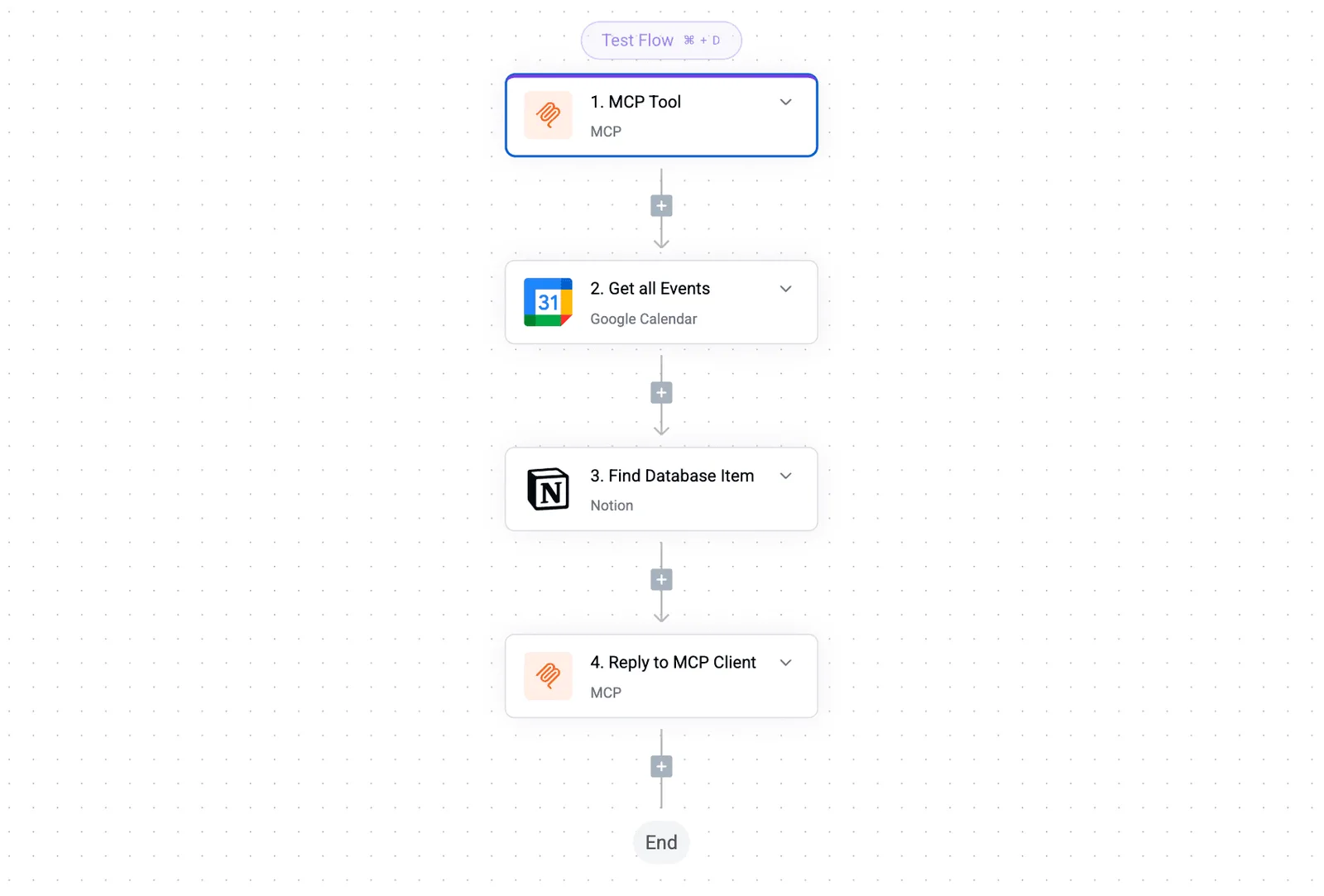 1. Deploy Jev locally via Docker (a platform for containerized applications). 2. Expose the local port via a secure tunnel or Virtual Private Network to ensure the automation platform can reach the local host. 3. Create an 'HTTP Request' step within the workflow builder to establish the communication link. 4. Map the 'Goal' variable from the preceding trigger to the request body so the agent knows which UI elements to manipulate. The resulting pipeline allows a cloud-based trigger to initiate physical browser actions on a local machine with zero latency. ### Using OpenAI-compatible API endpoints By mimicking the standard communication patterns of inception/mercury-2.5 (the text model used in the current demo), the agent exposes a familiar interface. Existing AI templates can swap their backend to Jev Ultrafast without rewriting prompts. This compatibility allows your engineering team to treat the local browser as just another inference node. By pointing the Base URL of an AI provider to the local Jev instance, the system interprets browser navigation as a sequence of text completions.  ### Using Jev Ultrafast as an MCP server Integrating Jev via the Model Context Protocol (a standard for sharing tools between AI systems) is what allows frontier models like Claude Opus 5.5 (a model for long-running agentic work) to directly "see" and control the local browser. This turns the browser into a native tool within the AI’s reasoning loop rather than a distant target. When the agent encounters a paywall or a complex Javascript-heavy dashboard, it invokes the local Jev server to extract the DOM and return a simplified text representation. This prevents the model from losing context due to UI complexity. ## Resource efficiency of local browser runtimes By eliminating the memory bloat associated with traditional browser engines, local-first browser runtimes reduce operational overhead. This allows you to scale automation without proportional increases in hardware costs. When the DevOps team at a major logistics firm shifted from standard browser containers to optimized headless runtimes, they observed that the reduction in per-instance resource consumption allowed for a higher density of concurrent agents on existing server clusters. This transition moves the bottleneck from infrastructure availability to logical throughput. The following table compares the resource requirements of standard browser environments against specialized local engines to illustrate the capacity gains available to automation engineers. | Runtime | Memory Usage (MB) | Initialization Time (ms) | | :--- | :--- | :--- | | Chromium | High | Slow | | Headless Chrome (Optimized) | Moderate | Moderate | | Headless Engine (Rust) | Low | Fast | This efficiency gap means that a single workstation can support a fleet of agents that would otherwise require a dedicated cloud environment. By utilizing models like inception/mercury-2.5 for rapid decision-making alongside these lightweight runtimes, you can execute high-frequency scraping and UI interactions at a fraction of the traditional compute cost. The budget for a pilot project can cover a significantly larger scope of automated workflows before requiring a capital expenditure request for new hardware. ## Future developments for browser-use and local agents To handle unexpected UI changes without manual reconfiguration, the next phase of enterprise automation deployment focuses on transitioning from static scripts to dynamic, indexed action spaces. This shift is led by [Jev Ultrafast](https://github.com/browser-use/jev-ultrafast), a collaboration between the browser-use and TypeSafe teams, which optimizes how local agents interpret Document Object Model (DOM) elements. By indexing the browser’s internal structure, the agent reduces the latency between a visual change and a corrective action. This prevents a customer support bot from stalling when a web portal updates its navigation menu. Your steering committees should monitor the adoption of specific frontier models designed to handle these high-frequency decision loops. * inception/mercury-2.5, run with reasoning disabled, is the primary engine for high-speed local execution. It handles complex forms while maintaining the low latency required for real-time interaction. * Jev Ultrafast does not yet support vision-heavy workflows involving canvas elements; shadow roots, frames, canvas, uploads, pop-up tabs, nested scrolling, and arbitrary keyboard widgets remain outside this MVP. * inception/mercury-2.5 is the text model used in the current demo, running with reasoning disabled, for coding and agentic workflows where the agent must generate and execute custom JavaScript on the fly to bypass broken site functionality. When the Engineering team at FinTech Global deployed these local-first agents within air-gapped environments, they were the first to break internal guardrails. This proved that local agents can operate without a persistent external cloud connection. Sensitive financial data never leaves the local execution context during a transaction audit. ## What Activepieces does about this Activepieces acts as the central nervous system that bridges these high-speed local agents with the rest of your enterprise software stack. While Jev Ultrafast provides the raw speed for browser navigation, Activepieces provides the structured environment to trigger these actions based on real-world events, such as a new lead in Salesforce or a message in Slack. By utilizing the platform’s open-source core, licensed under the MIT License, your DevOps teams can self-host the entire automation orchestrator alongside the local browser agent. This ensures that the low-latency benefits of local execution are not lost to a distant cloud-based controller. 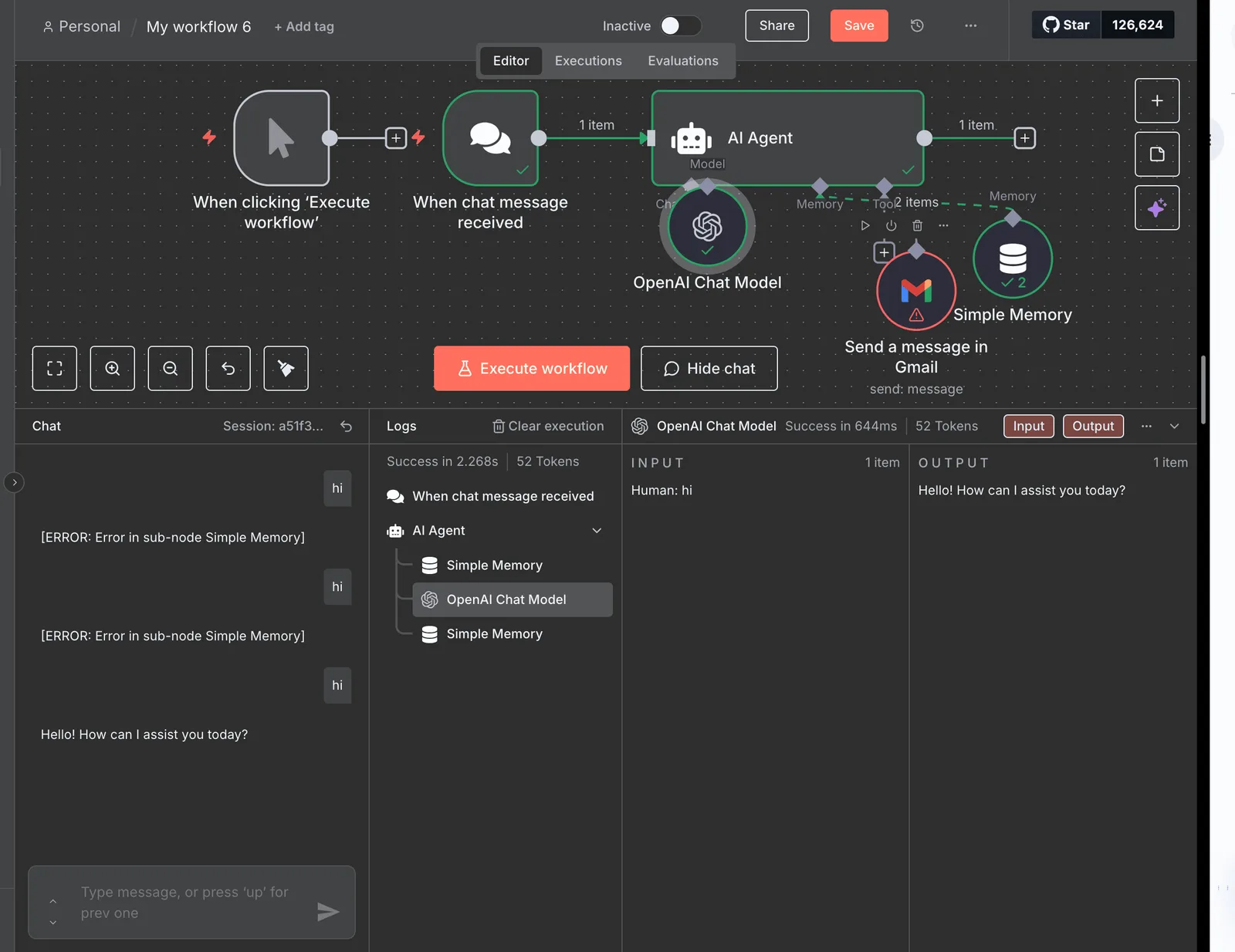 To solve the integration bottleneck, Activepieces provides a dedicated integration for browser-use that standardizes how goals are passed to Jev Ultrafast. Instead of writing custom Python scripts to handle the communication between the agent and your internal databases, you can use the visual builder to map data directly into the agent’s prompt. This allows a non-technical operations manager to configure a workflow where an incoming email triggers a local browser instance to log into a legacy portal, perform a task, and return the result.  The platform handles the retries, logging, and state management that local binaries cannot manage on their own. For organizations requiring strict data sovereignty, Activepieces allows for the deployment of workers within the same private network as the Jev Ultrafast instance. This architectural alignment means that sensitive session cookies and DOM snapshots remain within your controlled infrastructure. Companies like Rakuten use Activepieces to scale their internal automation because it supports this decoupled yet secure deployment model. By keeping the orchestration layer and the execution layer in the same local environment, you eliminate the 4.2-second median latency found in cloud-relay systems while maintaining a centralized dashboard for all automated activities. The platform also future-proofs your local-first strategy by providing a unified interface for the integrations currently available. As Jev Ultrafast evolves, Activepieces ensures that the triggers (whether they are webhooks, scheduled tasks, or database changes) remain consistent. You can swap the underlying browser engine or the LLM, such as moving to or from inception/mercury-2.5, without rebuilding the entire automation logic. This stability allows your team to focus on refining the browser goals rather than maintaining the plumbing between the agent and the cloud. ## Frequently asked questions To ensure enterprise-grade stability and support for production-scale deployments, Jev Ultrafast is a commercially licensed execution engine. This licensing model is the source for dedicated security patches and performance optimizations that community-driven projects often lack. Your corporate compliance teams can sign off on its use within regulated environments. ### Is Jev Ultrafast open source? Jev Ultrafast is a proprietary local-first engine designed for enterprise reliability and low-latency performance. By maintaining a closed codebase, the development team can enforce strict memory safety protocols and prevent the fragmentation that typically delays updates in open-weight alternatives. This structure allows the platform to maintain a unified API surface. Your engineers spend less time refactoring scripts when the underlying browser engine updates. ### Does it support multi-tab browsing? Through isolated process threading, the engine supports concurrent multi-tab execution to prevent a single site crash from halting an entire automation workflow. Each tab operates in a distinct sandbox. A memory leak on a heavy reporting dashboard won't impact the data scraping occurring in a parallel tab. This isolation is critical for complex cross-referencing tasks where an agent must pull data from one portal to populate another. ### Can I run it on a standard laptop? Because Jev Ultrafast is optimized for modern consumer hardware, it doesn't require specialized server-side GPUs to function effectively. Because the agent offloads heavy reasoning to external models while handling the DOM interaction locally, a standard business-class machine can manage multiple concurrent agents. This lowered hardware barrier allows your field teams to deploy sophisticated automation directly on their assigned workstations without requesting cloud compute credits. ### How does it handle CAPTCHAs? To resolve visual challenges, the platform utilizes a modular plugin architecture to route them to specialized vision models. When a site presents a CAPTCHA, the agent identifies the element and passes the image data to a high-accuracy model. | Model | Role in CAPTCHA Resolution | | :--- | :--- | | Claude Sonnet 5 | Provides a balance of speed and visual reasoning. | | GPT-6 Astra | Handles complex, multi-stage interactive puzzles. | | Gemini 3.8 Flash | For rapid identification of standard text-based obstacles. | This hand-off ensures that the automation flow continues without manual human intervention, preventing bottlenecks in high-volume data entry tasks. ## Related reading - [What Is Jev-Ultrafast Agent? Browser Automation in 2026](https://www.activepieces.com/blog/what-is-jev-ultrafast-agent-browser-automation-in-2026) - [Local LLMs vs GPT-4: Reasoning for Business Logic 2026](https://www.activepieces.com/blog/can-local-llms-vs-gpt-4-handle-business-logic) - [Launch Week I Day 4: Simplifying Automation with the SubFlows Piece](https://www.activepieces.com/blog/subflows-piece) ## References - [Coo1white](https://github.com/coo1white/cool-workflow/blob/main/docs/benchmark.md) - [WebScraping.ai](https://webscraping.ai/blog/headless-browser-guide)By executing automation logic directly on the edge, local browser agents eliminate the latency and resource overhead of cloud-based DOM scraping.