This volume of traffic is the primary indicator of a recursive loop. If the middleware can't distinguish between a human-initiated event and a system-generated one, it'll continue to execute until the infrastructure fails. The following table outlines the immediate operational debt incurred during those few minutes of uncontrolled execution: | Metric | Impact | Consequence | | :--- | :--- | :--- | | Database Size | Increased 40GB | Storage costs spiked and backup windows were missed | | API Requests | 10,000 daily limit hit in 4 mins | All other company integrations were paralyzed for the day | | Manual Cleanup | 48 man-hours | Three engineers spent two days manually scrubbing the production database | These figures represent a total loss of trust in the automation's ability to fail safely. ### The emergency stop: Killing the webhook listener The only way to halt the spiral was to manually disable the webhook listener. This move effectively blinded the company's automated workflows to prevent further data corruption. While tools like [Activepieces](https://www.activepieces.com) allow for more granular control over flow execution, the team at the time had no way to pause the queue or inspect the pending payloads. They had to kill the entire connection. This meant they sacrificed every legitimate business process relying on that integration to stop the loop. This recovery method is the hallmark of an architecture that lacks a visible, auditable middleware layer. 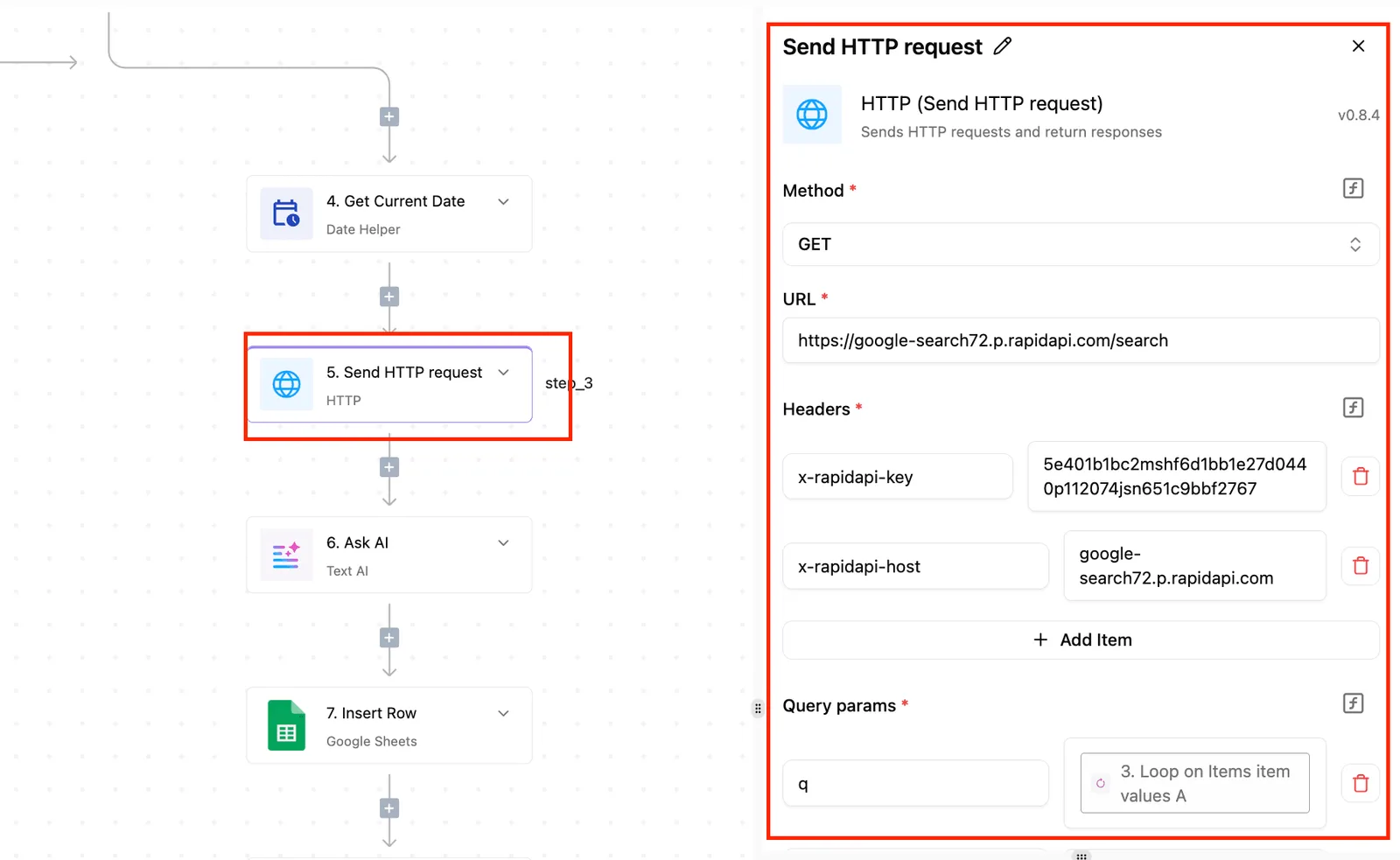 ## Why simple chat-to-Odoo webhooks frequently fail Standard webhooks lack the internal logic gates required to distinguish between a human user’s request and a bot’s automated response. When you connect a chat interface to an ERP system like Odoo without a middleware layer to filter event metadata, the system treats every incoming packet as a fresh command. This lack of state awareness means the integration can't remember that it just performed an action. This leads to systems that execute redundant or harmful tasks simply because they were told to listen to a specific channel. ### The recursive loop: Bots talking to themselves Recursive loops occur when the outgoing notification from your ERP satisfies the trigger criteria for the incoming webhook. This creates a closed circuit where the bot interprets its own status update as a new user command.  The following diagram illustrates a Slack message triggering an Odoo record creation, which then generates a Slack notification that the bot misreads as a new message, restarting the cycle indefinitely. The loop persists until the API rate limits are hit or the database crashes under the weight of thousands of duplicate entries. This happens without a middleware filter to drop messages based on a "bot_id" attribute. You need a way to inspect the header of every packet before it touches your ERP logic.  ### Missing validation between the chat UI and the ERP API Simple webhooks fail because they don't perform schema validation between the loose formatting of a chat app and the strict requirements of an ERP. A user might type a project name into a chat window that doesn't exist in the Odoo database. A basic webhook will still attempt the POST request, resulting in a 400-series error that the user never sees. By moving this logic to a visible queue, you can catch these mismatches (such as a missing field or a character limit violation) and resolve them in the middleware instead of letting errors pile up in your server logs. ### The danger of unrestricted write-access via chat Granting a chat bot unrestricted write-access to your ERP creates a security vacuum where any user with access to the chat channel can alter sensitive financial or inventory data. Because these integrations often use a single administrative API key, the audit trail in Odoo will show the bot as the author of every change. This effectively erases the identity of the person who actually initiated the command. To fix this, you must implement a gateway that maps chat aliases to specific ERP permissions. This ensures that a support agent can update a ticket status but can't accidentally, or intentionally, delete a purchase order. ## The technical constraints of the Odoo API Odoo limits external access to just 28 [ORM methods](https://github.com/parth-unjiya/odoo-mcp-gateway/commit/d7df11eeb082ad1b9472a3be759cf5991221508d). Any chat integration attempting to call custom logic outside this set will silently fail and leave your support team staring at a spinning loading icon. It is important to note that these specific limits (the 28 ORM methods, 5 HTTP methods, and **18 blocked models**) are constraints imposed by the odoo-mcp-gateway community project. 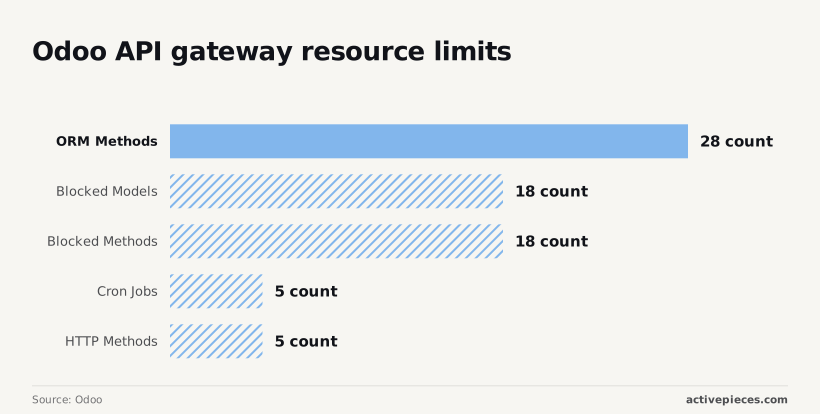 They do not represent the native Odoo XML-RPC or JSON-RPC APIs, which offer a much broader range of interaction for custom integrations. ### Odoo chat integration pricing tiers The table below refers to the pricing structure of the Odoo Chat Integration, a specific third-party connector module available in the Odoo marketplace. This service acts as a pre-built bridge between the ERP and chat platforms, charging based on the number of "Active Runs" or successful message executions. While this module simplifies the initial setup, it introduces its own set of usage caps that are independent of Odoo's core API limits. A team using this connector must monitor these tiers to avoid a complete shutdown of chat functionality when volume spikes. | Tier | Price | Active Runs | Support Level | | :--- | :--- | :--- | :--- | | Free | $0/mo | 100 | Community | | Professional | $19.99/mo | 2,000 | Standard | | Team | $69/mo | 10,000 | Priority | Moving to a higher tier increases your monthly throughput, but it doesn't remove the underlying architectural limits of the gateway itself. ### Odoo API HTTP method limitations The gateway restricts you to 5 HTTP methods. This forces every complex operation (from inventory lookups to customer creation) through a narrow bottleneck that can't distinguish between a critical database write and a simple status query. Because there are only 28 ORM methods available, your developers can't simply hook into any part of the business logic they want. The API confines them to basic CRUD operations. If a support agent triggers a chat command that requires a specialized workflow not covered by these 28 methods, the integration will return a generic error, forcing the agent to manually log into the ERP and redo the work they thought was automated. ### Why cron jobs cannot handle real-time chat bursts Standard Odoo configurations are limited to just 5 cron jobs. Using internal scheduled actions to process chat queues means your integration will lag by minutes whenever a system backup or payroll export is running. This resource ceiling creates a direct conflict between operational tasks and customer communication. ### Managing blocked models in the API gateway The gateway explicitly blocks 18 models and 18 specific methods to prevent external scripts from corrupting core financial and system data. As Odoo notes, these 18 blocked models include critical tables like system parameters and user credentials. Any integration designed to sync users via a chat bot will hit a hard wall. Because these 18 methods are hard-coded as restricted, you can't bypass them through configuration. You must instead build a middleware layer that handles the identity logic before it ever touches the Odoo API. ## Fixing the logic gap with Activepieces integrations Activepieces provides an MIT-licensed core that allows teams to inspect the queue and worker architecture before deploying it as a self-hosted gateway for webhook payloads. A security review for a high-stakes ERP integration often stalls when the middleware is a black box. Because Activepieces publishes an MIT-licensed core, you can clone the repository to trace exactly how the worker logic handles Odoo payloads, then run it self-hosted or fully air-gapped to verify the architecture yourself. ### Building a 'Human-in-the-loop' approval step The most effective way to prevent automated garbage from entering your production database is to insert a mandatory pause in the workflow for manual verification. In the Activepieces builder canvas, this manifests as a multi-step sequence that halts execution until a specific condition is met by a team member. The workflow below demonstrates a document automation flow. An AI agent processes a Google Drive file, but the output is funneled into a Router step marked with a warning icon. You ensure that a hallucinating LLM can't create a thousand duplicate invoices while your team is at lunch by routing high-confidence outputs to one branch and flagging anomalies for human review in another. ### Filtering chat events to prevent recursive triggers To stop a "bot-talking-to-bot" loop, you must use the Activepieces Router to verify the origin of every incoming message. Standard integrations often fail because they treat every message from a channel as a trigger. 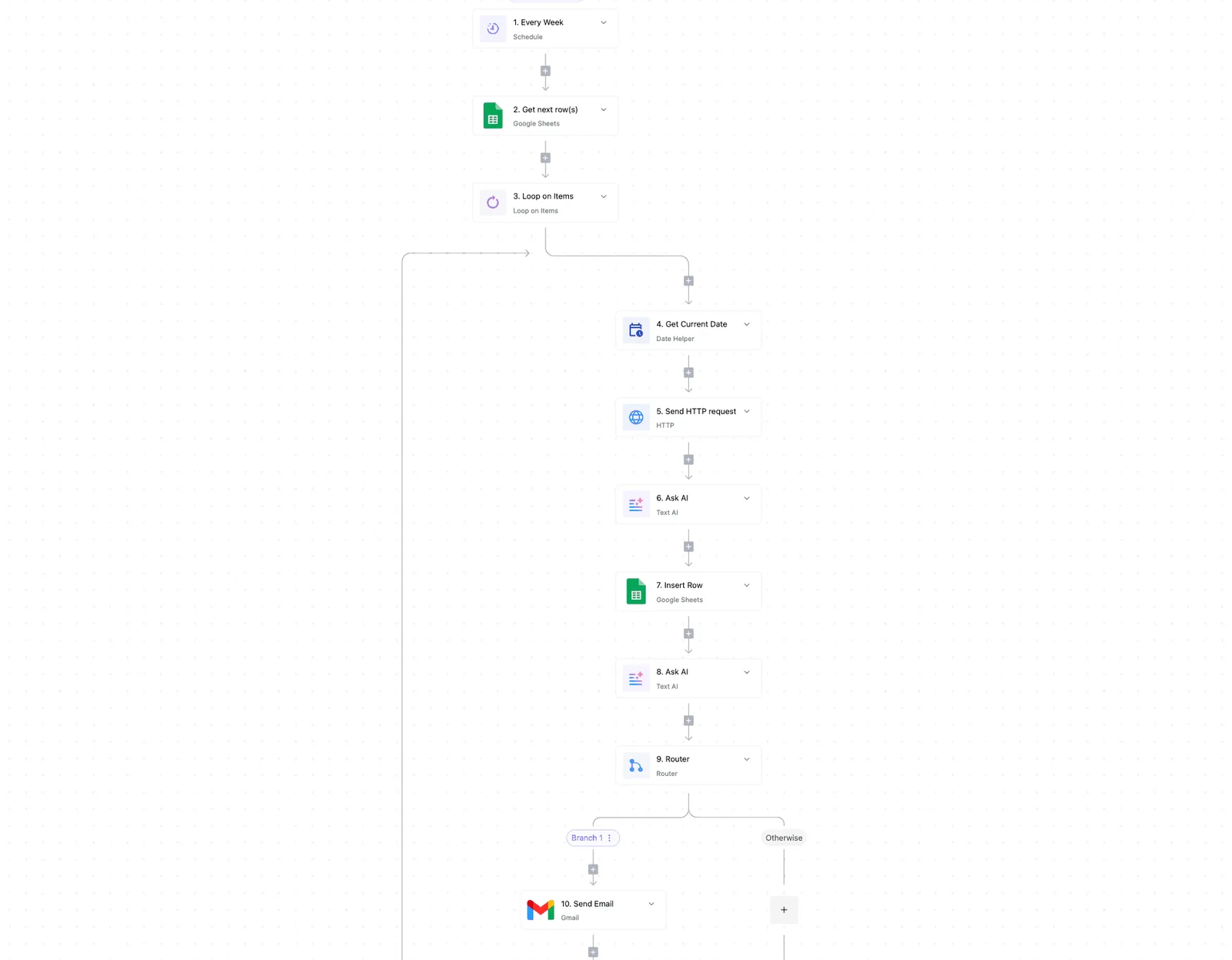 This causes an infinite loop if the integration itself posts a response back to that same channel. You can prevent this by adding a filter step that checks the sender ID or a specific "bot" flag in the metadata. If the incoming webhook contains the ID of your own integration, the workflow terminates immediately. This prevents your middleware from processing its own output as a new event. ### Mapping unstructured chat text to Odoo models Activepieces enables teams to sync automation flows to git and promote them through Release Management, ensuring that the logic mapping chat data to Odoo models is versioned and reviewed like production software.  By using Git Sync and Release Management, teams can move these Odoo logic gates from a test environment to production as versioned code rather than relying on a private in-app history. This makes promoting a new chat-to-ERP flow a deliberate, reviewed step that avoids the risks of a SaaS platform's hosted lock-in. ## The new rules for Odoo chat connectivity The target system, every message must pass through a logic gate that verifies the intent of the payload before a single row is updated in the database. When we first synced the Slack messaging platform with our Odoo ERP, a single "thank you" from a customer triggered a recursive loop that generated dozens of empty support tickets. This happened because the system was listening for any activity rather than specific intent. To stop the noise, we rebuilt the handshake to require explicit validation at the middleware level. 1. Receive payload 2. Check sender ID against bot whitelist 3. Validate keyword 'Create Ticket' 4. Write to Odoo This sequence ensures that the integration ignores the social chatter that makes up the bulk of channel activity, protecting the ERP from junk data. By moving the filtering logic to the middleware, we prevent the Odoo API from being hit by every single "hello" or emoji reaction. ### Rule 1: Mandatory keyword triggers for ERP actions Reliable automation requires an explicit "go" signal. We no longer allow the integration to scrape entire channels for context; instead, the middleware looks for a specific string prefix. If the message doesn't start with the designated trigger, the worker drops the payload immediately. This means we aren't wasting compute cycles processing natural language that was never meant for the database. ### Setting a per-user rate limit cooldown Rate limiting at the user level prevents a single frantic employee or a malfunctioning bot from flooding the queue. We implemented a stateful check where the middleware logs the timestamp of the last successful write for each User ID. If a second request arrives before the cooldown period expires, the system rejects it. A double-click or a network stutter doesn't result in duplicate shipping orders that warehouse staff then have to manually void.  ### Rule 3: Read-only defaults for public chat channels Writing to the ERP is now restricted to specific, controlled environments to prevent accidental data entry. While any channel can feed into a monitoring dashboard, only private, authenticated groups have the permissions required to trigger a "Write" action. MoneyGram and Moneypenny run Activepieces in production to manage these types of complex automation environments where central governance is required. By naming the specific users and their permissions, we ensure that a support agent can update a ticket status but can't accidentally delete a purchase order. ## Frequently asked questions about Odoo chat integrations ### Does this work with Odoo Community and Enterprise? Both versions of Odoo support the external API via XML-RPC. Your middleware logic remains identical regardless of whether you pay for the Enterprise license. The Enterprise edition includes the Odoo Studio tool for visual customizations. Community requires you to write custom modules to expose new fields to the API. If your team is on Community, you'll spend more time in Python code to make specific data points accessible to your chat integration. ### How do I secure Odoo API keys in a chat app? You must never hardcode Odoo credentials into the chat application itself, as this exposes your entire database to anyone who can inspect the client-side code or the chat platform's logs. Instead, you should: * Store the Odoo URL, database name, and API key as encrypted environment variables within your middleware. * Create a dedicated Odoo user for the integration with restricted access rights, so a compromised key only grants access to the specific modules needed for chat. * Use a proxy service or a server-side worker to execute the XML-RPC calls. This limits the chat app to seeing a generic success or failure message rather than raw database responses. ### Can AI agents handle Odoo chat commands safely? AI agents can interpret natural language for Odoo commands, but they require a hard-coded validation layer to prevent database writes that could corrupt your inventory or accounting records. An LLM might correctly identify that a user wants to "close an invoice," but it lacks the inherent context of Odoo’s state machine. This machine requires an invoice to be in the "posted" state before it can be marked as paid. Your middleware must act as a gatekeeper. It checks the current status of an Odoo record against your business rules before allowing the AI’s request to reach the API. Without this verification step, you risk the agent attempting to trigger workflows that Odoo will reject, leading to a backlog of unhandled errors in your integration queue. ## Related reading - [Zapier Pricing 2026: Plans, Tasks & True Cost at Scale](https://www.activepieces.com/blog/zapier-pricing-2026-plans-tasks-true-cost-at-scale) - [Odoo Studio vs Custom Development for AI Workflows (2026)](https://www.activepieces.com/blog/odoo-studio-vs-custom-development-for-ai-workflows-2026) - [Designing Webhook Payloads: A 2026 Guide](https://www.activepieces.com/blog/what-is-a-webhook-payload-structure-and-examples-2026) ## References - [Odoo](https://github.com/parth-unjiya/odoo-mcp-gateway/commit/d7df11eeb082ad1b9472a3be759cf5991221508d)The system wasn't serving a human user anymore; it was talking to its own echo.