Read the four situations below as a checklist, not a verdict. If none describes you, you probably don't need to leave, and if one does, it points to the kind of alternative to look for, not to a better omnara. A young project can still do its job well. What changes is how much weight you put on it. If you plan to depend on omnara daily, or a team will, check how recently it has shipped, how its issues get handled and what its terms say. **Newer tools ask you to accept more change**, and some readers would rather not. ### Wanting hosted infrastructure instead of tooling As its maker describes it, omnara's for supervising coding agents from your phone. That's tooling layered over agents you already run, on machines you already manage. If your real request is "run this agent somewhere I don't have to maintain," you're asking for something outside that description. This is a preference for vendor-hosted options, and it sends you to products built to host agents, not to supervise them. Try asking a phone-supervision tool for this: "Run every time a ticket arrives, draft a reply, and wait for a manager to approve before sending." Triggers, approval steps and connections to business systems are workflow features. If your list of needs reads like that, you're shopping for a different job, and the comparison should start from workflow capabilities. ## Five criteria for judging an omnara alternative Judge every option on five criteria: published price, core strength, main limit, who it suits, and where it runs. Each one answers a question you would otherwise have to dig for, and each is read from the vendor's own page. Below is the whole rubric. The criteria stay the same across all three jobs, so a phone supervisor and a workflow builder get asked identical questions. Keeping them fixed is how you notice that two tools with similar names answer different needs. - Published price: what does the vendor's own page say it costs? Where a page shows no figure, the entry reads "not published" rather than a guess, so a blank is information about how much sales contact you should expect. - Core strength: what is the one thing it does that you would otherwise build yourself? - Main limit: what doesn't the vendor's documentation say it covers? Look for the job it quietly leaves to you. - Who it suits: which person, a solo developer on a commute or a team wiring agents into business systems, is the product built around? - Where it runs: self-hosted or vendor-hosted? This decides who holds your code and credentials. omnara's [own repository](https://github.com/omnara-ai/omnara) shows why it matters: it lists Superserve as a machine pool provider, with each machine a Firecracker microVM created from a template, so even one product can mix your infrastructure with a third party's. Read the first two criteria together to find the job a tool is built for. Read the last three to learn whether you can live with how it is delivered. ## Omnara alternatives compared in one table In the table below, omnara sits beside three alternatives on price, core strength, main limit and who each suits. It shows that they do different jobs rather than the same job at different prices. Where a vendor lists no figure, the cell says so. | Tool | Price | Core strength | Main limit | Who it suits | |---|---|---|---|---| | omnara | not published | Supervising coding agents from a phone | Watches agents running elsewhere; doesn't host them | Developers already running agents | | Claude Managed Agents | $0.08 per session-hour of active runtime | Agents hosted by Anthropic | Tied to Claude models | Teams that want no infrastructure to run | | E2B | not published | Sandboxes for agent-written code | You build the agent yourself | Builders embedding execution in a product | | Daytona | not published | Sandboxes for agent-written code | You build the agent yourself | Builders embedding execution in a product | _Prices and plan limits checked against [github.com](https://github.com/omnara-ai/omnara) and [omnara.com](https://omnara.com/blog) and [docs.claude.com](https://docs.claude.com/en/docs/about-claude/models/overview) and [claude.com](https://claude.com/pricing) and [gemini.google](https://gemini.google/subscriptions) on October 22, 2026._ Hosted-compute rates use different billing units, so the table doesn't rank them. You stop managing the machine the agent lives on, because Anthropic runs it for you. The cost is that you work inside Anthropic's models, such as [Claude Opus 5.5](https://docs.claude.com/en/docs/about-claude/models/overview). Per [aiplans.dev](https://aiplans.dev/en/coding-agents), one coding task costs $14.19 on [Claude](https://claude.com/pricing) [Code](https://code.claude.com/docs/en/remote-control.md) with Sonnet and $13.04 with Opus. The Opus run is cheaper per task, so the pricier model isn't automatically the pricier job. 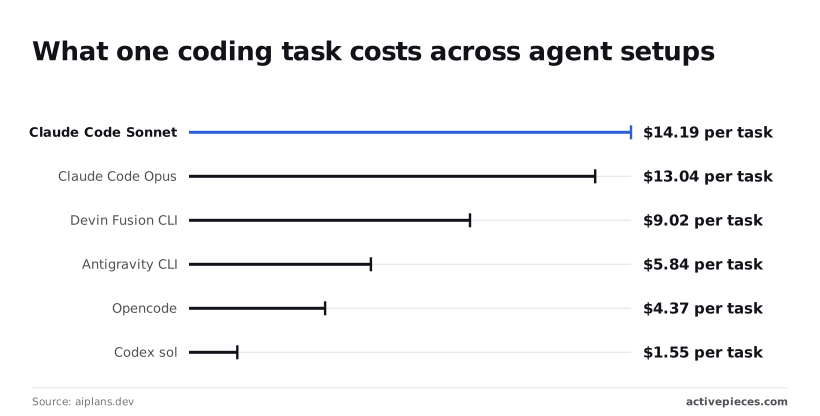 ### Other agent-supervision tools On the same benchmark, **Devin Fusion CLI costs $9.02 per task** and Codex astra $7.50, so teams seeking to minimize per-task costs should look at cheaper setups such as Antigravity CLI or Opencode. Antigravity CLI is $5.84 and Opencode $4.37. At 100 tasks a month, the gap between the top and bottom is about $980, so the agent you supervise matters more than the app you supervise it with. Those costs belong to the agent, not the table's tools, which is why the next step is to match each tool to the job it does. ## Connect any agent to your workflows with Activepieces Nothing here replaces omnara. I didn't run it with omnara, so treat everything below as a way to connect an agent you already run, not a migration path. There are three ways to connect an agent, ordered from simplest to most involved. The numbered list below is the whole decision: start at 1 and move down only when it stops being enough. 1. An HTTP request step that calls the agent's endpoint. 2. An AI step with a custom provider. 3. An MCP server that exposes the agent to the flow. What to take from the order: each option hands the agent more of the flow's control, so the simplest one that works is the right one. The sections below follow that order. ### Connect an Omnara alternative with an HTTP request If your agent can be reached at a URL, an HTTP request step is the whole integration. The flow sends a prompt as the request body and reads the reply in the next step. 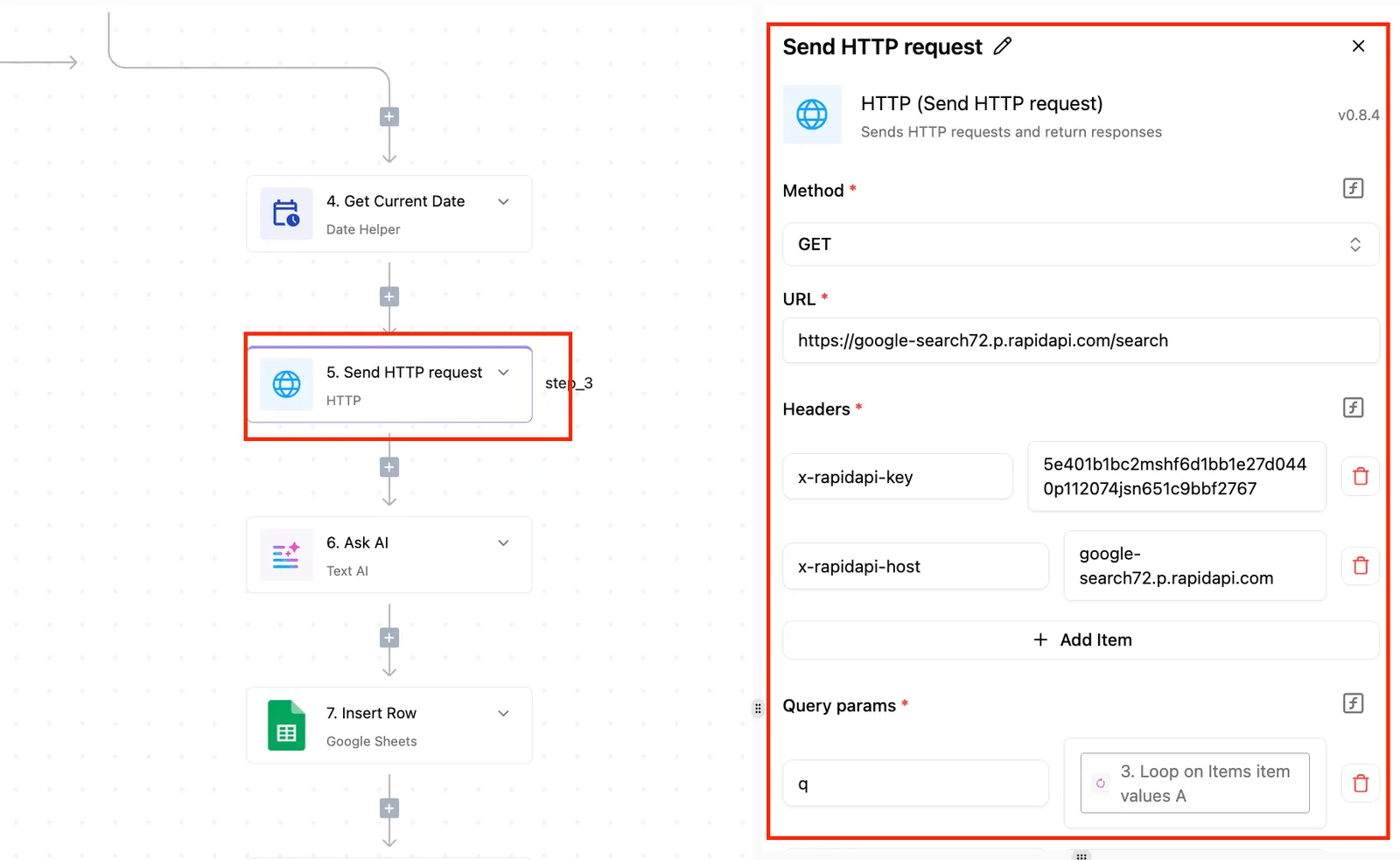 Say a ticket arrives and the flow posts its text to the agent, then pastes the answer into a Slack message (the chat app the team already watches). Because the call is one request and one response, a long-running coding session that wants a human to approve a step halfway through doesn't fit. The flow only sees the final answer, and that's the catch. ### Use an AI step with a custom provider An AI step is Activepieces' built-in way to call a language model inside a flow. Pointing it at a custom provider lets you swap in your own endpoint instead of a stock model. 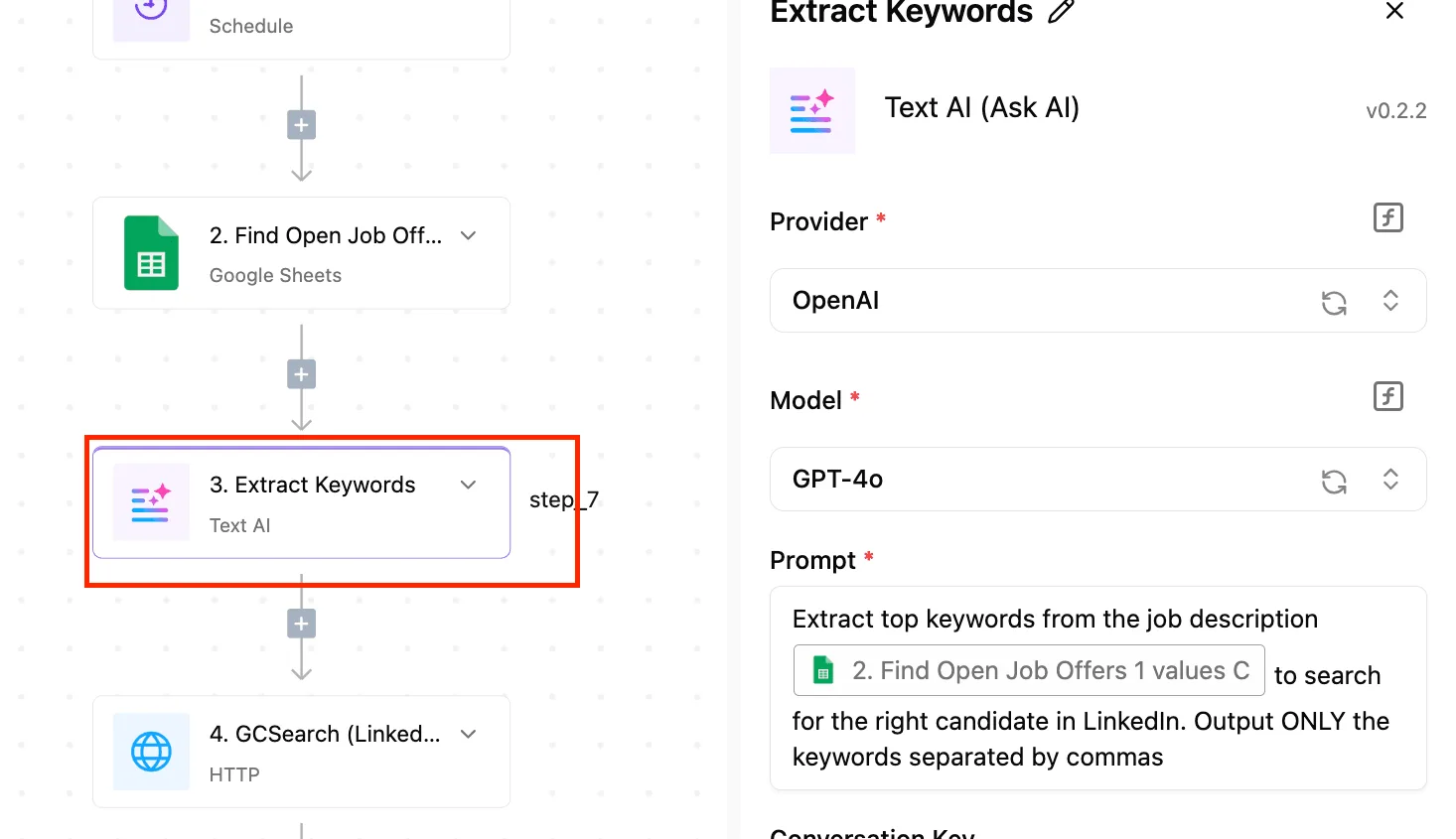 The benefit's that the agent sits where a model normally would, so the flow's other steps treat it like any other AI step. Expect the cost to show up in format, because the endpoint must speak the format the step expects. If your agent doesn't, you'll be writing a thin adapter, and that's where the debugging time goes. ### Connect an Omnara alternative through an MCP server MCP, the Model Context Protocol, is a standard for letting a client discover and call tools. Exposing the agent through an MCP server means the flow can see what the agent offers instead of being hard-wired to one URL. 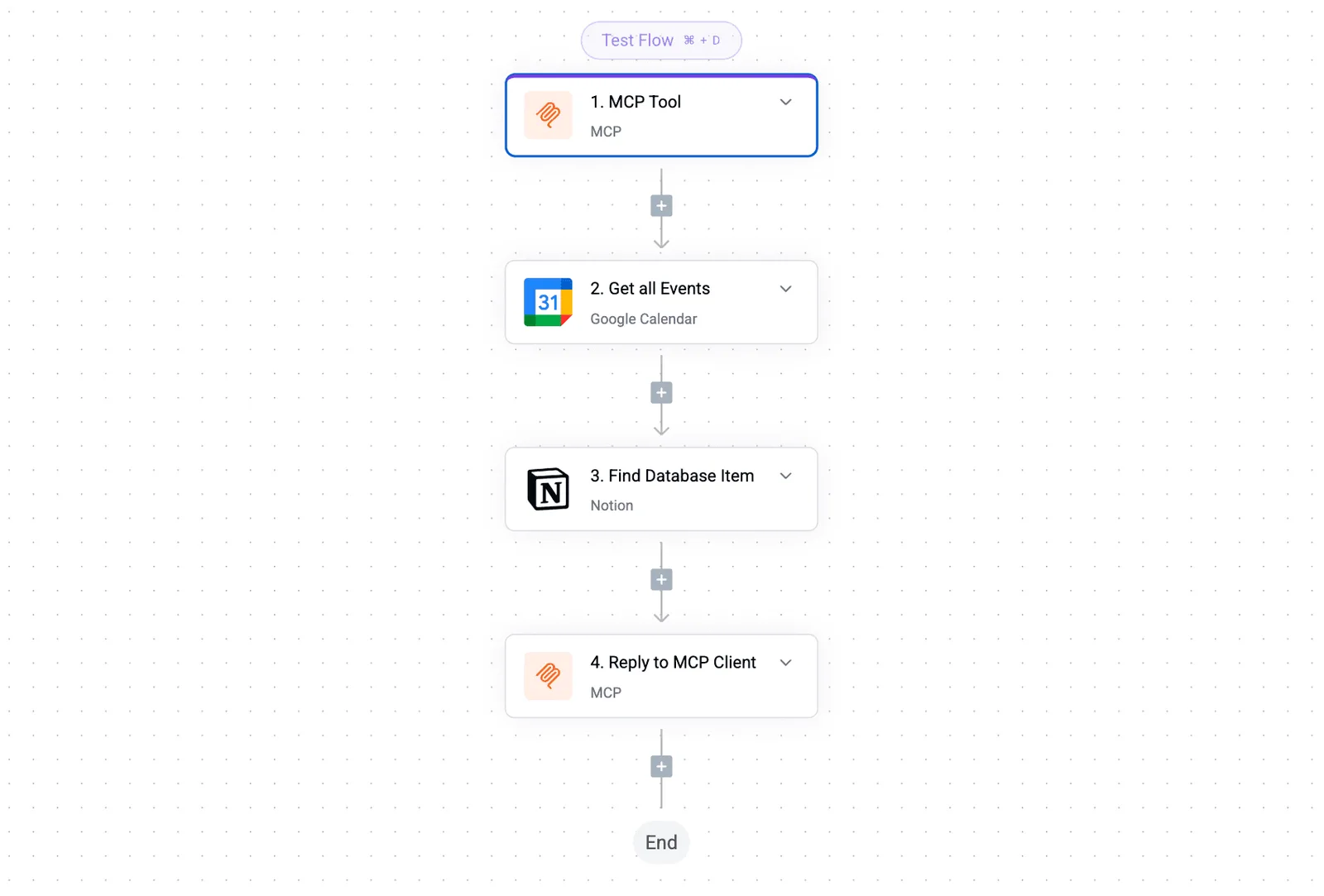 That suits a case where several flows share one agent. It's also the most setup, so reach for it last. The same protocol also runs the other way, and that direction is the one you can inspect. The Integrations Framework and MCP Server documentation describes that mechanism, and the action code in packages/integrations sits under the MIT-licensed core, so the action a flow runs and the tool an agent sees are the same definition. MoneyGram, Moneypenny, Alan and FundingSocieties run Activepieces in production. Whichever you choose, the automation sits around the agent. Supervising that agent from your phone is a different job, and the next section covers the tools built for it. Activepieces is the better fit for teams that already run an agent, like omnara, and want it to act inside their wider business processes, judged on how directly connectors become agent tools. Because the same piece action that runs in a flow is the one exposed as an MCP tool, the integrations you build or use for workflows don't have to be rebuilt for agents.  This verdict covers connecting an existing agent to those workflows; it isn't a claim that Activepieces replaces omnara, and I haven't tested the two together. ## When each alternative is the better choice Activepieces automates around an agent, and it's the wrong pick for the other two jobs, so you can't base your entire automation strategy on it. Each tool below wins on a criterion that matters to someone, and judged on the same five, **none of them is a lesser omnara**. ### Supervising from a phone is a job of its own omnara's strength is that it leaves your setup alone. Agents keep running on machines you already manage, so your code and credentials stay where they are, and you gain a way to check in and steer from a phone.  Its cloud sandboxing also gives it a hosted option when you want one. The limit is the one in the table: it watches agents and doesn't replace the place they run. For a developer who already runs agents and wants to approve or redirect them away from the desk, nothing else here fits that job as directly. ### Hosted agents suit teams with no runtime to maintain Claude Managed Agents wins by subtraction. Anthropic runs the agent, so nobody on your team patches, monitors or moves a runtime, and that's worth real money to a team without the people for it. The price is working inside Claude models, and Anthropic lists $0.08 per session-hour of active runtime, so check your expected usage before you plan around it. If Claude is already your model, that limit costs you nothing. ### Sandboxes suit builders who own the agent E2B and Daytona solve a narrower problem: a safe place for code an agent writes. If you're building a product that executes agent-written code for your own users, a supervision app or a workflow tool is the wrong shape and a sandbox is the right one. The limit is that you build the agent yourself, and neither lists a price here. Their billing units differ, so compare them on your own workload rather than on a rate card. ## Which omnara alternative to pick, and when **Unless you need to supervise agents running on your own machine from a phone, or need to control the infrastructure yourself, pick a vendor-hosted managed option.** The vendor then runs the sandbox and the uptime, and you only write the task. Add workflow tooling only when the task is a business process: an agent that has to touch a CRM, a ticket queue and an inbox in sequence. Because each choice fixes a different problem, the condition matters. If your agents live on your laptop or a server you own, a hosted service means moving them, and that move may be the real cost. If nobody on your team wants to patch and monitor a runtime, **self-managing buys you control you won't use**. If the job is "when a form arrives, do these steps," a coding-agent supervisor is the wrong shape however good it's.  Test this by running your own work through it, not by reading another comparison. The steps below show where your jobs fall, so you can see which category applies before you spend a week on it. 1. List every agent job you run today, one line each, noting where it executes and who needs to see its output. 2. Open each candidate's pricing page and note what's metered, such as seats, runs or compute time, and which tier gates the features you listed. 3. Pick one task, ideally a real one you've had to repeat, not a demo. 4. Trial it for one week on a single candidate, giving it the same instructions you'd give a colleague. Keep a note of every time you had to rephrase or rescue it. 5. Review the notes. Count the rescues, check the bill against the pricing page, and decide whether the job belonged in this category. ## Frequently asked questions Is omnara free to use? Check omnara's current pricing page before assuming either way, because this article has no confirmed figure to give you. Pricing pages often leave limits unpublished, so a free tier may exist without telling you what it caps. Test with a real session from your phone before you commit a team to it. Is omnara open source? Look at the project's repository and its license file, because that's the only place the terms are stated authoritatively. Even if the code is published, the hosted service is a separate question: you may be able to read the source without getting the same features, support, or uptime as the paid product. Does Activepieces integrate with omnara? No. There's no integration between the two. They sit in different categories: omnara's for supervising coding agents, while Activepieces is for wiring agents into business workflows. If you need both jobs done, you'd run them side by side rather than connected. ### Can Claude Managed Agents replace omnara? Only if your job was running agents on hosted infrastructure rather than watching them from your phone. Managed Agents is built for the first job, and nothing we found says it covers the second. Whether the two can be used together is still an open question, so treat any claim that they combine cleanly as unverified until you've tried it. ### How often do these prices and features change? Often enough that you should treat every page you read, including this one, as a snapshot. These projects are new, and new products rewrite their tiers, limits and integrations without much notice. Before you decide, re-read the vendor's own pricing and docs pages, and write down the date you checked. If a question here was answered "unknown," ask the vendor directly. ## Related reading - [Zapier Alternatives with AI Agents: Best Tools Compared](https://www.activepieces.com/blog/zapier-alternatives-with-ai-agents-best-tools-compared) - [Enterprise AI Agents: 7 Best Platforms Compared for 2026](https://www.activepieces.com/blog/ai-agents-for-enterprises) - [Gumloop Alternative: 7 Best Options (2026)](https://www.activepieces.com/blog/gumloop-alternatives) ## References - [aiplans.dev](https://aiplans.dev/en/coding-agents)When people leave omnara, it comes down to four reader situations, none of them documented defects.