Even highly capable models like GPT-4o remain vulnerable to "Best-of-N" jailbreaking, according to data from [ResearchGate](https://www.researchgate.net/publication/386455015_Best-of-N_Jailbreaking). This proves that internal alignment can't reliably distinguish between a developer's system prompt and a user's injected command. You must therefore enforce security at the orchestration level, where the application can sanitize inputs and enforce schema validation before the LLM ever sees the text. 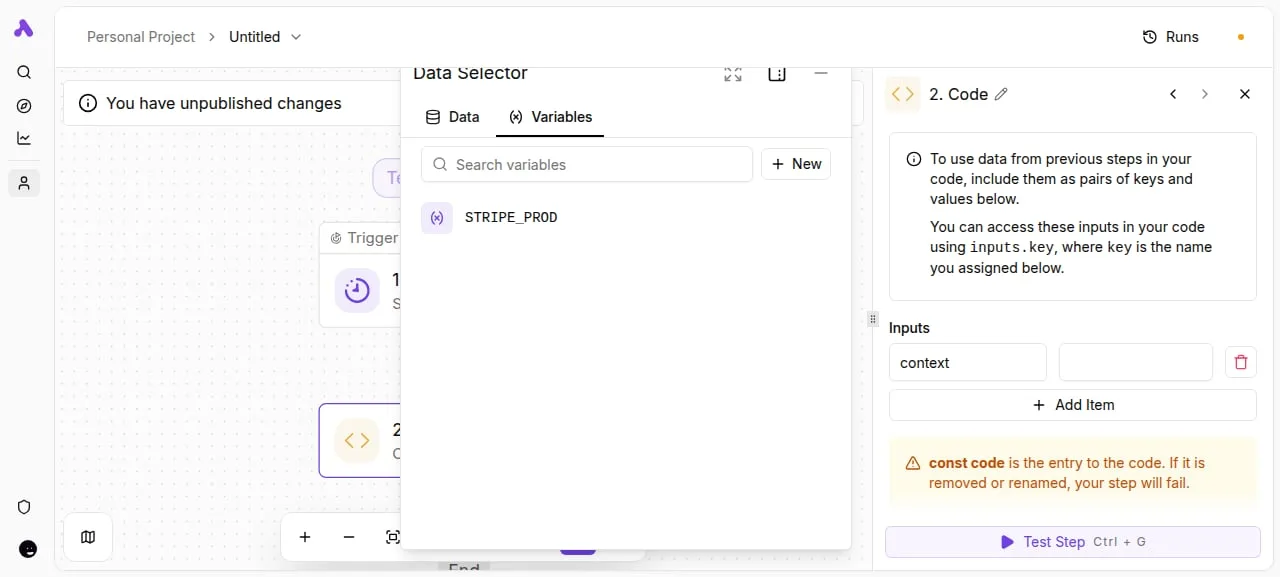 ## Intercept user prompts with webhooks A webhook trigger acts as the mandatory gateway for all external data. This ensures that the orchestration layer registers every raw user input before it reaches the model. By routing requests through a dedicated HTTP endpoint rather than allowing direct API access to the LLM, you gain a centralized logging point where you capture every incoming string for audit and inspection. Because the system has a chance to evaluate the intent of the message first, this isolation prevents a connection where a malicious payload could execute directly against the model's inference engine. Activepieces, built on an MIT-licensed core, runs judgment and rules in the same flow on a single engine rather than bridging two products with a webhook. You can place an Agent step alongside deterministic automation steps in the same flow and view the result in the run trace, where the entire execution is logged from start to finish as one coherent event. 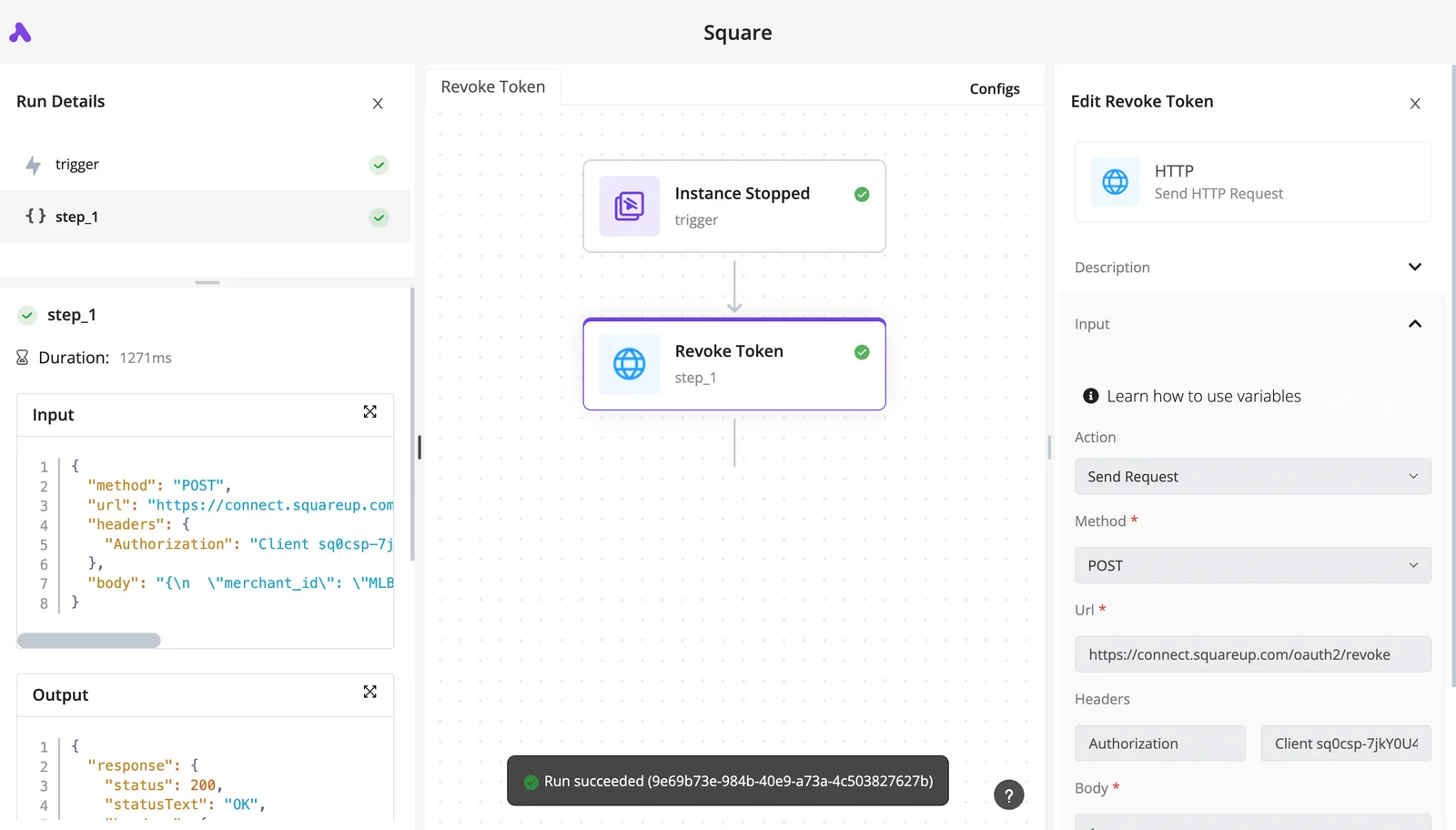 The isolation prevents a "hot-wired" connection. To manage these inputs effectively, the orchestration platform must categorize the incoming data through a structured interface. The interface shown here demonstrates a visual workflow builder. You can select specific integrations (such as Google Sheets for logging or Microsoft Excel 365 for data retrieval) to process the payload captured by the initial trigger. This modular approach creates a "defense in depth" strategy where each step in the flow performs a specific validation task. 1. The webhook receives the POST request containing the user prompt. 2. An intermediate parsing step strips non-printable characters and checks for length violations. 3. A classification step determines if the prompt contains restricted keywords or known injection patterns. 4. The LLM action node receives the sanitized data only after it passes all previous gates. Once the webhook has successfully captured and parsed the raw text, the system must then move to the evaluation phase to determine if the content violates safety policies. ## Classifying user input with a secondary LLM By routing all raw user text through a secondary, smaller Large Language Model (LLM) configured strictly for intent classification, administrator-defined guardrails function. This happens before the primary model receives the request. This architectural separation ensures that the main inference engine (which often has access to sensitive databases or internal APIs) never processes potentially malicious instructions that could lead to unauthorized data exfiltration. Implementing this gate within the orchestration layer, such as a custom Python middleware or a dedicated security proxy, allows you to intercept "ignore previous instructions" overrides without the prohibitive latency costs of re-running the full application logic. Effective classification requires selecting an adapter that balances detection depth against the response time of the user interface. The following table compares three common defense implementations based on their operational impact: | Defense Adapter | Detection Mechanism | Performance Overhead | | :--- | :--- | :--- | | Pattern Matching RegEx | Static string analysis for known injection keywords | Negligible; executes in sub-millisecond timeframes | | Vector Similarity Scorer | Compares input embeddings against a library of known attacks | Moderate; requires a dedicated vector database lookup | | Guardrail LLM (e.g., Llama-Guard) | Natural language understanding of semantic intent | High; adds a full inference cycle to every request | Semantic analysis delivers the most robust protection against novel adversarial tactics, as this comparison demonstrates. However, it introduces a significant delay that may frustrate users if it isn't properly optimized. The orchestration layer must be configured to fail-closed. Any input that triggers a high-confidence classification of "adversarial" results in an immediate termination of the workflow rather than a fallback to the primary model. Once this classification step confirms the input is benign, the system can safely pass the sanitized string to the final execution phase. ## Route requests based on security ### Blocking unsafe input from the primary LLM Conditional branching logic isolates the primary Large Language Model (LLM) from raw user input. It does this by enforcing a hard stop on any data packet that fails the initial guardrail classification.  This architectural gate ensures that the high-reasoning model, which often has access to sensitive tools or databases, never processes a string flagged as malicious. By treating the security classification as a binary toggle, you prevent the "jailbreak" from ever reaching the execution context where it could do damage. ### Guardrail checks before reaching the LLM To maintain this isolation, the orchestration layer must process the traffic through a specific sequence of logic gates before the prompt reaches the final inference endpoint. Before it evaluates the content of the request, the system ensures that it evaluates the intent of the data. First, the system reads the classification output from the guardrail evaluation step. Second, it evaluates the boolean condition to determine if the safety score meets the predefined threshold for execution. ### Firewalling the application layer This routing logic is the definitive firewall for the application layer. If the boolean condition returns a "false" for safety, the workflow terminates the request immediately and triggers a logging event to a security information and event management (SIEM) platform like Splunk or Datadog. Every agent decision and the data it acted on is captured in the Run Details and Debugging UI, which can be exported via event-streaming to these external security tools. This ensures that an agent's reasoning is reviewed with the same rigor as a deterministic workflow step. Once the routing logic confirms the path is clear, the workflow passes only the verified, sanitized payload to the primary model for a response. ## How Activepieces isolates prompt injection risks Activepieces enforces a structural separation between the model’s instructions and the untrusted data it processes across 735 integrations by treating LLM interactions as discrete steps within a managed workflow, which means the system prevents malicious data from bleeding into the core logic of the automation. By offloading the logic of the prompt from the model’s internal memory to a visual automation canvas, you can ensure that the "System" role is hardcoded into the workflow logic where a user-facing input field can't reach or overwrite it.  ### Keeping agents and automation steps in one workflow Activepieces places agents and deterministic automation steps in the same run rather than separate systems, an architecture that Alan and Moneypenny run in production. Because the platform treats the LLM as a modular "integration" rather than a single open-ended text box, you can define rigid boundaries for where user data enters the sequence. Decoupled system instructions that reside in the workflow metadata are a key feature of this architecture. This prevents users from injecting commands into the administrative configuration. It also features pre-execution input validation steps, such as the "Code" integration or "Text Manipulator." Before the payload ever reaches the LLM API, these allow for regex-based filtering or length constraints to be applied. Finally, step-level output mapping limits the model's influence to specific downstream variables rather than granting it broad execution privileges over the entire system. Even if a user succeeds in confusing the model, the blast radius is confined to that specific step's output variable. This separation ensures that the model can't hijack the flow of the entire business process.Treating injection as a training failure ignores the fact that developers design LLMs to follow instructions. The model is simply doing its job, but on the wrong set of commands.
### Automating multi-model security checks Activepieces, backed by more than 24,700 GitHub stars, allows you to implement a "judge-model" architecture where a smaller, specialized LLM validates the primary model's input for malicious intent. By inserting a secondary LLM step (configured with a strict security-focused system prompt) before the main processing step, the workflow can automatically halt execution if a potential injection is detected. This multi-stage verification forces the untrusted input to pass through a defensive gate that has no context of the final task. This makes it significantly harder for an attacker to craft a payload that bypasses two distinct sets of instructions simultaneously. ## Frequently asked questions ### Is prompt injection considered a jailbreak? While both exploit the fluid boundary between data and instructions, they differ in their operational goals. Prompt injection refers to the manipulation of a model’s instructions to execute unauthorized actions, whereas a jailbreak specifically targets the model’s safety guardrails to generate prohibited content. Injection attacks aim to hijack the application’s logic or access connected tools, such as an email client or database, leading to data exfiltration. Jailbreaks focus on bypassing the internal alignment of the Large Language Model to force the output of restricted information, such as hate speech or instructions for illegal acts. ### Can firewalls block prompt injection attacks? Standard Web Application Firewalls (WAFs) can't reliably block prompt injections because these attacks are typically embedded in natural language that appears benign to traditional pattern-matching filters. Effective mitigation requires a specialized LLM gateway. By using a secondary, smaller model to evaluate the semantic intent of the input before it reaches the primary agent, a proxy service like the IBM watsonx.governance platform provides this protection. This architecture ensures that malicious commands hidden within legitimate user queries are stripped out before they can influence the execution environment. ### Where does prompt injection fall in the OWASP Top 10 for LLMs? Prompt injection is the primary vulnerability (LLM01) in the Open Web Application Security Project (OWASP) Top 10 for LLM Applications. It is the foundational exploit for most other downstream failures. The following table summarizes the relationship between recognized threat metrics and the resulting operational failures for you. | Threat Metric / CVE | Severity / Value | Operational Impact | | :--- | :--- | :--- | | LLM01: Prompt Injection | Critical | Leads to total loss of agent control and unauthorized execution of internal functions. | | LLM02: Insecure Output Handling | High | Allows injected strings to execute XSS or CSRF attacks in the user's browser session. | | CVE-2024-21516 | High | Enables remote code execution via insecure processing of model-generated Python snippets. | Securing the model's weights is insufficient if the application layer treats model output as trusted code, as this hierarchy demonstrates. You must treat every response from the LLM as untrusted input for the rest of the tech stack. ## Related reading - [How I turned a chat prompt into an auditable flow, not a toy](https://www.activepieces.com/blog/how-i-turned-a-chat-prompt-into-an-auditable-flow-not-a-toy) - [AI Agent Security vs Application Security in 2026](https://www.activepieces.com/blog/ai-agent-security-vs-application-security-in-2026) - [AI Agent Security: Knowing Risks and How to Stop Them](https://www.activepieces.com/blog/ai-agent-security) ## References - [ResearchGate](https://www.researchgate.net/publication/386455015_Best-of-N_Jailbreaking) - [GitHub](https://github.com/scthornton/prompt-database/blob/main/README.md) - [Hokstad Consulting](https://www.hokstadconsulting.com/blog/ai-improves-cicd-tool-security)Even if a user succeeds in confusing the model, the blast radius is confined to that specific step's output variable.