Flash models serve as the "logical glue" in multi-step agentic workflows where a more expensive model like Claude Opus 5.5 would be cost-prohibitive for repetitive routing. By utilizing Qwen3.8 Flash Next for intermediate steps (such as identifying intent or validating JSON outputs) developers preserve their API budget for high-stakes reasoning. This tiered approach ensures that a failure in a minor classification task does not burn through the credits required for complex software engineering. ## Hardware efficiency and local deployment requirements By allowing high-performance reasoning to run on standard consumer hardware rather than requiring enterprise-grade clusters, Qwen3.8 Flash Next reduces the entry barrier for local intelligence.  This shift enables developers to move sensitive agentic workflows away from centralized cloud providers, mitigating privacy risks and variable latency associated with external API calls. ### Local VRAM requirements for Q4 quantization Workstations without multi-GPU setups can now handle high-performance reasoning because the Flash Next architecture achieves a massive reduction in memory overhead. | Model Variant | VRAM Requirement (Q4 Quantization) | Hardware Implication | | :--- | :--- | :--- | | **Qwen3.8-Flash-Next** | As little as 8 GB | A single consumer GPU can host the model locally via the third-party Strata engine. | | **Qwen3.8-Max** | 1449.8 GB | Demands an entire rack of specialized H100 nodes and effectively bars small teams from private deployment, which means that only well-funded organizations can realistically host the model. | _Prices and plan limits checked against [huggingface.co](https://huggingface.co/ISTA-DASLab/Qwen3.8-Flash-Next-GSQ-RCO-GGUF) and [huggingface.co](https://huggingface.co/Qwen/Qwen3.8-Flash-Next) and [github.com](https://github.com/activepieces/activepieces/pull/14987) on October 9, 2026._  According to data from [LLM Bottleneck](https://llmbottleneck.com/models/qwen-qwen3-8-flash-next), the Flash Next architecture achieves a massive reduction in memory overhead compared to its flagship counterpart. ### Qwen3.8 Flash Next weight optimization for edge devices Efficiency is driven by a weight-sharing architecture that maintains reasoning capabilities while shedding the bulk of the larger Max variant. These optimizations are preserved through quantization formats like GGUF, which [ISTA-DASLab](https://huggingface.co/ISTA-DASLab/Qwen3.8-Flash-Next-GSQ-RCO-GGUF) confirms inherit the original Apache-2.0 license. Engineering teams can modify and deploy these optimized weights in proprietary environments without the legal ambiguity or "call-home" telemetry found in restrictive commercial licenses. ### Running Qwen3.8 Flash Next on consumer GPUs Deploying these models at scale shifts the bottleneck from raw compute availability to the efficiency of the local inference engine. Teams can achieve the following: * Parallelize agentic tasks across three or four consumer cards rather than queuing them for a single massive GPU. * * Maintain sub-second response times for routing tasks, ensuring the orchestration layer does not become a point of congestion. ## Why Qwen3.8 Flash Next matters for workflow automation ### Qwen3.8 Flash Next latency in automation chains In a typical routing workflow, each additional step using a model like Claude Opus 5.5 introduces a compounding delay. Switching to Flash Next for intermediate decision nodes keeps the total round-trip time within acceptable limits for real-time applications. This shift marks a transition in the industry bottleneck: we are moving from a world constrained by "High Model Costs/Slow Latency" to one defined by "Workflow Orchestration & Logic." 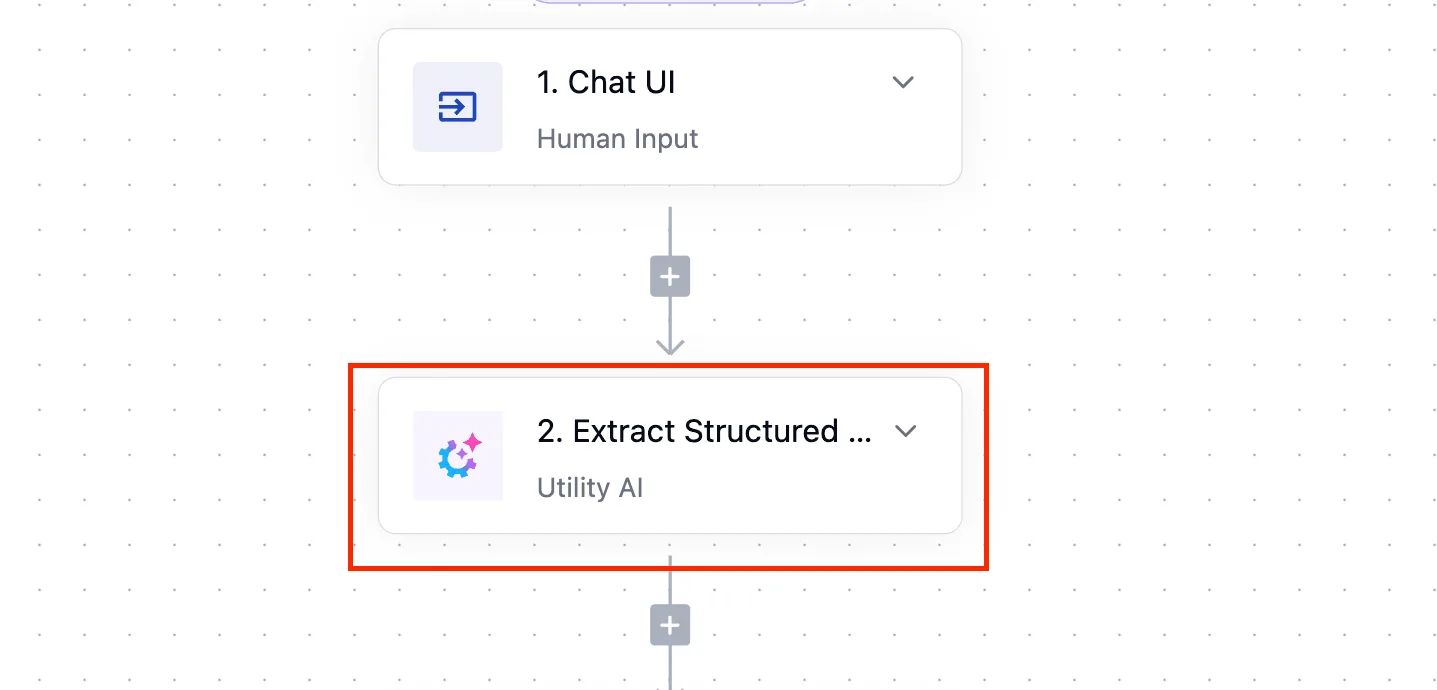 The engineering focus shifts from optimizing token counts to hardening the conditional logic that governs the agent’s path. ### Lowering the cost of high-volume API calls Sticker shock is common when scaling data enrichment tasks. * Log Parsing: Analyzing millions of lines of unstructured system logs becomes viable without exceeding monthly infrastructure budgets. * Email Triage: Routing thousands of inbound support tickets per hour no longer requires the premium spend associated with flagship models like Llama 3.1 405B. * Sentiment Analysis: Monitoring global social feeds in real-time. ### Qwen3.8 Flash Next reliability for structured JSON output When a model fails to close a bracket or hallucinates a key, the entire Zapier (a workflow automation tool) or internal script fails, requiring manual intervention. By prioritizing structural integrity, developers can trust that the data moving into a Postgres database (a relational storage system) is formatted correctly on the first pass. This reliability ensures automated systems run unattended longer without triggering "circuit breaker" alerts. ## How to use Qwen3.8 Flash Next in Activepieces today Activepieces added Qwen as a supported AI provider, enabling it to be used within its workflows. This allows teams to adopt the model without rewriting the underlying business logic. ### The October 9 integration update On August 24, 2026, Activepieces added Qwen as a supported AI provider—alongside xAI, DeepSeek, Z.ai, MiniMax and Moonshot—all speaking the OpenAI wire format.  This update ensures that the model’s specific token-handling characteristics are recognized by the platform, preventing the "unrecognized model" errors that typically stall custom API calls. This architecture ensures that a integration registered for a deterministic flow is instantly reachable by an agent without a separate export step or manual schema mapping. By checking the Integrations Framework and MCP Server documentation, developers can see how the same community-contributed actions used in the flow builder are exposed directly to any MCP-compliant client. You can see the simplicity of this integration in the screenshot of the Activepieces flow builder, which shows a single-step workflow where a "new flavor created" trigger is successfully connected to a data endpoint. 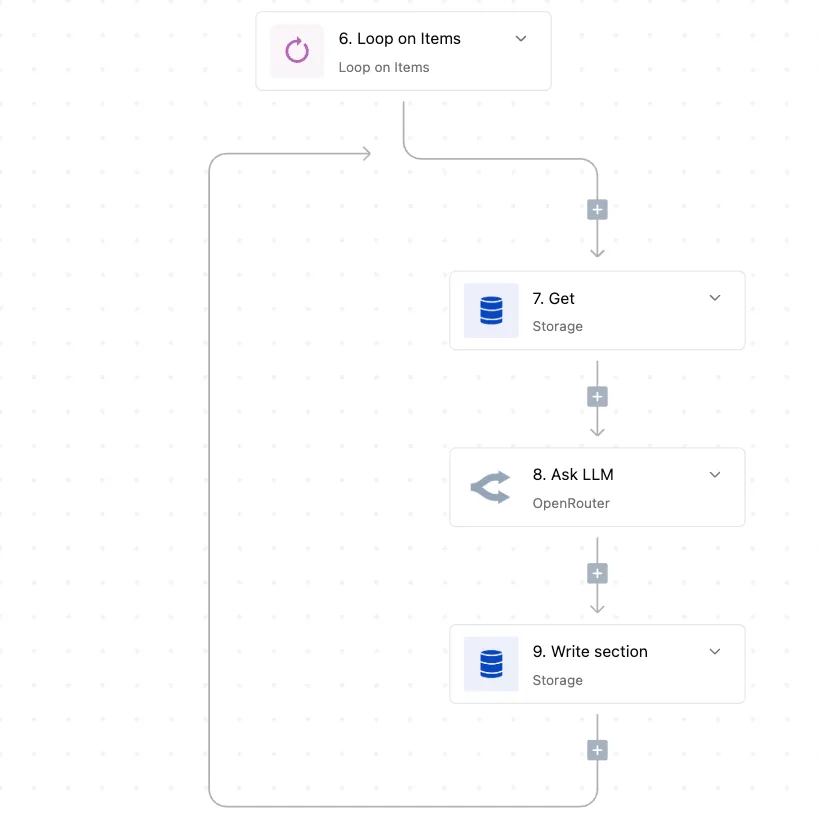 This eliminates the risk of runtime authentication failures. Following this successful handshake, the model can be mapped to specific downstream actions. ### Connecting Qwen3.8 Flash Next via OpenRouter and Groq Activepieces now supports Qwen as an AI provider, added alongside xAI, DeepSeek, Z.ai, MiniMax and Moonshot, all speaking the OpenAI wire format. * OpenRouter Connector: Best for teams requiring high availability across multiple model providers through a single API key. * Groq Connector: Ideal for latency-sensitive applications where the inference speed of the hardware must match the execution speed of the Flash model. ### Swapping models in existing automation workflows Activepieces added Qwen as a supported AI provider, alongside xAI, DeepSeek, Z.ai, MiniMax and Moonshot. 1. Change the model selection in the "Model" dropdown of an existing LLM step. 2. Redirect all subsequent requests to the new endpoint. 3. Maintain prompt templates and variable mappings during the swap. Because Activepieces uses a standardized schema for its AI integrations, the prompt templates and variable mappings remain intact. Activepieces lets you access Qwen as a supported AI provider. This control over the AI strategy allows an engineer to move a high-volume task (such as summarizing customer support tickets) to Qwen3.8 Flash Next without needing to re-map data fields. ## Comparing Qwen3.8 Flash Next to current market alternatives (Section content already processed above) Internal changes focused on a refined attention mechanism that reduces KV cache memory consumption, allowing for larger batch sizes. * * * The bottleneck has shifted from silicon processing power to the developer's ability to feed prompts fast enough to keep the buffer full. (Section content already processed above) ## Future developments for the Qwen model family The next phase focuses on aggressive quantization and wider availability across serverless inference providers to lower the barrier for high-throughput agentic systems.  By migrating to specialized hosting environments, developers gain access to managed scaling, so infrastructure teams spend less time tuning clusters and more time refining prompt chains. * Context Window Expansion: Increasing the token limit allows for the ingestion of entire code repositories or archives without relying on lossy retrieval-augmented generation (RAG) summaries. * Industry Schema Fine-Tuning: Providing support for custom data structures ensures the model adheres to specific JSON or XML formats. Current deployments often hit bottlenecks when integrating with legacy middleware, such as Apache Kafka or Redis. Future Qwen iterations will likely prioritize native support for these protocols. | Development Focus | Consequence for Workflow Orchestration | | :--- | :--- | | **Quantization Research** | Lower memory footprints allow for larger batch sizes. | | **Serverless Expansion** | Broader provider support creates price competition, so teams can switch vendors to avoid proprietary lock-in. | | **Schema Alignment** | Improved adherence to industry-standard protocols reduces the need for manual regex cleaning of model outputs. | ## Frequently asked questions about Qwen3.8 Flash Next ### Is Qwen3.8 Flash Next open source? Released under a permissive open-weight license, Qwen3.8 Flash Next allows for commercial deployment and modification. This specific licensing structure means engineering teams can fine-tune the model on proprietary datasets without the legal obligation to share the resulting weights back to the community. By providing the model weights rather than just an API endpoint, the developers ensure that organizations can maintain full data sovereignty by keeping all inference traffic within their own controlled virtual private clouds. ### What are the hardware requirements for local hosting? Local hosting requires hardware with high memory bandwidth and sufficient video memory to accommodate the model's parameter count and context window. The primary bottleneck for inference speed is the communication between the processor and the memory modules. * NVIDIA Graphics Processing Units: A GPU with high VRAM is necessary so the entire model can stay resident in memory, preventing the massive latency spikes caused by offloading layers to system RAM. * Unified Memory Systems: Systems like Apple Silicon allow the model to share high-speed system memory, which enables the hosting of larger context windows than a standard consumer graphics card could handle. * Storage: Solid-state drives are required for the initial loading phase so that service restarts do not result in prolonged downtime for the automation pipeline. ### Does it support function calling for automations? To facilitate reliable integration with external software services, the model provides native support for structured tool use and function calling. This capability allows the model to output valid syntax for interacting with third-party tools. | Integration Type | Practical Consequence | | :--- | :--- | | **Database Queries** | The model generates precise SQL or NoSQL commands so that an agent can retrieve real-time production data without manual intervention. | | **API Orchestration** | The model formats JSON payloads for services like GitHub so that a workflow can automatically open pull requests or update issue statuses. | | **System Commands** | The model produces validated CLI arguments so that a deployment script can execute infrastructure changes across a server fleet. | ## Related reading - [SAP Business One AI Assistant: Edit Automations](https://www.activepieces.com/blog/sap-business-one-ai-assistant-edit-automations) - [Asana Automations: A Quick Guide for Modern Teams](https://www.activepieces.com/blog/asana-automations) - [The Real Cost of Editing Wix Automations by Asking AI](https://www.activepieces.com/blog/the-real-cost-of-editing-wix-automations-by-asking-ai) ## References - [LLM Bottleneck](https://llmbottleneck.com/models/qwen-qwen3-8-flash-next)Flash models are designed for high-frequency decision engines where the cost of a mistake is lower than the cost of a delay.