### Why 'Export' is the most expensive word in a pitch Gating the logging of 'Export' commands behind the most expensive enterprise tiers is a frequent vendor tactic. This means basic users can download entire client lists without triggering a single alert. When your procurement team opts for a mid-tier seat to save budget, they're effectively paying to be blind to the most common method of data theft. ## The $45,000 premium that bought zero visibility Paying for a top-tier enterprise license specifically for security features often results in a false sense of protection if those features lack the granularity required for a forensic investigation. ### Calculating the cost per missing log line The uncertainty of the data exfiltration carries more weight in the total cost of a security incident than the price of the software itself. > **The Enterprise License Premium accounts for a specific portion of the annual budget. However, the Incident Response (IR) fees and the scale of the Estimated Profit Impact dwarf this cost.**  ### The forensic consultant's bill for manual reconstruction When native audit trails fail to capture specific event metadata, you must pay external specialists to manually piece together the timeline of the attack. These consultants charge high hourly rates to perform "log surgery," which involves correlating fragmented data from secondary sources like network flow logs or load balancer headers. ### Loss of customer trust during the 'unknown' phase During the period when your company can't definitively state which records an unauthorized party accessed, the most significant financial risk occurs. A robust architecture syncs flows to git and promotes them through Release Management, ensuring that the logic handling sensitive data is versioned and reviewed like software rather than saved in a private in-app history.  Reviewing technical documentation for Git Sync shows how separate projects and environments make this promotion a deliberate step. A SaaS-only platform cannot offer this level of forensic transparency without breaking the hosted lock-in its business depends on. ## Three ways vendors hide limited logging capabilities Vendors obscure limited logging capabilities by prioritizing system performance and storage margins over the forensic requirements of a post-breach investigation. | Logging Type | Storage Cost | Performance Impact | Forensic Utility | | :--- | :--- | :--- | :--- | | Shallow Logging | Low | Low | Zero | | Throttled Logging | Medium | Medium | Low | | True Immutable | High | High | High |Hard evidence of how data is handled closes a review, whereas a vendor's word only reopens it.
### Aggregation that destroys granular evidence To save on ingestion costs, logging systems often use aggregation, which replaces individual event records with a single summary entry. While this reduces the storage footprint for the vendor, it strips away the specific timestamps and IP addresses needed to differentiate between a legitimate batch process and a malicious actor scraping the database. ### The 30-day retention trap Because it aligns with billing increments rather than the actual dwell time of modern threats, standard retention periods are frequently set to a monthly cycle. If a breach is discovered after the logs have been purged, the incident response team must work with a blank slate. ### Proprietary formats that prevent external analysis Many platforms wrap their logs in proprietary schemas that can only be viewed through their own dashboard. This prevents your security team from exporting the data to a dedicated Security Information and Event Management (SIEM) tool. ## Building a verifiable trail with Activepieces Activepieces captures vendor activity data across 735+ integrations before it can be truncated or obscured by the provider’s own limited reporting interface. ### Capturing raw JSON payloads at the trigger level By ingesting the entire JSON object directly from the source application, your security team gains full visibility into the metadata of an event. When a SaaS platform like GitHub or HubSpot fires a webhook, the default log often summarizes the event, but the raw payload contains the specific IP addresses and session IDs required for forensic mapping. 1. Create a Webhook trigger in Activepieces to receive vendor events; 2. Add a 'Filter' step to isolate sensitive actions like 'Export' or 'Delete'; 3. Add a 'Google Sheets' or 'SQL' step to log the data.  ### Routing logs to an independent WORM storage bucket A single point of failure is created when audit logs are stored within the same environment being audited, where a compromised admin account can delete the evidence of its own intrusion. Activepieces allows your team to pipe these captured events into Write Once, Read Many (WORM) storage, such as an Amazon S3 bucket with Object Lock enabled. This separation of concerns is the only way to guarantee that the audit trail is immutable and legally defensible during a post-incident review. ### Automating alerts for high-risk export actions Real-time detection of data exfiltration requires an automated response layer that triggers the moment a high-risk event is detected in the stream. By using the 'Branch' logic within Activepieces, you can set immediate Slack or PagerDuty notifications for specific actions, such as a bulk CSV export from a CRM or a change in global permission settings. ## A Monday morning checklist for auditing the auditors A robust audit trail requires technical verification of data structures and storage policies before a contract creates a permanent visibility blind spot. ### The 'Show me the JSON' test By demanding a raw export of a complex event, such as a bulk data export or a permission override, you can verify the specific metadata captured in the logs. When you deploy the Gemini 3.1 Pro LLM for enterprise workflows, you must ensure the logs capture the specific prompt-to-response mapping. This is your only way to audit for prompt injection or data exfiltration via model interactions. ### Verifying the immutability of the log store Confirm that the vendor utilizes a write-once-read-many (WORM) storage architecture or a cryptographically hashed ledger to prevent the alteration of audit records. 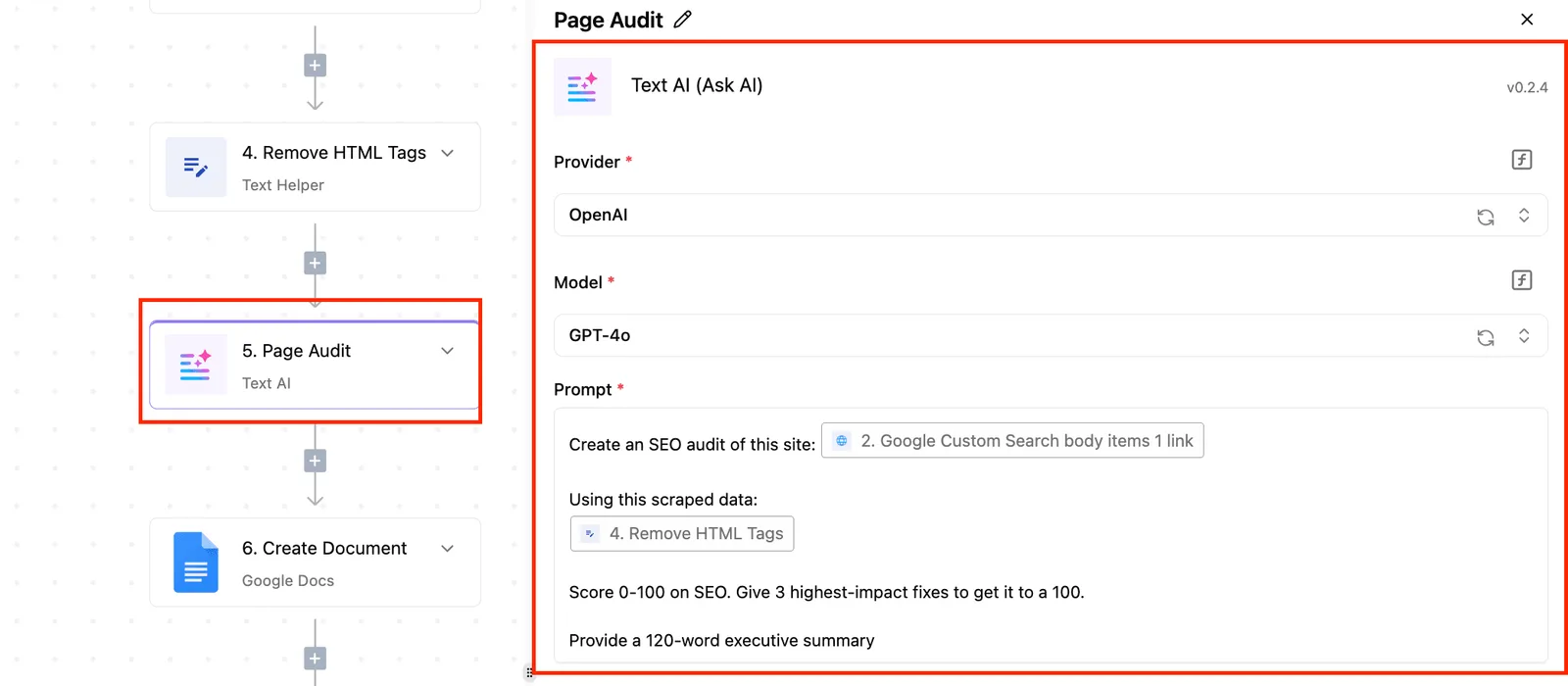 ### Testing the export latency and completeness Before signing, measure the time elapsed between an action occurring and its appearance in the external Security Information and Event Management (SIEM) integration. Real-time streaming is necessary for automated incident response where a delay of minutes allows an attacker to finish their objective. ## Frequently asked questions about vendor audit trails ### Does SOC2 compliance guarantee a forensic audit trail? Analysis from Infosecurix confirms that SOC2 Type II compliance indicates a vendor has defined security processes and followed them over a specific period. It doesn't mandate the technical depth or field-level granularity of the logs themselves. A vendor can pass an audit by simply proving they log "login events." This satisfies the auditor's checklist while leaving you with zero visibility into which specific records were exported or modified during a session. Because SOC2 is a report on the effectiveness of a vendor’s own stated controls, it acts as a baseline for operational trust rather than a technical guarantee that the data provided will be sufficient for a post-incident reconstruction. ### How long should audit logs be retained for legal safety? Statutes of limitations for the specific data types handled must dictate the retention periods. Storing logs for a flat duration without mapping them to regulatory obligations creates a liability gap where evidence is purged before a legal challenge arises or an undetected breach is discovered. Seven years of retention is often required for financial records to satisfy tax authority audits. Healthcare data governed by regional privacy laws may necessitate six years of audit log availability to track unauthorized access to patient files. General operational logs are frequently kept for one year to cover the typical dwell time of an advanced persistent threat. 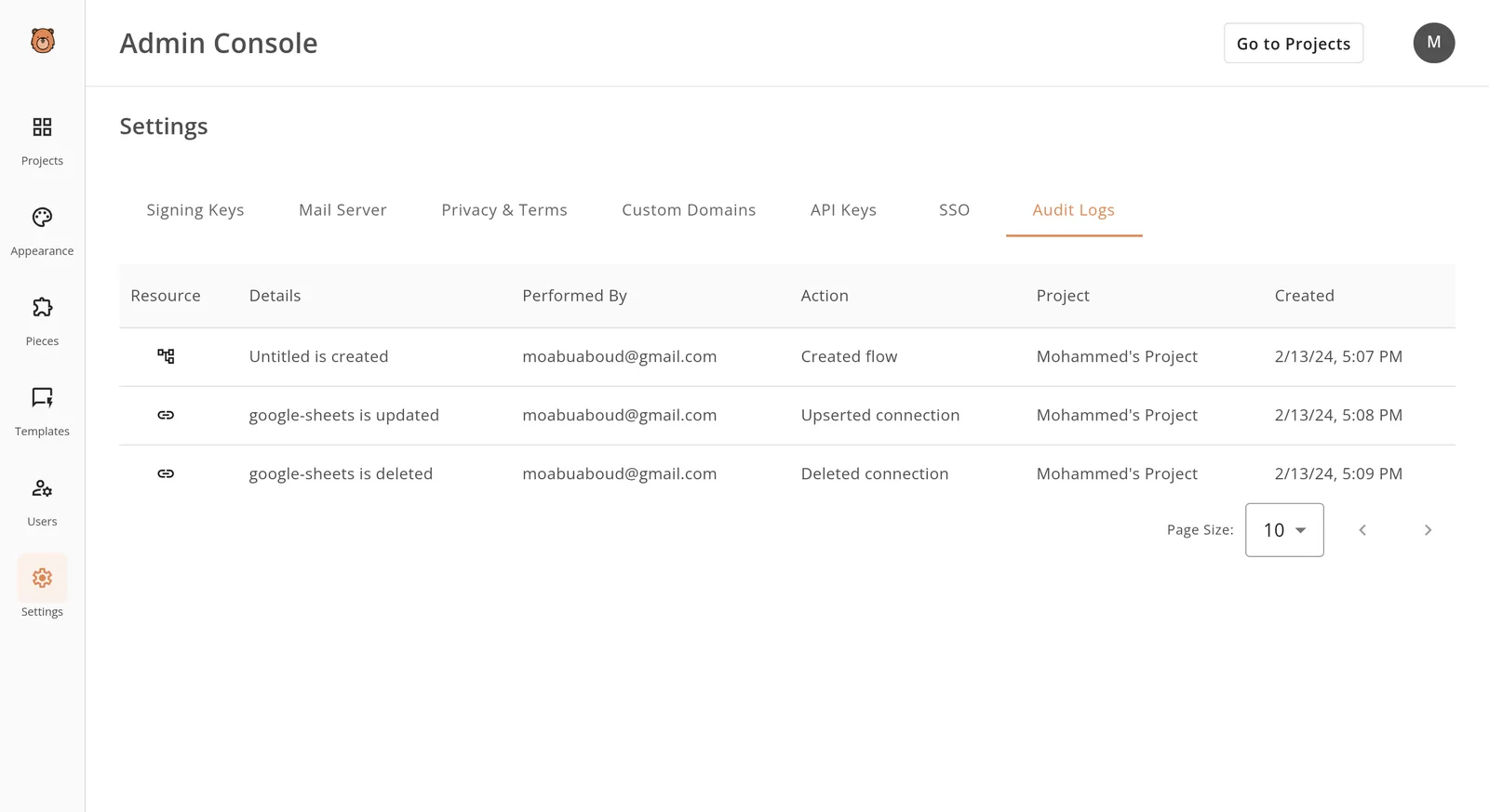 ### What is the difference between a system log and an audit log? A system log records the health and performance of the infrastructure, whereas an audit log records the actions and identities of the users interacting with the data. System logs are designed for debugging and capacity planning, while audit logs are built for accountability and compliance. | Feature | System Log | Audit Log | | :--- | :--- | :--- | | Primary Audience | DevOps and Site Reliability Engineers | Compliance Officers and Security Analysts | | Content Focus | CPU spikes, memory leaks, and service timeouts | User IDs, timestamped data access, and permission changes | | Retention Goal | Short-term performance optimization | Long-term evidentiary integrity | ## Related reading - [What a hash-chained audit trail actually means](https://www.activepieces.com/blog/what-a-hash-chained-audit-trail-actually-means) - [GPU Requirements for Self-Hosting Mistral Large via API](https://www.activepieces.com/blog/gpu-requirements-for-self-hosting-mistral-large-via-api) - [FedRAMP Authorized Vendor List for Secure Integrations](https://www.activepieces.com/blog/fedramp-authorized-vendors-list-2026-integration-guide) ## References - [Datadog](https://www.datadoghq.com/pricing/?product=log-management)Vendors obscure limited logging capabilities by prioritizing system performance and storage margins over the forensic requirements of a post-breach investigation.