By self-hosting the Activepieces core, the only limit to execution volume is the CPU and memory you've allocated to the instance. A background sync running every sixty seconds costs the same as one running once a day. The platform has rapidly expanded its native connectivity to ensure that choosing a self-hosted engine doesn't mean sacrificing the ecosystem. This trajectory matches the coverage of established proprietary competitors. As your tech stack evolves, this expansion ensures that the automation layer remains compatible with both legacy databases and modern AI services. ### Building custom integrations for proprietary internal tools Your developers can use the Activepieces Framework to wrap internal APIs into "Integrations" that non-technical staff can use as drag-and-drop blocks in the visual builder. Unlike Power Automate, which often requires complex custom connectors and premium licensing for internal endpoints, Activepieces uses a TypeScript-based SDK to define triggers and actions. Activepieces syncs flows to git and promotes them through Release Management, moving them from test to production as versioned code rather than just saving an in-app history. This ensures that a flow that lives only in a vendor's UI is never actually reviewed, a capability documented in the Git Sync and Release Management features available on both cloud and self-hosted versions.  Triggers use webhooks or polling to start a flow when a state changes in a custom CRM. Actions map specific JSON fields from a proprietary ERP into standardized inputs for external tools like GitHub or Jira. Validation defines input schemas so your users can't pass malformed data into sensitive internal databases. ### How to deploy Activepieces on Docker in five minutes Deploying Activepieces on a private server ensures that sensitive data (such as API keys for Claude Sonnet 5.5 or customer records from a PostgreSQL database) never leaves your corporate perimeter. 1. Install Docker and Docker Compose on a virtual machine to provide the necessary container runtime. 2. Download the official Activepieces docker-compose.yaml file to pull the latest images for the app and the Redis worker. 3. Configure the environment variables to set the encryption key and the external URL for webhook callbacks. 4. Run the `docker-compose up -d` command to launch the services in the background. 5. Access the dashboard via the server’s IP address to create your first administrative user and start building flows. Explore the full library of connectors at [activepieces.com/pieces](https://www.activepieces.com/pieces) and start free. By decoupling workflow complexity from operational costs, Activepieces eliminates the financial penalty typically associated with multi-step automation. Activepieces is the better choice for teams scaling high-concurrency workflows who require a predictable cost-to-volume ratio without the per-task tax of traditional SaaS incumbents.  This model ensures that data processing spikes remain affordable, as the platform bills only for the flow run rather than the individual steps within it. ## 1. Zapier for massive app ecosystems and rapid deployment Offering thousands of pre-built integrations, Zapier has the Connectivity across the automation market, allowing non-technical teams to deploy workflows across niche software without writing custom API requests. This library reduces the time-to-value for you if you're using fragmented toolstacks. The platform's pricing structure shifts significantly as execution volume moves from occasional triggers to continuous data processing. ### The cost of scaling on Zapier Central Persistent AI agents that interact with over 6,000 apps can be built in Zapier Central. The consumption-based pricing model means that high-frequency agentic loops can quickly exhaust monthly task quotas. Because Zapier charges per successful action, a complex agent using Claude Sonnet 5.5 to research leads and update a CRM will incur a cost for every discrete step it takes. Linear price-to-volume ratios like this mean you can't achieve economies of scale. The dashboard is a centralized view for managing these digital workers. This is seen in the Agents interface where you can monitor specific roles like "SEO blog writer" or "Blog Author Enricher."  This visibility ensures that your administrators can see which agents are active. Your administrators must still reconcile this activity against the total task usage of the account. Following the deployment of these agents, you often need to move beyond simple task execution. ### Enterprise features for governance and security Necessary guardrails for your large-scale deployments are added by the Zapier Enterprise plan. These include Single Sign-On (SSO) and Domain [Insights](https://insights.ariox.com/workato-pricing-in-2026-what-it-costs-and-what-drives-the-bill), which allow your IT department to see every automation being built across your company. 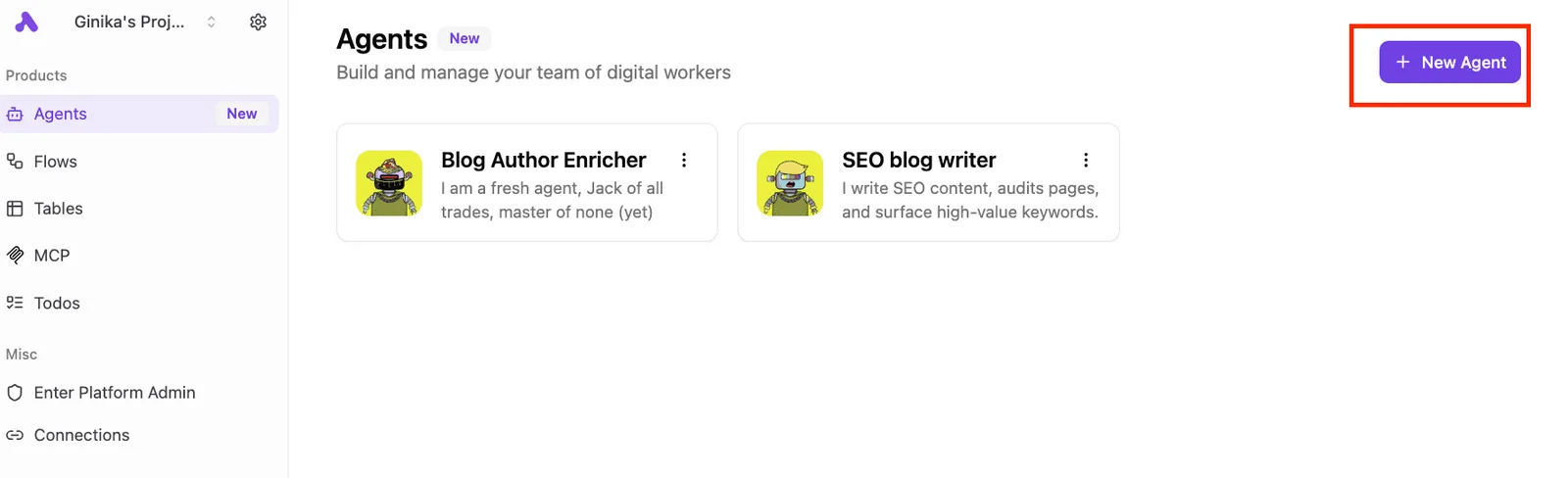 These features prevent "shadow IT" where your employees might connect sensitive data to unauthorized third-party apps. * Single Sign-On (SSO) supports SAML 2.0 providers like Okta or Azure AD. Access is revoked automatically when an employee leaves your company. * App Restrictions allow your admins to block specific connectors so that proprietary data can't be sent to unapproved AI models or public storage. * The Admin Dashboard consolidates multiple team accounts into one bill so that you can track total spend across different departments. ## 2. Make for complex data mapping and visual logic Offering a lower entry price for complex logic than Zapier, Make is a visual canvas for building multi-step workflows that require granular data manipulation. Its interface allows you to map variables across modules using functions for string manipulation, date formatting, and math. A single scenario can replace multiple disjointed automations. ### Make's operations-based pricing and usage limits Make defines its pricing and performance by the number of operations performed. Every individual step in a scenario consumes a credit from the monthly pool: this includes filters that fail or searches that return no results. 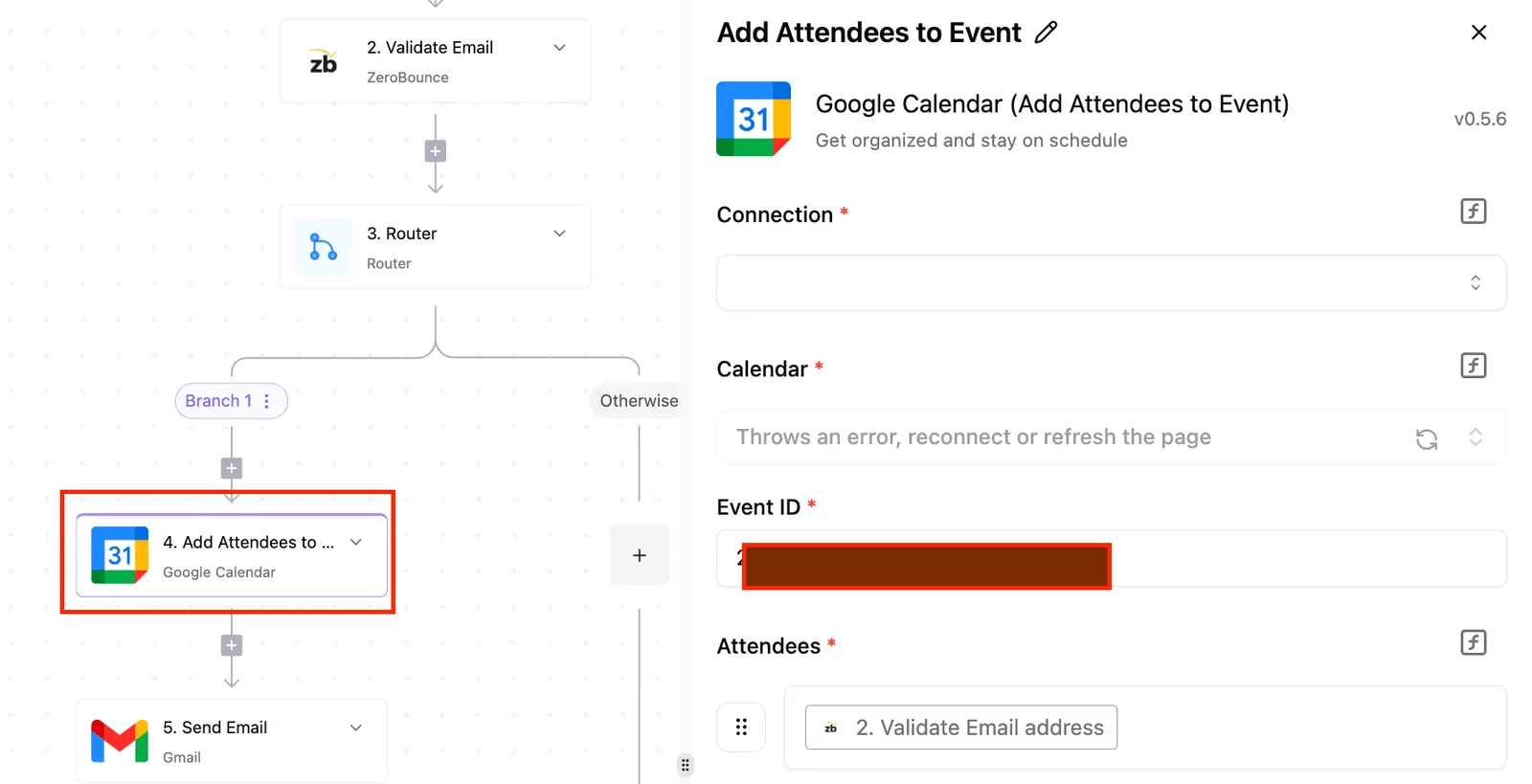 This creates a direct correlation between the complexity of a workflow’s logic and its ongoing cost. You must optimize scenarios to avoid hitting the ceiling prematurely. Beyond the count of operations, the platform enforces a data transfer limit on each plan. This cap limits the total volume of megabytes processed through its servers. A workflow handling large file attachments or high-resolution images can exhaust its monthly quota even if the number of steps remains low. The configuration panel for a Google Calendar "Add Attendees to Event" step shows how Make handles field mapping and connection health. A validation error is indicated by the red border on the step. The "Reconnect" message in the Calendar field signifies that the OAuth token has expired, which halts the scenario until you manually refresh the credentials.  This visibility allows you to troubleshoot specific field mappings before the scenario is activated. One example is linking an email from a previous validation step to the attendee list. Once the connection is restored, the data flows into the subsequent steps of the automation. ### High-concurrency execution on Enterprise plans Execution priority and concurrency limits of a specific plan tier restrict the ability to process multiple triggers simultaneously. On lower tiers, scenarios may be queued or processed sequentially. This introduces latency for time-sensitive tasks like lead routing or instant notifications. Make reserves its highest execution priority for its Enterprise tier. This tier is a dedicated environment for your high-volume needs and the ability to run many scenarios in parallel. On the Enterprise tier, this is the only way to achieve predictable performance under heavy loads. This ensures that a sudden spike in incoming webhooks doesn't cause a backlog that delays your critical business operations.  Check the full list of supported integrations at [activepieces.com/pieces](https://www.activepieces.com/pieces) and [start for free](https://www.activepieces.com/). ## 3. n8n for technical teams and self-hosted environments By providing your technical teams with a self-hosted automation framework that eliminates per-execution pricing, n8n is suitable for high-volume data processing where cloud-based task credits would be cost-prohibitive. By running the orchestration engine on your internal infrastructure, you maintain direct control over data residency and execution overhead. ### The transition from free to Power and Enterprise plans A Community edition begins the n8n self-hosted model. This edition allows for unlimited workflow executions. Your developers can run a high-frequency polling loop without incurring incremental costs for every cycle. As your requirements evolve toward production-grade reliability, you move to the Power or Enterprise tiers to access features like external database support for execution history. This ensures that a surge in logs doesn't crash the application container. The Enterprise tier is the only version that includes Log Streaming to external tools like the Datadog monitoring platform. You can audit execution failures without manual inspection of the n8n interface. ### Scaling through custom JavaScript and Python nodes Dedicated Code nodes that execute raw JavaScript or Python handle complex logic, allowing your teams to manipulate large JSON payloads without stacking multiple declarative steps that clutter the UI. This approach reduces the GiB of memory required during high-concurrency periods. A single script replaces several memory-intensive nodes. The following data illustrates the RAM requirements for managing concurrent executions, showing how resource demands spike as the volume of simultaneous workflows increases. This upward trend in resource consumption necessitates a deliberate strategy for vertical scaling or moving to a queue-based architecture. For your teams utilizing advanced AI workflows, n8n integrates with next-generation reasoning models for complex decision-making and high-speed models like Gemini 3 Flash for agentic tasks. ## 4. Workato for enterprise-grade governance and ERP integration Through strict role-based access controls, Workato provides a centralized workspace for your IT department to manage complex data synchronizations between legacy ERP systems and modern cloud applications. The platform addresses your needs as a large-scale organization by providing environments for testing, staging, and production to ensure that changes to automated financial or HR workflows don't disrupt your core business operations. ### The Workato pricing model: Recipes vs. successful jobs Rather than charging for every individual step or task executed within a flow, Workato bases its commercial structure on the number of active recipes. These recipes are individual integration workflows. This allows you to build high-logic processes with numerous conditional branches without increasing the cost of a single execution. It requires precise planning to avoid paying for dormant or redundant workflows. The cost of entry reflects its positioning for you if you've surpassed the limits of entry-level tools. Mid-Market and Enterprise tiers have a **median annual contract of $64,772**, indicating a significant budget commitment required for organizations looking to scale their automation capabilities. These figures represent the commitment required to access features like the Workato SDK. This SDK allows your developers to build custom connectors for proprietary internal databases. Consequently, the platform is often restricted to departments with the budget to support high-value business processes.  ### Infrastructure for millions of monthly events The platform utilizes a serverless architecture designed to scale horizontally, meaning it automatically allocates more computing power as the volume of incoming webhooks or scheduled triggers increases. This prevents the execution delays common in shared-tenant systems when you attempt to process a massive batch of data. Examples include a monthly payroll run or a large-scale inventory update. For your teams integrating high-reasoning AI, Workato supports calling frontier models like GPT-6 Astra for complex decision-making or Gemini 4 Carbon for technical reasoning within these flows. These models are accessed through secure API connections that maintain the platform’s compliance standards. This ensures that sensitive data used in reasoning tasks remains within the governed environment. ## Frequently asked questions about scalable automation? ### Is self-hosting always cheaper for high-volume workflows? Self-hosting reduces the direct "per-task" fee charged by SaaS vendors, but it shifts the financial burden to infrastructure maintenance and engineering overhead. A platform like n8n allows for unlimited execution on a self-hosted instance. You remain responsible for scaling the underlying compute resources to prevent memory exhaustion during heavy processing. In contrast, a SaaS provider like Workato absorbs the infrastructure complexity but applies tiered pricing that can lead to a "success tax" as your automation volume increases. The total cost of ownership only drops when the savings on task licenses exceed the salary cost of the DevOps time required to maintain high availability. ### How do I handle API rate limits when scaling? Scaling requires implementing sophisticated queuing and retry logic to prevent third-party services from blocking your integration tokens. When pushing high volumes to a CRM like Salesforce or a communication tool like Slack, the platform must support configurable concurrency limits. These limits ensure that outgoing requests stay within the provider's allowed window. Platforms that lack built-in "wait" or "retry with exponential backoff" features will simply fail the execution, resulting in lost data and manual cleanup. Effective scaling relies on asynchronous processing. The automation platform buffers the load rather than hitting the target API with every request simultaneously. ### Can I migrate workflows between these platforms easily? Migrating workflows is a manual rebuilding process because no universal standard exists for representing automation logic across different vendors. Each platform (such as Make or Zapier) uses a proprietary JSON schema to define how a trigger maps to an action. You can't simply export a file from one and import it into another. To prepare for a potential migration, you should follow a structured evaluation process. 1. Audit your current task volume and 'task tax' to determine which workflows are costing the most under current pricing. 2. Identify high-concurrency bottlenecks where simultaneous executions are currently failing due to platform limits. 3. Evaluate data residency requirements to see if moving to a self-hosted or region-specific cloud is a legal necessity. 4. Run a parallel POC on a self-hosted platform to verify that the new environment can handle the peak load of the original system. This systematic approach ensures that the transition addresses the performance gaps of the incumbent system without introducing new technical debt. ## Related reading - [Enterprise AI Agents: 7 Best Platforms Compared for 2026](https://www.activepieces.com/blog/ai-agents-for-enterprises) - [7 Best No Code Automation Platforms Compared for 2026](https://www.activepieces.com/blog/no-code-automation-tools) - [Best Wix Alternatives for 2026: A Guide to Scaling Up](https://www.activepieces.com/blog/best-wix-alternatives-for-2026-a-guide-to-scaling-up)The run is the meter, not the steps inside it.