# Self-Hosted AI Agent Builder: Best Options in 2026

By Halvor Kristiansen · 2026-10-13 · Source: https://www.activepieces.com/blog/self-hosted-ai-agent-builder-best-options-in-2026

---
<aside class="tldr"><p class="tldr-label">Summary</p><p>Self-hosted AI agent builders enable enterprises to maintain total data sovereignty by running orchestration logic, model inference, and sensitive tool integrations entirely within a secure, private network environment.</p><ul><li>Llama 3 70B models require 40 GB to 48 GB of VRAM for operation.</li><li>GPT-6 Astra costs $10 per 1 million output tokens in cloud-based API environments.</li></ul></aside>

When you design and manage autonomous workflows entirely within your own controlled network environments, you are using self-hosted AI agent builders.

A platform that versions every flow ensures that the logic governing your operations **never leaves your firewall** by providing a self-hosted stack that keeps the orchestration layer entirely within your network.

## Self-hosted AI agent builders defined for private infrastructure

### The distinction between cloud-based and on-premise agents

The primary difference between these architectures is where the execution environment and data transit reside. In a cloud-based model, the provider's hardware processes the instructions and sensitive data. This introduces external dependencies for every task execution.

![An AI workflow in Activepieces showing a chat-based automation with OpenAI integration and memory components during…](https://ap-marketing-media.fra1.cdn.digitaloceanspaces.com/uploads/a6067e1b-8835-4d0d-9203-c84d59a68866/qwen3-8-flash-next-launch-specs-benchmarks-and-l-d13b39af.webp)

Conversely, an on-premise agent builder runs as a containerized application on your internal servers. This means the system remains functional even if the external internet disconnects.

This architectural choice is critical when you're deploying frontier models like [Claude Fable 5.1](https://www.anthropic.com/news/claude-5-1-announcement) for demanding reasoning and long-horizon agentic work.

While cloud wrappers require an outbound API call for every step of a complex plan, a self-hosted builder communicates with local model instances or private VPC endpoints. It keeps the entire reasoning chain invisible to third parties.

### Why data sovereignty drives the shift to local hosting

To meet data sovereignty requirements, digital assets must remain subject to the laws and governance of the jurisdiction where you collect them.

When you use [Claude Haiku 5.5](https://www.anthropic.com/news/claude-5-5-haiku) for high-volume, latency-sensitive tasks such as classification and routing, the scale of data throughput increases the risk of a compliance breach if that data crosses international borders. Local hosting mitigates this risk by ensuring that:

* The underlying datasets used for Retrieval-Augmented Generation (RAG) stay on encrypted local volumes.
* A proprietary database stores the audit logs tracking agent activity rather than a vendor’s dashboard.
* A local vault manages the API keys and secrets used to connect internal tools rather than a multi-tenant cloud service.

## Planning for future AI model requirements in 2026

The rapid evolution of artificial intelligence necessitates planning for the hardware and software requirements of the next generation of intelligence. This guide references several current flagship model versions to illustrate the scale of infrastructure needed by the year 2026.

### Current AI models referenced in this guide

These examples allow architects to stress-test their private infrastructure plans against the real memory and compute demands of deploying these models today.

By designing for these high-parameter versions today, you ensure that your self-hosted stack remains relevant as open-weights models continue to close the gap with proprietary cloud services.

## How private agent architectures function in air-gapped environments

By isolating the entire computational stack within a local network, a private agent architecture ensures that **no data packets ever cross** the perimeter to a third-party provider.

This self-contained approach replaces the traditional cloud API call with a three-tier system where your own hardware hosts the model, logic, and data environment.

### Local Inference: Running LLMs on private GPUs

Local inference requires matching the specific model parameters to the available Video Random Access Memory (VRAM) to avoid performance degradation.

Hardware specifications from [VRLA Tech](https://vrlatech.com/vrla-tech-workstations/llama-3/) show a Llama 3 8B model requires **6.7 GB of VRAM** for basic operation and 12 GB for optimal performance.

**40 GB of VRAM** is required to load the Llama 3 70B model, according to [Fast](https://fast.io/resources/deepseek-v3-context-window/)’s analysis, with 48 GB needed to operate effectively. This necessitates a professional-grade GPU like the NVIDIA A6000 to prevent the system from crashing during long-context tasks.

![VRAM required for private LLM deployment](https://ap-marketing-media.fra1.cdn.digitaloceanspaces.com/uploads/bba3fdde-c41b-4a0f-8dc5-758547c5331e/self-hosted-ai-agent-builder-best-options-in-202-1703c95f.svg "Source: VRLA Tech")

### The Orchestration Layer: Managing state and memory locally

Acting as the central nervous system, the orchestration layer translates your intent into a sequence of executable steps without sending prompts to a cloud-based gateway.

Regulated organizations like MoneyGram and FundingSocieties use Activepieces to maintain this sovereignty without sacrificing governance. The self-hosted air-gapped documentation lists the same enterprise feature set (including SSO, SCIM, custom RBAC, and release management) as the managed cloud tier pinned to SOC 2 Type II regions.

![Activepieces pricing page with four subscription tiers showing costs, features, and call-to-action buttons](https://ap-marketing-media.fra1.cdn.digitaloceanspaces.com/uploads/841ec84e-02e4-4761-aca2-e92f6d457f41/self-host-mistral-ai-enterprise-deployment-guide-c7d7dca9.webp)

This ensures that moving to private infrastructure does not mean settling for a stripped-down version of the orchestration layer.

### Secure Tooling: Connecting agents to internal databases and APIs

Through a controlled bridge that never touches the public internet, secure tooling allows your agents to interact with internal resources, such as a PostgreSQL database or a local Jira instance.

### Execution via pre-built connectors

The builder interacts with these systems using pre-built connectors, often referred to as integrations, which act as the interface for specific software tools.

These connectors execute locally within the same network as the target tools, meaning the builder does not require custom code to bridge the gap to your internal data.

This local execution ensures that the credentials and the data retrieved from your PostgreSQL or Jira instances never traverse an external bridge.

Because these connections are confined to the internal subnet, your agent can perform the following actions securely:

1. Querying local SQL databases to generate reports without exposing schema structures to external scrapers.
2. Triggering internal webhooks to automate server restarts based on log analysis.
3. Reading from a local vector store to provide RAG (Retrieval-Augmented Generation) support using proprietary technical manuals.

## The case for managed cloud agents versus self-hosted control

Managed cloud agents provide the fastest path to deployment because they eliminate the need to provision specialized hardware or manage model weights manually. By utilizing services like OpenAI or Zapier Central, you can connect an agent to existing software-as-a-service (SaaS) tools in minutes.

### Why speed-to-market favors OpenAI and Zapier Central

Cloud-based platforms offer immediate access to frontier intelligence without the overhead of infrastructure maintenance. [Gemini](https://gemini.google/subscriptions) states that a developer can start building with [Google](https://google.iopscience.iop.org/article/10.1088/2753-3751/ae2486/meta) Gemini for $0/month with a Google Account, allowing immediate experimentation without any upfront financial commitment.

2x higher usage access is granted by the Google AI Plus tier at $4.99/month, according to Gemini reports, so power users can double their operational capacity for a nominal recurring fee. You can validate complex architectures without upfront infrastructure investment.

![Activepieces pricing page displaying four subscription tiers with features and costs.](https://ap-marketing-media.fra1.cdn.digitaloceanspaces.com/uploads/841ec84e-02e4-4761-aca2-e92f6d457f41/self-host-mistral-ai-enterprise-deployment-guide-c7d7dca9.webp)

This speed ensures that your business units can test hypotheses against live data immediately.

### Data leakage risk from shadow AI usage

Accidental exposure of sensitive intellectual property through "Shadow AI" implementations is the primary risk of cloud-managed agents. When a contractor uses a cloud-based model to analyze a proprietary technical manual, that data leaves the secure perimeter and resides on external servers.

<blockquote class="pull"><p>Accidental exposure of sensitive intellectual property through &quot;Shadow AI&quot; implementations is the primary risk of cloud-managed agents.</p></blockquote>

This violates the strict data residency requirements of sectors like defense or healthcare. The act of transmission creates a new attack surface that you must audit, even if the vendor claims data isn't used for training.

### Why local control wins on latency and predictable pricing

**Self-hosting moves the AI stack inside your corporate firewall to ensure that data never traverses the public internet, fulfilling the "air-gapped" requirement of high-security environments.** This architectural shift has three specific advantages for your long-term operations:

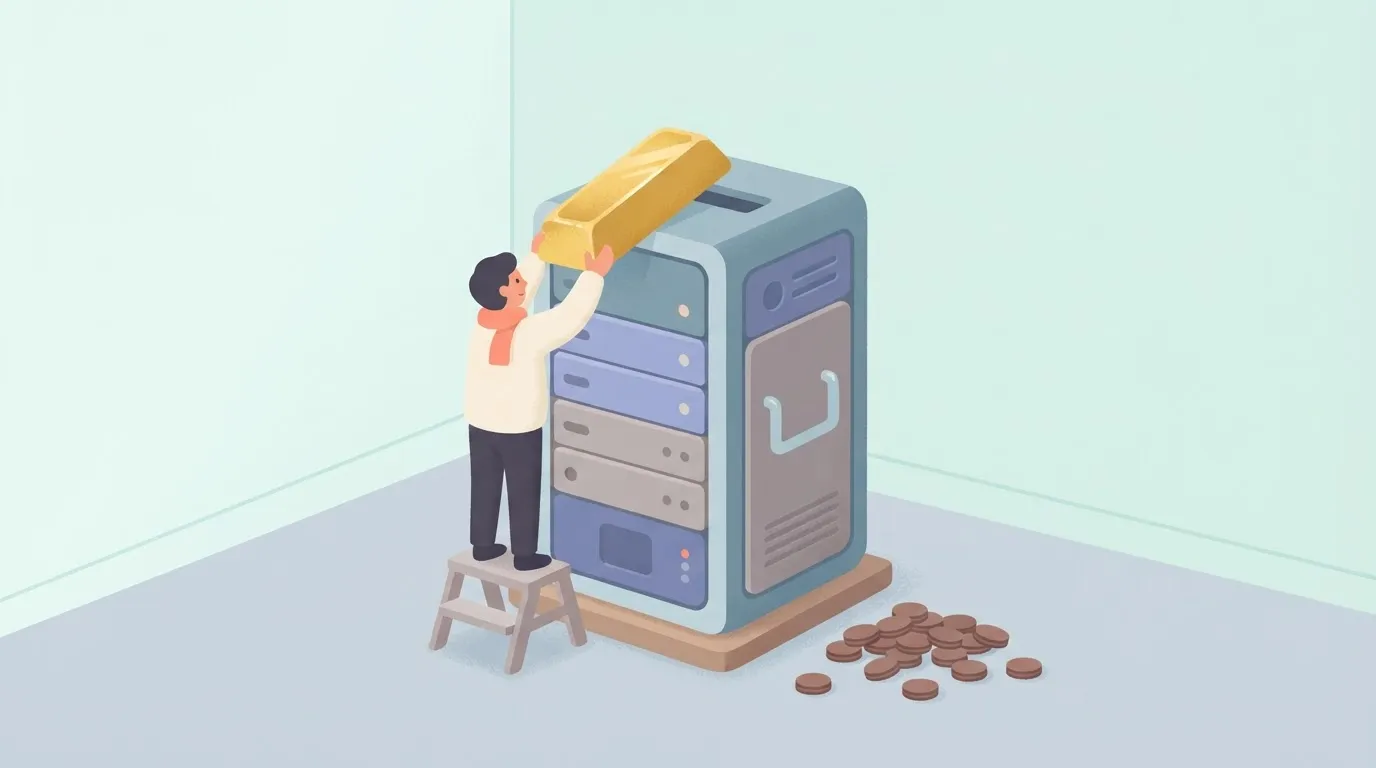
* **Elimination of per-token API fees**, such as the $10 per 1 million output tokens charged for GPT-6 Astra, which makes high-volume automation costs impossible to forecast.
* Fixed infrastructure depreciation instead of variable scaling costs, meaning a one-time purchase of H100 cards results in a flat monthly operational expense regardless of how many millions of requests you run.
* Reduced data transit latency by keeping the model on the same local network as the vector store, which ensures that RAG-based responses are delivered fast enough for real-time customer support.
![A large, heavy coin bank shaped like a server rack.](https://ap-marketing-media.fra1.cdn.digitaloceanspaces.com/uploads/e29a6120-987d-4703-9fa7-f531ae868f9f/self-hosted-ai-agent-builder-best-options-in-202-832ae50a.webp)

By anchoring the stack to a self-hosted orchestration layer, you maintain sovereignty over your intelligence assets while avoiding the "success tax" inherent in per-token billing models.

## Infrastructure requirements for hosting AI agents internally

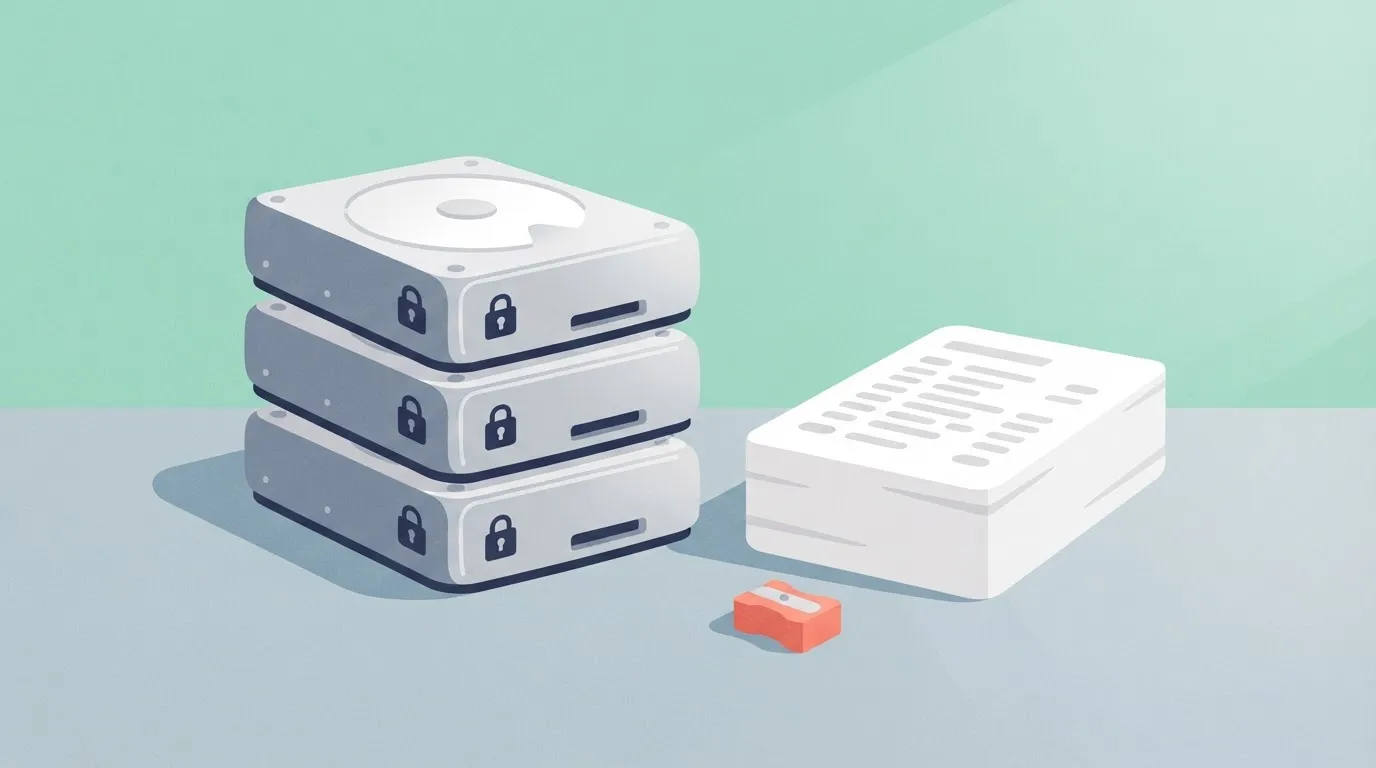
Internal AI hosting requires a hardware baseline capable of supporting the specific memory footprints of open-weights models. Relying on local infrastructure eliminates the latency of external API calls. This ensures that data never leaves the controlled environment of your corporate subnet.
![A stack of three internal hard drives sits on a desk, each with a small lock icon on its side to represent encrypted local…](https://ap-marketing-media.fra1.cdn.digitaloceanspaces.com/uploads/1f9fa47a-f8eb-4c80-ba89-ff0a40572814/self-hosted-ai-agent-builder-best-options-in-202-1ec0959f.webp)

### VRAM required for private LLM deployment

Sufficient Video Random Access Memory (VRAM) is required to hold the model weights and the KV cache for processing long context windows.

| Model Name | Required VRAM |
| :--- | :--- |
| Llama 3 8B | 8-12 GB |
| Llama 3 70B | 40-48 GB |
| Mistral Large 4 | 69.3 GB |

_Prices and plan limits checked against [docs.claude.com](https://docs.claude.com/en/docs/about-claude/models/overview) and [openai.com](https://openai.com/chatgpt/pricing) and [gemini.google](https://gemini.google/subscriptions) on October 12, 2026._

Exceeding these memory thresholds causes the system to offload tensors to system RAM. This results in a performance drop significant enough to render real-time agentic workflows unusable.

### Identity management: Integrating with SSO and SCIM

Securing an internal AI stack necessitates mapping model access to your existing corporate identity providers.

* Use Security Assertion Markup Language (SAML) to ensure that only authenticated employees can trigger agentic workflows.
* Implement System for Cross-domain Identity Management (SCIM) so that when an employee leaves your company, the central directory revokes their access to sensitive internal models automatically.
* Apply Role-Based Access Control (RBAC) to restrict high-token-cost models or sensitive data tools to specific departments.

### Audit logging for compliance and secret isolation

Maintaining a sovereign stack requires a permanent, immutable record of every prompt and tool execution. Centralized logs allow your security teams to reconstruct the exact logic an agent followed during a failure. This is a requirement for passing SOC2 or ISO 27001 audits.
![Activepieces AI agent workflow with OpenAI Chat Model and memory components showing a chat execution.](https://ap-marketing-media.fra1.cdn.digitaloceanspaces.com/uploads/e0962ae3-b2da-4d37-bc91-a78d5027dfd1/ai-software-for-insurance-brokers-a-2026-guide-s-7263020b.webp)

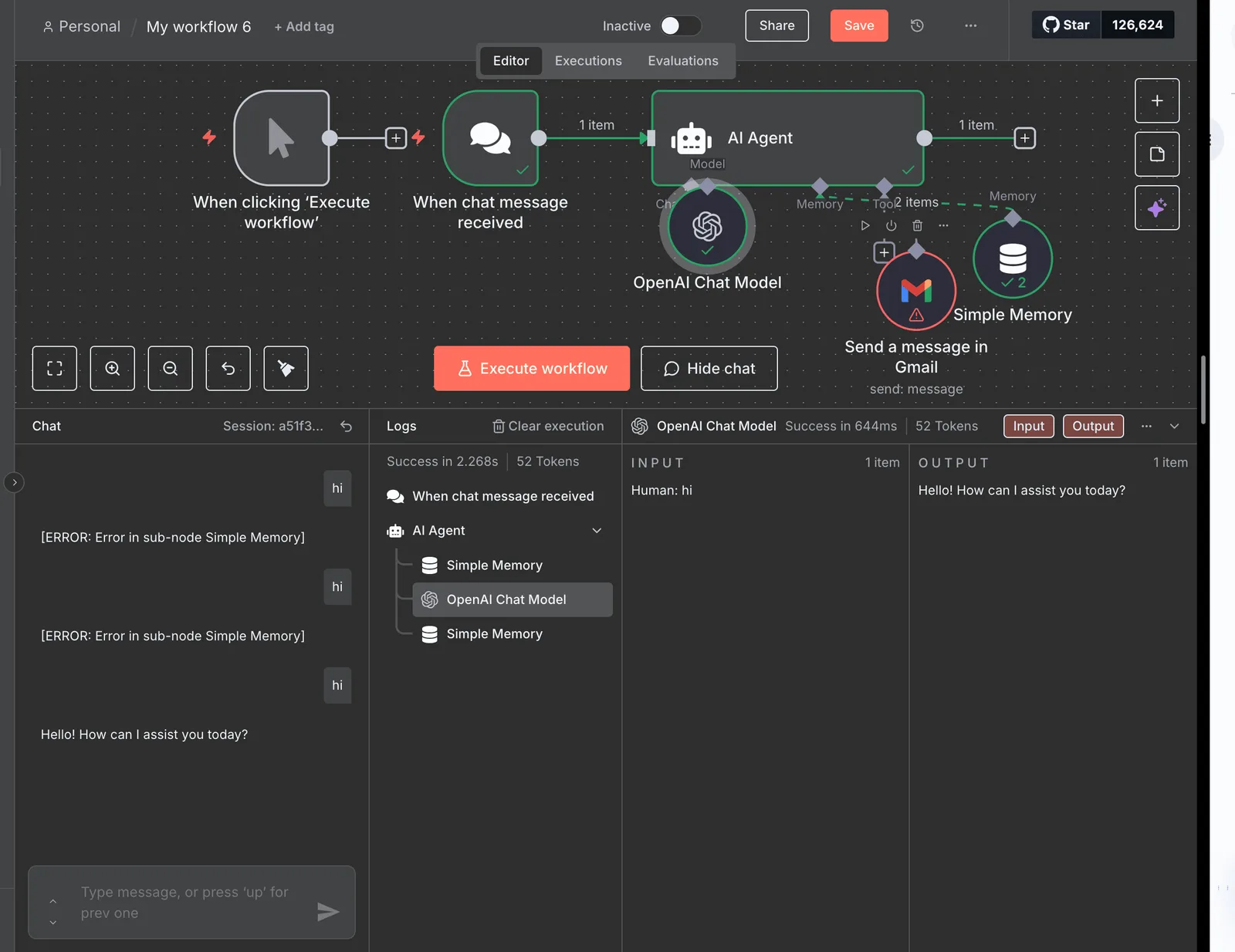
Every credential used to connect these agents can be routed to your own secret manager. In a properly configured self-hosted instance, you can connect an external secret manager and inspect the database to verify that no connection secrets are stored locally by the platform.

This ensures that the credentials your business runs on are never held by a third party, a level of control unavailable in cloud-only tools like Zapier or Make.

## Deploying private automation with Activepieces

Activepieces provides an MIT-licensed core that executes your entire automation logic and AI orchestration within a private network. This architecture ensures that sensitive operational data never leaves the local environment to reach a third-party cloud provider.

### Self-hosting via Docker, Compose, or Kubernetes

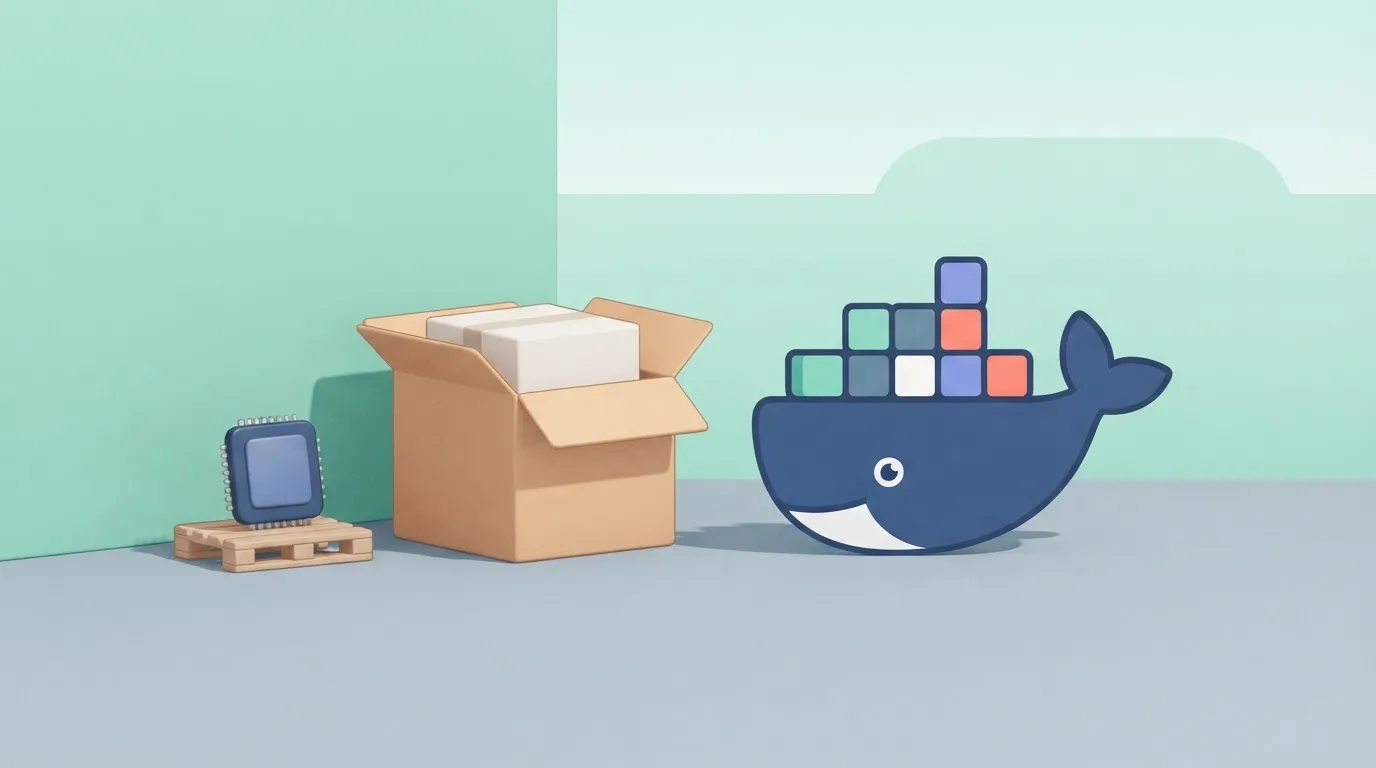
Distributed as a containerized application, the platform allows for deployment across standard infrastructure stacks. By providing official images for Docker and Kubernetes, the software fits into your existing CI/CD pipelines. The [Community](https://community.activepieces.com/t/mcp-update-easier-faster-and-more-secure/11177) edition allows for self-hosting with unlimited workflow runs.
![A small, square computer chip sits next to a shipping box containing a smaller box labeled as a containerized application…](https://ap-marketing-media.fra1.cdn.digitaloceanspaces.com/uploads/0b187787-8988-481f-a89a-e9ecec43e0ab/self-hosted-ai-agent-builder-best-options-in-202-f87a1df8.webp)

### Connecting to local LLMs like Ollama or vLLM

Workflows in Activepieces can be configured to communicate with local inference servers to maintain a closed-loop AI system.

Instead of routing prompts to external APIs, the system connects to internal endpoints running models such as Mistral Large 4 for complex multimodal tasks or Claude Haiku 5.5 for high-volume routing. This setup ensures that proprietary data used for RAG stays behind your firewall.

### Enterprise governance and air-gapped support options

Utilize specialized features to manage access and oversight if you operate under strict regulatory requirements. The enterprise tier provides Single Sign-On (SSO) and SCIM for centralized identity management. It also includes Role-Based Access Control (RBAC) to restrict workflow editing to authorized personnel.

![Activepieces pricing page showing four subscription tiers with features and pricing details.](https://ap-marketing-media.fra1.cdn.digitaloceanspaces.com/uploads/5780ea9c-6ecc-45f7-99f2-8707dfb01930/vercel-pricing-in-2026-how-the-costs-scale-scree-22533578.webp)

The system generates comprehensive audit logs to track every execution and configuration change for compliance reviews. For environments with no outbound internet connectivity, the [Activepieces sales team](https://www.activepieces.com/sales) coordinates air-gapped deployments.

This ensures that the automation stack remains functional even when physically isolated from the public web.

## The Monday morning checklist for local AI deployment

A production-ready private agent environment requires a systematic transition from ephemeral cloud experimentation to a hardened internal infrastructure. This shift ensures that every component, from the weights of the model to the execution of the agentic logic, remains under your physical control.

The local AI deployment sequence:
1. Provision GPU-enabled hardware
2. Deploy a local model provider like vLLM or Ollama
3. Install the orchestration platform via Docker Compose
4. Configure OIDC for your team

This sequence establishes a baseline where the infrastructure is operational before you introduce any sensitive data.

Following these steps ensures that the underlying compute is validated for the specific requirements of flagship open-weight models, such as Mistral Large 4, which demands significant VRAM to maintain acceptable token-per-second throughput.

Once the model provider is live, the automation layer is introduced to bridge the gap between raw inference and functional business workflows.

For teams operating under strict regulatory oversight, the final configuration of OpenID Connect (OIDC) ensures that access to these powerful internal tools is governed by your existing identity providers.

This foundation allows you to begin migrating specific high-security tasks from public wrappers to the sovereign stack.

## Frequently asked questions about self-hosted AI agents?

### Can I run a self-hosted agent on a standard laptop?
Provided the machine has sufficient unified memory to prevent the system from swapping to disk, a standard laptop can host the orchestration layer and small-scale models. Running a compact model like Ministral 3 3B allows for local text processing and basic routing without the latency of a round-trip to a data center.

### Do self-hosted agents require an active internet connection?
Sovereign agents function entirely without an outbound internet connection if the same local network hosts the model weights, orchestration software, and target databases. This air-gapped configuration ensures that sensitive telemetry never leaves the building. While public models like GPT-6 Astra require a persistent connection to OpenAI’s servers, an on-premise deployment using Mistral Small 4 maintains full functionality even if the network cable is pulled.

### What is the difference between Open Source and Open Weights?
Open Source refers to the software code and logic being readable and modifiable. Open Weights refers to the pre-trained parameters of the AI model itself being available for local execution. The orchestration platform is licensed as Open Source so that you can inspect the source code to verify there are no hidden data exfiltration hooks. Open Weights models such as Z.ai GLM 5.3 allow you to download the model file and run it on your own hardware.

### How do I update local models without breaking my agents?
Updating local models requires a staged deployment where the new version is validated against existing prompts before you decommission the old model.

1. Deploy the new model version, such as moving from DeepSeek-V4.1-Flash to a newer iteration, on a separate local inference endpoint.
2. Run a set of regression tests to ensure the new model's output format doesn't break the parsers in your orchestration flows.
3. Point the production agent's API routing to the new endpoint once the output is verified.

## Related reading

- [Best AI Agent Builders in 2026: Ranked & Reviewed](https://www.activepieces.com/blog/best-ai-agent-builders)
- [Self-Hosted AI Travel Agent: Owning Your Infrastructure](https://www.activepieces.com/blog/self-hosting-ai-for-travel-and-hospitality-in-2026)
- [Best Lovable Alternatives: 5 AI App Builders for 2026](https://www.activepieces.com/blog/best-lovable-alternatives-5-ai-app-builders-for-2026)

## References

- [VRLA Tech](https://vrlatech.com/vrla-tech-workstations/llama-3/)
