[Www-api](https://www-api.ibm.com/adobe/assets/urn:aaid:aem/c4711149-da99-4654-9114-8ee524108540/original/as/cost_of_a_data_breach_report_2024.pdf) data shows that while the global average sits at $4.88 million, airlines operate at the intersection of logistics and high-value finance, suggesting their actual exposure likely dwarfs that baseline figure. For instance, the [Financial Industry](https://www.ibm.com/think/insights/cost-of-a-data-breach-2024-financial-industry) faces even steeper penalties at $6.08 million per breach, which means security budgets in this sector must account for significantly higher risk premiums.  You're handling both booking PII and credit card data. Your risk profile trends toward this higher ceiling. The following data illustrates the financial stakes of these security failures: ### The risk of PII leakage in prompt history Public LLM providers typically retain prompt history for 30 days to monitor for abuse. This means any unredacted passport number or frequent flyer ID you send to a managed API exists in a third-party plaintext log for a full month. When a developer uses ChatGPT to debug a passenger manifest parser, that sensitive data is now stored outside your controlled perimeter. This creates a secondary attack surface. A **breach at the AI provider** becomes a breach for you. ### PCI DSS 4.0 requirements for AI workloads The PCI DSS 4.0 standard is the latest regulatory framework for the Payment Card Industry. It mandates that you maintain a documented inventory of all system components in scope for cardholder data.$4.35 million is the average cost of a single data leak in the travel sector.
Meeting this requirement is impossible when using black-box proprietary models. Because you can't audit the underlying weights or the training data of a remote model, you can't prove that the model isn't remembering Primary Account Numbers (PANs) during fine-tuning. For organizations requiring strict compliance, self-hosting on isolated hardware is the only way to ensure that payment data never crosses the boundary into a non-compliant environment. ### Tokenization vs. redaction in local inference Local inference allows for granular control over how data is transformed before it reaches the model. You manage the transformation to ensure the LLM never sees raw sensitive strings. By using tokenization, you replace a credit card number with a non-sensitive reference token that the model processes. This ensures the actual financial data stays in a secure vault. Redaction uses a library like Presidio (Microsoft’s open-source PII identification tool) to scrub names and addresses from a prompt. The model only receives the intent of the query. Synthetic Data Injection swaps real passenger names for generated placeholders during testing. You can iterate on prompts without risking real identity theft. ## Manage private AI infrastructure cost scaling An **air-gapped H100 cluster** requires a capital expenditure that exceeds the monthly operational expense of cloud tokens for several years. This represents a shift from variable utility pricing to fixed industrial overhead.  Through this upfront investment, you ensure that you own the compute capacity outright. It removes the risk of a third-party provider throttling API access during peak travel disruptions or hiking per-token rates after you've locked into their ecosystem. ### GPU procurement and H100 availability for airlines A direct purchase agreement for Nvidia H100 Tensor Core GPUs places you in a global supply queue where lead times often span months. These are the specialized hardware required to run large-scale inference.  By securing these units, you act as your own service provider. This insulates the passenger manifest and payment processing workflows from the data-sharing requirements inherent in public cloud hardware clusters. The following diagram illustrates the resulting Virtual Private Cloud (VPC) perimeter, where the LLM and the vector database reside entirely within your controlled environment. You'll physically block the system from sending any telemetry or prompt data to the public internet. By establishing this hard boundary, you eliminate the possibility of a "man-in-the-middle" leak during the inference cycle. This architectural isolation is your primary defense against the accidental training of public models on proprietary routing logic. ### The 'hidden' cost of specialized AI DevOps talent Maintaining a private inference stack requires a dedicated team of site reliability engineers who specialize in Kubernetes. This is the orchestration software used to manage containerized applications. Your team also manages Triton Inference Server, which optimizes how models interact with GPUs. Hiring these specialists increases your payroll burden significantly compared to consuming a standard REST API, but it grants you total transparency into the model's execution logs. Without this internal expertise, you can't verify if a model has been tampered with or if an unencrypted temporary directory is caching data. ### Energy consumption of local model fine-tuning Local fine-tuning on massive datasets of historical flight delays and passenger PNR (Passenger Name Record) data demands a constant, high-wattage power draw. This requires specialized data center cooling infrastructure. This energy footprint adds a recurring monthly cost to your utility bill. Yet it allows you to refine the model on sensitive data that is legally prohibited from leaving the jurisdiction. By absorbing the electricity costs of local training, you avoid the compliance fines and reputational damage associated with transferring protected European or North American passenger data to a third-party cloud provider’s training cluster. ## Activepieces secures the orchestration between AI and payment gateways ### Self-hosting the workflow engine on Kubernetes Deploying Activepieces as a containerized stack within your own Kubernetes cluster ensures that every byte of passenger data remains behind your corporate firewall, a configuration used in production by organizations like MoneyGram and Alan.  This architectural choice means the logic that decides which payment gateway to ping or which loyalty tier to apply never routes through a third-party vendor’s cloud. By pulling the official Docker image into a private registry, your IT team eliminates the risk of "shadow AI" workflows. These occur where employees might otherwise sync sensitive flight manifests to external SaaS platforms to save time. ### Connecting private LLMs to Amadeus and Sabre APIs Activepieces routes every credential it touches (API keys, OAuth tokens, and the connection secrets for 735+ integrations) to your own secret manager in the self-hosted edition, ensuring no vendor holds the keys to your GDS access. The platform uses a visual canvas to map data between these systems. A private AI can query a booking reference without exposing the API credentials to the public internet. 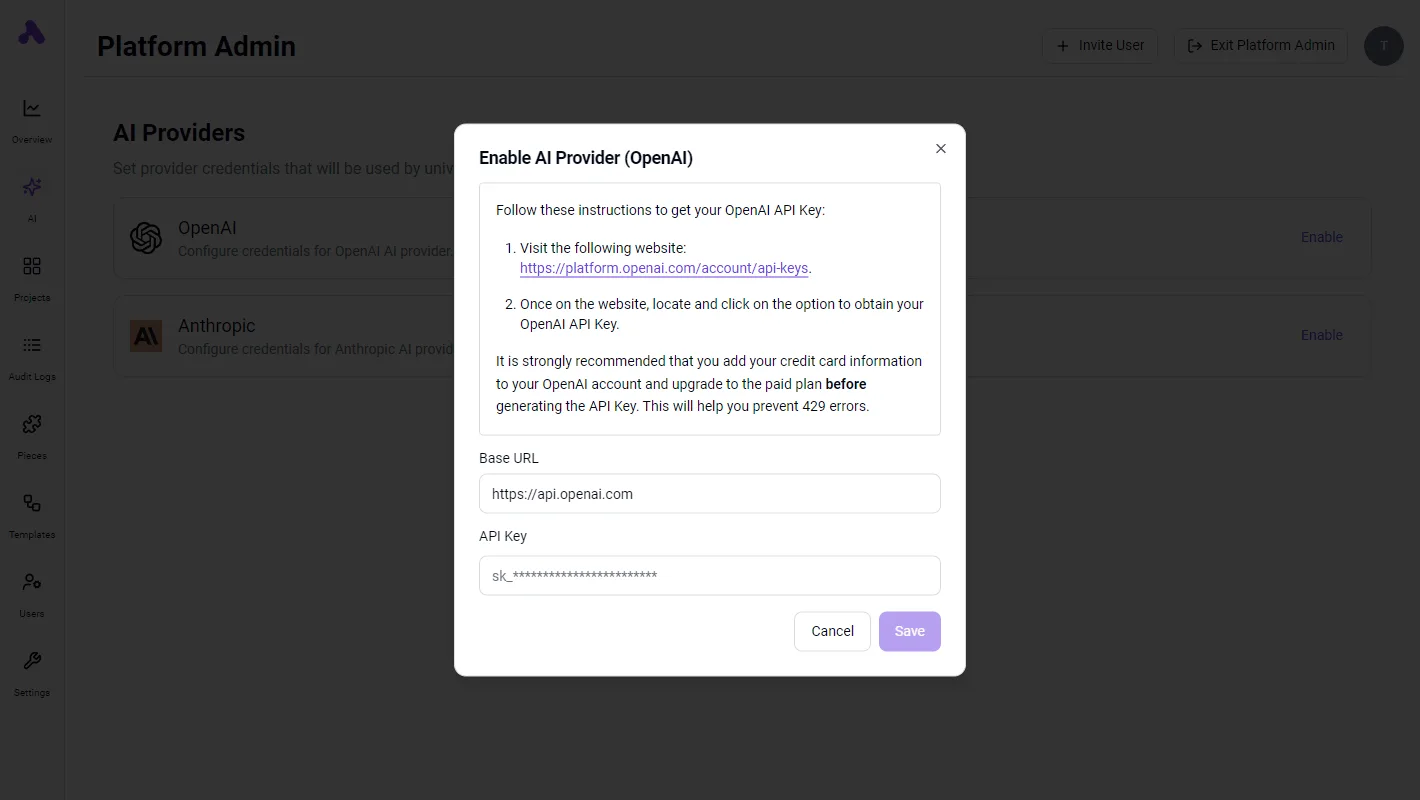 The workflow builder allows your engineers to define the exact sequence of data exchange. For example, they can trigger an automated refund process only after a private model confirms the sentiment of a customer complaint. The screenshot below illustrates this granular control, showing a "Get Icecream Flavor" action step within a Gelato integration being configured with specific retry logic. This prevents the accidental leakage of PII through malformed API requests. ### How to maintain audit logs for compliance While many vendors gate governance behind cloud-only tiers, Activepieces provides the same SSO, SCIM, custom RBAC, and audit logs in its air-gapped edition as in the managed cloud. This ensures that air-gapped means full control, not a fraction, for regulated carriers. MoneyGram and FundingSocieties run this in production to maintain strict oversight of automated data flows. By inspecting the self-hosted enterprise feature set, you can verify that release management and secret manager integrations function identically within your private perimeter. This parity allows you to produce a forensic trail of exactly which internal AI model accessed a payment record during a security audit. This provides a verifiable chain of custody that's impossible to replicate when using black-box automation tools. 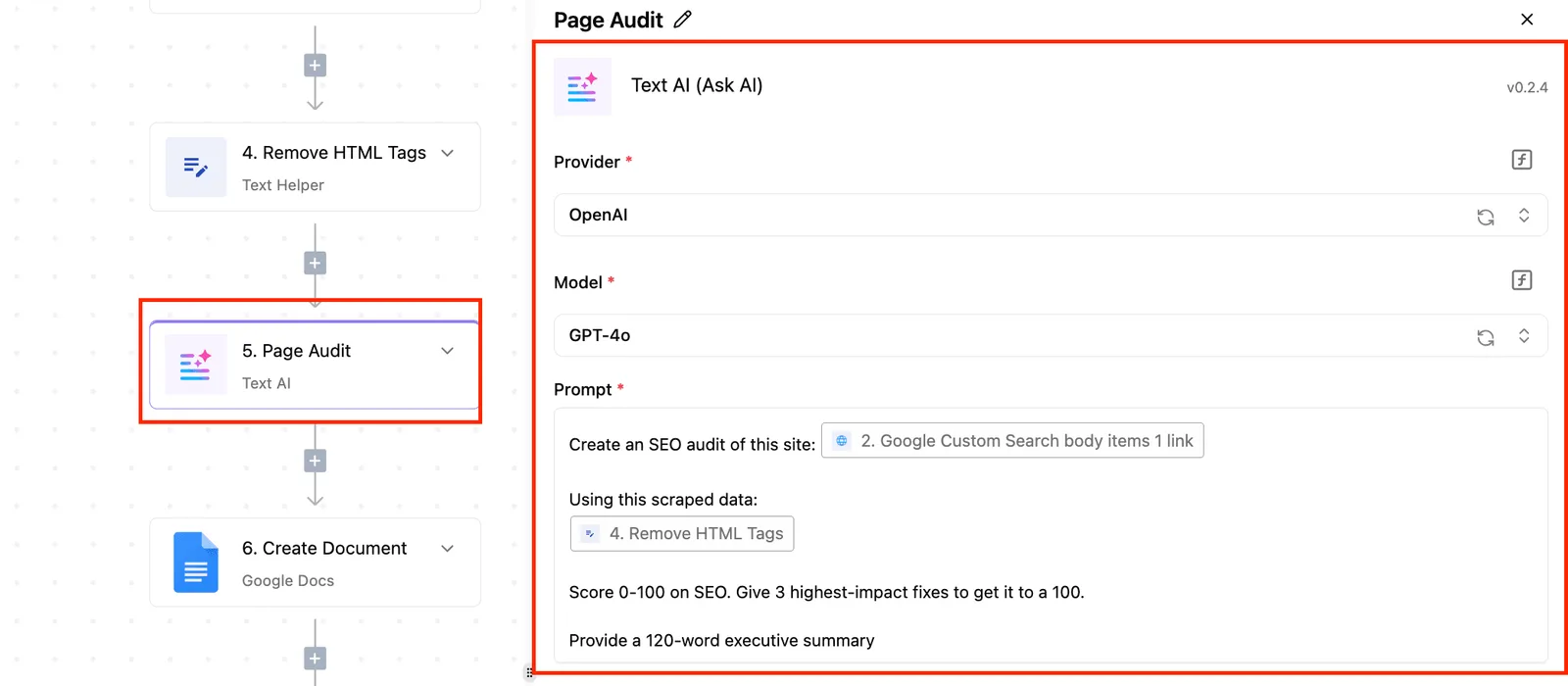 ## Implementation steps for deploying a private AI pilot A signed manifest for a local container registry proves that your AI pilot operates entirely within your own administrative control. By air-gapped the initial deployment from external API providers, your IT department eliminates the risk of outbound data exfiltration before the first query is even processed. ### Mapping the 'shadow AI' footprint in customer support When you conduct a comprehensive audit of browser extensions and clipboard history, it reveals exactly where your employees are currently pasting sensitive passenger data into unauthorized public LLMs. Identifying these unofficial workflows allows your security team to prioritize which internal tools need immediate AI integration to stop the leakage of PII to third-party servers. ### Selecting a Llama 3 or Mistral base for local testing The specific model weights for Llama 3 or Mistral must be downloaded and verified against their SHA-256 hashes to ensure the code hasn't been tampered with during transit. These are open-source large language models. By using these local models instead of proprietary APIs, you retain the intellectual property of your fine-tuning efforts. The resulting specialized weights remain on your internal disks rather than becoming training data for a competitor’s cloud service. ### Establishing the data perimeter for the first POC The initial proof of concept requires a rigid network configuration that denies all egress traffic to the public internet. This ensures that any logic errors in the AI don't result in data being broadcast externally. This environment is built through a specific sequence of infrastructure actions: 1. Provision a GPU-enabled VPC instance to ensure the hardware is physically segregated from general-purpose web servers. 2. Deploy a Llama 3 container to verify that the model can run without calling home for license validation, which means the software can operate in air-gapped or restricted network environments. 3. Install a self-hosted automation engine via Docker to manage the flow of information between the model and the database. 4. Connect a non-production PII data stream for testing so that developers can iterate on prompts without risking actual customer credit card numbers. ## Frequently asked questions ### Does self-hosting AI increase booking latency? Local inference eliminates the round-trip time to public cloud regions. This prevents PII-scrubbing middleware from adding a perceptible delay to the passenger's checkout flow. When a request travels to a third-party API, you're subject to internet routing fluctuations and provider-side queuing. By contrast, a dedicated inference server on the same local area network as the booking engine processes tokens at a fixed rate. Because of this architectural proximity, the total time-to-first-token remains consistent even during peak holiday booking surges. This prevents session timeouts that lead to abandoned carts. ### Can we use consumer GPUs for airline AI workloads? Consumer-grade hardware lacks the Error Correction Code (ECC) memory required for 24/7 reliability. This means a single bit-flip during a flight-manifest query could result in corrupted data output. While the raw compute power of high-end gaming cards is high, their lack of multi-instance GPU partitioning prevents a single piece of hardware from being securely carved into isolated environments for different departments. Using enterprise-grade silicon ensures that memory errors are detected and corrected automatically, preventing the silent corruption of sensitive passenger records. Hardware-level virtualization allows the loyalty team and the operations team to share a physical card without their data ever touching the same memory registers. Furthermore, long-term driver support cycles match the three-to-five-year lifecycle of your infrastructure, avoiding the need for emergency kernel patches that break production stability. ### How does self-hosting impact AI model accuracy? Self-hosting enables the use of specific, fine-tuned weights that aren't diluted by the "generalist" safety filters applied to public models. This results in higher precision for industry-specific terminology like IATA airport codes. Public LLMs are frequently updated with new reinforcement learning, which can cause "model drift" where a prompt that worked yesterday fails today. By pinning a specific model version in a local container, your engineering team ensures that the logic used to calculate baggage fees or rebooking options remains identical across every deployment. This provides a verifiable audit trail for regulatory compliance. ## Related reading - [5 Airlines Processes That Can Be Easily Automated](https://www.activepieces.com/blog/5-airlines-processes-that-can-be-easily-automated) - [How to Deploy Self-Hosted AI for Bank Call Centers (2026)](https://www.activepieces.com/blog/how-to-deploy-self-hosted-ai-for-bank-call-centers-2026) - [10 Top API Integration Platforms for 2026](https://www.activepieces.com/blog/10-top-api-integration-platforms-for-2025) ## References - [IBM](https://www.ibm.com/think/insights/cost-of-a-data-breach-2024-financial-industry)A breach at the AI provider becomes a breach for you.