DeepSeek-V4-Pro-0813 is a flagship-tier reasoning engine for your internal development teams that doesn't expose proprietary codebases. Grok 4.7 handles sophisticated coding and general-purpose tasks within your private cluster. ## The technical stack for local model execution Precise alignment of GPU memory and software architecture is required for local execution to ensure that sensitive data never leaves your organizational perimeter. While cloud-based models like [Claude Fable 5.1](https://docs.anthropic.com/en/docs/about-claude/models/overview) offer high-reasoning capabilities for agentic work, replicating that performance on-premise demands a rigorous calculation of hardware overhead. ### Hardware requirements: VRAM is the primary bottleneck Maximum model size is determined by Video Random Access Memory (VRAM). It's the hard ceiling for local intelligence. To run a flagship 70B parameter model at 16-bit (Full) precision, your system requires [140 GB](https://rdp.in/gpu-mart/knowledge-base/how-much-vram-does-a-70b-405b-llm-need-for-inference/) of VRAM. This necessitates a multi-GPU cluster like an NVIDIA H100 node rather than a single workstation. Requirement drops to 70 GB when you use 8-bit (INT8) quantization. This allows the model to fit within the memory of a single A100 or H100 card, so you can bypass the coherence of distributed computing. For edge deployments or budget-constrained environments, 4-bit (INT4) quantization brings the requirement down to 35 GB, so a single high-end workstation card can now host the model locally. This allows the model to run on consumer-grade hardware or mid-tier enterprise cards like the L40S, which democratizes access to high-capacity AI. ### VRAM requirements and multi-GPU setups Deploying a 70B model at 4-bit quantization requires 35-43 GB of VRAM, a figure that exceeds the capacity of standard consumer hardware. A single RTX 4090 offers only 24GB, which is insufficient for this workload and will result in an immediate out-of-memory error, forcing users to either distribute the model across multiple GPUs or reduce its precision, so the hardware is effectively useless for this specific task without significant compromises. To bridge this gap, users must utilize a multi-GPU setup by pooling the memory of two consumer cards via the system bus. Alternatively, a single enterprise-grade L40S card provides 48GB of VRAM, allowing the model to fit comfortably on one piece of silicon, so long as the weights are compressed to a 4-bit or 8-bit format. ### Interconnect speed and the consumer hardware bottleneck Consumer hardware faces a physical limitation when scaling beyond a single card. While two RTX 4090s provide 48GB of total VRAM, they lack the high-speed NVLink interconnect found on enterprise cards, forcing data to travel over the significantly slower PCIe bus, which creates a severe performance bottleneck during inference.  This hardware constraint creates a massive communication bottleneck during inference. Without a dedicated high-speed bridge, the latency penalty of moving data between consumer GPUs can negate the benefits of a larger model, making enterprise silicon mandatory for high-performance private clusters. ### Choosing between Ollama, vLLM, and LocalAI Hardware efficiency and the ease of integration with existing internal services are dictated by your choice of inference engine. vLLM is a high-throughput library that uses PagedAttention to manage memory. It allows for 24x higher throughput than basic implementations, effectively enabling real-time responsiveness for demanding applications, so users experience near-instantaneous feedback during complex interactions. Hundreds of concurrent users can query the same hardware, drastically lowering the cost-per-request for service providers, thereby making large-scale AI deployment economically viable, so the financial barrier to entry for high-traffic applications is significantly reduced. Ollama is a streamlined tool that bundles model weights and configurations into a single "Modelfile." This simplifies the deployment of models like Mistral Large 4 for your teams without dedicated MLOps engineers. LocalAI is a drop-in replacement for OpenAI’s API that supports multiple backends. You can redirect legacy applications to local infrastructure without rewriting code. ### Model quantization: Balancing speed and intelligence Memory is saved by reducing the bit-precision of model weights, but quantization introduces a trade-off between resource efficiency and reasoning accuracy. While high-volume, latency-sensitive tasks such as classification are best served by smaller, faster models like [Claude Haiku 5.5](https://docs.anthropic.com/en/docs/about-claude/models/overview), local deployments often use quantization to squeeze larger models into available VRAM. | Precision | VRAM Required (70B Model) | Impact on Deployment | | :--- | :--- | :--- | | 16-bit (Full) | 140 GB | Requires multi-GPU NVLink clusters; no loss in reasoning. | | 8-bit (INT8) | 70 GB | Fits on a single high-end enterprise GPU; negligible accuracy drop. | | 4-bit (INT4) | 35-43 GB | Runs on high-end consumer hardware; slight degradation in complex logic. | _Prices and plan limits checked against [docs.claude.com](https://docs.claude.com/en/docs/about-claude/models/overview) and [openai.com](https://openai.com/chatgpt/pricing) and [gemini.google](https://gemini.google/subscriptions) on October 12, 2026._ 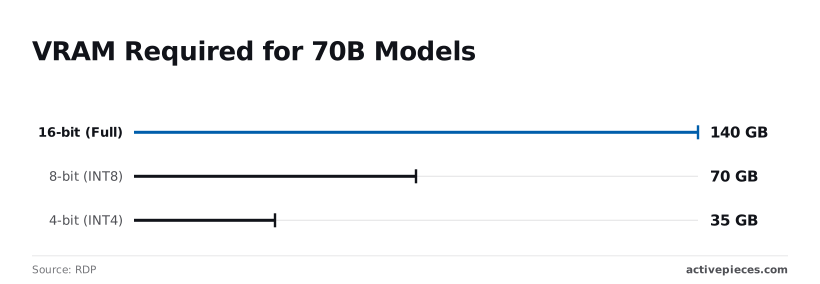 A 4x reduction in hardware costs is possible when moving from 16-bit to 4-bit, yet the resulting "perplexity" increase may lead to hallucinations in regulated legal or medical summaries, forcing developers to weigh financial savings against the risk of critical inaccuracy, meaning that cost-cutting measures could compromise the reliability of sensitive outputs. The financial savings come at the expense of output reliability. Selecting the right quantization level keeps your system within budget without sacrificing the reliability required for compliance-heavy workflows. ## Comparing private model costs with SaaS AI Self-hosting private models shifts your financial liability from unpredictable monthly operational expenses to a fixed capital asset that depreciates over time. While SaaS providers offer low-friction entry points, the long-term cost of ownership for your regulated entity is defined by the volume of inference required to sustain automated workflows. ### GPU cluster hardware costs upfront Significant initial investment in high-bandwidth memory silicon is required to deploy flagship open-weight models like Mistral Large 4. This ensures the model can fit into VRAM without offloading to slower system memory. 19,070 hours of operation is the break-even point for a standard H100 hardware configuration against SaaS alternatives, meaning that long-term continuous utilization is required to justify the initial capital expenditure. The hardware pays for itself in just over two years of continuous use. This upfront cost secures a dedicated resource that isn't subject to the per-token fluctuations of the [OpenAI](https://openai.com/chatgpt/pricing) pricing model. By owning the compute, you eliminate the risk of sudden price hikes or tier changes that could disrupt a fixed budget.  ### Ongoing power, cooling, and maintenance costs $1.1k for 24/7 operation is the baseline monthly expenditure for the secondary layer of ownership, meaning businesses must account for significant recurring overhead beyond initial hardware acquisition. This covers the power draw and thermal management of your high-density server racks. Substantial heat is generated by high-performance inference. You must account for cooling overhead to prevent hardware throttling that would degrade response times. These costs represent a predictable floor for your budget, unlike token-based billing where a sudden spike in agentic activity can lead to an unforecasted invoice. ### Token volume break-even vs SaaS pricing Financial advantages of self-hosting become absolute once your throughput exceeds the cost of a managed API subscription. Comparing the $0.60 to $0.65 per 1M tokens charged by top-tier SaaS providers against a self-hosted baseline reveals that high-volume reasoning tasks quickly outpace the cost of maintaining private hardware, as the efficiency of scale eventually favors the infrastructure investment, rendering long-term reliance on external APIs more expensive than building internal capacity, so heavy users are essentially overpaying for convenience. | Metric | SaaS (Token-based) | Self-Hosted (H100 Cluster) | | :--- | :--- | :--- | | **Unit Cost** | $0.60 - $0.65 per 1M tokens | $1.1k monthly baseline | | **Scaling Factor** | Linear (More use = higher cost) | Fixed (More use = lower cost per token) | | **Break-even** | Immediate for low volume | 19,070 hours of 24/7 operation | Marginal costs for each additional prompt trend toward zero as you scale your internal automation. This efficiency allows for the deployment of dense, reasoning-heavy agents without the fiscal restraint required by metered cloud services. ## Common failure modes in private AI deployments When your infrastructure can't sustain the reasoning density required by modern agentic workflows, private deployments fail. While self-hosting ensures compliance with frameworks like PIPEDA or FISMA, it introduces technical bottlenecks that cloud-based APIs mask through massive distributed clusters. ### The latency trap of underpowered hardware LLMs become a barrier to productivity rather than a tool when system responsiveness drops. When your team deploys a reasoning-heavy model like Claude Fable 5.1 on a workstation with insufficient VRAM, the system relies on slower system RAM or aggressive quantization. This increases time-to-first-token. This delay causes synchronous automation tasks to time out, meaning an engineer can't rely on the model for real-time code reviews. ### Model drift and the lack of automated evaluation Rigorous, continuous benchmarking is required for local models to ensure they maintain their logical integrity after updates or fine-tuning. Without a dedicated evaluation layer, a model like Mistral Large 4 may begin hallucinating incorrect syntax in restricted environments. These regressions often stem from the following data integrity issues: * OCR and parsing errors that corrupt the initial knowledge ingest. * Poor chunking strategies that strip necessary context from retrieved segments. * Missing metadata that prevents the system from filtering by document date or security clearance. * Duplicate or contradictory data that forces the model to choose between conflicting "truths." Confident but technically inaccurate answers are the result of failing to address these causes in a RAG system. ### Shadow AI: When teams bypass slow local models for ChatGPT Users will prioritize speed over security if the private alternative is significantly slower than public frontier models. If a self-hosted instance of GPT-6 Luna is throttled by network congestion, your employees may copy sensitive proprietary data into unauthorized web interfaces to meet deadlines. This creates a "Shadow AI" environment where you lose all visibility into data egress. This risk is highest when local inference latency exceeds five seconds per response. ## Building secure workflows with Activepieces Compare the enterprise feature list (SSO, SCIM, custom RBAC, audit logs, release management, and secret managers) in the self-hosted air-gapped docs against the managed cloud; it is the same list either way.  Organizations like MoneyGram and FundingSocieties run this in production today because the air-gapped edition provides full governance rather than a stripped-down subset of the cloud product. Air-gapped means full control, not a fraction. ### Deploying automation engines on private infrastructure Built on an MIT-licensed core, Activepieces allows you to deploy the entire automation engine on your own hardware using Docker Compose or Kubernetes. This architectural choice ensures that the workflow engine resides behind your corporate firewall. Your IT team has full control over every network packet. Unlimited workflow runs are offered in the Community edition without a cloud dependency, so you can scale internal automations without hitting external API rate limits. The platform supports air-gapped installations. Regulated industries can operate high-frequency automations in environments with zero outbound internet access. 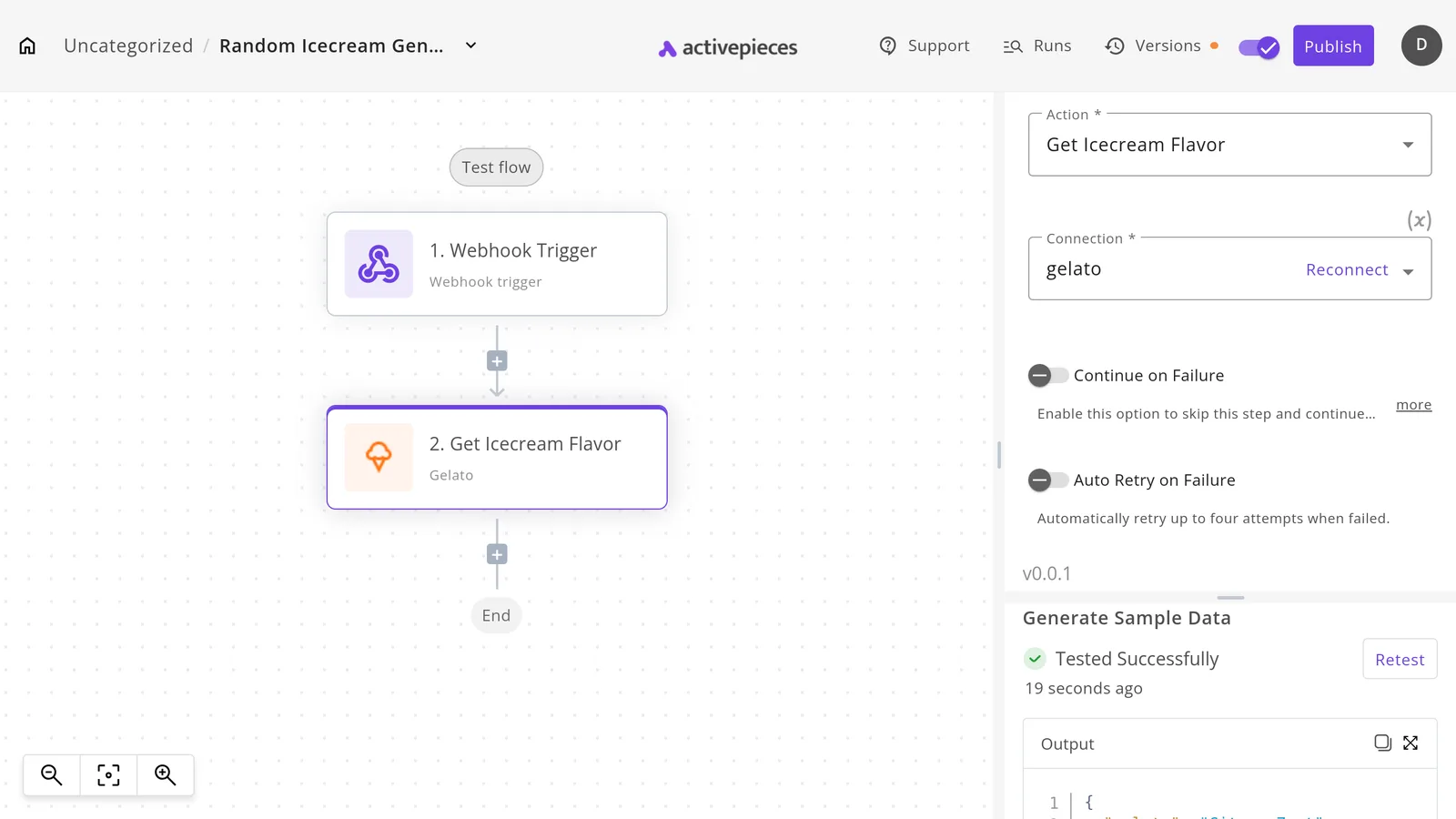 ### Connecting local LLMs to private internal data Modular connectors that interface directly with local LLM endpoints allow Activepieces to bridge the gap between raw model inference and actionable business logic. By selecting a specific action within the workflow builder, your engineer can route data from a private database into a self-hosted instance of Mistral Large 4. This generates summaries without the text ever leaving your local subnet. The workflow builder is a visual canvas for mapping these connections: even complex logic remains auditable. The screenshot shows a Webhook Trigger step connected to a "Get Icecream Flavor" action step from the Gelato integration. A simple incoming request can immediately trigger a specific internal lookup. 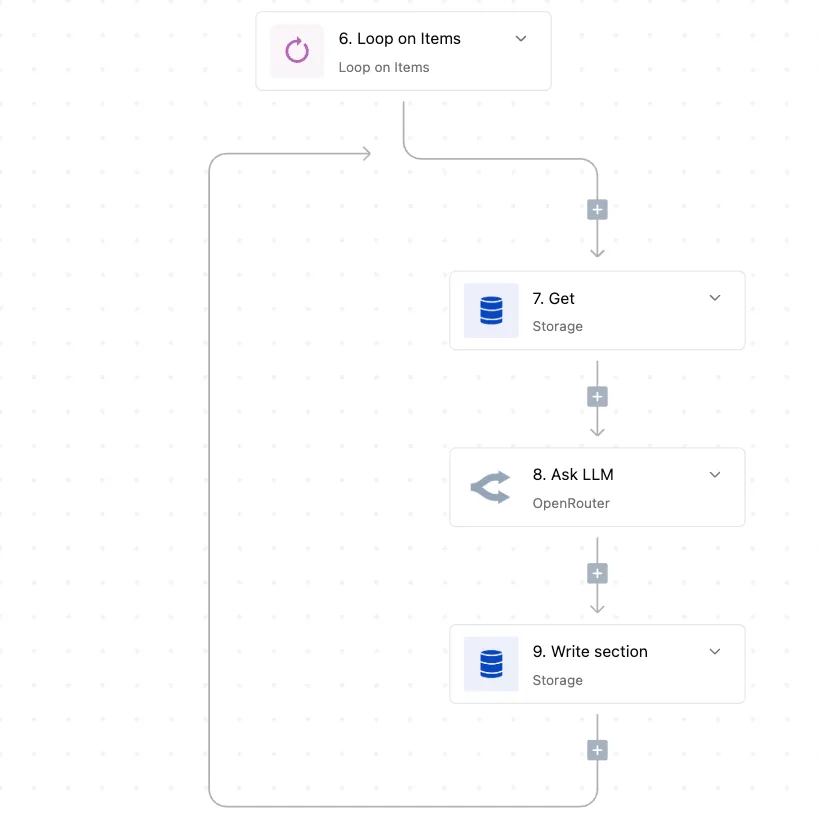 Immediate feedback on data mapping is provided by the configuration panel on the right. It validates the connection status, which reduces the risk of misconfiguration during the deployment of agentic workflows. Following this validation, the output is ready to be passed to a reasoning model like Gemini 3.8 Flash for further processing within the secure perimeter. ### Enterprise governance: SSO, RBAC, and audit logs for AI For organizations requiring strict compliance with frameworks such as FISMA or PIPEDA, Activepieces is an Enterprise tier that adds administrative oversight to your automation stack. These features allow your security teams to manage access through existing identity providers using SSO (Single Sign-On) and SCIM (System for Cross-domain Identity Management). Only authorized personnel can modify sensitive AI prompts. * Role-Based Access Control (RBAC) limits workflow visibility to specific departments, preventing unauthorized users from accessing flows that touch sensitive HR or financial data. * Detailed audit logs track every change made to a workflow, providing a forensic trail required for regulatory inspections. * Dedicated support for air-gapped deployments ensures that mission-critical infrastructure receives updates and troubleshooting without compromising your network's isolation. Every credential Activepieces touches (API keys, OAuth tokens, the connection secrets behind every app you connect) can be routed to your own secret manager instead of the platform database. Configure a self-hosted instance against an external secret manager and inspect the database yourself; the credentials are not there. This ensures that no vendor, including us, ever holds the keys to your private infrastructure. ## Frequently asked questions ### Can I run a self-hosted LLM on a standard CPU? Technically, running a self-hosted LLM on a central processing unit (CPU) is possible through llama.cpp, a specialized software library for local inference. It's rarely viable for production workflows. CPUs lack the massive parallel processing cores found in graphics processing units (GPUs). Token generation speeds often drop to a crawl, causing users to wait seconds for every word. For regulated industries requiring low-latency responses, a dedicated GPU with high video random access memory (VRAM) is the standard requirement to avoid system timeouts. ### Is self-hosted AI better for GDPR compliance? A more direct path to General Data Protection Regulation (GDPR) compliance is provided by self-hosting. It eliminates the "Data Processor" role typically occupied by third-party cloud providers. When using a cloud API, you must sign a Data Processing Addendum (DPA) and ensure the provider doesn't store prompts for training, which adds layers of legal risk. By keeping all data within a sovereign private network, the data never leaves your control as the Data Controller. This removes the risk of cross-border data transfers or unauthorized third-party processing. ### Do I need a dedicated data scientist to manage local models? Because the focus has shifted from training architecture to systems engineering and infrastructure management, you don't need a data scientist to deploy modern open-weight models. A systems architect or DevOps engineer can handle the deployment using tools like Docker, a platform for containerizing applications, to manage the model environment. Your primary workload involves: 1. Configuring the inference server to match hardware specifications. 2. Managing the integration layer that connects the model to your internal databases. 3. Monitoring system logs to ensure high availability and hardware health. ## Related reading - [Marketing Automation in B2B Industries: How It Works](https://www.activepieces.com/blog/marketing-automation-b2b) - [Self-hosted AI Platforms for Airlines](https://www.activepieces.com/blog/self-hosted-ai-platforms-for-airlines) - [Air-Gapped AI: Self-Hosted Agents with Active Directory](https://www.activepieces.com/blog/air-gapped-ai-deploying-agents-with-active-directory) ## References - [RDP](https://rdp.in/gpu-mart/knowledge-base/how-much-vram-does-a-70b-405b-llm-need-for-inference/)You no longer have to compromise on intelligence to maintain security.