For high-growth teams, this creates a performance-to-cost paradox. You'll often measure efficiency by your ability to convert traffic into revenue, and Shopify's ecosystem maintains a significant lead in baseline conversion metrics. The following benchmarks illustrate the delta between a standard setup and a highly optimized store: * Average Shopify Store: **1.4% conversion rate** * Top 20% of Stores: 3.2% conversion rate * Top 10% of Stores: 4.7% conversion rate The **3.3% gap between an average store** and the top decile represents the "App Tax" territory, where you'll deploy third-party tools to claw back lost revenue. Activepieces resolves the cost of these granular workflows by introducing credit-based AI billing that scales with actual intelligence usage rather than the number of steps in a flow. While per-task billing models punish builders for creating reliable, multi-step flows, Activepieces allows for per-project cost caps to keep automation spend predictable. This allows for complex logic without the compounding costs found in Zapier's per-task or Make's per-module billing. 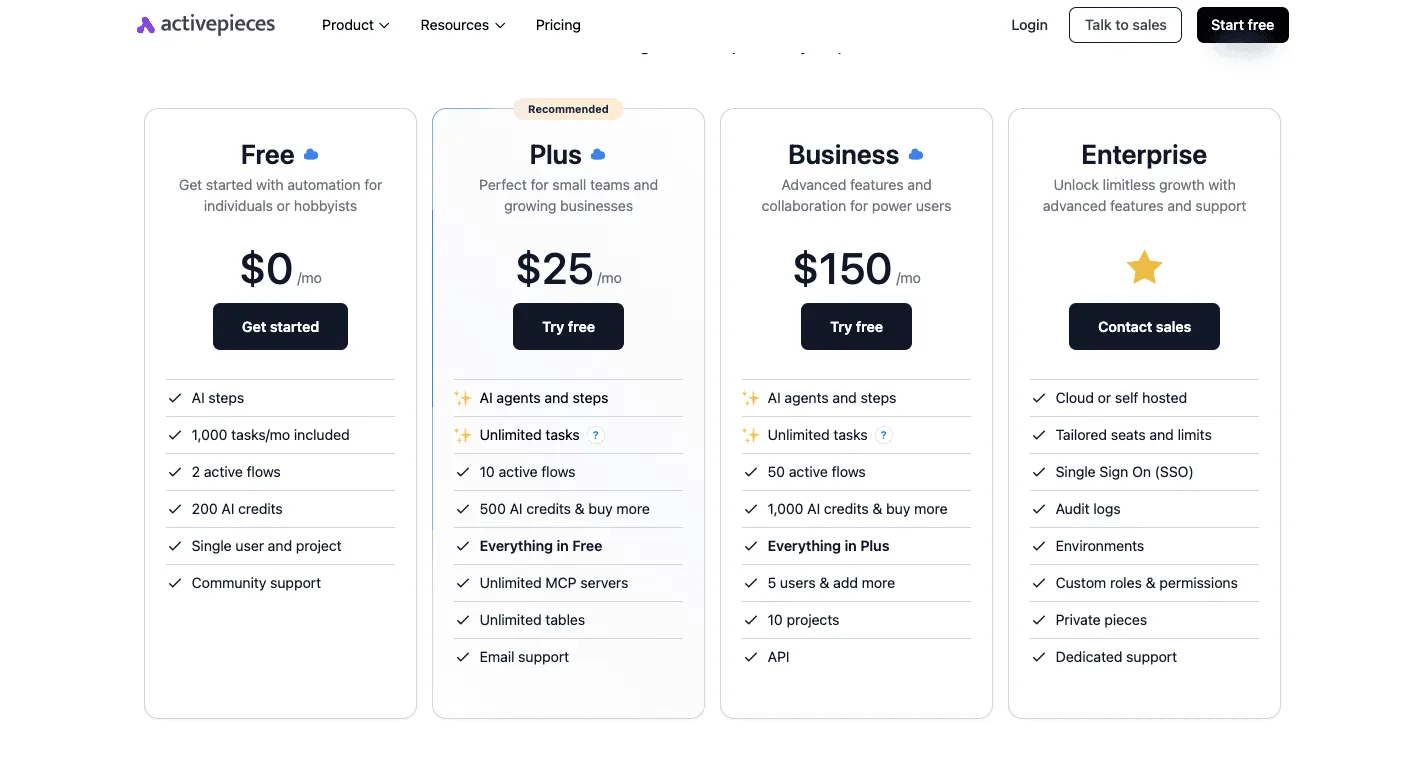 You'll increasingly manage this reliance via generative AI. For example, you might now utilize Gemini 3.8 Flash to automate the generation of SEO-optimized product descriptions. Furthermore, you could use GPT-6.1 Sol to handle high-volume customer service triage. These tools bridge the gap to the 4.7% conversion tier but add layers of API costs and subscription fees that further decouple the total cost of ownership from the base Shopify license. ## Shopify pricing and plan structures Shopify's core architecture segments functionality by transaction throughput and administrative access, forcing a migration up the license ladder as operational complexity increases. The platform utilizes a tiered fee structure where higher monthly commitments reduce the tax on every sale, creating a clear mathematical crossover point for your growing brand. ### Shopify Basic plan pricing explained The Basic plan targets solo operators by offering a low barrier to entry. It imposes a 2% [Clickwerxs](https://www.clickwerxs.com/blog/shopify-payment-processing-fees) third-party transaction fee, which doubles the variable cost per sale compared to the next tier, significantly eroding your net profit. While it includes the Shopify Collective app for dropshipping, the plan limits staff accounts to just one. This means you can't grant separate, audited credentials to a developer and a virtual assistant simultaneously. Customer interaction is similarly constrained. While buyers can leave a rating from 1 to 5 stars per [Shopify Help](https://help.shopify.com/en/manual/online-sales-channels/shop/product-reviews), the 1,000-character limit on review comments prevents long-form technical feedback from appearing directly on the product page. ### The mid-tier Shopify plan for growing teams Moving to the Shopify plan reduces the third-party transaction fee to 1%, allowing you to retain more capital. This effectively saves $1,000 for every $100,000 in processed volume, giving you a wider margin of error as you expand operations. This tier expands staff seats to five. It allows a dedicated manager for each core department (marketing, fulfillment, and support) without sharing passwords. It's the bridge for multi-channel operations, providing the first level of professional reporting you'll need to track inventory across different physical or digital storefronts. ### Advanced features for high-volume scaling The Advanced plan drops the transaction fee to 0.6%. This provides the margin relief necessary for high-volume retailers to fund complex tech stacks. You can reinvest those savings into deeper software integrations. This tier supports up to 15 staff accounts, so you can implement granular permissions for global B2B teams. For those moving into the Plus tier, the fee hits a floor of 0.2%. This justifies the $2,000+ monthly platform fee once your monthly revenue consistently exceeds $600,000, effectively making the upgrade a net-positive financial decision. ### Shopify Plus pricing and revenue share The Shopify Plus pricing model transitions from a flat subscription to a **revenue-share agreement** once a brand reaches significant scale. While the base fee starts at $2,000 per month, this is actually a minimum floor rather than a fixed ceiling.  Once a merchant exceeds $800,000 in monthly sales, the platform fee shifts to 0.25% of monthly revenue. This means a brand generating $2 million in monthly sales pays $5,000 in platform fees, effectively turning the software license into a variable expense that scales directly with success. The following breakdown illustrates how these tiers dictate the operational ceiling for different business maturities: | Maturity | Plan Details | | :--- | :--- | | Starter | Basic plan utilizing dropshipping and solo-ops; the 2% fee acts as a high-cost proof-of-concept tax. | | Scaling | Shopify plan with 6+ third-party apps and multi-channel sync; the 1% fee balances overhead with team access. | | Enterprise | Plus/Advanced plans using headless Hydrogen and global B2B; the 0.6% to 0.2% fees prioritize margin retention at scale. | _Prices and plan limits checked against [help.shopify.com](https://help.shopify.com/en/manual/online-sales-channels/shop/product-reviews) on October 2, 2026._ This progression ensures that as your technical requirements grow, the platform's cost shift moves from variable transaction fees to fixed subscription overhead. ## Primary strengths of the Shopify ecosystem ### Shopify checkout conversion rate advantage Shopify maintains the highest baseline conversion rate in the industry because its checkout environment is a globally distributed, closed-loop system. This setup eliminates the latency common in self-hosted solutions. By restricting deep code access to the checkout liquid files for all but the highest-tier merchants, the platform prevents third-party script bloat from degrading performance during the final payment steps. This architectural rigidity ensures that mobile buyers encounter a standardized, accelerated interface. It directly reduces the abandonment rates typically caused by fluctuating load times on unoptimized server stacks. ### Headless Shopify with Hydrogen Headless commerce decouples the frontend presentation layer from the backend commerce engine, allowing you to build a custom user interface that communicates with Shopify via APIs. By going headless, you remove constraints to achieve superior site speed and design flexibility. The Hydrogen framework allows developers to build high-performance, custom storefronts using React while offloading the complexities of hosting and data synchronization to Shopify's purpose-built infrastructure. This separation means you can deploy a unique visual experience without managing the underlying server maintenance or API rate-limiting logic. Consequently, your engineering team spends less time on DevOps and more time utilizing advanced tools like Gemini 3.8 Flash to automate the generation of localized product descriptions or complex agentic workflows. ### Global expansion via Shopify Markets Shopify Markets centralizes cross-border commerce by consolidating localized currency, duty calculations, and language translation into a single administrative interface. This native integration removes the need for separate store instances for every region, so you manage one inventory pool across multiple international domains. By automating the tax nexus and compliance requirements for each territory, the platform reduces the legal overhead that usually prevents mid-market brands from testing new geographic regions. ## Critical limitations and hidden ownership costs Shopify's rapid deployment model creates a long-term financial trade-off where basic store functionality requires a recurring monthly subscription to external software vendors. The core platform is the infrastructure for checkout. Essential features for conversion (such as product reviews, advanced email flows, or cross-sell logic) are missing from the base installation, forcing you to build a stack of independent monthly bills.  ### Shopify app costs and site speed The cumulative cost of these third-party extensions often exceeds the base platform licensing fee, creating a variable overhead that scales with store complexity rather than revenue. This reliance on external code creates a performance penalty, as each app injects its own JavaScript snippets into the storefront, which increases the time it takes for a browser to render the page. Because these scripts load from different servers, you lose granular control over the critical rendering path. This often results in lower search engine rankings due to poor core web vitals. > **The 'Hidden Cost' Stack:** Typical monthly add-ons including a Premium Theme ($420 one-time), Judge.me Awesome ($15/mo), Klaviyo Email Marketing ($0-$100+), and Third-party Transaction Fees (0.2% to 2.0%). These figures represent the baseline entry price for a competitive storefront, yet they don't account for the technical debt incurred by overlapping app functionalities. ### Shopify Liquid versus modern frameworks Liquid, the proprietary Ruby-based templating language used by Shopify, prevents developers from using modern component-based frameworks that allow for faster, more modular builds. Because the server renders Liquid before the page reaches the user, developers can't easily implement the highly interactive, state-driven experiences expected in modern web applications without significant workarounds. This constraint forces you to choose between the simplicity of the Shopify ecosystem and the performance benefits of a headless architecture, where the frontend is separate from the backend. ### Shopify fees for third-party payment gateways Using a payment processor other than the platform’s native solution triggers a mandatory percentage-based fee on every order, effectively penalizing you if you require specific financial integrations. This fee is a pure margin reduction for businesses that must use regional gateways for international compliance or those with high-risk profiles that the native processor won't support. For high-volume retailers, this non-negotiable cost can represent a larger annual expenditure than the entire technical payroll, making the platform's convenience a significant drag on net profitability. ## Automating Shopify workflows with Activepieces Activepieces executes multi-step sequences across external databases and APIs using an MIT-licensed core, bypassing the restrictive logic limits of Shopify Flow. While the native Shopify Flow app only works with triggers within the store's immediate ecosystem, Activepieces allows your engineers to construct branched logic that incorporates third-party logistics providers and custom internal tools. This architectural shift moves the processing load off the e-commerce platform. As a result, complex inventory reconciliations don't stall during high-traffic sales events. Your customer service team can intervene before an order is marked for fulfillment. By centralizing these cross-platform interactions, you eliminate the need for individual "connector" apps that each demand a monthly subscription fee.  Building these flows requires defining a specific trigger, such as a new order or a stock level change, and connecting it to a series of functional steps: 1. A Webhook receiver captures the raw JSON payload from Shopify to ensure no data is lost during transmission. 2. A Data Mapper step reformats the attributes to match the schema required by the destination service, such as an ERP or shipping carrier. 3. A Branching node applies conditional logic to route the data based on warehouse location or customer loyalty tier. Once these logic gates are established, you gain a transparent audit log of every automated action. This visibility allows your technical leads to debug synchronization errors without waiting for third-party app support responses. If a required connector is missing from the 738 integrations currently in the open-source monorepo, builders can generate the integration with AI and add it privately to their instance. This removes the reliance on vendor release cycles, as roughly 60% of the existing catalogue is already community-contributed rather than built by a central team. ## When to choose a Shopify alternative Selecting an alternative to Shopify is necessary when the cost of modifying its rigid core architecture to support complex B2B logic exceeds the licensing fees of more flexible platforms. Shopify excels at rapid deployment. However, its reliance on a shared database schema means that unique wholesale workflows, such as individualized price lists or restricted regional catalogs, often require a fragile layer of third-party middleware. **The decision hinges on the tension between deployment speed and long-term structural autonomy.** The following matrix identifies where each platform sits on the spectrum of operational requirements: | Platform | Speed to Market | B2B Complexity | Total Customization | | :--- | :--- | :--- | :--- | | Shopify | Highest | Low | Limited | | BigCommerce | Medium | High | Moderate | | Adobe Commerce | Lowest | Highest | Full | This comparison highlights that as business requirements move toward the right side of the table, the "Shopify Tax" of per-transaction app fees begins to outweigh the initial speed advantages. Organizations managing high-volume wholesale operations typically find that BigCommerce has more native B2B functionality, such as customer-specific quoting, without the need for external extensions. For enterprises requiring complete control over the underlying server environment, Adobe Commerce is the standard for deep customization. Because it allows for direct modification of the source code, a developer can build proprietary features. These features are impossible to implement within Shopify's closed ecosystem. Moving to these platforms ensures that your technical roadmap is dictated by business goals rather than the limitations of a multi-tenant software-as-a-service provider. ## Frequently asked questions about Shopify ### Is Shopify still the best for SEO in 2026? Shopify is a competitive baseline for search engine optimization by automating technical requirements like sitemap generation and SSL certification. It remains restrictive for brands requiring granular control over URL structures. While the platform handles core web vitals effectively for standard themes, the reliance on third-party apps for advanced schema markup often introduces script bloat. To counteract performance degradation from these apps, developers now utilize Gemini 3.8 Flash to audit liquid files and remove redundant tracking code. This keeps site speed high enough to satisfy search engine ranking algorithms. ### How hard is it to migrate away from Shopify? Migrating away from Shopify is a complex data orchestration task because the platform utilizes a proprietary database schema that doesn't map directly to open-source or headless alternatives. While product CSV exports are standard, the transfer of customer password hashes and historical gift card balances is restricted. This means customers must reset credentials upon migration. Engineering teams often deploy Claude Opus 5.5 to write custom middleware that maps Shopify’s specific JSON outputs to the relational databases used by platforms like BigCommerce or custom Composable setups, preventing the loss of years of order metadata during the transition. ### Does Shopify require a long-term contract? Shopify offers month-to-month flexibility for its standard tiers. Enterprise-level features and significant rate discounts are gated behind multi-year Shopify Plus agreements. Opting for a monthly plan preserves your ability to pivot tech stacks quickly, whereas the multi-year commitment locks a brand into the platform’s specific ecosystem of transaction fees and API limits. You can currently use Gemini 3.7 Flash to analyze these service level agreements against projected order volumes. This identifies the exact point where the fixed costs of a long-term contract become more economical than the variable fees of a monthly subscription. ## Related reading - [Do I Need Power Automate? Pros, Cons & Alternative (2026)](https://www.activepieces.com/blog/microsoft-power-automate-alternative) - [9 Best Shopify Alternatives in 2026: Compare Fees & Features](https://www.activepieces.com/blog/9-best-shopify-alternatives-in-2026-compare-fees-features) - [DeepSeek V4.1 Flash API: Pricing, Specs & Features (2026)](https://www.activepieces.com/blog/deepseek-v4-1-flash-api-pricing-docs-2026) ## References - [Clickwerxs](https://www.clickwerxs.com/blog/shopify-payment-processing-fees) - [SEC](https://www.sec.gov/Archives/edgar/data/1594805/000159480524000090/exhibit992mdaq32024.htm)Shopify functions primarily as a payments and services processor rather than a software vendor.