The following data illustrates how different enterprise tasks demand varying levels of memory retention to remain effective. If a support agent cannot recall the customer's account ID from three turns ago, the automation fails, forcing a human intervention that negates the efficiency gains of the AI. ## Four dimensions of agent memory types Divided by how they store data, how quickly they retrieve it, their total capacity, and their impact on the bottom line, short-term and long-term memory serve distinct operational roles. ### Storage mechanisms: Prompt context vs vector databases Within the active prompt context lives short-term memory, while long-term memory resides in external storage systems like Pinecone, a dedicated vector database for high-dimensional data. Using the prompt context means data is volatile and vanishes once the session ends. In contrast, Pinecone stores embeddings permanently, so the agent can query historical knowledge without the developer having to manually pass it back and forth. The following table compares these two memory types across their primary operational dimensions to help determine where to store specific datasets. | Dimension | Short-Term Memory | Long-Term Memory | | :--- | :--- | :--- | | Storage Mechanism | Active prompt context | Vector database (e.g., Pinecone, Weaviate) | | Retrieval Latency | Near-zero (included in inference) | Variable (requires external query time) | | Capacity Limits | Fixed by model context window | Theoretically infinite scaling | | Operational Cost | High recurring per-token cost | Lower storage fees plus retrieval costs |  ### Retrieval latency: In-memory speed vs database queries Because the data is already present in the model's immediate processing window, short-term memory offers the lowest possible latency. When using a service like OpenAI's Assistants API, the "thread" persists on their servers, so the agent accesses previous turns at the speed of the inference itself. By contrast, long-term memory requires an extra hop to an external database. This adds milliseconds or seconds to the response time. ### Token window limits vs long-term memory scaling If a transcript exceeds the 128k token limit found in GPT-4o, the system truncates the oldest information. The model's context window strictly governs short-term memory. By storing data externally, long-term memory bypasses these hardware constraints, so a company can maintain a decade of support tickets without ever hitting a hard technical ceiling. ### Operational cost: Recurring context overhead vs storage fees Because providers bill every token in the context window on every single interaction, short-term memory incurs a recurring cost. Moving static data to a database is the primary way to keep an agent's unit economics sustainable, as long-term memory shifts the financial burden to storage and retrieval fees. These are typically orders of magnitude cheaper than LLM input tokens. 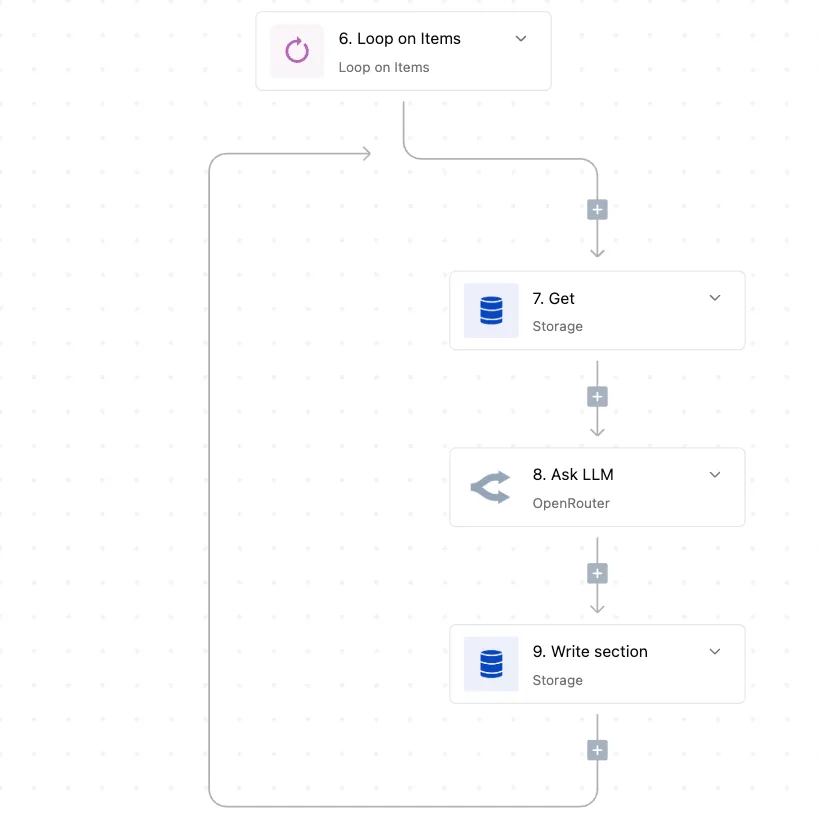 ## Short-term memory keeps immediate agent tasks on track To ensure the agent executes its current instructions without losing track of the user's intent, short-term memory manages the active conversation flow and local variables within the prompt context window. **91% of the cost has vanished in eighteen months, meaning developers can now afford to include richer, more descriptive local context without blowing their operational budget on every user turn.** This rapid collapse in the cost of intelligence fundamentally alters the economics of AI scaling. ### How chat history retention maintains conversational flow By keeping the last several exchanges in the active context, chat history allows the agent to resolve pronouns and follow-up requests. **26% of the context window** is often pre-consumed by the Model Context Protocol (MCP), a standard for connecting agents to data sources, and system prompts. This leaves only 74% for the active task, which forces engineers to prioritize brevity over depth. ### Managing scratchpads for multi-step reasoning chains Within the prompt, a scratchpad serves as a dedicated workspace where the agent can "think out loud" or store intermediate data before delivering a final answer. By isolating these reasoning steps from the final output, the developer prevents the user from seeing the messy internal logic while ensuring the agent doesn't skip critical validation steps. ### The risk of context eviction during long operations When an agent reaches its token limit, context eviction occurs: * The system prompt or core instructions are pushed out of the window, causing the agent to stop following its safety or formatting rules. * The initial user goal is lost, which leads to the agent hallucinating a new purpose. * Variable definitions from the start of the task disappear, resulting in execution errors. ## Long-term memory preserves organizational knowledge across sessions To recall historical context and company-specific documentation that exceeds the temporary capacity of a context window, an agent relies on long-term memory as a persistent repository. ### Vector databases as the permanent storage layer Serving as the indexing engine for an agent’s long-term memory, a vector database converts raw text into numerical embeddings. An embedding is a mathematical representation of text where the meaning is encoded as a list of numbers in a high-dimensional space. To create one, the system passes text through an embedding model, which maps semantic concepts to specific coordinates.  This process allows the database to perform similarity searches by calculating the distance between vectors. If two sentences share a similar meaning, their numerical representations will be physically close to each other in the database, enabling the agent to find relevant information even if the exact keywords do not match.  Unlike traditional relational databases, these systems allow an agent to perform similarity searches rather than exact keyword matches. **2.0 ms is the P99 retrieval latency** achieved by Zilliz Cloud, the managed version of the Milvus vector database. Self-hosted Milvus configurations range from 2.3 ms to 2.4 ms depending on quantization methods. This indicates that even at high scale, retrieval adds negligible overhead to the total response time. ### Semantic retrieval and the needle-in-a-haystack problem To ensure the agent receives only the most relevant "needles" from the vast "haystack" of organizational data, effective long-term memory requires a precise retrieval strategy. If the retrieval system returns too much irrelevant information, the agent’s prompt becomes cluttered with noise, which increases the likelihood of hallucination. To manage this density, developers typically implement a two-stage process. First, the vector database identifies a broad set of potentially relevant documents. Second, a secondary model, such as the Cohere Rerank enterprise search tool, evaluates the initial results to select the most contextually accurate snippets. ### Syncing dynamic business data into static embeddings Because embeddings are static snapshots, any change in a source system must trigger an update in the vector database to maintain accuracy. Managing this lifecycle involves: 1. Change data capture to identify modified records. 2. Chunking strategies to break large documents into digestible integrations. 3. Version tagging to prevent the agent from retrieving conflicting versions of the same policy. ## How Activepieces manages context in automated workflows Activepieces maps volatile short-term variables to persistent data stores by exposing its **735+ integrations as tools** through a per-project MCP server. This ensures AI agents possess the specific context required for a task without bloating the processing window.  Every integration registered in Activepieces is immediately available as a tool for the agent to call. In the Integrations Framework, the same integration action that runs in a deterministic flow is the one exposed as a tool schema on the built-in MCP server, ensuring that short-term memory is always backed by real-time data access without redundant wiring. ### Passing short-term state between workflow steps In this architecture, short-term memory is treated as a transient state passed through a sequence of discrete data-transformation steps. The system feeds the output of a text-cleaning step directly into a GPT-4o prompt. This ensures the model only processes relevant data rather than raw, noisy HTML. ### Automating the ingest pipeline for long-term vector stores Moving data from operational tools into vector databases like Pinecone or Weaviate requires a structured pipeline for long-term memory. Activepieces manages this by monitoring event triggers across its 735+ integrations, such as a new ticket in the Zendesk customer support platform. It then formats and "chunks" the text into digestible integrations so the embedding model can process it without exceeding token limits. Finally, it upserts the resulting vectors into a database. ### Balancing memory types to control LLM API costs Minimizing the data sent to the LLM by utilizing the workflow engine to filter information before it reaches the API is what effective cost management relies on. Every agent decision and the data it retrieves is captured in the Run Details and Debugging UI, providing a step-by-step trace of how memory was utilized. These traces can be exported as event streams to a SIEM, allowing security teams to review an agent's memory access with the same rigor as a standard workflow, a capability utilized by MoneyGram and Moneypenny in production. 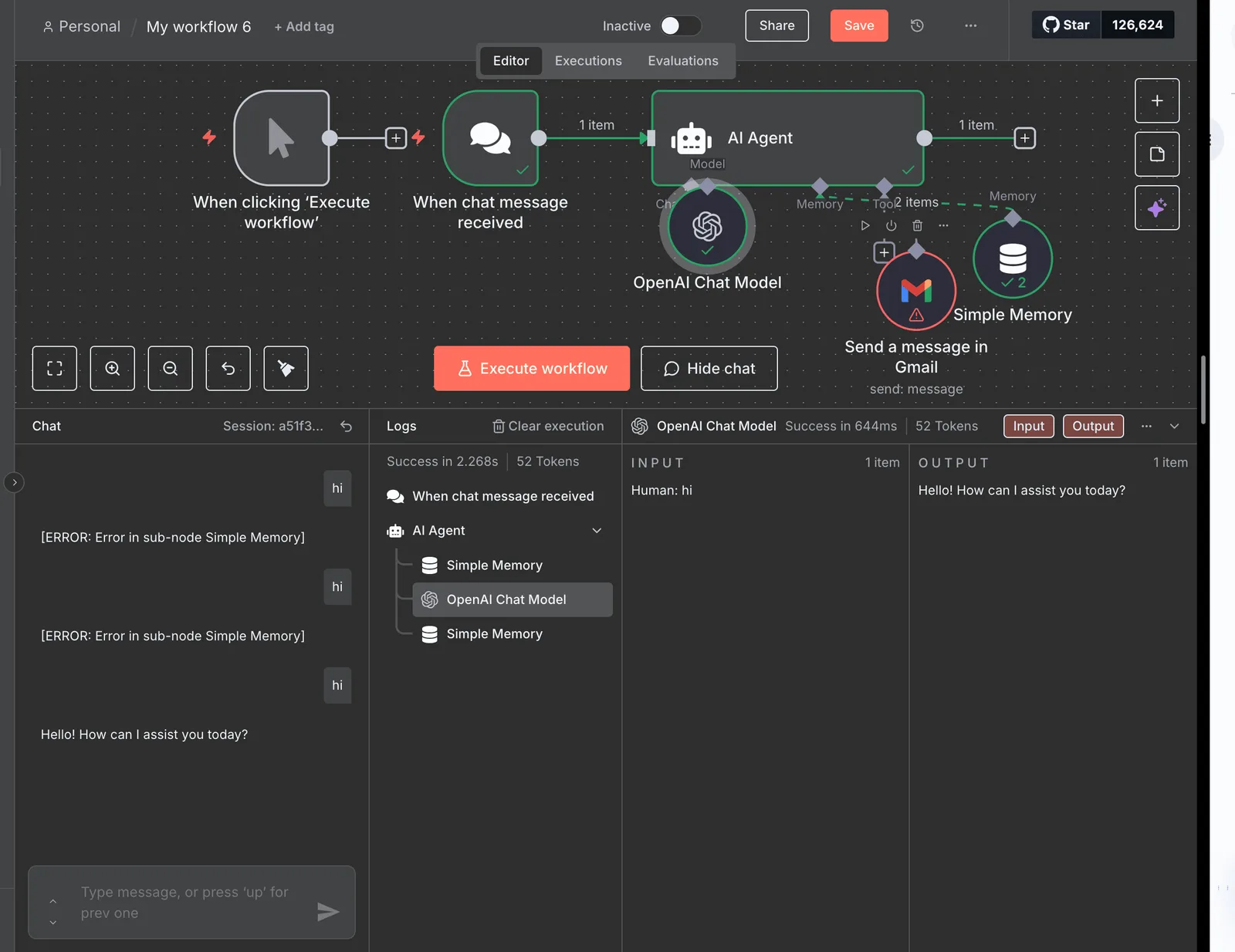 By using "Text Helper" steps to prune variables before they hit the "Text AI" step, developers ensure they only pay for the tokens that directly contribute to the final output. By unifying deterministic automation with agentic execution, this architecture ensures that every integration serves as a functional tool without requiring redundant configuration. Activepieces is the better choice for developers who need to scale AI agents using a vast library of pre-built connectors that function natively as MCP tools. Through the Pieces Framework, the platform bridges the gap between static workflows and dynamic reasoning, making it the superior fit for maintaining real-time context across complex environments. ## Mapping agent workflows to memory requirements ### Mapping your agent workflows to memory requirements When an agent manages a transient task, it requires a short-term scratchpad that clears upon resolution. Conversely, a research agent tasked with tracking market trends over months requires a persistent connection to a vector database, such as Pinecone, which is a long-term retrieval-augmented generation (RAG) source. High-performance agents succeed by matching the specific task lifecycle to the narrowest possible data window. ### Setting up context pruning rules for short-term state To prevent the context window from bloating, effective memory management requires strict rules to discard intermediate reasoning steps. If an agent uses a tool to search a knowledge base, the raw search results should be summarized or purged after the relevant answer is extracted. You can implement these rules by setting a maximum turn limit for conversation history before older messages are summarized. You should also configure the system to strip out "thought" blocks or internal logs. ### Verifying embedding sync schedules for long-term data If the embedding pipeline only runs weekly, the agent will provide answers based on outdated documentation. Long-term memory is only as reliable as the frequency at which your vector store synchronizes with your primary data sources. To maintain a functional long-term memory, follow the Monday morning agent memory audit checklist: * Measure token waste percentage against the 24% to 41% redundancy benchmark to identify where your context window is over-saturated. * Verify vector database index retention policies to ensure that deprecated product versions are marked as "stale." * Audit system logs for retrieval failures where the agent requested information that existed in the source but had not yet been indexed. ## Frequently asked questions about AI agent memory ### How much does it cost to maintain long-term agent memory? Driven primarily by the recurring storage fees of vector databases and the token costs incurred during the retrieval-augmented generation (RAG) process, the cost of maintaining long-term memory is shifting. While storage costs for services like Pinecone, a managed vector database, remain relatively stable based on the number of vectors indexed, the cost of feeding that memory back into a large language model (LLM) has plummeted. **Two-thirds of the price** per million tokens dropped between the release of GPT-4 in early 2023 and the introduction of GPT-4 Turbo later that year. Further reductions followed in mid-2024. Consequently, architects can now afford to include more context from long-term storage in each prompt without blowing the project budget. This trend allows teams to prioritize data density over aggressive pruning, as the financial penalty for "over-reading" from memory is no longer the primary constraint on system viability. ### Can an agent have too much long-term memory? When the retrieval system returns irrelevant "noise" that distracts the model from the current task, an agent suffers from excessive long-term memory. If a vector search against a massive dataset pulls in three conflicting historical examples, the agent may hallucinate a hybrid solution, meaning the developer must implement stricter top-k filtering to ensure only the most relevant documents reach the prompt. This top-k filtering technique limits the retrieval to a specific number (k) of the highest-scoring, most relevant results, preventing the model from being overwhelmed by low-quality data. ### Does increasing short-term memory make agents slower? Expanding the short-term context window directly increases time-to-first-token latency because the LLM must process every word in the current conversation before generating a response. Large context windows increase the computational load on the inference engine. Longer prompts take more time to transmit over the network to the API provider. Increased token counts can trigger rate limits on standard API tiers, forcing the system to pause execution. ### Which vector database is best for long-term agent memory? Depending on whether the priority is ease of deployment or the ability to handle complex, multi-tenant data structures, the choice of a vector database changes. Weaviate offers open-source flexibility but requires internal DevOps resources to manage the cluster. Pinecone is a fully managed serverless option that reduces maintenance overhead but limits control over the underlying hardware. Milvus is built for high-scale throughput and optimized for billion-scale vector searches at the cost of setup complexity. ## Related reading - [How to Create AI Agents in Minutes: Quick Guide](https://www.activepieces.com/blog/how-to-create-ai-agents) - [AI Autonomous Agents: A Quick Guide to How They Work](https://www.activepieces.com/blog/ai-autonomous-agents) - [AI Data Sovereignty for Insurance Agents: 2026 Guide](https://www.activepieces.com/blog/best-ai-tools-for-insurance-agents-2026-privacy-guide) ## References - [API Cost Calc](https://apicostcalc.com/llm-price-history.html)An agent lacking a dedicated memory layer forces the business to choose between high operational costs and low functional utility.