# Twilio Pricing 2026: What Drives the Cost?
By Nalani Reeves · 2026-09-28 · Source: https://www.activepieces.com/blog/understanding-twilio-workflow-pricing
---
According to [Edesy](https://edesy.in/tools/twilio-voice-pricing-us-outbound), [Twilio](https://twilio.com/en-us/pricing) utilizes a pay-as-you-go model where Programmable SMS starts at $0.0079 per message and Voice begins at $0.013 per minute, meaning businesses face variable monthly expenses that scale directly with their communication volume.
This model necessitates tiered monthly commitments for businesses seeking volume-based discounts.
Twilio pricing is a consumption-based financial model where businesses pay variable rates for SMS and voice services based on message volume, call duration, and geographic destination.
Initial deployment has a low barrier because there's no cost ceiling. However, complex logic multiplies the per-interaction cost unless developers use [Activepieces](https://www.activepieces.com) to decouple workflow execution from the communication layer.
A ten-step process costs the same to run as the two-step workaround it replaced, as the published pricing page shows 1 credit per flow run regardless of the number of steps.

Significant cost relief requires high monthly spend. The following table illustrates how Twilio scales its support and pricing tiers.
| Service Tier | Monthly Commitment | Volume Discounts | Support Level |
| :--- | :--- | :--- | :--- |
| Developer | $0 | None | Community / Email |
| Growth | $499 | Initial breaks on SMS/Voice | Web support with 24hr SLA |
| Business | $2,000 | Custom volume pricing | Priority routing and 4hr SLA |
| Enterprise | Custom | Negotiated specialized rates | 24/7 Dedicated account manager |
_Prices and plan limits checked against [twilio.com](https://twilio.com/en-us/pricing) on September 28, 2026._
### Programmable SMS and MMS rates
Standard outbound SMS rates in the US start at $0.0083 per message, which means businesses must budget carefully for high-volume marketing campaigns.
A simple notification campaign to 10,000 users costs $83 before carriers apply fees, so the final invoice will likely be higher than the base estimate.
If those messages include media, the MMS rate jumps to $0.02 per message. These base rates don't include the A2P 10DLC (Application-to-Person 10-Digit Long Code) registration fees required by US carriers.
### Voice and SIP Trunking costs
Twilio segments voice pricing by direction and the level of AI processing used for the stream.
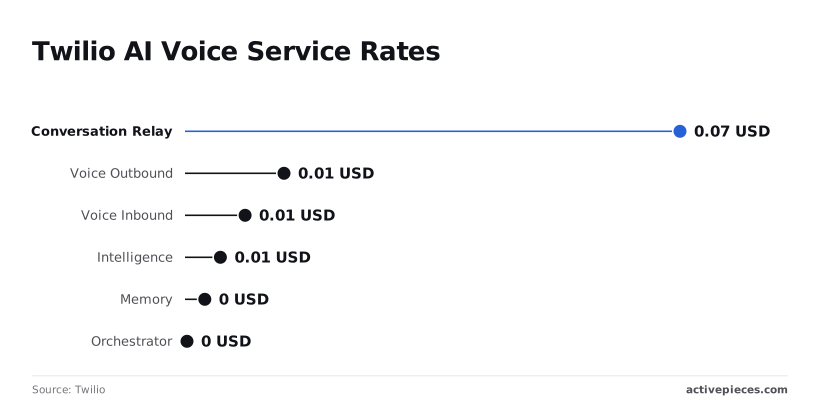
* Inbound calls cost $0.0085 per minute, meaning companies should anticipate these charges when scaling their customer support infrastructure. A high-traffic support line will accumulate $8.50 for every 1,000 minutes of customer wait time, so minimizing hold durations is essential for controlling operational expenses.
Outbound calls cost more at $0.014 per minute, forcing teams to prioritize efficiency when initiating contact, which means every second spent on the line directly impacts the bottom line.
Conversation Relay services add $0.07 per minute, effectively increasing the total cost of each interaction for those utilizing advanced automation features, so businesses must weigh the value of these tools against their operational budget.
The Conversation Orchestrator tool costs $0.0002 per 1,000 characters for ingestion, which means high-volume data processing remains extremely affordable.
Conversation Intelligence adds $0.005 per 1,000 characters for Twilio-authored operators, so developers must account for these additional processing fees when calculating total usage costs.
Twilio bills memory storage for these interactions at $0.0028 per 1,000 characters, meaning that retaining long-term conversation history increases the overall expense of the deployment.
### Connectivity through virtual trunking
SIP Trunking allows a business to connect its existing private branch exchange (PBX) to the internet using the Session Initiation Protocol.
This service replaces traditional physical phone lines with virtual connections, enabling voice traffic to travel over the data network while maintaining compatibility with legacy hardware.
Pricing for this connectivity typically follows a per-minute model starting at $0.0045 for inbound and $0.007 for outbound calls, which means your budget will scale directly with the volume of voice traffic.
Some enterprises prefer a per-channel pricing model, which charges a flat monthly fee for each concurrent call path rather than billing for individual minutes of usage.
When integrating these services with frontier models like Gemini 3.8 Flash for real-time reasoning, the infrastructure costs scale linearly with every word spoken.
### WhatsApp Business API fees
WhatsApp interactions move away from per-second billing to a conversation-based model. The first message triggers a 24-hour session. Business-initiated conversations carry higher rates than user-initiated service sessions.
Efficiency is rewarded under this model. A business that resolves a query within one session pays a single fee.
## The hidden floor of Twilio resource maintenance
Twilio’s monthly recurring fees for numbers and short codes establish a permanent financial floor that persists even when an account sits idle.
### Toll-free vs Local number costs
A business pays to reserve a specific entry point into the Public Switched Telephone Network (PSTN).
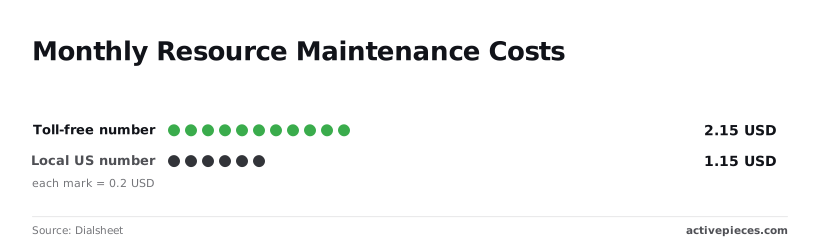
A US Local Number costs $1.15 per month, meaning that maintaining a large portfolio of contact points requires a consistent recurring investment.
As documented by [Dialsheet](https://www.dialsheet.io/resources/twilio-phone-number-cost), a US Toll-Free Number carries a higher monthly fee of $2.15, so businesses should expect a premium for professional-grade contact options.
### Short code rental premiums
High-volume messaging workflows often require short codes to bypass filtering and throughput limitations. These resources represent the most significant fixed-cost barrier.
**$500 per month** is the lease cost for a Random Short Code. A Vanity Short Code Lease costs $1,000 per month, which means this specific identifier is intended for large-scale enterprise marketing campaigns rather than small-scale applications.
### Regulatory bundle maintenance
Maintaining these numbers requires ongoing compliance labor. Under A2P 10DL regulations, businesses must submit verified EINs and physical addresses.
If a compliance officer fails to update a bundle when a business changes its registered address, the carrier may revoke the number, rendering the monthly lease investment useless.
## Financial risks of unmonitored Twilio loops
Uncapped financial liability stems from the platform's design as a stateless utility that bills for every API attempt.
### 02:15 AM: The first failed delivery trigger
When a misconfigured webhook response initiated a retry loop, it treated a standard "undelivered" status as a transient network error.
Because the system lacked a maximum retry counter, the engine interpreted every failed delivery notification as a command to re-queue the message. This created a recursive execution pattern where a single blocked recipient generated a continuous stream of outbound API calls.

### 04:00 AM: Carrier pass-through fees accumulate
Twilio passes through carrier surcharge fees from providers like Verizon or T-Mobile. Providers bill these even if the carrier’s spam protection systems ultimately filter the message.
During this incident, the automated loop hit the carrier's rate limits. The API continued to accept and bill for the requests, resulting in a compounding debt for messages that had a zero percent chance of reaching a handset.
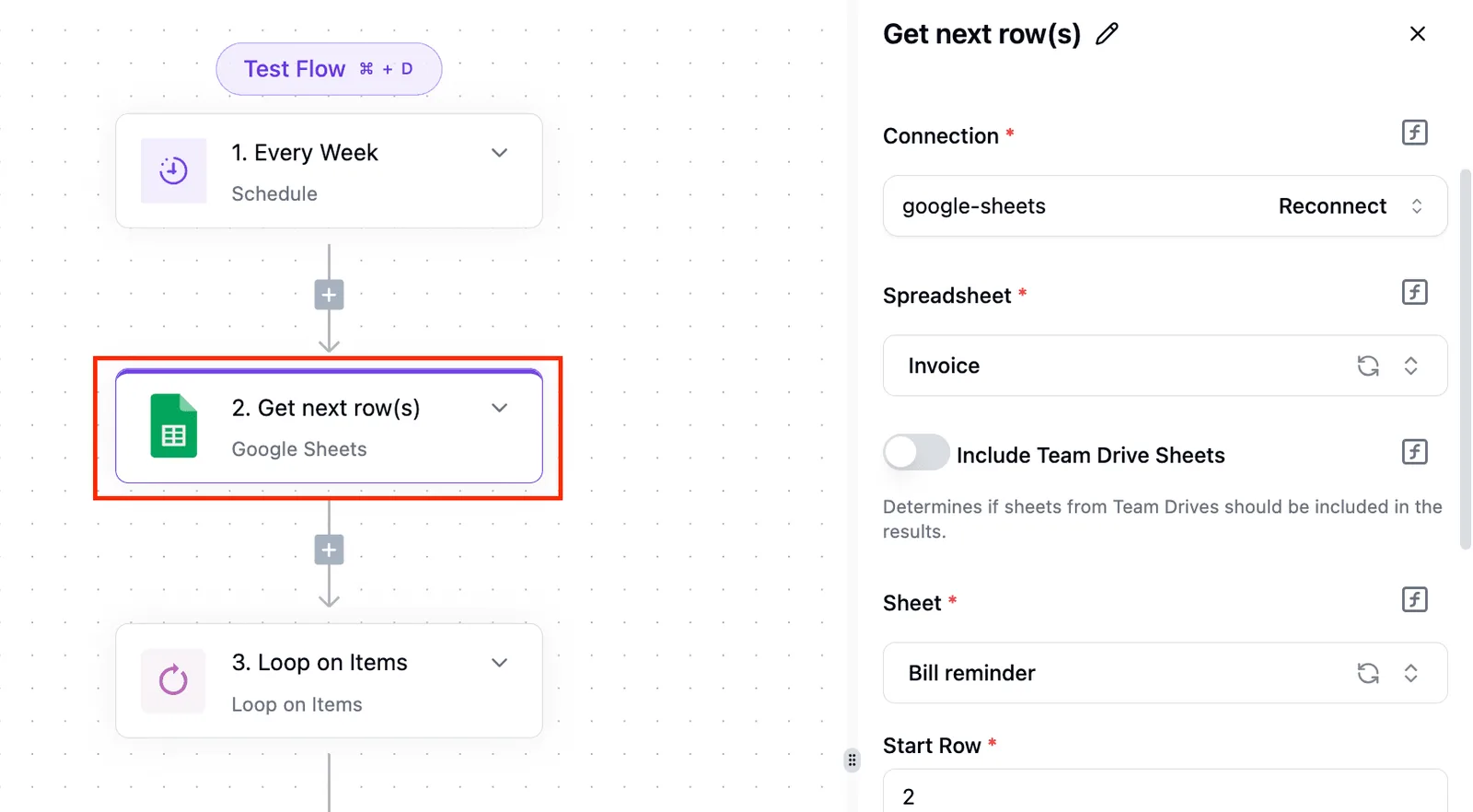
### 08:30 AM: The manual kill switch and the final tally
The financial drain only stopped when an engineer manually rotated the API credentials. Relying on manual intervention for billing protection exposes a company to the speed of its slowest monitoring alert.
The final invoice reflected the total volume of requests sent to the API gateway. A single malfunctioning script can consume a business's entire monthly budget in a single morning.
Relying on manual intervention for billing protection exposes a company to the speed of its slowest monitoring alert.
## How to calculate final Twilio costs
Regional carrier regulations and specific metadata requirements dictate the final cost. The headline rate is merely a baseline.
### A2P 10DLC registration and vetting fees
Operating a high-volume messaging workflow requires compliance with A2P 10DLC standards. A brand must pay a one-time registration fee and a monthly campaign fee to The Campaign Registry.
### Carrier-specific surcharges by network
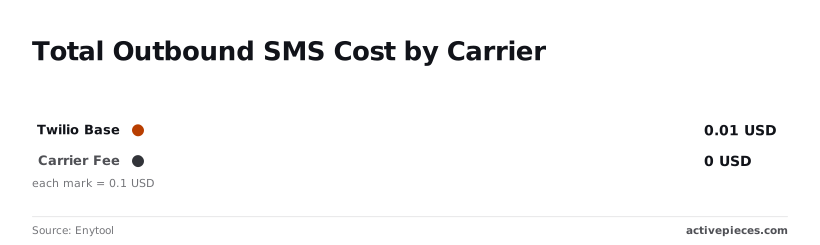
Mobile network operators add their own surcharges to every message. According to [Enytool](https://enytool.com/utility/twilio-sms-calculator), the base Twilio rate for a standard SMS is $0.0083.
Major carriers like Verizon or T-Mobile apply a carrier fee of $0.0045 per message. Nearly 35% of the total cost is a pass-through tax that the business can't negotiate away.
Sending 1,000 SMS messages to the US costs $8.30, but that same volume jumps to $30.90 in Bahrain and $118.40 in Argentina. This **1,326% increase** between the US and Argentina means a global rollout using a single unified logic will cause massive budget overruns.
### Lookup API and intelligence costs
To avoid paying for messages sent to landlines, businesses must utilize the Lookup API to verify the destination's validity.
When combined with advanced reasoning models like Gemini 3.8 Flash to analyze message sentiment before sending, the operational overhead per interaction scales vertically.
## The cost of Twilio AI and Voice intelligence
Twilio’s transition to an AI-driven interaction layer introduces a multi-tiered billing structure that separates the physical connection from the cognitive processing.
### Conversation Relay vs Standard Voice
Conversation Relay is the technical bridge that allows a voice stream to interact with an external LLM, such as Gemini 3.8 Flash, in real-time.
The Relay architecture creates a WebSocket connection that must stay open for the duration of the call. For high-volume support centers, this creates a dual-billing scenario where the cost of the AI bridge exists alongside traditional per-minute carrier rates.
### Real-time intelligence and transcription
Real-time intelligence requires a continuous stream of speech-to-text (STT) processing to convert raw audio into a format that models like Claude Sonnet 5 can analyze.
A single customer query generates a recurring fee for the transcription engine and a subsequent fee for intelligence features like sentiment analysis.
### Data retention and memory costs
Maintaining context across multiple interactions requires persistent storage solutions. Under GDPR Article 32, businesses must ensure that these stored transcripts are encrypted and managed within specific geographic boundaries.
Twilio’s storage models often separate transient memory from long-term archival storage. As the volume of AI-driven interactions grows, the cost of retaining high-fidelity data grows exponentially.
## Reducing Twilio costs with Activepieces automation
Activepieces provides a self-hosted or cloud-based orchestration layer that decouples your business logic from the Twilio API.
Every agent tool call, the data it acted on, and the order it made its decisions in is traced step by step in the Run Details and Debugging UI, ensuring that logic errors are visible before they scale.
A ten-step logic process costs the same to run as a two-step workaround, as the published pricing page shows 1 credit per flow run regardless of the number of steps. This removes the financial penalty for breaking work into granular, reliable steps.
### Building a circuit breaker for API loops
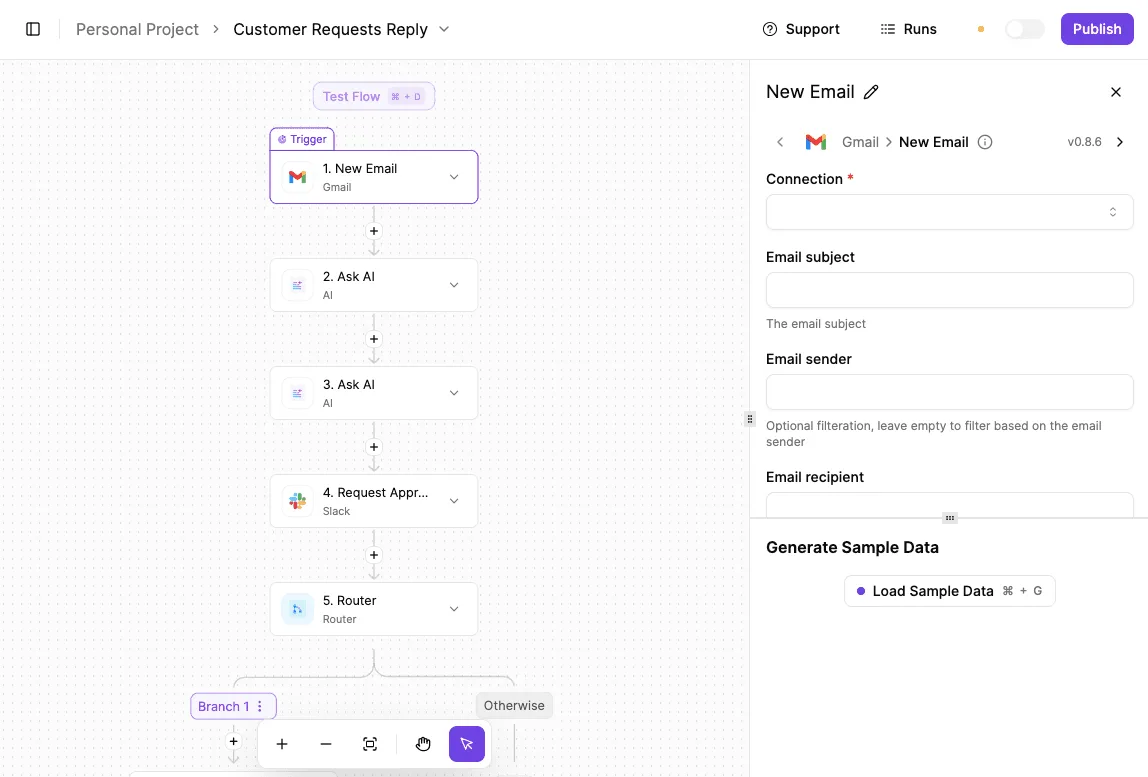
Activepieces provides a circuit breaker for automated workflows, preventing runaway processes from sending thousands of redundant messages through its MIT-licensed core.
To build this defense, set a per-task cost limit and a per-agent daily limit. Validate the number format via Activepieces and check the 'Success Rate' dashboard to ensure it stays above 80%.
Every agent decision and the deterministic flow steps running next to it are traced step-by-step in the Run Details and Debugging UI. This trace exports as audit logs and event streams into existing SIEMs.
### Pre-validating numbers with Lookup logic
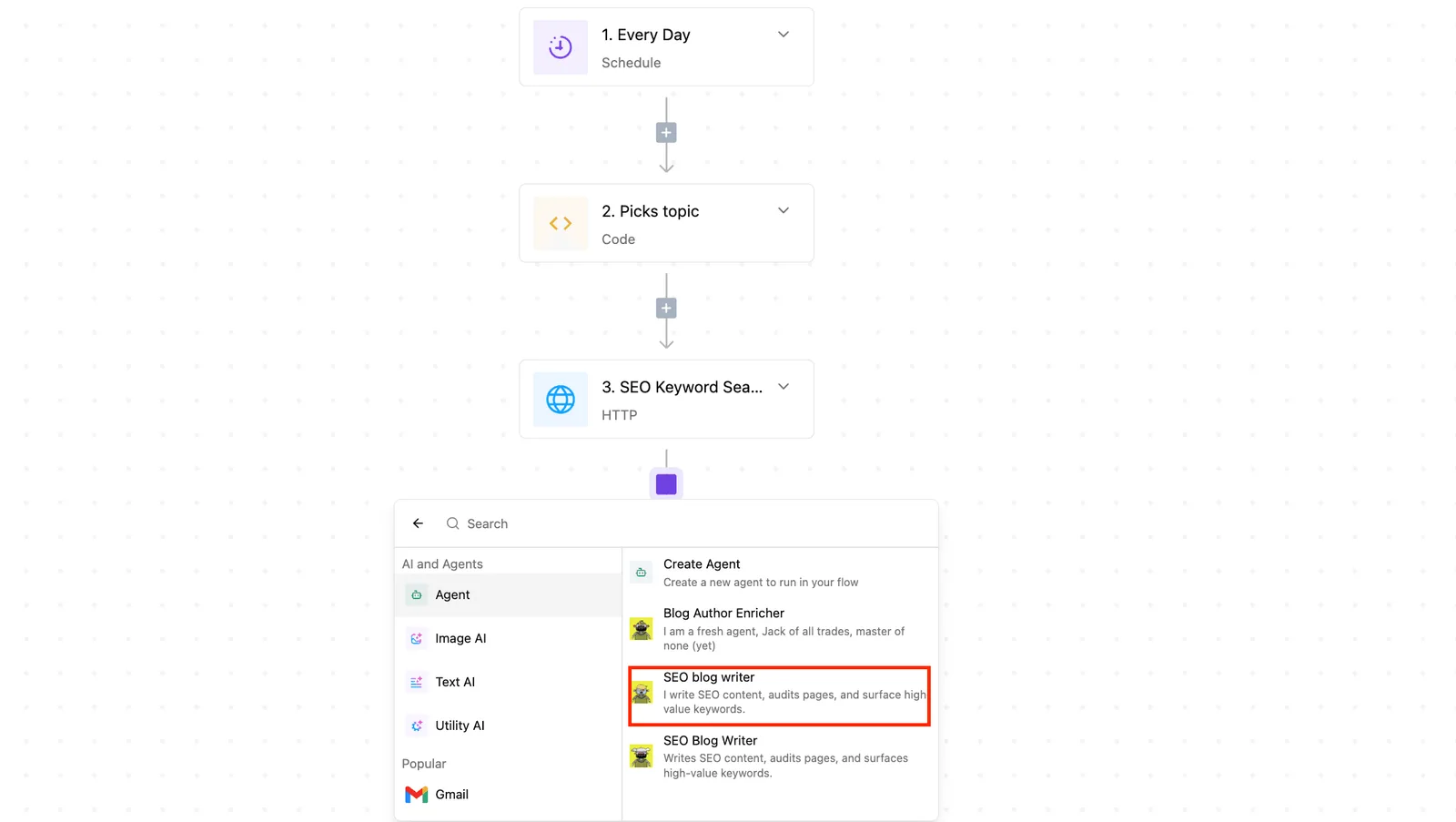
Validating phone numbers within Activepieces before they reach the Twilio Programmable SMS API eliminates charges for messages sent to landlines or improperly formatted strings. With 735+ integrations available, the platform can cross-reference destination data across internal databases and CRM systems to verify delivery viability.
Activepieces can query your primary system of record or use internal regex formatting to strip out invalid requests before any external API is pinged. This logic runs within the MIT-licensed core, ensuring that pre-processing costs do not scale with the complexity of the validation rules.
### Automated budget alerts and kill-switches
Automated kill-switches provide a final layer of compliance by programmatically disabling API keys if spending velocity exceeds predefined safety parameters.
By using the Activepieces HTTP integration to poll billing endpoints, you can trigger an emergency shutdown of the outbound flow if a specific budget is exhausted. MoneyGram and FundingSocieties run Activepieces in production to manage these complex environments.
## Frequently asked questions about Twilio pricing
### Does Twilio charge for undelivered messages?
Twilio bills for every message attempt submitted to their API regardless of whether the handset receives it.
This means that if an upstream carrier rejects a message due to content filtering or if the destination is a non-mobile landline, the account is still debited for the transaction.
To mitigate this, developers often use Gemini 3.8 Flash to pre-screen outbound content against carrier compliance guidelines before the API call is made. This prevents wasting capital on messages that have zero probability of delivery.
### What is the minimum monthly spend for a Twilio account?
Twilio doesn't enforce a global minimum monthly spend for standard pay-as-you-go accounts, but operational costs are dictated by the specific resources maintained in the console. Every active long-code or toll-free phone number incurs a recurring monthly lease fee.
This means an account with idle numbers will continue to draw down its balance even if no traffic is processed. For organizations utilizing dedicated short codes, the quarterly lease is paid in advance, creating a fixed financial floor that exists independently of actual messaging volume.
### How do Twilio carrier fees work?
Carrier fees are pass-through surcharges applied by mobile network operators for delivering messages across their specific infrastructure. Twilio adds these fees directly to the base per-message rate, so the final cost per segment varies based on the recipient's mobile service provider.
These surcharges are outside of Twilio’s control. Because they're subject to change by the carriers without notice, businesses must architect their billing logic to fetch real-time pricing via the API to avoid margin erosion on outbound notifications.
### Can I get a discount for high-volume SMS?
Volume-based discounts are available, but they typically require transitioning from standard pay-as-you-go rates to a committed-use contract. These agreements offer lower per-message pricing in exchange for a guarantee that the business will meet a specific monthly or annual spending threshold.
To forecast these commitments accurately, teams often deploy Claude Opus 5.5 to analyze historical traffic patterns and predict seasonal spikes. This helps align the negotiated commitment with actual demand rather than leaving unused credit on the table.
## Related reading
- [Understanding the Architecture of Workato](https://www.activepieces.com/blog/workato-architecture)
- [We Flipped the Script on Automation Pricing](https://www.activepieces.com/blog/automation-pricing)
- [Pipedrive Pricing Plans and Total Costs for 2026](https://www.activepieces.com/blog/pipedrive-pricing-plans-and-total-costs-for-2026)
## References
- [Twilio](https://twilio.com/en-us/pricing)
- [Enytool](https://enytool.com/utility/twilio-sms-calculator)
- [Dialsheet](https://www.dialsheet.io/resources/twilio-phone-number-cost)