### Preventing duplicate payment charges from webhook retries A standard SQL rollback is insufficient for financial integrity. The payment processor captures funds independently of your local commit status. If a network timeout occurs after the payment gateway (such as the Stripe API) confirms a charge but before your application records the success, the retry logic will trigger a second request. The separate External API box shows a successful charge that cannot be undone by the database. This disconnect means your internal ledger shows a failure while the customer’s bank statement shows a completed withdrawal. To prevent this, the request must carry a unique idempotency key that the payment provider uses to recognize the retry. Your database’s internal consistency checks are invisible to their infrastructure. ### Third-party API calls that lack 'Undo' functions Most external service interactions are non-atomic operations. These include triggering a transactional email through the SendGrid API or dispatching a message via the Twilio SMS gateway. Once the remote server accepts the payload and returns a 200 OK status, the action is finalized in their system. This happens regardless of the outcome for your local application state. If your code crashes immediately after the API call, the database will roll back the record of the message being sent. ### State drift between your system and the outside world Relying solely on database constraints creates a permanent desynchronization between your internal records and the actual state of your integrated services. Inventory levels in an external warehouse management system may decrease while your local database shows a failed order. License keys in a seat-based SaaS provider may be provisioned without a corresponding subscription record in your own tables. Webhooks from downstream services may arrive for objects that your database technically "rejected" during a rollback. Without a mechanism to audit the specific keys and headers sent to these services, you will lose the ability to reconcile these systems when the local transaction fails but the external side effect persists. 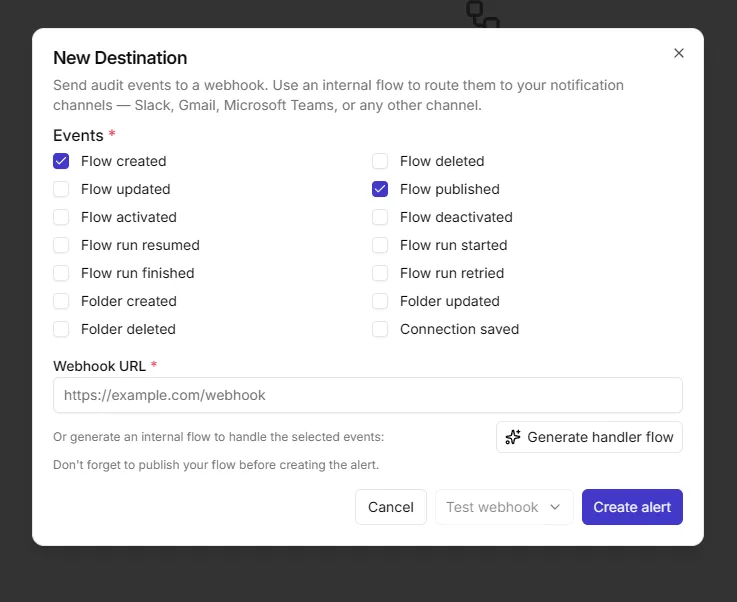 ## Implementing a reliable idempotency strategy for your receivers ### Choosing a unique key source (UUID vs. Event ID) A reliable idempotency strategy begins by selecting a key source that originates as close to the initial user intent as possible. [Shopify](https://shopify.dev/changelog/updates-to-webhook-retry-mechanism) notes that using a client-generated Version 4 Universally Unique Identifier (UUID) ensures that even if a network timeout occurs during the first transmission, the subsequent retry carries the exact same fingerprint. 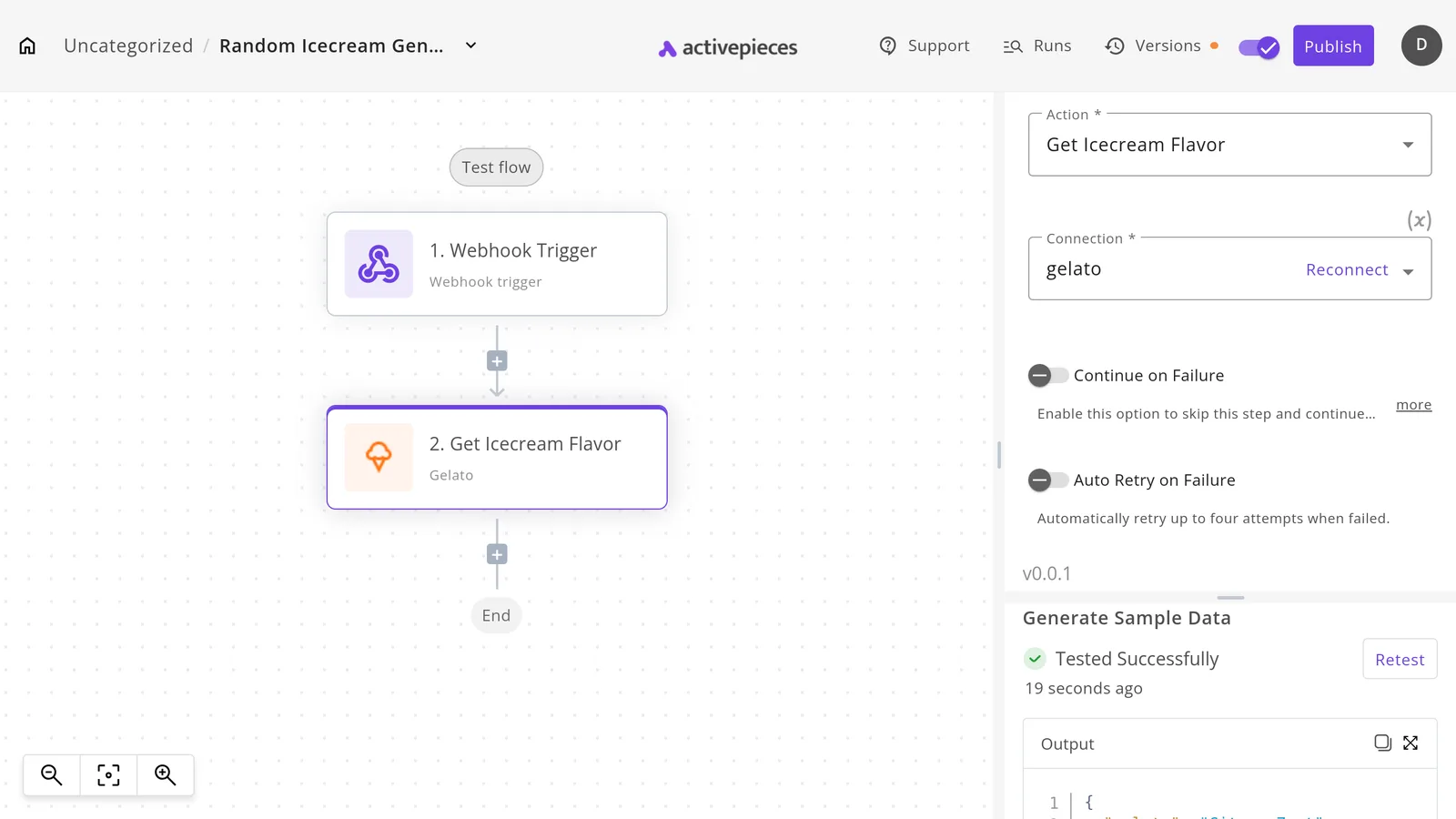 To maintain a strict audit trail, you must map your internal transaction state to these external keys before the first outbound call is dispatched. ### Persisting keys for outbound retries When acting as the client, you must generate and store the idempotency key within your own database alongside the pending transaction record before attempting the API call. A random UUID is preferred over a payload hash because it remains stable even if you update minor metadata in a retry. By saving the key to a `pending_requests` table, your background worker can retrieve the exact same string for every subsequent attempt. This ensures the external server sees a consistent identifier despite local crashes or network resets.  ### Maximum character length for idempotency keys Standardizing your key format requires adhering to the most restrictive character limits among your integrated vendors. This avoids silent truncation or 400 Bad Request errors. The following table outlines the specific constraints for common payment processors, which dictates the maximum entropy you can safely include in a header. | Provider | Max Character Length | Recommended TTL | | :--- | :--- | :--- | | Stripe | 255 chars | 24 hours | | Square Payments | 45 chars | 24 hours | | Square Orders | 192 chars | 24 hours | These variations mean a key strategy built for one provider may fail when ported to another without a middleware layer to normalize the hashing. ### Returning the cached response for duplicate hits Your idempotency layer must intercept incoming requests and return the original successful response body for any key that already exists in your persistence store. This process requires a three-step verification flow: 1. Query the idempotency store for the incoming key to check for an existing record. 2. Verify that the request body hashes match the original entry. This ensures the client isn't attempting to reuse a key for a different operation. 3. Replay the stored status code and headers to the client so the integration remains transparent to the calling service. ## Auditing idempotency across your entire stack Enforcing duplicate protection across dozens of different apps often stalls because proprietary vendors hide their idempotency logic behind a closed black box. Activepieces provides an MIT-licensed core that allows teams to audit the exact queue and worker architecture before deploying to production. By running the platform self-hosted or fully air-gapped, security teams can trace how keys are stored and retried without taking a vendor's maturity on faith. A workflow engine that syncs flows to git and promotes them through Release Management ensures that idempotency logic is versioned and reviewed like any other critical software component. Consult the relevant technical documentation for Git Sync and Release Management to see how these environments remain isolated across both self-hosted and cloud deployments, providing the same version control for automations that MoneyGram and Alan use to maintain production stability. ## Automating duplicate protection with Activepieces workflows Activepieces manages idempotency by providing a dedicated deduplication integration that filters incoming payloads against a persistent key store before they reach your downstream logic. This integration is part of the community-contributed library, which accounts for roughly 60% of integrations on the platform, ensuring that deduplication logic is maintained and vetted by a broad base of contributors, meaning the majority of the system relies on collective oversight rather than centralized vendor support. This architectural choice ensures that if a source application sends the same webhook multiple times due to a network timeout, the secondary executions are halted at the trigger level. ### Native deduplication for incoming webhooks The deduplication integration functions as a gatekeeper by hashing specific fields from an incoming JSON object to identify unique events. By auditing the source code of the deduplication logic in the Activepieces GitHub repository, which has earned 24,348 GitHub stars, an engineer can verify that the key-value store utilizes atomic operations. ### Managing state across long-running automations Activepieces uses a persistent storage service to maintain state across disparate steps in a flow, a capability that companies like Moneypenny and FundingSocieties run in production to ensure workflow integrity. This allows a workflow to remember if a specific task was already completed.  This storage mechanism acts as a manual idempotency layer for APIs that do not natively support idempotency keys. By checking a stored Boolean flag before executing a "Create User" step, the workflow avoids triggering a 409 Conflict error. ### Reducing compute costs by filtering redundant runs Filtering redundant executions at the start of a flow preserves your execution quota by terminating the process before any heavy compute steps are initiated. When a workflow is aborted by the deduplication integration, it doesn't consume the task units associated with subsequent steps. This lowers the total cost of ownership for high-volume integrations. ## The Monday morning idempotency audit checklist ### Identify 'side-effect' heavy workflows first Auditing your integration landscape begins with isolating workflows that execute non-reversible actions. These include capturing a payment or provisioning a virtual machine. These specific operations carry the highest financial risk during a retry storm. You must categorize every active flow by its impact on external state. ### Visualizing the data path The visual builder in an automation platform allows an auditor to trace the data path from the initial event to the terminal action. In the flow configuration shown here, the "new flavor created" trigger from the Ice-cream integration acts as the entry point for a single-step workflow. This establishes a clear boundary where a unique event ID must be captured before any downstream logic executes. ### Standardize your X-Idempotency-Key headers Implementing a uniform `X-Idempotency-Key` header across all internal and external API calls ensures that your infrastructure can consistently identify and discard duplicate payloads. Use `X-Idempotency-Key` as the header name to maintain compatibility with standard gateway filters. Generate keys on the client side so that a network failure during the initial transmission doesn't result in a new key being generated for the same intent. Store these keys in a high-speed key-value store like Redis. This ensures that the lookup happens in the request-handling middleware rather than the application layer. ### Simulating timeouts to test webhook retry logic Verifying your idempotency implementation requires a controlled failure injection. You drop the connection after the server has processed the request but before it sends the 200 OK response. In a controlled failure injection, this specific failure mode is the only way to confirm that your system recognizes the second attempt as a duplicate. It then returns the cached result of the first successful execution.  You should perform these tests using a staging environment that mirrors your production rate limits. This ensures that your key-storage mechanism can handle the concurrent lookups required during a real-world outage. ## Frequently asked questions about webhook idempotency ### How long should I store an idempotency key? Storage duration for an idempotency key must exceed the maximum possible retry window of the upstream event provider. This prevents duplicate processing of delayed payloads. If a payment processor like Stripe attempts retries over a twenty-four-hour period, a storage TTL of only twelve hours creates a race condition. A late retry is then treated as a brand-new transaction. Maintaining these keys in a high-speed cache like Redis ensures that lookup latency doesn't degrade the performance of your ingestion endpoint during high-traffic spikes. ### What happens if two different requests use the same key? The server must return the original cached response without re-executing the underlying business logic if the request parameters are identical. It should return a conflict error if the parameters differ. [Codemia](https://codemia.io/knowledge-hub/path/http_response_code_for_post_when_resource_already_exists) reports that receiving a **409 Conflict status code** indicates that a client is attempting to reuse a key for a different operation. This protects your database from state corruption caused by logic errors in the client’s retry implementation. In an open-source architecture, you can verify that the comparison logic checks the request hash against the stored key. This ensures that a simple collision doesn't accidentally trigger a successful response for the wrong data.  ### Do all APIs support idempotency keys natively? Native support for idempotency headers isn't a universal standard. Developers must often implement a custom deduplication layer within their own middleware. Many RESTful services lack the internal state tracking required to recognize a repeated POST request. This shifts the burden of atomicity onto your infrastructure. By using a transparent proxy or an open-source gateway to manage these keys, you gain a consistent safety net across all integrations. This works even when the destination API is functionally "dumb" regarding request repetition. ## Related reading - [Webhook Idempotency: How to Handle Duplicate Events (2026)](https://www.activepieces.com/blog/webhook-idempotency-how-to-handle-duplicate-events-2026) - [Reviewing a Wix Chat-Built Automation Before it Runs](https://www.activepieces.com/blog/reviewing-a-wix-chat-built-automation-before-it-runs) - [AI Agent Security: Knowing Risks and How to Stop Them](https://www.activepieces.com/blog/ai-agent-security) ## References - [Stripe](https://docs.stripe.com/api/idempotent_requests)Local database constraints fail to prevent duplicate external actions because your internal ACID transactions have no authority over the state of third-party servers.