# What Is Agent37? Features, Pricing & Alternatives (2026)
By Ossian Kettunen · 2026-10-13 · Source: https://www.activepieces.com/blog/what-is-agent37-features-pricing-alternatives-2026
---
When the goal is structural integrity for long-running business processes, Agent37 functions as a multi-agent orchestration framework. It moves beyond the transient nature of conversational chat, according to Agent37, which can be connected to [Activepieces](https://www.activepieces.com) to facilitate broader workflow automation.
Launched by 37Signals, the system moves beyond simple prompt-response loops to manage complex workflows where data persistence and execution history are mandatory for your enterprise reliability.
### The 37Signals origin story for Agent37
The development of Agent37 stems from the internal need at 37Signals to automate high-stakes operations within your project management and communication suites.
While traditional automation tools struggled with the non-linear path of software development cycles, this framework was built to ensure that an agentic action you take on Monday remains contextually linked to a follow-up task on Friday.
By moving away from the ephemeral "chat box" interface, the creators focused on a system where agents operate as background infrastructure.
### Why stateful agents differ from stateless LLM calls
Stateful agents maintain a continuous memory of variables, previous tool outputs, and execution paths, whereas stateless calls treat every interaction as a brand-new request.
In a stateless environment, a model like Claude Sonnet 5.5 requires the entire history to be re-sent in the prompt window. This increases token costs and risks context window overflow.
Agent37 captures the delta of every change in a persistent database, so the agent can resume a complex deployment or data migration after a network interruption without repeating previous steps.
The logic governing retries and state transitions in [Activepieces](https://www.activepieces.com) is hosted in an MIT-licensed core, ensuring that every tool call an agent makes is visible in the run trace.
By matching the public Flow Execution Engine code against the step-by-step UI, teams can verify exactly how their agentic decisions are being processed.
### Core architecture: The 'supervisor and worker' model
Labor is organized through a hierarchical structure that separates strategic planning from tactical execution. The Supervisor agent acts as the primary logic gate, decomposing a high-level goal into discrete tasks and selecting the appropriate model, such as GPT-6 Astra, for complex reasoning.

Worker agents function as specialized executors that handle specific API calls or data processing tasks, reporting results back to the Supervisor for validation. The State Store is the shared memory layer, ensuring that every Worker has access to the current progress of your overall mission.
## How to access Agent37 and pricing
Access to Agent37 is currently split between a restricted waitlist for managed cloud instances and a self-hosted binary available only to the existing 37Signals user base.
### Joining the Agent37 Pro waitlist
New users must join a moderated waitlist to access Agent37 Pro, which provides managed hosting instances for running AI agents in isolated environments. According to [Agent37](https://agent37.com/blog/how-do-you-manage-multiple-ai-agents-in-2026), these "always-on boxes" create a strict trust boundary for each agent.
Consequently, a security breach in a web-scraping agent can't migrate to an agent handling your sensitive financial data. The Pro tier uses the same unified dashboard for multiple agents, so you can monitor a fleet of workers without toggling between separate terminal sessions.

### Self-hosting requirements for existing customers
The self-hosted binary is available exclusively to existing customers of 37Signals, the software firm behind Basecamp and HEY.
This restriction means a team already using the 37Signals stack can deploy the core runtime on their own hardware today, whereas a new firm must wait for cloud capacity.
The following table compares the two primary deployment paths to help you determine if you meet the current barrier to entry.
| Dimension | Self-Hosted Binary | Basic Hosted |
| :--- | :--- | :--- |
| Deployment | Local Infrastructure | Cloud Managed |
| Pricing | $0 base (included in sub) | $3.99/mo base |
| Maintenance | User-managed | Vendor-managed |
| Access | Existing customers | Waitlist only |
_Prices and plan limits checked against [agent37.com](https://agent37.com/docs/quickstart) and [agent37.com](https://agent37.com/docs) and [agent37.com](https://agent37.com/blog/how-do-you-manage-multiple-ai-agents-in-2026) and [agent37.com](https://agent37.com/yc) and [agent37.com](https://agent37.com/blog/best-multi-agent-coding-platforms-id-rank-in-2026) on October 13, 2026._
### The three-tier pricing structure: Free, Pro, and Enterprise
The pricing model scales based on the compute resources required to keep agentic processes active. The Free Tier lets personal agents run but puts them to sleep when idle, keeping them awake for about 10 hours a week.
$3.99/mo is the starting point for the Basic Tier for a single instance (1 vCPU, 4 GB RAM, 8 GB storage), which means entry-level scaling remains highly affordable for individual developers.
The Enterprise Tier has custom pricing for high-volume orchestration. This is necessary for firms running hundreds of concurrent workers on platforms like [Agent37](https://agent37.com/blog/best-multi-agent-coding-platforms-id-rank-in-2026), so infrastructure overhead scales linearly with the complexity of the agent swarm.

## The operational costs of persistent agent sandboxes
Because it maintains state within persistent Linux environments rather than ephemeral, stateless calls, Agent37 requires you to account for granular compute costs.
This shift from simple inference to dedicated infrastructure means that a running instance incurs charges based on its hardware allocation regardless of active model processing. Agent37 defines this instance as a persistent sandbox for code and agent harnesses.
### Agent37 vCPU and RAM costs explained
When you need to keep the agent's environment responsive to API triggers, operational expenses begin with the baseline resources. A single vCPU costs [$0.0011 per hour](https://www.agent37.com/cloud), allowing for granular cost tracking across distributed compute environments, which enables precise budget allocation for even the smallest microservices.

A high-concurrency deployment running twenty parallel agents will accrue idle costs before the system generates a single token, so you are effectively burning capital just to keep your infrastructure in a ready state. Memory allocation adds to this baseline.
Scaling workspace RAM capacity incurs a predictable, incremental expense.
### Agent37 disk storage pricing for long tasks
State persistence relies on dedicated disk space to store session logs, downloaded libraries, and intermediate file outputs.
1GB of Disk storage costs [$0.00012 per hour](https://www.agent37.com/cloud), making long-term data retention a negligible line item in your monthly cloud bill, meaning you can archive extensive logs without worrying about significant financial impact.
This allows a researcher agent to maintain a multi-week knowledge base without re-downloading assets.
This design ensures that a Gemini 3.8 Flash agent can pick up exactly where a previous session ended.
### Agent37 sandbox costs versus token pricing
Evaluating the total cost of ownership requires balancing these infrastructure fees against the variable costs of frontier models. While 37Signals bills GPT-6 Astra calls by the million tokens, it bills the Agent37 sandbox by the clock.
| Resource | Cost per Hour |
| :--- | :--- |
| vCPU | $0.0011/hr |
| RAM | $0.00096/hr per GB |
| Disk | $0.00012/hr per GB |
While 37Signals bills GPT-6 Astra calls by the million tokens, it bills the Agent37 sandbox by the clock.
This billing structure lets Agent37 charge only for the compute it actually uses, which suits long-horizon tasks where the agent remains active for hours.
## Strengths and limitations of the Agent37 architecture
Agent37 excels at maintaining logic across complex, multi-step reasoning cycles but suffers from high-latency environments and a restricted library of native third-party integrations.
### Where Agent37 wins: Long-running task persistence
The architecture provides a memory layer that prevents context drift during extended operations. When paired with a model like Claude Opus 5.5 for deep reasoning or Gemini 3.8 Flash for rapid iteration, the system maintains a consistent state database.
This persistent tracking allows you to pause a sequence, update the underlying prompt logic, and resume without re-running the entire chain.
### Current limitations: Integration gaps and latency overhead
Specific architectural bottlenecks hinder immediate scalability. These technical constraints include high latency in cross-region sandbox communication, which delays the feedback loop between the agent and the execution environment.
There's also a lack of pre-built OAuth2 connectors, requiring manual implementation of authentication flows for every new service.
Finally, the absence of a native visual drag-and-drop workflow builder restricts your ability to map logic flows without writing boilerplate code.
### Agent37's learning curve for non-technical managers
The platform requires a deep understanding of state machines and JSON-based configuration, making it difficult for product managers to audit or adjust agent behavior without developer intervention.
Because there's no graphical interface to visualize how data moves between steps, troubleshooting a failed run involves parsing raw execution logs.
## How to connect Agent37 to existing business workflows
Because the platform currently lacks native connectors in the major automation marketplaces, connecting Agent37 to your business stack requires manual bridging via HTTP endpoints.
The [YC Advisor](https://agent37.com/yc) skill, which utilizes 434 scraped and transcribed essays, interviews, and lectures, is one example of this deep knowledge.
### Triggering Agent37 tasks via HTTP request steps
Workflows initiate Agent37 tasks by sending a POST request to its API endpoint. This allows any third-party system capable of webhooks to hand off data for processing.
Because Agent37 expects a specific JSON payload, the calling system must be able to map its local variables to the agent's schema.
### Using Agent37 as a custom OpenAI-compatible provider
Standardizing the integration through an OpenAI-compatible interface allows you to swap the underlying model for a specialized agent without rewriting your entire codebase.
By pointing the Base URL of an existing application toward the Agent37 gateway, you can use high-reasoning models like GPT-6 Astra or Claude Opus 5.5 while maintaining the agent's specific system prompts and knowledge base.
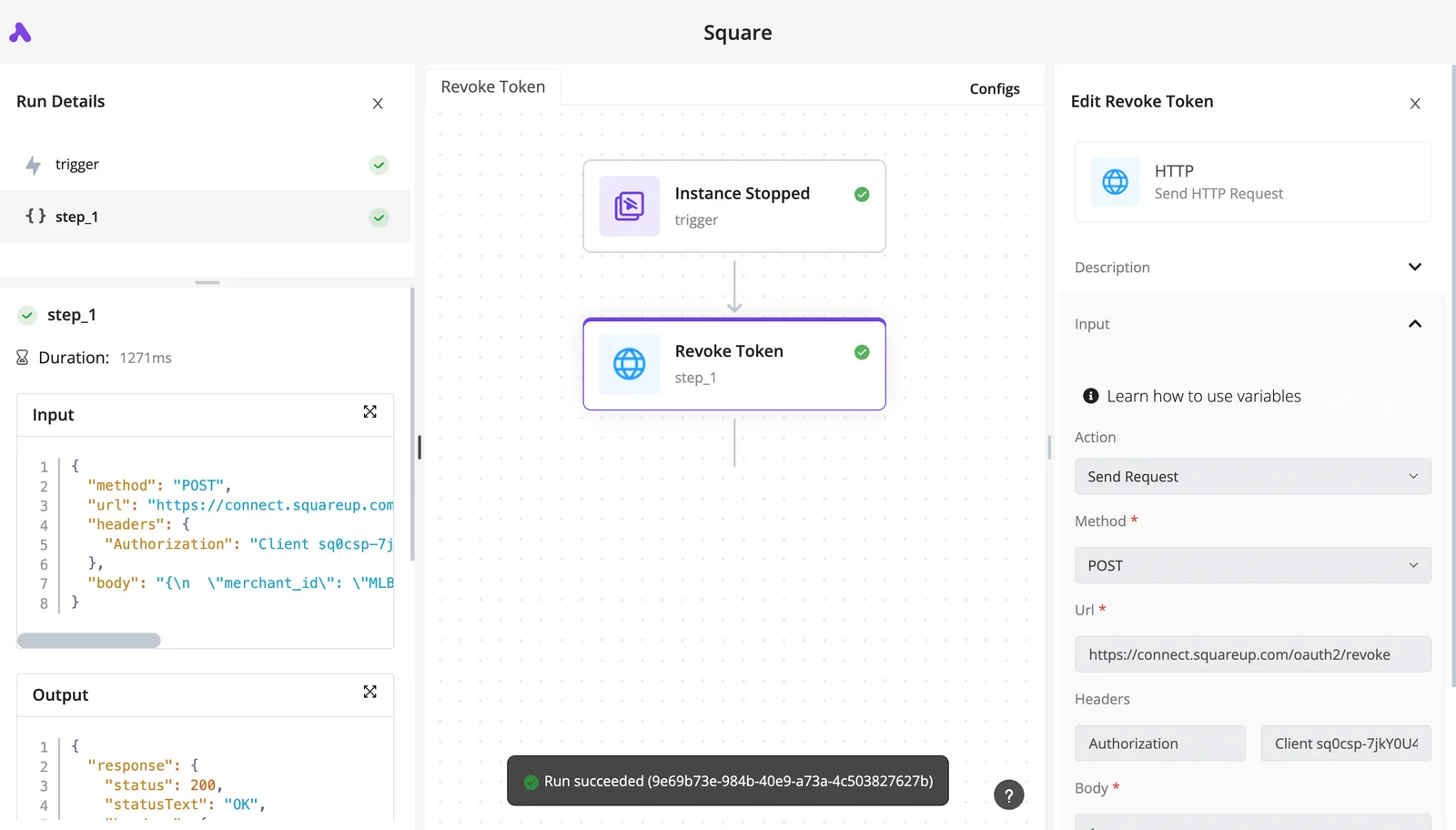
### Connecting software services through orchestration engines
An orchestration engine provides the necessary visibility into these HTTP exchanges, turning opaque code executions into auditable logs.
> [Screenshot as described: A completed flow run in Activepieces showing the Run Details panel...]
MoneyGram and Moneypenny run Activepieces in production, where every connected integration is instantly available as an agent tool.
Because each of the **739 integrations** is exposed via a per-project MCP server, an agent can call any business app without a second migration or manual schema export.
## The Monday morning plan for implementing Agent37
Implementing Agent37 requires a deliberate transition from stateless task execution to a persistent memory architecture that aligns with your existing software stack.
To ensure a predictable deployment, use the following sequence to audit your infrastructure and define the operational boundaries for the agent.
* Audit for long-running state requirements.
* Verify 37Signals customer status for binary access.
* Define the 'Trust Boundary' for the first sandbox.
* Map the HTTP request flow for external API authentication.
### Choosing Agent37's LLM logic layer
Once the trust boundary is defined, the focus shifts to the specific LLM backbone required for the logic layer.
For high-reasoning agentic coding and complex knowledge work, deploying Claude Opus 5.5 provides the necessary cognitive depth to handle the long-horizon tasks that Agent37’s state management is designed to support.
## Bridging the integration gap with Activepieces
While Agent37 provides the stateful memory required for long-running tasks, it remains isolated from the SaaS ecosystem without a dedicated orchestration layer. Activepieces solves this by serving as the connective tissue between the Agent37 sandbox and your business applications.

By deploying the MIT-licensed Activepieces core, you gain access to a visual workflow builder that handles the OAuth2 authentication and API schema mapping that Agent37 lacks natively.
This allows you to trigger agentic reasoning from a Salesforce update or a Slack message without writing the boilerplate code typically required for manual HTTP bridging.
The platform provides full visibility into the execution of these connections, which is critical when debugging autonomous agents.
Every interaction between Agent37 and an external service is captured in a detailed run trace, allowing you to inspect the exact JSON payload sent to a tool and the resulting state change.
This transparency ensures that the "black box" of agentic decision-making is replaced by an auditable trail. Because the engine is open source, organizations can verify the security of their data pipelines, ensuring that sensitive credentials never leave their controlled environment.
For teams scaling beyond a single worker, Activepieces offers a per-project MCP server that exposes its library of 739 integrations directly to the agent as executable tools, providing a vast automation surface that significantly reduces the manual effort required to connect disparate software systems, which means developers can automate complex workflows without needing to build custom connectors from scratch.
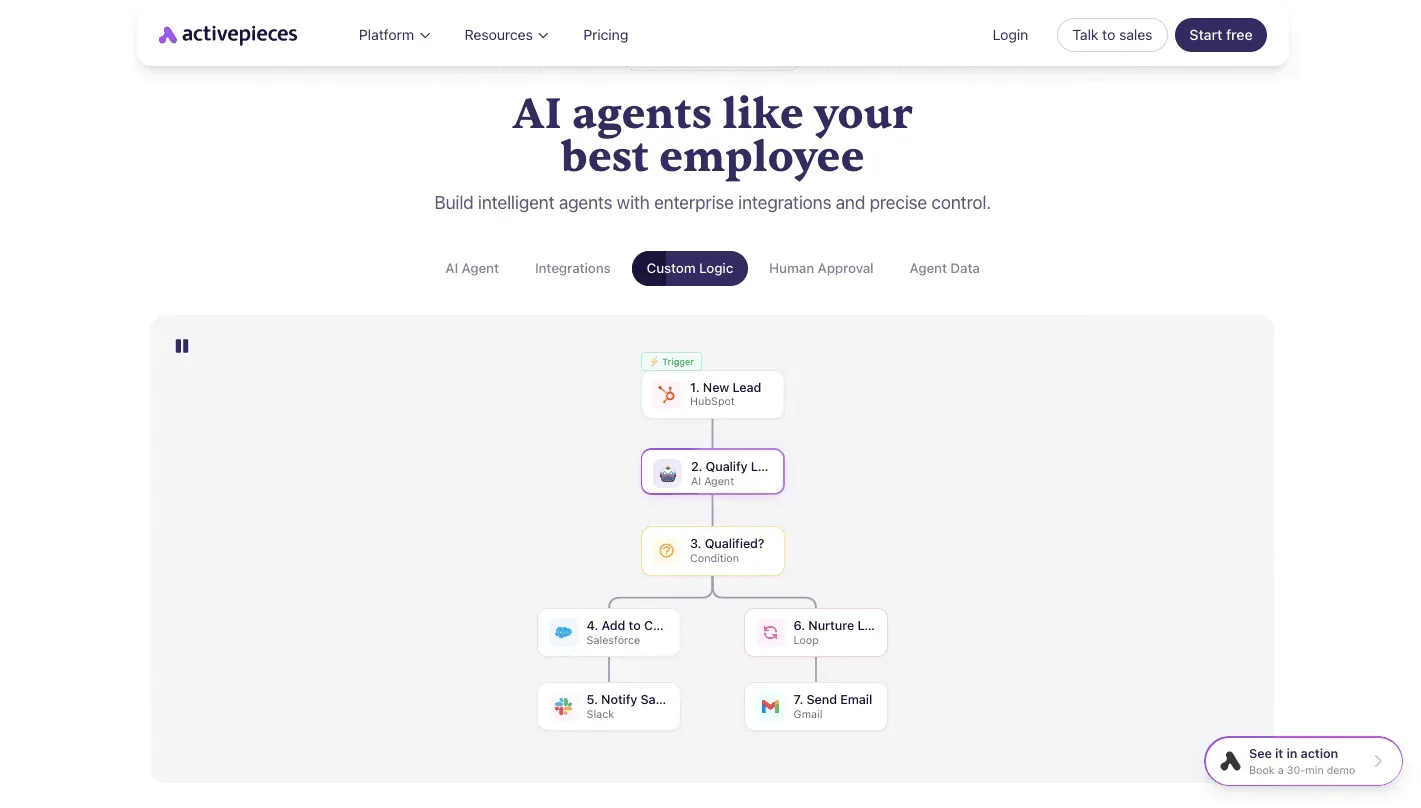
This architecture is used in production by firms like MoneyGram and Moneypenny to maintain reliable automation at scale.
Instead of manually defining tool definitions for every new service, you can point Agent37 at the Activepieces interface to instantly grant it the ability to read from a database, update a project management board, or send an invoice, all while maintaining the persistent state provided by the 37Signals framework.
## Frequently asked questions about Agent37
### Can I run Agent37 entirely offline?
Agent37 requires an active internet connection to authenticate its core state management engine against central licensing servers. While the reasoning logic resides within your local container, the lack of a true air-gapped mode means you can't deploy it in high-security environments that forbid outbound traffic.
### Does Agent37 support GPT-4o and Claude 3.5?
To utilize the framework, you must provide API keys or local endpoints for the following supported models:
* GPT-6 Astra for complex reasoning and agentic coding tasks.
* Claude Fable 5.1 for long-horizon planning and demanding logical workflows.
* Mistral Large 4 for high-performance open-weight multimodal requirements.
* Gemini 3.8 Flash for latency-sensitive tool use and rapid execution.
### How does Agent37 handle data privacy for enterprise users?
Enterprise data privacy is managed through a pass-through architecture where the agent stores state metadata locally while sending actual payload content to your chosen model provider.
Because Agent37 doesn't include a proprietary storage layer for your business data, your privacy posture is determined entirely by the data processing agreement you have with the LLM vendor.
## Related reading
- [Best AI Agent Platforms for Workflows: 2026 Guide](https://www.activepieces.com/blog/best-ai-agent-platforms-for-workflows-2026-guide)
- [HR Agent Guide: How AI Agents for HR Improve Workflows](https://www.activepieces.com/blog/ai-agents-for-hr)
- [Integrating Gradual AI Deployment with Existing IT Infrastructure](https://www.activepieces.com/blog/integrating-gradual-ai-deployment-with-existing-it-infrastructure)
## References
- [Agent37](https://www.agent37.com/cloud)