### Hardware and hosting costs for Xing4.0 29B Nobody notices the scale of the system until the bill arrives, but with MoE, you only pay the hardware hosting overhead for a small model while retaining the knowledge base of a much larger system.  [Arxiv](https://arxiv.org/pdf/2401.04088) notes that legacy MoE models like Mixtral 8x7B require 13 billion active parameters out of 47 billion total parameters to process a token. That increases the baseline hardware requirement to multiple enterprise GPUs. 37 billion active parameters out of 671 billion total parameters is the requirement for DeepSeek-V3, according to [Theterminal](https://theterminal.space/ai/xing4-29b-a4b-huawei-ascend)’s analysis. That mandates massive cluster orchestration that's out of reach for mid-market infrastructure budgets. ### Xing4.0 29B routed and shared experts Internally, the model structures its workload through two distinct types of specialized networks. Benchmarks published by [MindStudio](https://www.mindstudio.ai/blog/xing4-29b-a4b-benchmarks) show the architecture relies on **64 routed experts**. 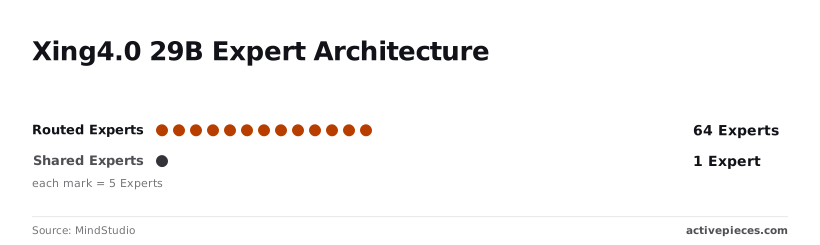 Dedicated neural pathways process specific domain tasks instead of generalized layers. MindStudio indicates that 1 shared expert stabilizes this routing. It captures universal linguistic patterns across all tokens so that specialized experts don't lose contextual coherence during complex reasoning chains. ### Xing4.0 29B context window for enterprise data Because of this structural efficiency, you can handle massive enterprise datasets without dropping information. Architectural sparsity allows for massive data ingestion boundaries. **256,000 tokens** is the threshold that allows your operations team to feed entire codebase repositories or multi-year financial ledgers directly into a single prompt without chunking data.By isolating computational paths, the architecture decouples a model's total capacity from its per-token execution cost.
[Activepieces](https://www.activepieces.com) ensures every connector is an agent tool by exposing its 735 integrations through a per-project MCP server, which means developers can instantly equip their AI agents with a vast library of external capabilities. Once a integration is registered in the MIT-licensed core, it functions as both a deterministic flow step and a schema reachable by Xing4.0 29B without a second migration. This unified catalog removes the need to re-integrate systems for agents, as the same logic in the open source repo handles both automation and model tool-calls. ## A4B architecture for 29 billion parameters The model utilizes a Mixture of Experts architecture. It contains 29B total parameters, meaning the system holds a deep knowledge base while maintaining efficiency. 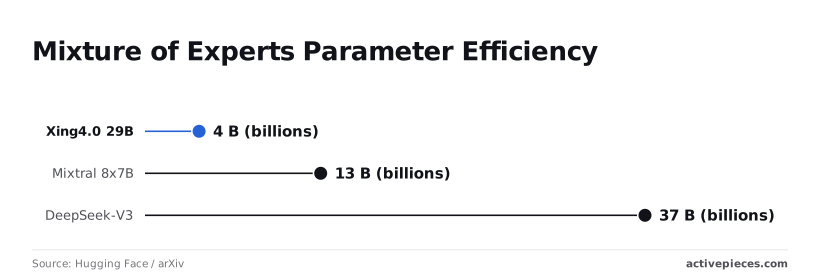 ## Accessing Xing4.0 29B through Hugging Face and APIs Accessing Xing4.0 29B A4B requires either a local environment capable of hosting its 29B parameters or a connection to a provider. The provider must support the specific Mixture-of-Experts (MoE) architecture developed by [China Telecom Artificial Intelligence Technology Co., Ltd.](https://huggingface.co/XingChen-AGI/Xing4.0-29B-A4B). While the model only activates 4B parameters per token, the full 29B parameter weights must reside in memory to avoid significant latency penalties during expert switching. ### Local deployment hardware requirements Running this model locally necessitates a hardware configuration that can accommodate the full parameter set in Video Random Access Memory (VRAM) to maintain the efficiency gains of the MoE design. You will need sufficient system RAM for the initial model loading phase so that the operating system doesn't bottleneck the transfer to the GPU. 1. A GPU with sufficient VRAM, such as the NVIDIA H100, is required for FP16 precision so that the entire model fits without offloading to slower system RAM. 2. A multi-GPU setup using NVLink shards the 29B parameters across multiple consumer-grade cards. **This means you only pay the hardware hosting overhead for a small model while retaining the knowledge base of a much larger system.** ### API providers and inference endpoints If you can't meet the local hardware threshold, you can utilize managed endpoints that handle the orchestration of the 4B activated parameters. The following providers offer compatible environments: Hugging Face Inference Endpoints hosts dedicated instances so that you can maintain private data silos. China Telecom’s proprietary cloud infrastructure is the native environment for the model, where developers get the lowest possible latency for the MoE routing logic. When you need to manage the visibility of these integrations, versioning tools track deployment health. The version history interface displays the status of specific flow iterations, such as a green indicator for a stable webhook-to-code deployment or a yellow warning for a pending configuration change. 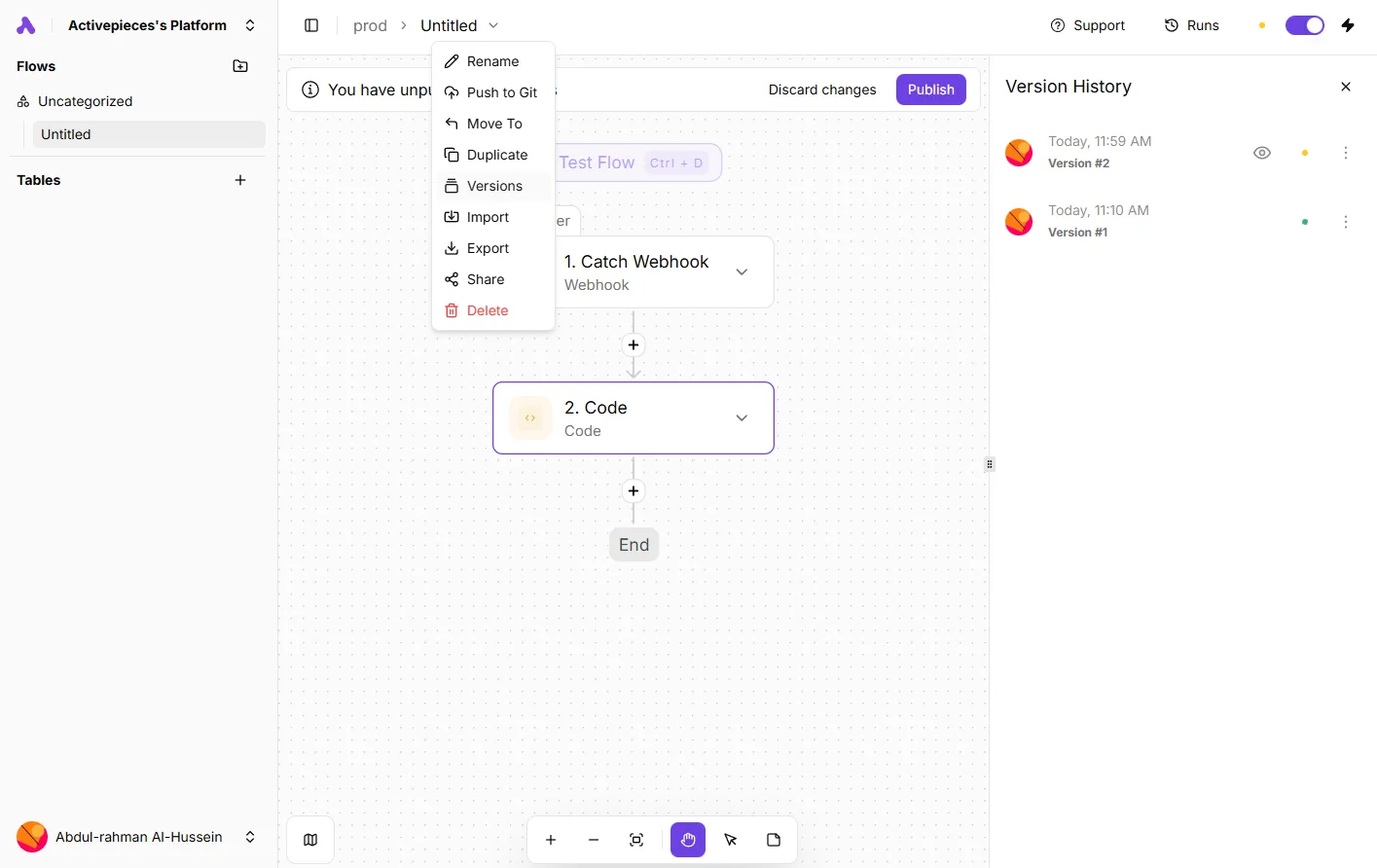 This allows you to rollback to a known stable state if a new inference endpoint fails to respond. ### Xing4.0 29B Apache 2.0 licensing terms This grants you the right to modify and distribute the software without paying royalties. This specific license is the only tier offered by the developers that permits commercial integration without a per-seat subscription fee. Because the license is permissive, you can build proprietary wrappers around the 29B parameter backbone so that you retain intellectual property rights over your specific implementation. ## How to implement Xing4.0 29B workflows Integrating through the Model Context Protocol, which is an open standard for secure app-to-model communication, enables the system to safely fetch real-time data from external enterprise systems. The protocol establishes a standardized client-server architecture where the model acts as the client requesting specific context. By exposing local databases and APIs through an MCP server, developers grant the model secure access to live operational metrics without exposing the underlying infrastructure. To execute a data retrieval workflow, the model evaluates the user prompt and identifies the necessary tools defined in the MCP schema. It then generates a structured request that the protocol translates into precise API calls or database queries. The server processes these actions and returns the relevant data payload directly into the model's context window for immediate analysis. ## Strengths and limitations of the XingChen-AGI framework The XingChen-AGI framework has the analytical depth of a high-parameter system but keeps the operational footprint of a much smaller model through its aggressive Mixture-of-Experts (MoE) architecture. By activating only a fraction of its total parameters during a single inference pass, the system reduces the memory bandwidth required per token. The sandbox is not the problem; the hardware is. This allows you to host the model on consumer-grade hardware that would otherwise fail to load a monolithic 29B alternative. Furthermore, this efficiency doesn't come at the cost of working memory. The native support for a large context window ensures that the model can ingest entire technical manuals or codebases without the information loss associated with aggressive vector database chunking.  The following table summarizes the core operational tradeoffs found within the current documentation: | Capability | Status | | :--- | :--- | | Reasoning Density | High (4B Active) | | Context Handling | 256K Native | | Multilingual Support | Limited (Gaps identified) | _Prices and plan limits checked against [huggingface.co](https://huggingface.co/XingChen-AGI/Xing4.0-29B-A4B) and [huggingface.co](https://huggingface.co/xingchen-agi/xing4.0-29b-a4b) on September 29, 2026._ ## What Activepieces does about this To capitalize on the sparse efficiency of Xing4.0 29B A4B, users must bridge the gap between the model's reasoning and the enterprise data it needs to act upon. Activepieces provides the orchestration layer required to turn this architectural efficiency into functional automation. By utilizing the MIT-licensed framework, organizations can host their own automation server alongside their model deployment, ensuring that the low-latency benefits of the 4B active parameters are not lost to inefficient external API calls or fragmented middleware. The platform addresses the complexity of tool-augmented reasoning by exposing over 735 integrations as structured tools that the Xing4.0 29B model can invoke natively. Because Activepieces ensures every connector is an agent tool by exposing its integrations through a per-project MCP server, developers can instantly equip their AI agents with a vast library of external capabilities. This eliminates the need for manual schema mapping, as the model can query the Activepieces catalog to understand exactly how to format a request for specialized enterprise software. For teams managing the 256,000 token context window, Activepieces serves as the high-throughput pipeline that feeds these massive datasets into the model. Whether pulling multi-year financial ledgers from a database or entire repositories from a version control system, the platform handles the ingestion and pre-processing steps necessary to fill that window without manual intervention. This allows the Xing4.0 29B model to focus its specialized experts on analysis rather than data retrieval logistics. Operational stability is maintained through the platform's robust versioning and error-handling features. When deploying a model with complex routing like Xing4.0, the version history interface displays the status of specific flow iterations, such as a green indicator for a stable webhook-to-code deployment or a yellow warning for a pending configuration change. This visibility ensures that as you scale your sparse model infrastructure, the automated workflows surrounding it remain predictable and auditable. ## Frequently asked questions about Xing4.0 29B ### Can I fine-tune Xing4.0 29B on a consumer GPU? Fine-tuning this model requires a high-end consumer graphics card. It must be equipped with sufficient VRAM, such as the NVIDIA GeForce RTX 4090, to accommodate the parameter count during the training process, which means users without high-end hardware will be unable to run the model locally. If you rely on standard consumer hardware, you must utilize Parameter-Efficient Fine-Tuning (PEFT) techniques like QLoRA to reduce memory overhead. A full-parameter update would exceed the memory capacity of a single non-enterprise card.  ### Is there a smaller version of the Xing4.0 model? The current Xing4.0 architecture is exclusively available as the 29B parameter model, though if you're seeking lower resource footprints, you'll typically deploy quantized versions to reduce the memory required for inference. If you require a natively smaller model for edge deployment or high-velocity tasks, you have several alternatives. Ministral 3 3B from Mistral is a compact text and vision solution for mobile environments. Gemini 3.5 Flash-Lite from Google is a high-speed option for budget-sensitive multimodal workloads. GPT-6 Luna from OpenAI is designed to handle high-volume tasks with greater efficiency than the flagship series. ### Does Xing4.0 support function calling natively? Native function calling is a core feature of the Xing4.0 29B architecture, allowing the model to generate structured JSON outputs that map directly to external API definitions. By using this native support, you ensure that you don't need to rely on brittle regular expression parsing to extract intent, which reduces the failure rate when the model interacts with external software tools.  Enterprise workflows requiring specialized reasoning for tool use often compare it against GPT-Realtime-2.1. This is a model from OpenAI specifically optimized for complex tool-augmented agentic tasks. ## Related reading - [Agentic AI Security: Why Our Control Model Must Evolve](https://www.activepieces.com/blog/agentic-ai-security-why-our-control-model-must-evolve) - [Can Agentic AI Replace Your RPA Bots? A Real Postmortem](https://www.activepieces.com/blog/can-agentic-ai-replace-your-rpa-bots-a-real-postmortem) - [When Not to Use an AI Agent: Limits of Agentic Automation](https://www.activepieces.com/blog/when-not-to-use-an-ai-agent-limits-of-agentic-automation) ## References - [Hugging Face / arXiv](https://huggingface.co/XingChen-AGI/Xing4.0-29B-A4B) - [MindStudio](https://www.mindstudio.ai/blog/xing4-29b-a4b-benchmarks)Architectural sparsity allows for massive data ingestion boundaries.