### Why white labeling beats 'powered by' branding To reduce brand friction, the industry is transitioning from visible third-party logos to invisible, white-labeled infrastructure. This shift ensures the user remains within the primary application's interface during setup, preventing the cognitive load of managing a separate account on an external platform. | Metric | Before (Manual/Native) | After (Embedded Builder) | Delta | | :--- | :--- | :--- | :--- | | Support Load | High per-integration tickets | Centralized builder logs | -50% Support Time | | Customer Churn | Users leave for missing apps | Infinite app library access | -15% Churn | | ARPU | Fixed subscription tiers | Monetizable automation add-ons | +38% ARPU | ## How white label workflow builders function under the hood ### Using JWT for user provisioning and authentication White label builders use JSON Web Tokens (JWT) to map a user session in the host application to a corresponding identity in the workflow engine without requiring a secondary login. This stateless exchange allows the host server to sign a payload containing the user's unique ID and permissions. The workflow engine then only executes operations the user is authorized to perform. Activepieces ships its core under an MIT licence, allowing teams to embed the builder via JWT authentication while retaining the right to fork or resell their implementation. The LICENSE file in the activepieces/activepieces repository shows this MIT designation on the core, with enterprise directories held under a separate commercial licence. This distinction ensures that the rights to the embedded engine remain with the builder, rather than being subject to the restrictive fair-code clauses found in source-available alternatives like n8n. ### The relationship between the host app and the embedded canvas The integration architecture determines how much control the host application maintains over the visual experience versus how much maintenance it offloads to the vendor. | Delivery Method | Customization Depth | Maintenance Overhead | Latency | | :--- | :--- | :--- | :--- | | IFrame | Low | Low | High | | React/Vue Components | Medium | Medium | Medium | | Headless API | Full | High | Low | While an IFrame offers the fastest deployment, it prevents the host app from styling internal buttons. A Headless API allows for a bespoke UI but requires the team to rebuild every visual state for every new feature released. ### Managing the credential vault for end-user API keys The workflow engine is a secure proxy that stores and injects authentication tokens into requests sent to third-party services like GitHub or Salesforce. When a user connects an account, the builder encrypts the resulting OAuth token or API key before persisting it in a dedicated vault. This isolation ensures that even if the host application's frontend is compromised, the engine's encryption layer protects the underlying secrets. ## The build versus buy trade-offs for integration platforms Building an integration platform in-house trades immediate capital for a compounding technical debt that scales with every third-party service added to the ecosystem. ### Calculating the cost of maintaining 50+ third-party API connectors Maintaining 50 connectors requires a dedicated rotation of engineers, leaving fewer resources available for new feature development, which means the product roadmap will inevitably face significant delays. Third-party providers update their API versions and deprecate endpoints on independent, often aggressive schedules.Maintaining custom-coded integrations creates a permanent tax on the engineering roadmap because every third-party service eventually deprecates its endpoints.
A single breaking change in an OAuth flow triggers an immediate failure across all active customer workflows. If your team manages these in-house, they must build custom retry logic for every unique error code returned by every vendor. This shifts high-value developers away from your core roadmap into a cycle of reactive patching. ### Time-to-market benchmarks: 6 months of dev vs. 1 week of embedding Engineering teams consistently underestimate the complexity of building a resilient execution engine. According to the [Specway 2026 API Integration Complexity Report](https://specway.com/blog/api-integration-complexity-report-2026), there is a massive "Integration Overrun Gap." The **Initial Engineering Estimate** is a 1x multiplier of effort, yet the **Actual Time to Market** averages a **3.2x multiplier**. 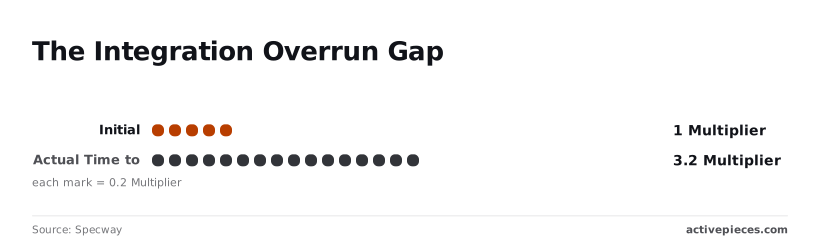 This 3.2x overrun occurs because teams account for the "happy path" but fail to build for the 200+ edge cases inherent in distributed systems. Modern infrastructure enables this transition by syncing flows to git and promoting them through Release Management, allowing teams to move automations from test to production as versioned code. Technical documentation for Git Sync and Release Management shows how this replaces private in-app histories with a standard software review process. Companies like MoneyGram and Alan run this in production to ensure that every embedded flow is reviewed and versioned before it reaches their end users. ## The rising cost of maintaining custom integrations Maintaining custom integrations requires a linear increase in engineering headcount to manage the exponential growth of external API surface areas. ### Support costs of end-user workflow execution errors When a customer's workflow fails because a CRM field was deleted, the internal developer must audit execution logs to prove the fault lies outside their stack. Without a dedicated abstraction layer, senior developers spend sprints acting as high-priced support agents for other companies' breaking changes. ### Why late-stage companies spend 70%+ of dev time on maintenance As a product matures, the "Maintenance Tax" scales. According to data from [Richard Ewing](https://www.richardewing.io/blog/subprime-code-crisis), early-stage companies allocate 30% of their budget to maintenance, so a significant portion of capital is diverted away from growth initiatives. 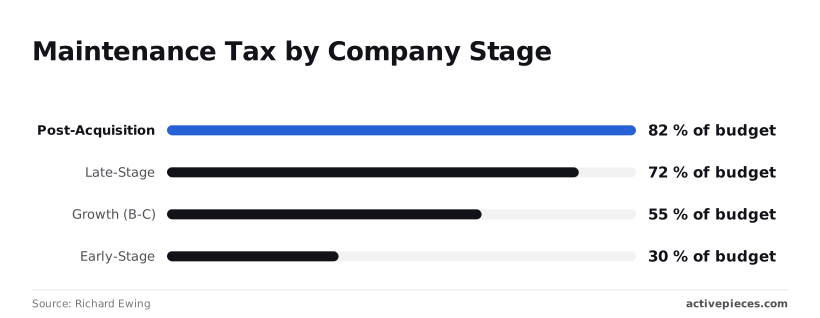 | Company Stage | Maintenance Budget Allocation | | :--- | :--- | | Early-stage | 30% | | Growth-stage (Series B-C) | 55% | | Late-stage | 72% | | Post-acquisition | 82% |  Over half of every dollar spent is now preserving existing functionality. Late-stage companies reach a **72% budget allocation** for maintenance. Post-acquisition entities face an **82% maintenance burden** according to Richard Ewing, meaning nearly all operational resources are consumed by technical debt rather than innovation. ## Where white label integration projects typically fail or stall Integration projects fail when teams treat third-party connectors as static assets rather than volatile dependencies. ### Problems with closed, non-extensible connector libraries Standardized connector libraries often lack the granularity required for specialized logic. If the provider operates as a closed system, your team can't patch a specific API wrapper when a service deprecates an endpoint ahead of the vendor's roadmap.  True extensibility requires a system where your team can fork a connector and host that private version within the same engine. ### UI friction: When the builder looks like a foreign object in your app A workflow builder that cannot be visually deconstructed creates a cognitive break for the end user. Most "white-label" solutions only allow for basic CSS overrides, failing to account for the layout shifts of modern SPAs. ### Data residency and compliance hurdles in multi-tenant environments Passing sensitive customer credentials through a provider’s cloud environment introduces sub-processors, which often violates data residency requirements. A viable architecture must support network isolation where the engine runs within your VPC and stores secrets in your own encrypted vault. ## How Activepieces handles embedded workflow requirements for teams Activepieces provides an MIT-licensed workflow engine that allows teams to embed a white-labeled automation builder directly into their product. End-user data remains within the host application's security perimeter. ### Deploying the MIT-licensed core for full data control Self-hosting the Activepieces core allows you to run the workflow engine on your own infrastructure, where roughly 60% of integrations are community-contributed and open for audit, so you can verify the security and reliability of the majority of your automation tools. Customer secrets and execution logs never leave your controlled environment. Because the core is MIT-licensed, your engineering team can audit the execution path and verify encryption at rest. ### Customizing the CSS and branding of the workflow builder UI The white-labeling tier enables you to inject custom CSS and brand assets into the builder interface while offering unlimited flows on every plan. You provision users via JSON Web Tokens (JWT), which maps your application’s internal identities to Activepieces tenants without requiring a separate login flow. This allows you to toggle specific integrations based on the user's subscription level. 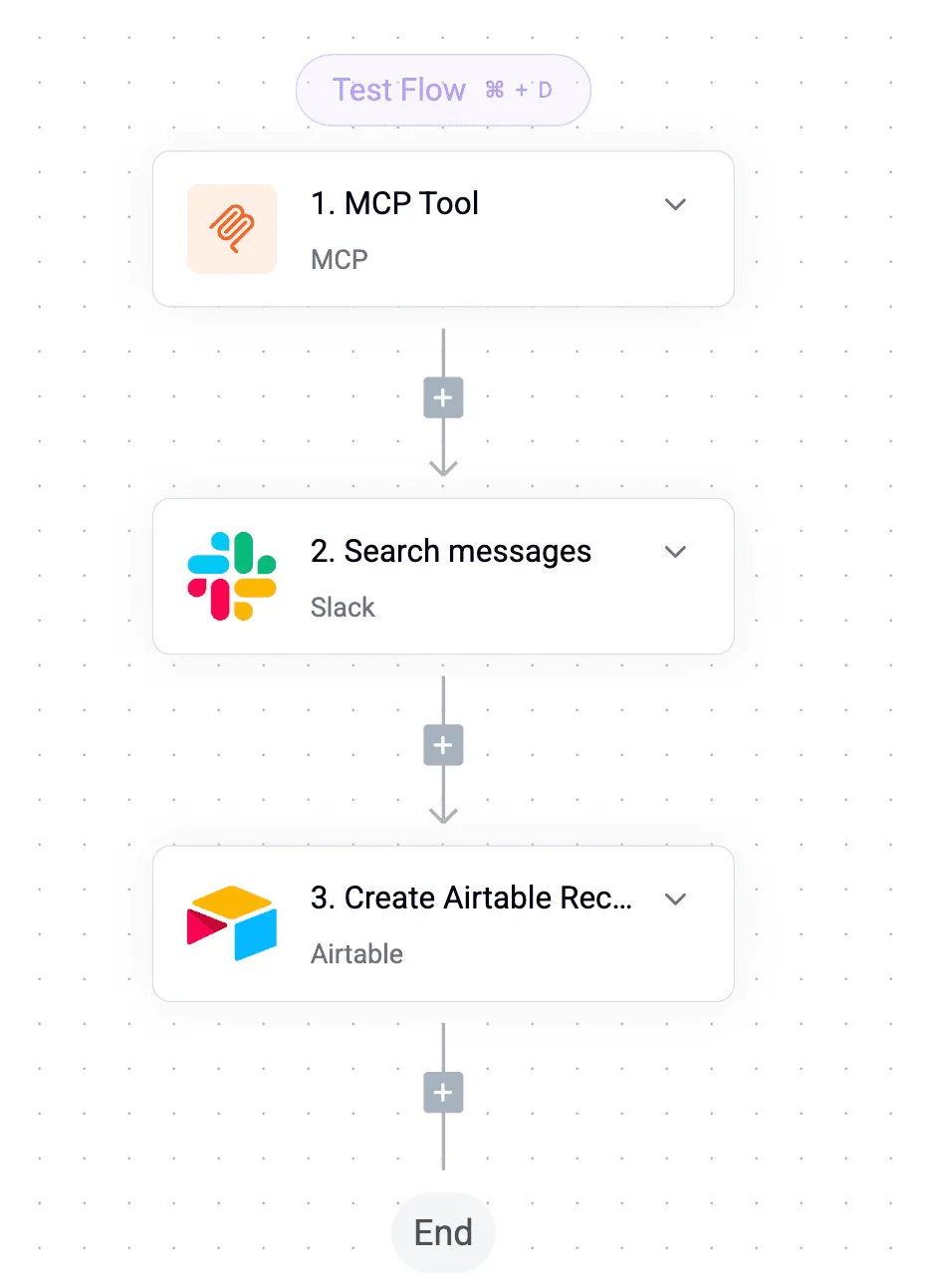 ### Using the Cloud and Self-Hosted options for scaling tenant workloads Teams can choose between managing their own runners for total isolation or utilizing a managed environment for faster deployment. For organizations requiring specific enterprise terms or high-availability configurations for embedded use cases, FundingSocieties and Moneypenny run Activepieces in production to manage these scaling requirements. You can review standard tiers at https://www.activepieces.com/pricing or reach out for custom configurations. ## The Monday morning plan for launching embedded integrations A successful white-label deployment requires aligning the host application's identity provider with the workflow engine's execution environment. 1. Mapping your first three 'must-have' customer integrations. 2. Auditing your existing auth flow for JWT compatibility. 3. Setting up the support tier for user-generated workflow errors. ### Mapping your first three 'must-have' customer integrations Focusing on high-frequency events, such as syncing a new lead from a CRM or posting to Slack, allows teams to validate the webhook listener and credential storage logic before scaling to complex multi-step flows. ### Auditing your existing auth flow for JWT compatibility The host application must be capable of issuing JSON Web Tokens (JWT) that include unique tenant identifiers. This is the primary mechanism for scoping the builder’s visibility to a specific user's data. 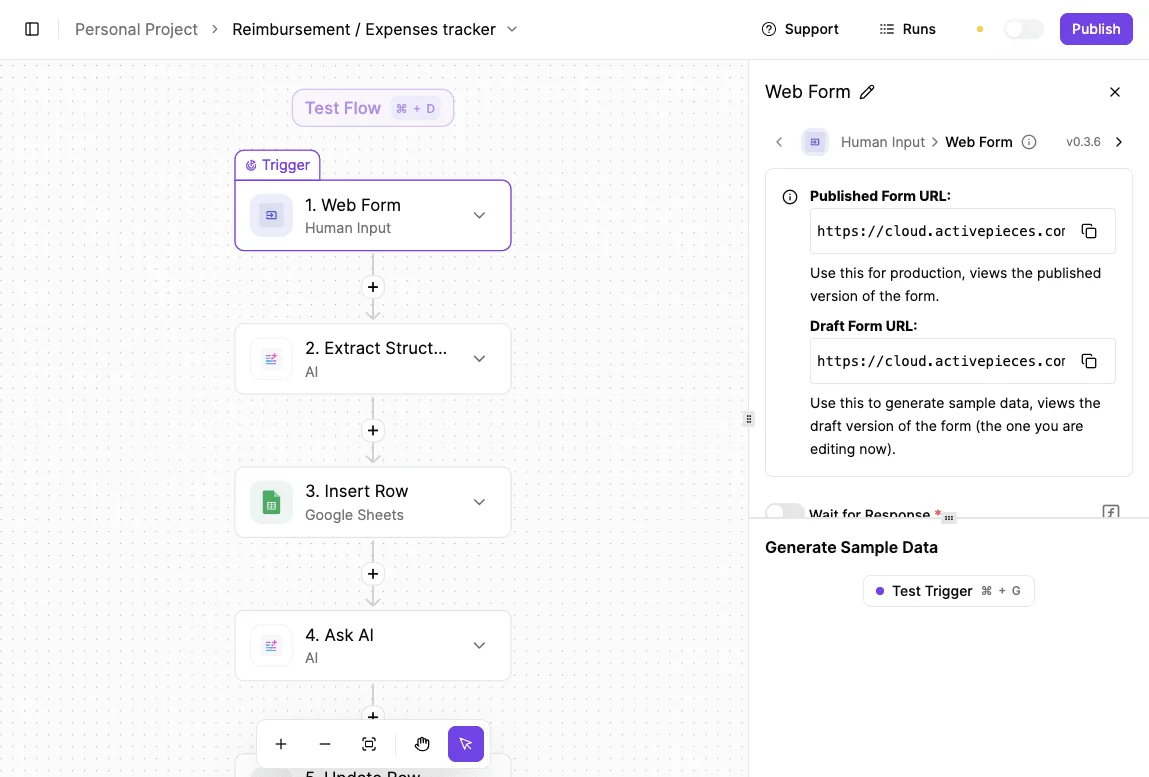 ### Setting up the support tier for user-generated workflow errors Defining how the system handles execution failures ensures that API rate limits do not result in silent data loss. The support team needs access to execution logs to distinguish between a bug in the host app and a breaking change in an external endpoint. ## Frequently asked questions about white label builders ### Can I build my own custom connectors for a white label builder? A white label builder is an extensible framework where you define the authentication schemes, triggers, and actions for proprietary or niche services. When your team develops a custom connector, you define the state machine for each API request. The builder treats your internal services with the same retry and error-handling logic as public integrations. This extensibility means your product isn't restricted to a pre-defined library. Your developers can wrap any internal endpoint into a reusable component for your end-users. ### Does the end-user need their own account with the automation provider? Because the white label provider is an invisible infrastructure layer, the end-user interacts exclusively with your interface. You provision access using JSON Web Tokens (JWT), which maps your internal user IDs to the automation engine’s workspace entities. Because the provider acts as a sub-processor rather than a consumer-facing platform, your customers never see a third-party login screen or billing prompt. ### How do white label builders handle high-volume data syncing? High-volume syncing is managed through asynchronous worker queues that decouple the trigger event from the execution logic. When a web-hook from a service like Salesforce (a customer relationship management platform) fires a burst of updates, the builder places these into a queue for sequential processing. This architecture prevents a spike in traffic from exhausting your database connections. The system throttles execution based on your defined concurrency limits. ### Is it possible to white label the automation engine but not the UI? By interacting directly with its API to trigger flows and retrieve execution logs, you can utilize the automation engine as a headless service. This approach allows you to build a completely custom front-end while the underlying engine manages the complex state transitions and credential encryption. By decoupling the UI, you maintain total control over the user experience while offloading the maintenance of third-party API schemas to the specialized provider. ## Related reading - [Building Business Processes with an AI Workflow Builder](https://www.activepieces.com/blog/building-business-processes-with-an-ai-workflow-builder) - [No Code Web Builder: Best Options in 2026](https://www.activepieces.com/blog/no-code-web-builder-best-options-in-2026) - [No-Code Application Builder: Best Options for 2026](https://www.activepieces.com/blog/no-code-application-builder-best-options-for-2026) ## References - [Richard Ewing](https://www.richardewing.io/blog/subprime-code-crisis) - [Specway](https://specway.com/blog/api-integration-complexity-report-2026)Building an integration platform in-house trades immediate capital for a compounding technical debt that scales with every third-party service added to the ecosystem.