En notes that competing methods consume 4,969 tokens for the same task. These efficiencies are supported by three core performance claims: * An increase in code generation speed, which reduces the "hang time" in IDE completions. * A lossless context window, so developers can feed in entire repositories without losing track of variable definitions in the earliest files. * Video-based world-learning data, providing the model with a spatial understanding of UI layouts that text-only training lacks. ### Accessing the ZCode API and Playground Whether testing speeds in the Z-AI Playground or deploying via Activepieces, developers can immediately automate GitHub repository maintenance without writing custom glue code. The moment a integration is connected in Activepieces, a ZCode agent can call it, as every integration action functions both as a step in a flow and as a tool schema on a per-project MCP server. This allows technical teams to reach their entire catalog from an agent or an IDE like Cursor without wiring the same logic up twice. The API supports direct integration into CI/CD pipelines, ensuring that every push triggers a logic check that finishes before the build server even initializes. ## Why ZCode matters for automated business workflows Instead of bloating the primary application server, ZCode provides a dedicated environment for executing AI-generated logic in a sandboxed runtime. By isolating execution, a team avoids the common risk of a malformed script crashing the entire production middleware. ### How ZCode reduces latency in AI agents By minimizing the delay between an agent perceiving a task and executing the script, ZCode ensures that customer-facing bots resolve logic-heavy requests without a processing pause. When a system uses [ZCode](https://github.com/zai-org/ZCode) as its backend service, it bypasses the overhead of spinning up generic containers for every small calculation. * The Agent CLI provides a direct interface for terminal-based commands. * The browser interface offers a visual debugging layer for logic verification. * Shared UI components ensure consistency across the desktop app and web portal.  ### Cost efficiency for high-volume code tasks Operational expenses drop when script generation is offloaded to specialized models rather than running heavy general-purpose models for simple syntax fixes. Using [zai-org](https://github.com/zai)’s infrastructure prevents the "token tax" associated with sending repetitive boilerplate requests to massive frontier models.Instead of the model "thinking out loud" in text, it maps logic into a dense, non-linguistic vector space representing structural relationships.
### Integration with existing developer stacks ZCode functions as a modular workbench that slides into current CI/CD setups. Because the repository includes both the client and the backend services, teams can self-host the runtime to maintain strict data sovereignty. ## Measurable improvements in the ZCode architecture By offloading execution to the GLM-5.3 engine, ZCode achieves its performance gains through a high-parameter text model that processes logic locally to bypass cloud-based API latency. ### How the GLM engine powers ZCode The General Language Model (GLM) is a proprietary bilingual framework developed by Z-AI to bridge the gap between natural language reasoning and structured code execution. This relationship allows ZCode to function as a specialized wrapper that optimizes the raw power of the GLM series for technical syntax. By utilizing a dedicated engine rather than a third-party API, Z-AI maintains full control over the weights and biases that prioritize code accuracy over conversational flair. ### ZCode speed gains over the Z-1 model The transition to the GLM-5.3 engine reduces time spent on token generation, allowing complex boilerplate code to appear faster than previous iterations. By utilizing the ZCode Desktop AppImage (a portable software format for Linux) the system utilizes local GPU acceleration to handle inference. The ZCode v3.14.3 architecture diagram, as presented by [Particle](https://particle.news/story/zai-launches-zcode-desktop-ide-to-run-glm-52-for-autonomous-coding), illustrates how the GLM-5.2 engine, featuring a 744B parameter set, feeds directly into the ZCode Desktop AppImage. This direct pipeline eliminates middleware layers that typically throttle throughput. Consequently, the local environment handles code synthesis without relying on external bandwidth. ### ZCode's 128k context window for codebases Several thousand lines of code can be ingested simultaneously, enabling the AI to maintain variable consistency across an entire project. * Project-wide refactoring: The model analyzes all connected modules so that a change in a base class updates all inherited dependencies. * Documentation generation: ZCode reads the full implementation logic to ensure README files accurately reflect code behavior. * Bug detection: The engine scans cross-file interactions to identify race conditions. ### Benchmarking ZCode against industry standards ZCode is positioned as a specialized tool for high-speed local execution, contrasting with general-purpose models like Gemini 3.8 Flash, a flagship model for coding and agents, which relies on Google’s global infrastructure. While Gemini 3.1 Pro excels at complex architectural planning, ZCode focuses on the raw velocity of file-level operations. For tasks requiring extreme reasoning, developers often pair ZCode’s speed with GPT-6 Astra, the flagship for complex reasoning and coding, to ensure that local speed is balanced with frontier-grade logic. ## Automating ZCode workflows with Activepieces By treating AI models as modular steps in a flow, Activepieces enables businesses to deploy ZCode through a visual canvas that connects specialized coding models to existing software stacks without writing custom API middleware. Activepieces runs ZCode on your own provider key, ensuring that model spend lands directly on your own account at your own rate rather than being resold through a middleman. This approach keeps the AI strategy under your control, a model that MoneyGram and FundingSocieties already use to manage their production automations. ### ZCode compatibility with existing AI tools Immediate compatibility with ZCode was achieved by expanding the platform engine to support the OpenAI wire format for a new tier of providers. According to the official [Activepieces](https://github.com/activepieces/activepieces/pull/14987) repository, the recent pull request integrated Z.ai alongside providers like xAI and DeepSeek, ensuring that new models are available for production use within hours of their public release. 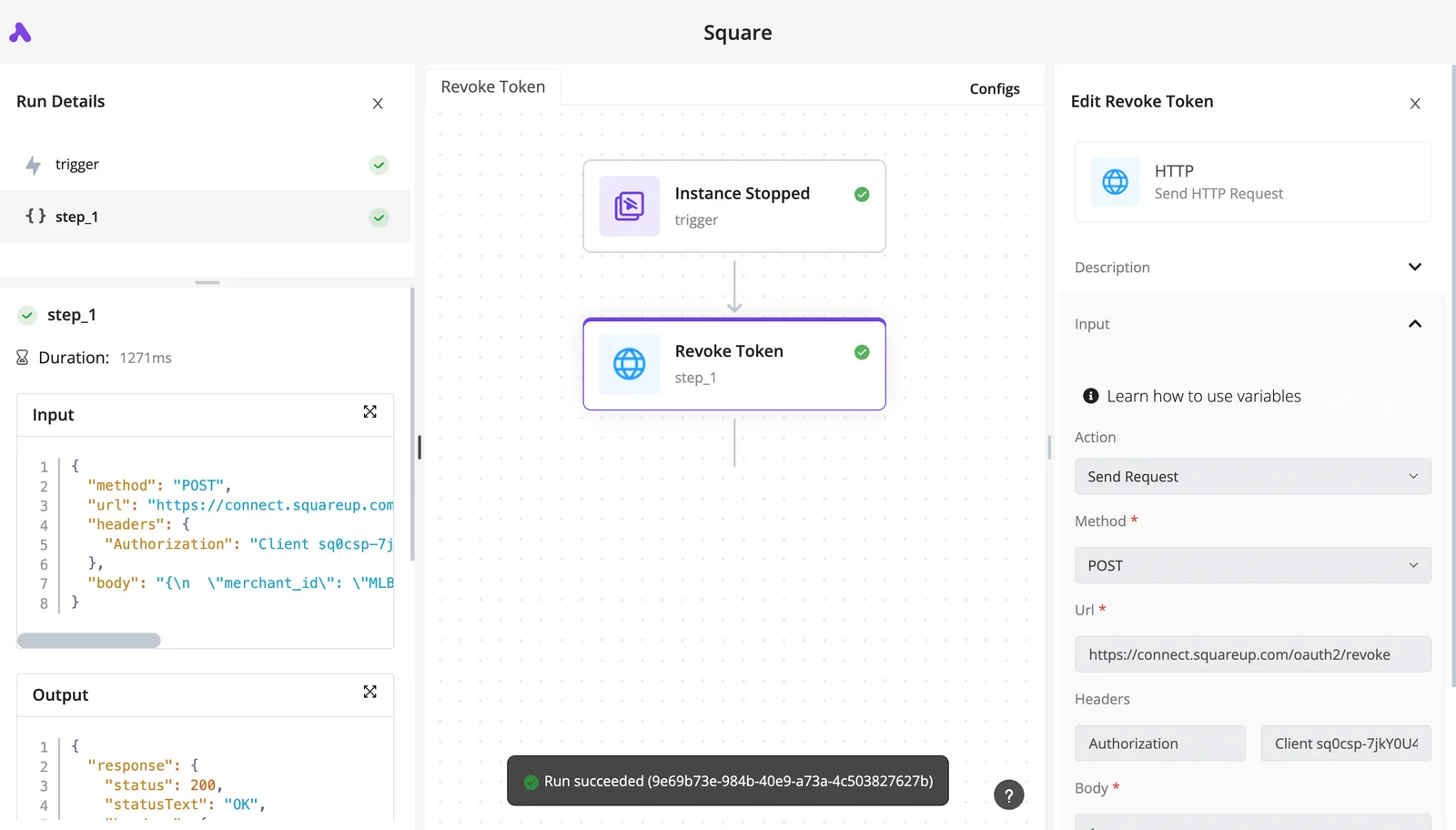 The following image demonstrates a successful execution where a ZCode-powered request automates a sensitive security task. 1. Update a base URL and API key in the connection settings to swap existing LLM steps for Z.ai GLM 5.3. 2. Trigger the flow, such as an "Instance Stopped" event. 3. Execute the ZCode-powered request, such as a "Revoke Token" action. 4. Receive a JSON response with status 200 and "OK" statusText to confirm the run succeeded. The left panel displays the step_1 details including Duration (1271ms), Input showing a JSON POST request to squareup.com with Authorization header, and Output showing a JSON response with status 200 and "OK" statusText.  The right panel shows the "Edit Revoke Token" configuration for an HTTP Send Request action with Method set to POST and Url field populated. A green success banner at the bottom states "Run succeeded (9e69b73e-984b-40e9-a73a-4c50382762b)".] In just over a second, this successful run confirms that ZCode can process logic and trigger external API calls. ### Connecting ZCode to 200 plus apps By providing pre-built connectors for a library of over 735 integrations, Activepieces reaches every model provider a company uses and pushes the combined ZCode spend into the same sheet finance already reads, which means accounting teams gain immediate visibility into total AI costs without manual data entry. This ecosystem allows the specialized coding logic of Z.ai GLM 5.3 to interact directly with business data located in: * CRM platforms like Salesforce or HubSpot. * Storage services like Google Drive and Dropbox. * Communication tools including Microsoft Teams and Discord. Roughly 60% of these integrations are community-contributed, ensuring that even niche developer tools are supported without waiting for a vendor roadmap, so teams can automate workflows across their entire stack immediately rather than waiting for official updates. 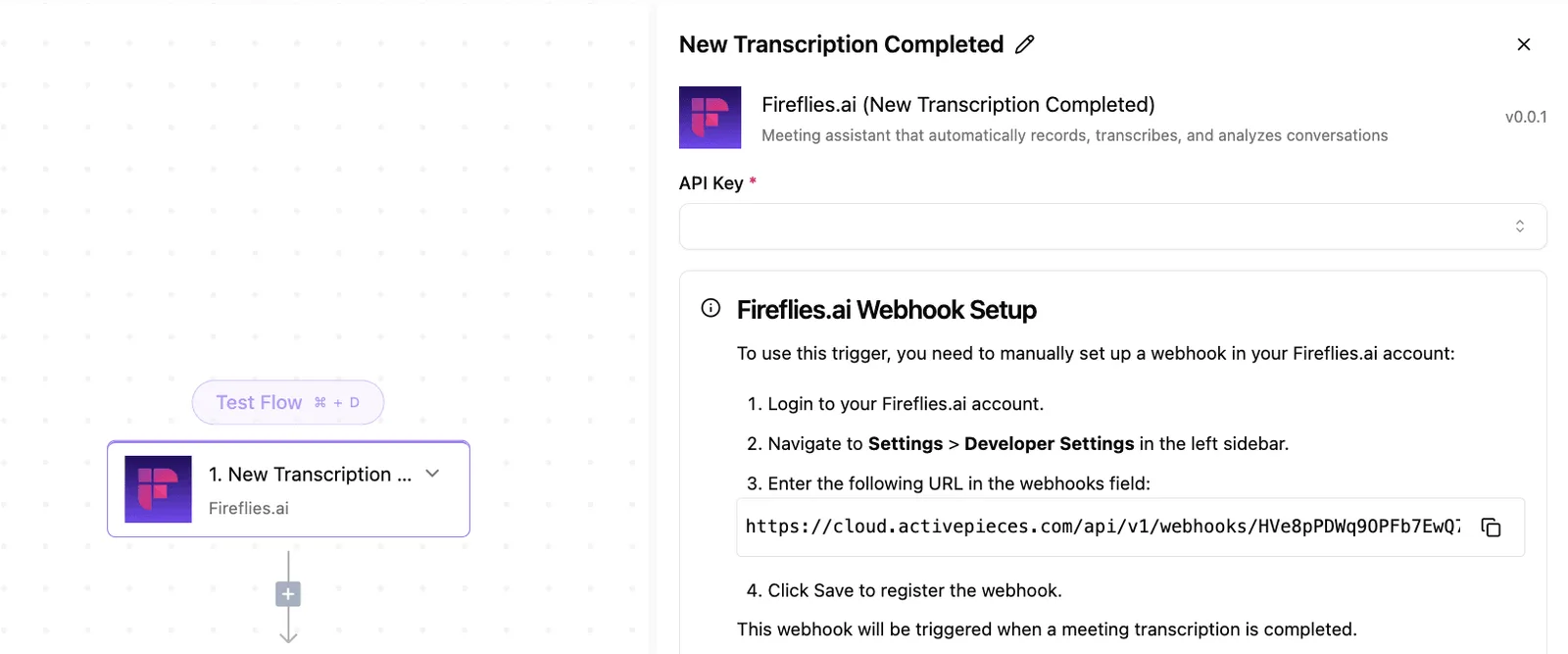 ### Triggering ZCode from Slack or GitHub events When ZCode is tethered to real-time events, workflows move from manual execution to autonomous response. A developer can configure a flow where a new issue in GitHub acts as the catalyst for ZCode to analyze code snippets or generate pull request summaries. ## Comparing ZCode costs to existing models At 12.6 USD per month, ZCode Lite enters the market as a mid-tier alternative that balances the specialized power of multi-agent "vibe coding" against basic autocomplete tools. This pricing structure reflects the shift from simple code generation to the complex, agentic goals supported by the [GLM-5.3 harness](https://zcode.z.ai/en), allowing developers to manage multi-step workflows without the overhead of enterprise-level suites. ### Price per month vs competitors A widening gap is appearing between entry-level extensions and full-featured agentic environments in the monthly cost of coding assistants. While [GitHub Copilot](https://aiapicost.com/coding-plans) maintains a low floor at 10 USD, it lacks the multi-agent control found in higher-tier tools. ZCode Lite fills this void at 12.6 USD, offering savings over [Cursor Pro](https://aiapicost.com/coding-plans) at 20 USD, which translates to significant budget relief for small teams scaling their automation. | Plan | Price per month | Key Distinction | | :--- | :--- | :--- | | GitHub Copilot | 10 USD | Lacks multi-agent control; requires manual bridging for finished features. | | ZCode Lite | 12.6 USD | Best for complex, multi-agent goals; savings over Cursor Pro. | | Cursor Pro | 20 USD | Provides a deep IDE experience at nearly double the ZCode Lite entry point. | | Cursor Business | 40 USD | Demands high-volume usage to justify the 3x cost increase over ZCode Lite. | _Prices and plan limits checked against [github.com](https://github.com/zai-org/ZCode) and [zcode.z.ai](https://zcode.z.ai/en) and [zcode.z.ai](https://zcode.z.ai) and [github.com](https://github.com/activepieces/activepieces/pull/14987) on September 28, 2026._ 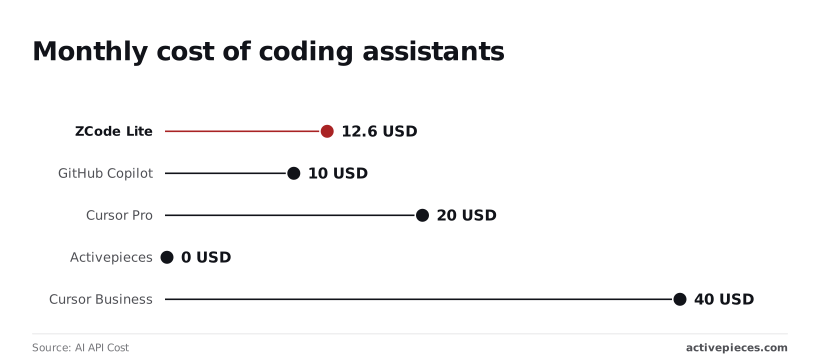 ### Tokens per second performance metrics When running multi-agent tasks through the [Z.ai GLM 5.3](https://zcode.z.ai) model, high-speed execution is critical, as latency in one agent stalls the entire chain. ZCode is designed for "vibe coding" (a paradigm where users describe complex goals and multiple agents execute them) requiring high throughput to prevent the "agentic drift" that occurs when slow responses cause timeouts. ### Total cost of ownership for automated tasks Total ownership costs depend on integration depth. Because ZCode is built to be controlled from anywhere, the lack of a mandatory IDE lock-in helps teams avoid the "seat tax" associated with proprietary editors. ## Why human verification of AI code still matters Even as ZCode accelerates production, human-in-the-loop verification remains the only reliable safeguard against logic errors and security vulnerabilities. ### AI coding usage versus developer trust gap According to [Sonar](https://www.sonarsource.com/company/press-releases/sonar-data-reveals-critical-verification-gap-in-ai-coding/), 84% of developers use or plan to use AI, yet only 29% actually trust the accuracy of the output, highlighting a massive disconnect between widespread adoption and confidence in the generated code, which means the majority of users are deploying tools they fundamentally distrust. 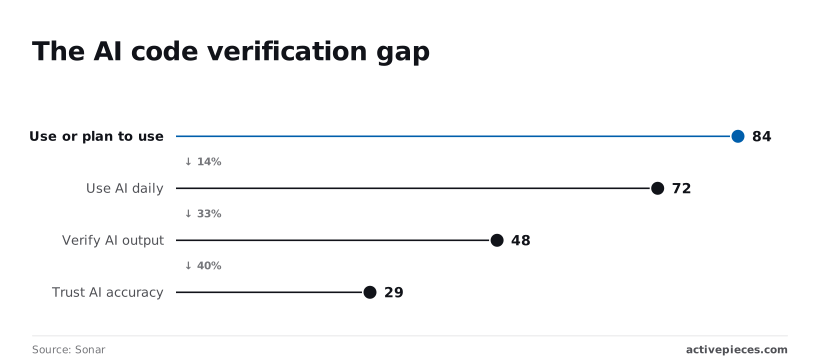 This skepticism is justified when 72% of developers use AI daily to maintain velocity, but only 48% consistently verify the output, creating a "blind spot" where half of all daily AI contributions enter production without a human sanity check, leaving organizations vulnerable to undetected bugs or security flaws, so a significant portion of the codebase is being built on unexamined foundations. | Metric | Rate | Impact on Development | | :--- | :--- | :--- | | AI Adoption | 84-91% | Near-universal integration into the modern dev stack. | | Developer Trust | 29% | High reliance on tools that users do not fully vouch for. | | Security Risk | 45% | Nearly half of AI-generated snippets require manual patching. | ### Implementing verification steps in automated pipelines Securing a ZCode workflow requires explicit checkpoints. When using a high-reasoning model like GPT-6 Astra for complex logic, the pipeline must include a "Review" status in the version control system so that no code is merged without a peer’s digital signature. ### Maintaining code quality in high-speed environments Teams should leverage Claude Sonnet 5 to perform secondary "auditor" sweeps of ZCode outputs, as using a second frontier model catches hallucinations that the primary model might repeat. ## Why watch the ZCode ecosystem next ### ZCode's upcoming Enterprise tier features The upcoming Enterprise tier focuses on granular resource governance. By introducing hard limits on execution time and memory per workspace, teams can deploy experimental agents without risking a total service outage for production workflows. ### Programming languages supported by ZCode ZCode is expanding to support a broader range of logic frameworks, allowing developers to port existing libraries without rewriting them. * Python: Enables data science teams to run complex Pandas transformations. * Rust: Provides a high-performance option for compute-intensive tasks. * TypeScript: Offers strict typing for mission-critical financial integrations. ### Community adoption and third-party benchmarks How ZCode handles demanding agentic coding tasks will be determined by independent testing against frontier models like GPT-6 Sol and Gemini 3.8 Flash. These benchmarks prove whether the specialized environment actually reduces latency overhead. ## What are common ZCode questions? ### Is there a free tier for ZCode? To ensure that a misconfigured loop in a development environment won't trigger an unexpected invoice, ZCode offers a free tier that permits developers to test integrations without incurring immediate costs. This entry-level access is restricted to non-production environments, so users must upgrade to a paid plan before deploying live customer-facing automations. ### Which programming languages does ZCode support? Native execution environments are provided for the most common scripting and systems languages used in modern backend infrastructure. * Python for data processing and AI orchestration. * JavaScript and TypeScript for web-based middle-ware and API glue code. * Go for high-concurrency microservices that require minimal memory overhead. * Rust for memory-safe, high-performance computational tasks. ### How do I get a ZCode API key? You generate an API key through the security tab of the centralized dashboard, which acts as the primary authentication method for all outbound requests. Every key is scoped to specific projects, so a compromised credential in a testing sandbox cannot be used to access production data stores or sensitive environment variables. ### What is the rate limit for ZCode? To prevent noisy-neighbor syndrome from degrading the performance of your mission-critical scripts, rate limits are enforced based on your specific subscription tier. If a burst of traffic exceeds these thresholds, the system returns a standard HTTP 429 status code, which signals your application to initiate a retry-backoff strategy rather than failing the entire workflow. ## Related reading - [What Is ZCode? A Developer Guide to Z.ai's Coding Agent](https://www.activepieces.com/blog/what-is-zcode-a-developer-guide-to-z-ais-coding-agent) - [How to Find High ROI AI Automation Use Cases](https://www.activepieces.com/blog/how-to-find-high-roi-ai-automation-use-cases) - [What is Vibe Coding?](https://www.activepieces.com/blog/what-is-vibe-coding) ## References - [Sonar](https://www.sonarsource.com/company/press-releases/sonar-data-reveals-critical-verification-gap-in-ai-coding/) - [AI API Cost](https://aiapicost.com/coding-plans) - [Miraheze](https://ai.miraheze.org/wiki/Plannable)Operational expenses drop when script generation is offloaded to specialized models rather than running heavy general-purpose models for simple syntax fixes.