GoDaddy Pricing in 2026: Plans, Domains and Costs

Nov 3, 202614 min read
GoDaddy has no single price.
The entry plan's starting price is a promotional rate for the first term, and the renewal rate, which is what lands on the client's invoice from the second term on (the same line item you'd want to check before wiring it into any Activepieces billing automation), is higher.

Budget from the renewal line, not the banner.
Read "GoDaddy pricing" as four separate price lists, each with its own intro and renewal logic:
What GoDaddy pricing covers across its product lines
- Domains, priced per name and per year, with renewals that often differ from the first-year price
- Hosting, sold in tiers that change by term length
- Websites + Marketing, the site builder bundle, priced separately from hosting
- Email and add-ons, such as mailboxes, security and backups, which cost extra on top of the plan
The reader's real cost is the sum, and nobody should assume the entry plan already includes the other three.
As of 3 November 2026, the figures come from GoDaddy's public pricing pages and from each product's checkout cart. The cart is where the renewal rate and the add-ons show up, so it's the source I trust over the headline price.
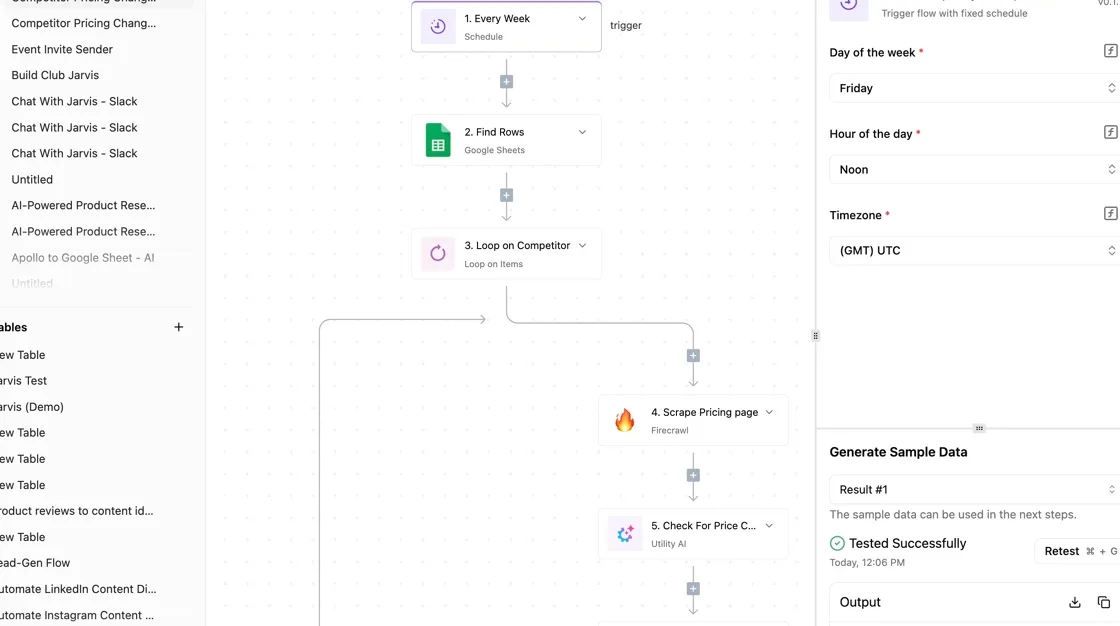
Keeping the notes consistent across all four lists takes a three-step workflow built in Activepieces, which counts a run as 1 credit however many steps it has, so splitting the job into three steps costs no more than one, and the free plan includes 1,000 credits a month.

The screenshot below shows its middle step, where free-form pricing text becomes structured fields, so each line item carries the same labels: intro price, renewal price, term and whether it's an add-on.
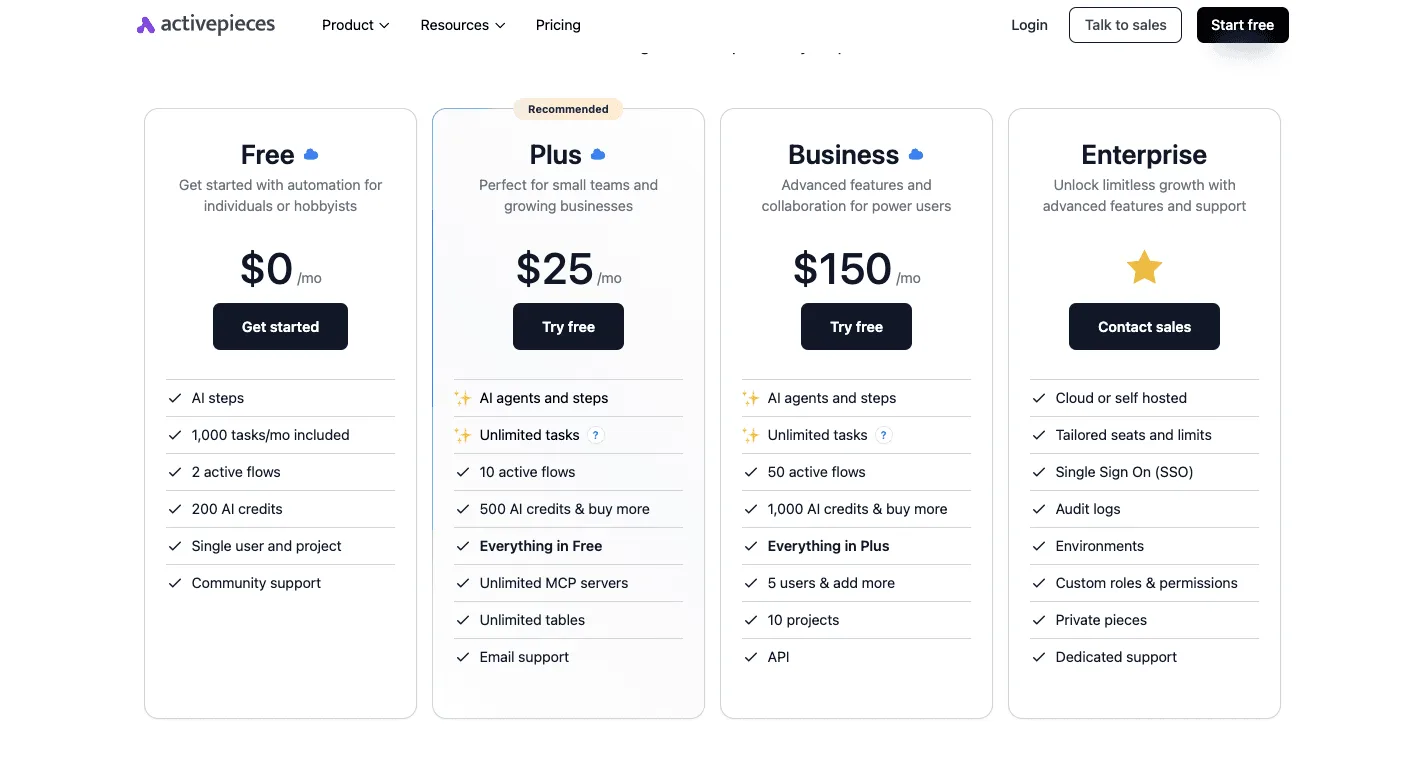
If you are running this arithmetic for your own team, see what the same workload costs on Activepieces.
Every current GoDaddy plan, price and usage limit
Each GoDaddy plan carries three prices at once: an introductory rate, a renewal rate and a billing term that gates the first.
The table lists them by product line so you can quote the one that lands on the invoice. Where I have no published figure to stand behind, the cell reads "not stated".
| Product line | Plan | Intro price/mo | Renewal | Required term | Inclusions | Limits |
|---|---|---|---|---|---|---|
| Domains | Registration | not stated | not stated | not stated | not stated | not stated |
| Hosting | Web hosting | not stated | not stated | not stated | not stated | not stated |
| Hosting | WordPress hosting | not stated | not stated | not stated | not stated | not stated |
| Websites + Marketing | Site builder | not stated | not stated | not stated | not stated | not stated |
| Websites + Marketing | Online store | not stated | not stated | not stated | not stated | not stated |
| Email plans | not stated | not stated | not stated | not stated | not stated | |
| Microsoft 365 | not stated | not stated | not stated | not stated | not stated |
Before a client sees a quote, every blank is a question to put to checkout.
Price the renewal, and price privacy protection separately, because a client who thinks it comes bundled will dispute the invoice later. A domain's first-year price is the least reliable number on the page.
Compare the term required for the advertised rate against the term you'll actually bill. A multi-year commitment prepaid on your account is cash you front for a client, so pass it through.
Also check the resource limits, since a busy client on a shared plan quietly consumes capacity the other sites on it are paying for.
Confirm which features sit behind the higher tier before promising them, because a missing feature turns into an unplanned upgrade. Builder plans bundle marketing tools, and the store tier changes what you can sell.
When headcount changes, the email total moves with it, because email costs a set amount per mailbox. Microsoft 365 through GoDaddy is a separate product from basic email, and mixing them up is how a quote ends up wrong in both directions.
What GoDaddy costs at three realistic usage levels
Over three years GoDaddy costs $50.97 for a bare domain, $551.64 for a small business site and $1,091.64 for a store.
Year one is the cheapest year of each, which means you can't use year-one pricing to forecast your total cost.
On the chart, the Websites + Marketing tiers run intro against renewal per month. Basic moves from $9.99 to $16.99, Premium from $14.99 to $29.99 and Commerce from $20.99 to $34.99, which means all customers will pay more.

From about two-thirds taller to double, the renewal bar says the client should see the higher figure on the invoice from the start. The three profiles below turn those monthly steps into annual totals, using figures from Wonderly.
Three-year GoDaddy cost for each usage profile
At $4.99 in year one, then $22.99 in each of years two and three, a domain alone loses its introductory rate upon renewal.
The three-year total is 4.99 + 22.99 + 22.99 = $50.97, which is $35.99 more than three times the first-year price, meaning renewal rates comprise the bulk of the cost.
Over three years that's $551.64, against $359.64 if year one's price held.
The $192 difference is what the retainer should absorb up front, rather than leaving the client to find it at the first renewal.
Expect a store to cost $251.88 in year one and $419.88 in each year after, which matches Commerce at $20.99 and $34.99 a month over twelve months, so renewal costs jump to a much higher level permanently.
$1,091.64 is the three-year total, and the $168 yearly jump is the largest of the three profiles, putting store customers through the biggest renewal shock.
Hidden costs and limits GoDaddy buyers hit
Quote the headline price and you've quoted only the first term: the renewal rate, the add-ons and the exit rules all land on whoever holds the account. The invoice you quote has to carry them from day one.
According to FrContext, Basic runs from $9.99 to $16.99 per month, so a retainer priced on the first number is about 70% short by year two.

Premium runs from $14.99 to $29.99, which doubles the cost. Commerce runs from $20.99 to $34.99, so a store budgeted at the low end is under-recovering by $14 every month.
The chart sits here.
Costs on top of the plan fee
Those are plan fees only, and the next costs sit on top of them.
From the second year, an SSL certificate is $119.99 a year, so a site that looked secure and free at signup carries that line on every renewal after.
Domain privacy, business email and backups are sold separately. Each one is a monthly or annual line that has to be priced into the retainer, or the agency absorbs it.
When a store outgrows its tier, it is pushed up to the next one. Storage limits and transaction fees vary by plan, and a plan with a per-sale fee takes a share of revenue on top of the subscription.
The client's volume should decide the plan, not the entry price.
Before a domain can move out, the account holder has to meet its transfer conditions. If the account is in your name, the client's exit is your admin task, so price that time in.
Check the transfer rules before you sign, not when the client asks to leave.
Worth checking against a plan that does not meter every step: one credit covers a whole run on Activepieces.
GoDaddy against Namecheap, Hostinger, Squarespace and Wix
On the one price every client eventually pays, the.com renewal, GoDaddy is the dearest of the four registrars with a published figure. You can't call it cheapest on a like-for-like basis.
NameBeta puts GoDaddy at $22.99 a year, and the table shows how far each competitor sits below that, which is the amount you'd be absorbing if you left a client on GoDaddy's rate.
| Registrar | .com renewal per year | Against GoDaddy |
|---|---|---|
| GoDaddy | $22.99 | n/a |
| Wix | $21.35 | $1.64 lower |
| Hostinger | $19.99 | $3.00 lower |
| Namecheap | $17.81 | $5.18 lower |
Wix at $21.35 saves only $1.64 a year per domain, so moving there isn't worth the transfer work on price alone.
Hostinger at $19.99 saves $3.00, which on ten client domains is $30 a year, enough to cover a small monitoring fee but not a retainer line.
Namecheap at $17.81 saves $5.18 per domain, or $51.80 across ten, and that's the only gap large enough to show up on an invoice you'd defend.
With no figure for it in that comparison, I won't rank Squarespace. Treat it as unpriced until you have its renewal quote in hand, and don't assume it lands between the others.
Check what the plans exclude as well, because the table leaves out email, SSL, storage limits and ecommerce fees.
A cheaper renewal can be cancelled out by a mailbox charge the client never saw coming, and that charge usually lands on your account because you manage it.
Price each registrar on renewal plus the add-ons the client actually uses, then decide who pays for what.
Automating GoDaddy renewal and expiry alerts with Activepieces
It does nothing to what GoDaddy charges, but Activepieces, an automation tool that chains apps into scheduled workflows, can warn your team before a domain renews or expires, and a daily check is about 30 runs a month, so 30 of the 1,000 credits on the free plan.
Nothing changes in the renewal price you budgeted; the automation only makes sure someone sees it coming before it lands on a card nobody is watching.
That matters for the same reason the pricing exercise does. When a renewal hits a shared account unannounced, the agency absorbs it, and the client who should have been billed for it is quietly cross-subsidized.
An alert sent early enough lets you invoice the client first.
Start with a calendar reminder
Start with the fallback, because it needs no tool. Put a calendar reminder on each domain's expiry date, set well ahead of renewal, and assign it to a named person.
If you only run a handful of domains, that's enough, and an automation adds upkeep without adding safety.
Once the list outgrows what one person tracks, the workflow earns its place. The sequence below reads a spreadsheet of domains and expiry dates on a daily schedule, filters for those inside your chosen warning window, and posts the matches to a team chat channel.
The spreadsheet is the real asset. The workflow is only as accurate as the dates someone keeps in it, and the calendar reminder stays underneath as the backstop if the workflow breaks.
Activepieces keeps its 746 integrations in the open-source monorepo on GitHub at packages/integrations/community, beside an MIT-licensed core, and roughly 60% of them are contributed by the community, so most of your integrations depend on volunteer maintenance.
Whether that directory holds a GoDaddy entry, next to the spreadsheet and chat apps you actually use, decides if the workflow can read expiry dates from GoDaddy directly; without one, maintain the dates by hand and let the workflow handle only the checking and the nudge.
The Monday checklist for pricing a GoDaddy plan
How to price a GoDaddy plan at renewal
Whoever holds renewal authority should price the plan on Monday by adding its renewal rate to the add-ons it leaves out, then checking that total against one alternative.
The list below shows the order that keeps the introductory price from setting the budget, and the renewal line is the one that goes on the client's invoice.
- Pick the profile: how many sites, how much email, and whether a store is involved, so every later number describes one real setup.
- Add the renewal price, not the introductory price, for the term you'd actually keep, because that's what the client pays from the second period onward.
- List the add-ons the profile needs that the plan leaves out, such as email, backups, or security certificates, and price each one.
- Check the cap that matters, meaning the limit this profile would hit first, since crossing it forces an upgrade nobody budgeted.
- Set a renewal reminder with a named owner, so the decision to renew or re-bill falls to someone with the authority to make it.
- Compare one alternative host, priced the same way, so the comparison is total against total.
Keep each step's output separate: the introductory price, the renewal price, the add-ons, and the alternative's total. That shows where a shared account quietly subsidizes a client. If one client's add-ons are buried in a pooled bill, someone else is paying for them.
No current GoDaddy figures were confirmed for this section, so it gives a method, not quoted prices. Pull each price from GoDaddy's own pricing page and cart on the day you run the checklist, and write the date beside it.
Since plans and promotions change, an undated number is how an old introductory rate ends up in a budget.
Frequently asked questions
Check the live page the day you buy and date whatever you put in the budget, since each answer below follows GoDaddy's own help pages and those change.
Does GoDaddy charge more when a plan renews?
Yes, renewal is billed at the regular rate, not the introductory one, and auto-renew is on by default for most products.
Price the second year, not the first, because the second year is what your client's invoice will carry for as long as the service runs. Turning auto-renew off in your account stops the charge, but it also means you must remember the expiry date.
Refunds
Can I get a refund if I cancel a GoDaddy plan? Sometimes, and the refund window depends on the product, so read the policy for each item before you pay.
Domains, hosting and add-ons are treated separately. A refund on the hosting doesn't necessarily return the domain or the extras bought alongside it.
Treat the whole bundle as committed money unless the help page says otherwise.
Free Domains and privacy
Is a domain included free with GoDaddy hosting? Only on certain plans, and the free domain is typically a first-term offer.
Once that term ends, the domain renews at the standard registration price, which is a cost the plan comparison page doesn't show. Add privacy protection if you want your contact details hidden, because that is billed separately and someone has to pay for it.
Transfers and SSL
Can I move my domain away from GoDaddy? Yes, but a domain is locked against transfer for a period after registration or after a previous transfer.
You also have to unlock it and request an authorization code from your account. Do this well before expiry, so the move never depends on a renewal charge you were trying to avoid.
Does GoDaddy charge extra for an SSL certificate? On many plans, yes.
A certificate is a paid add-on unless the plan you chose explicitly bundles one. A site that takes payments or logins needs one, so count it as a standing line item rather than an optional extra.
References
Running the numbers
See what the same workload costs here.
Free forever plan, and every paid plan self-hosts at no extra cost.
See pricing Talk to sales