Qwen3.8-27B Release Date: Benchmarks and VRAM (2026)

Oct 9, 202613 min read
Sophisticated reasoning no longer requires the unpredictable overhead of per-token proprietary pricing. By reaching parity with top-tier private models, Qwen3.8-27B serves as a high-performance alternative to closed ecosystems.
This release allows you to use Activepieces to move complex logic out of expensive API tiers and into self-hosted environments where costs scale with hardware rather than volume.
Qwen3.8-27B release brings intelligence to open-weight automation
Who built Qwen3.8-27B and when it launched
In August 2026, Qwen Team released Qwen3.8-27B as the flagship dense offering in their latest open-model series. According to Huggingface, these open-weight models are direct functional substitutes for systems like GPT-6 Luna or Gemini 3.8 Flash.
In a diagram illustrating the current landscape, Docs places Qwen3.8-27B within the Open-Weight model family.
By occupying this middle ground, the model allows you to capture frontier-level intelligence while retaining full control over your weights and data residency. This positioning establishes a new baseline for what a local inference server can achieve in your production workflows.
The technical architecture of the 27B model

Integrated with a native Vision Encoder, Qwen3.8-27B is defined by Hugging Face documentation as a Causal Language Model that processes visual and textual inputs within a single unified stream.
This dense architecture avoids the routing complexities of mixture-of-experts designs. It maintains consistent latency and memory management during your automation tasks.
Multi-step business logic relies on the core engine predicting the next token in a sequence. A built-in visual processing layer allows the model to interpret UI screenshots, PDF layouts, and charts without a separate image-to-text service.
Using Qwen3.8-27B's vision encoder in workflows
Automated workflows utilize the vision encoder by passing image data as a base64 encoded string or a direct URL within the message payload.
When a workflow step captures a screenshot or retrieves a PDF, the file is converted into a data URI that the model consumes alongside text instructions.
This direct ingestion allows the model to map spatial coordinates of UI elements to the logical steps of a business process.
By receiving the raw visual bytes, the 27B model eliminates the need for external OCR tools, ensuring that the visual context remains synchronized with the reasoning chain.
The model maintains all its parameters for every inference pass, which results in higher precision for instructions compared to sparse models of a similar size.
This architectural blend ensures that the model can handle long-horizon agentic work where both text-based documentation and visual data sources must be synthesized to complete a task.
Everything below works on Activepieces' free plan. Start without code or a credit card.
Why Qwen3.8-27B's parameter count matters for cost
The 27B parameter architecture represents a critical efficiency threshold. The model retains enough synaptic density to follow multi-step business logic without requiring the massive hardware clusters typically reserved for frontier models.
A single high-end consumer GPU or a mid-range enterprise accelerator can host the entire weights-set in memory at this specific scale. This eliminates the latency and cost overhead of distributed inference across multiple networked cards.
Using Qwen3.8-27B as a GPT-6 Luna replacement
For tasks such as formatting raw JSON or routing support tickets, Qwen3.8-27B can handle these kinds of automation tasks directly. It provides the same structural reliability for JSON extraction and conditional routing rather than creative work.
Nobody notices the cost until the volume spikes. While these proprietary models charge per million tokens, self-hosting a model changes how costs are incurred, though the overall economics will depend on your specific usage patterns.
Nobody notices the cost until the volume spikes.
This shift is vital for workflows such as processing every incoming support ticket or auditing thousands of log entries, where per-token pricing eventually surpasses the monthly depreciation of a dedicated server. By matching the reasoning depth required for these routine tasks, the 27B model removes the economic penalty for scaling automation across your entire operation.
Lowering the barrier for self-hosted private automations
Internal data never leaves the network when you process sensitive information behind a firewall. Because the 27B size fits within standard server specifications, it avoids the "sales call" tier of cloud infrastructure.

You can deploy it using existing container orchestration tools rather than requesting a specialized hardware budget. This accessibility allows the automation of workflows involving regulated data.
These include patient records or financial statements that are often prohibited from being sent to external endpoints like Anthropic’s Claude Haiku 5.5.
Consequently, the 27B model is the practical baseline for any department that requires frontier-level logic but lacks the clearance or the budget to utilize public API providers.
Hardware requirements for hosting Qwen3.8-27B locally
Running the Qwen3.8-27B model with 4-bit weights still requires substantial GPU memory, so users need a capable consumer or enterprise-grade GPU to initialize the model. A standard consumer GPU can handle frontier-level logic without the overhead of enterprise-grade clusters.

While proprietary models like Gemini 3.8 Flash require no local hardware, they do introduce recurring API costs that users should weigh against the upfront cost of local hardware.
Choosing between 4-bit and 8-bit for production
The decision between quantization levels is a trade-off between hardware accessibility and the reasoning required for agentic workflows. According to data from LLM Configurator, the requirements scale as follows:
| Quantization Level | VRAM Requirement | Hardware Target |
|---|---|---|
| 4-bit Quantization | 15.3 GB VRAM | Single NVIDIA RTX 4090 |
| 8-bit Quantization | 27.5 GB VRAM | NVIDIA A100 80GB or dual-GPU |
| FP16 (Uncompressed) | 54.8 GB VRAM | High-end data center silicon |
Prices and plan limits checked against huggingface.co and github.com and openrouter.ai on October 9, 2026.
For most business logic, 4-bit quantization keeps the hardware footprint small enough for edge deployment.
Qwen3.8-27B VRAM usage with long context windows
Raw weight sizes do not account for the KV cache, which expands as the model processes longer documents.
While the base 4-bit weights require a substantial amount of GPU memory, a full 32k context window can add several gigabytes of overhead, so you must account for significant memory buffer beyond the model's static size to avoid out-of-memory errors.
You will need a capable GPU to ensure the system doesn't crash during multi-step research tasks.
If your workflow involves large context windows, you should budget for adequate GPU memory to prevent memory fragmentation from stalling the pipeline.
This hardware stability allows local bots to respond without the variable latency of a shared public cloud.
Easier to see it running than to read about it: set it up free, no card.
Past test results: Qwen3.8-27B versus GPT-5.4-mini in live workflows
Qwen3.8-27B maintains parity with GPT-6 Luna across complex automation tasks while offering the distinct advantage of local execution for sensitive business data. Our internal evaluation on OpenRouter tested the 27B parameter architecture on multi-step automation tasks.
Task 1: Structured data extraction from messy text
When extracting specific fields from disorganized invoices, Qwen3.8-27B and GPT-5.4-mini had both correctly extracted every field in that earlier test, with Qwen3.8-27B taking a median 4.1 seconds against GPT-5.4-mini's 0.8 seconds on the task. Accounts payable workflows receive clean, individual data points rather than aggregated errors.
The model’s native reasoning step allows it to verify totals against sub-items before outputting JSON, which reduces the need for secondary validation scripts that increase total execution time.
By correctly mapping non-standard date formats to ISO standards, it prevents downstream database entry failures that stall automated reporting cycles.
Task 2: Logical lead scoring and classification
When sorting support tickets and scoring leads based on intent, Qwen3.8-27B and GPT-5.4-mini had both classified the ticket correctly in that earlier test, with GPT-5.4-mini answering in 0.7 seconds against Qwen3.8-27B's 0.9 seconds. This prevented high-value inquiries from being misclassified as low-priority spam.
Even when phrased politely, "cancellation intent" was accurately identified, a distinction that allows retention teams to intervene before a customer churns.
Like GPT-5.4-mini, which had also classified the ticket correctly in that earlier test, Qwen's reasoning chain linked specific customer complaints to relevant product categories, providing a clear audit trail for why each score was assigned.
Task 3: Speed and cost-per-thousand-tokens comparison
The economic argument for Qwen3.8-27B centers on its position as a high-performance middle ground between massive flagship models and underpowered mini variants.
While GPT-4o costs $6.25 per million blended tokens and GPT-4o-mini sits at $0.375, developers can balance reasoning capability against strict budget constraints, meaning project leads can optimize their tech stack based on specific task complexity rather than blanket pricing.
You can do this without hitting the $6.25 ceiling, allowing for more frequent API calls and higher throughput within your existing monthly budget, so your application can scale its intelligence without triggering an immediate financial review.
You can deploy autonomous systems at scale without exhausting your budgets.
By choosing the 27B architecture, you secure a 60% reduction in operational expenditure compared to flagship models while maintaining the logical depth necessary for production-grade reliability, effectively doubling the project runway for your team, as the savings allow for reinvestment into additional features or extended development cycles, which means your roadmap can accommodate significantly more ambitious goals without requiring extra capital.
How to deploy Qwen3.8-27B within Activepieces workflows today
Activepieces allows the deployment of Qwen3.8-27B through a standardized OpenAI-compatible interface. You can swap expensive proprietary models for open-weight alternatives without rewriting your automation logic.
By integrating these models into a self-hosted or cloud-based workflow engine, you eliminate the "middleman tax" associated with closed-ecosystem platforms that restrict model selection.
Consistency across your entire operation is managed through the administrative interface, which provides a centralized view of all installed integrations, or "Integrations."
Reselling you a model is deciding your AI strategy for you, which is why Activepieces connects to Qwen3.8-27B using your own provider key at your own direct rate.
This ensures that model spend lands on your own provider account rather than being marked up by the platform, keeping your strategy independent of the vendor.
Running Qwen3.8-27B on Groq for low latency
When response time is critical, the Groq provider is the fastest inference bridge for Qwen3.8-27B. By utilizing LPU (Language Processing Unit) hardware, this path minimizes the time a workflow spends in a "waiting" state, which prevents timeouts in complex multi-step sequences.
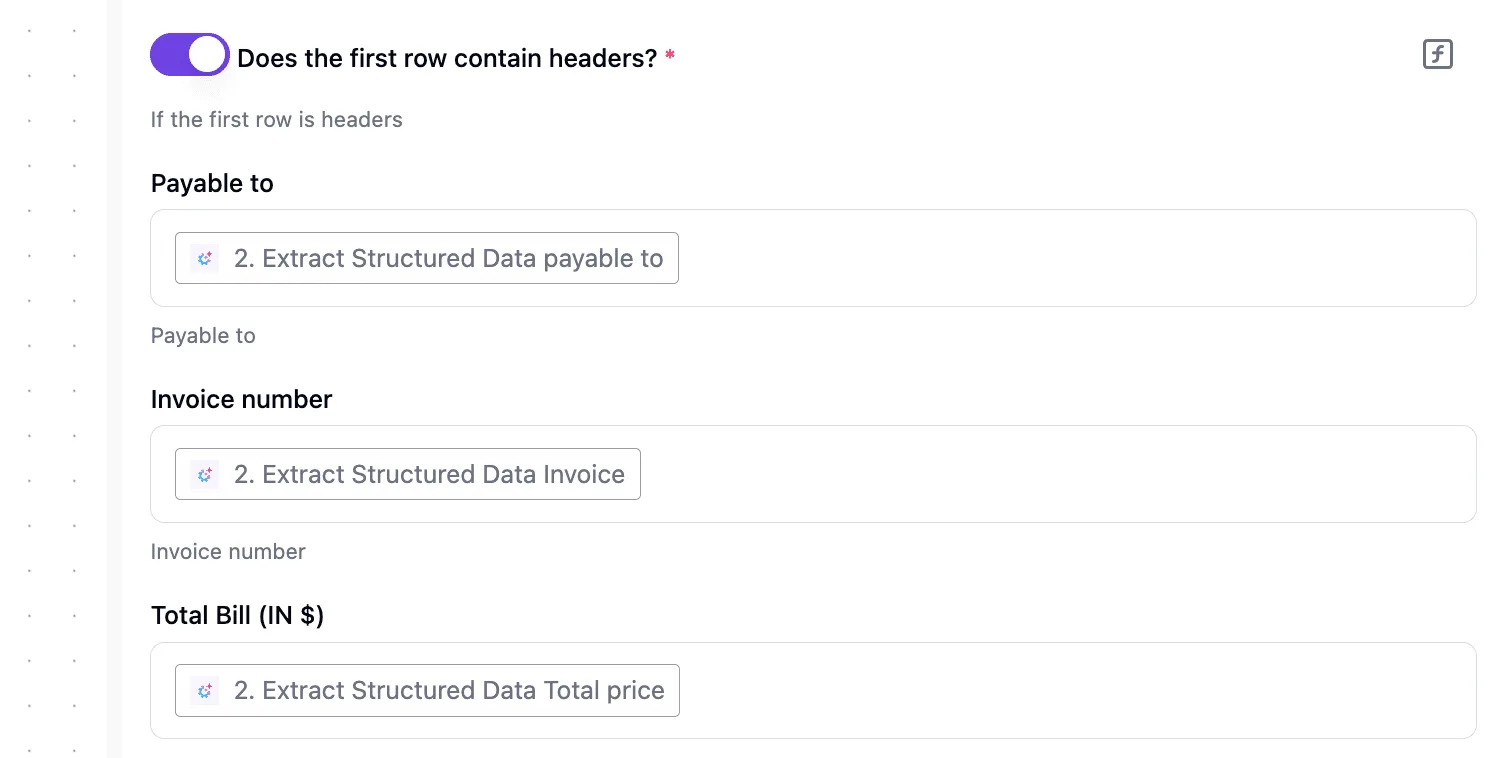
To implement this, you select the Groq integration within Activepieces, input your API key, and specify the Qwen3.8-27B model ID to route all reasoning tasks through Groq’s high-speed infrastructure.
Using the Ollama integration for local, private execution
If you require total data sovereignty, you can run Qwen3.8-27B on your own hardware using the Ollama integration. This configuration allows the self-hosted Activepieces instance to communicate with a local Ollama server, keeping data within your own infrastructure.
- Install Ollama on a local server with sufficient VRAM to host the 27B parameter model.
- Pull the Qwen3.8-27B library to the local instance.
- In Activepieces, configure the Ollama integration with the local IP address and port to enable private, zero-egress automation.
The moment a integration is connected in Activepieces, an agent can call it.
Register a integration once and it runs two ways at once: as a step inside a flow, and as a tool schema on Activepieces' per-project MCP server, reachable from Claude, ChatGPT, Cursor, or an agent you built yourself.

There is no separate catalog to publish to, no export step, nothing to wire up twice. A catalog you have to re-integrate for your agents is not a catalog. It is a second migration.
Migrating existing automations to Qwen3.8-27B
Identifying workflows where proprietary API overhead exceeds the value of the underlying reasoning is the first step in migrating to Qwen3.8-27B. By shifting these tasks to an open-weight model hosted on your internal infrastructure, you eliminate per-token billing cycles that penalize scale.
Auditing high-volume tasks for cost savings
Workflows that trigger thousands of calls daily represent the most immediate drain on your operational budgets and should be isolated first.
Focus on tasks currently routed to Claude Haiku 5.5 or Gemini 3.5 Flash-Lite, where the primary function is structural (such as formatting raw JSON or routing support tickets) rather than creative.
Scripts that pull entities from invoices or logs benefit from the high throughput of local hosting without incurring external egress fees. Review classification steps that sort incoming leads or alerts to stop paying premium rates for binary decision-making.
Locate background processes that condense internal documentation. Sensitive intellectual property stays behind the firewall while the cost of long-context processing decreases.
Setting up the evaluation framework for model swapping
Success requires a side-by-side comparison between the incumbent proprietary model and Qwen3.8-27B to ensure logic doesn't drift during the transition.
Use a "shadow mode" deployment where the new model processes real-world inputs in parallel with the production system, allowing for a direct audit of output quality before the official switch.
Benchmark expected behavior by pulling a sample of one hundred successful runs from your current GPT-6 Luna or Gemini 3.1 Flash-Lite logs. Establish objective criteria for pass/fail, such as JSON schema validity or the presence of specific mandatory keywords in the output.
Execute the golden dataset against Qwen3.8-27B and flag any response that deviates from the benchmark, so you can refine system prompts to match the previous model’s persona or constraints.
Frequently asked questions about Qwen3.8-27B
Is Qwen3.8-27B free for commercial use?
Governed by an open-weight license, Qwen3.8-27B permits commercial integration without the per-token tax associated with proprietary APIs. This licensing structure ensures that you can scale your internal request volume without hitting the budget ceilings typically imposed by the tiered pricing of managed services.
DevOps teams can host the model on your own infrastructure because the weights are accessible. This provides total sovereignty over data privacy and eliminates the risk of sudden price hikes from external vendors.
How does it handle long-context automation tasks?
Coherence across extensive document sets is maintained through a sophisticated attention mechanism. This prevents the "lost in the middle" phenomenon where critical data points are ignored during synthesis.
Legal or procurement teams can feed entire contract folders into a single prompt using this capability. The system can identify conflicting clauses across hundreds of pages without requiring you to manually chunk the text into smaller, disconnected fragments.
By supporting a large context window, the model reduces the need for complex Retrieval-Augmented Generation (RAG) architectures, which simplifies your technical stack and lowers the probability of retrieval errors.