Data flow
Any Activepieces flow can either have a vertical or horizontal layout that starts with a trigger step followed by any number of action steps. Data flows from parent steps to the children (Children steps have access to the output data of the parent steps)Example Steps
This flow has 3 steps, they can access data as follows:- Step 1 is the main data producer to be used in the next steps. Data produced by Step 1 will be accessible in Steps 2 and 3. Some triggers don’t produce data though, like Schedules.
- Step 2 can access data produced by Step 1. After execution, this step will also produce data to be used in the next step(s).
- Step 3 can access data produced by Steps 1 and 2 as they’re its parent steps. This step can produce data but since it’s the last step in the flow, it can’t be used by other ones.
Data to Insert Panel
In order to use data from a previous step in your current step, place your cursor in any input, the Data selector panel will pop up. This panel shows the accessible steps and their data. You can expand the data items to view their content, and you can click the items to insert them in your current settings input. If an item in this panel has a caret (›) to the right, it means you can click on the item to expand its child properties. You can select the parent item or its properties as you need. When you insert data from this panel, it gets inserted at the cursor’s position in the input. This means you can combine static text and dynamic data in any field. We generally recommend that you expand the items before inserting them to understand the type of data they contain and whether they’re the right fit to the input you’re filling.Testing Steps
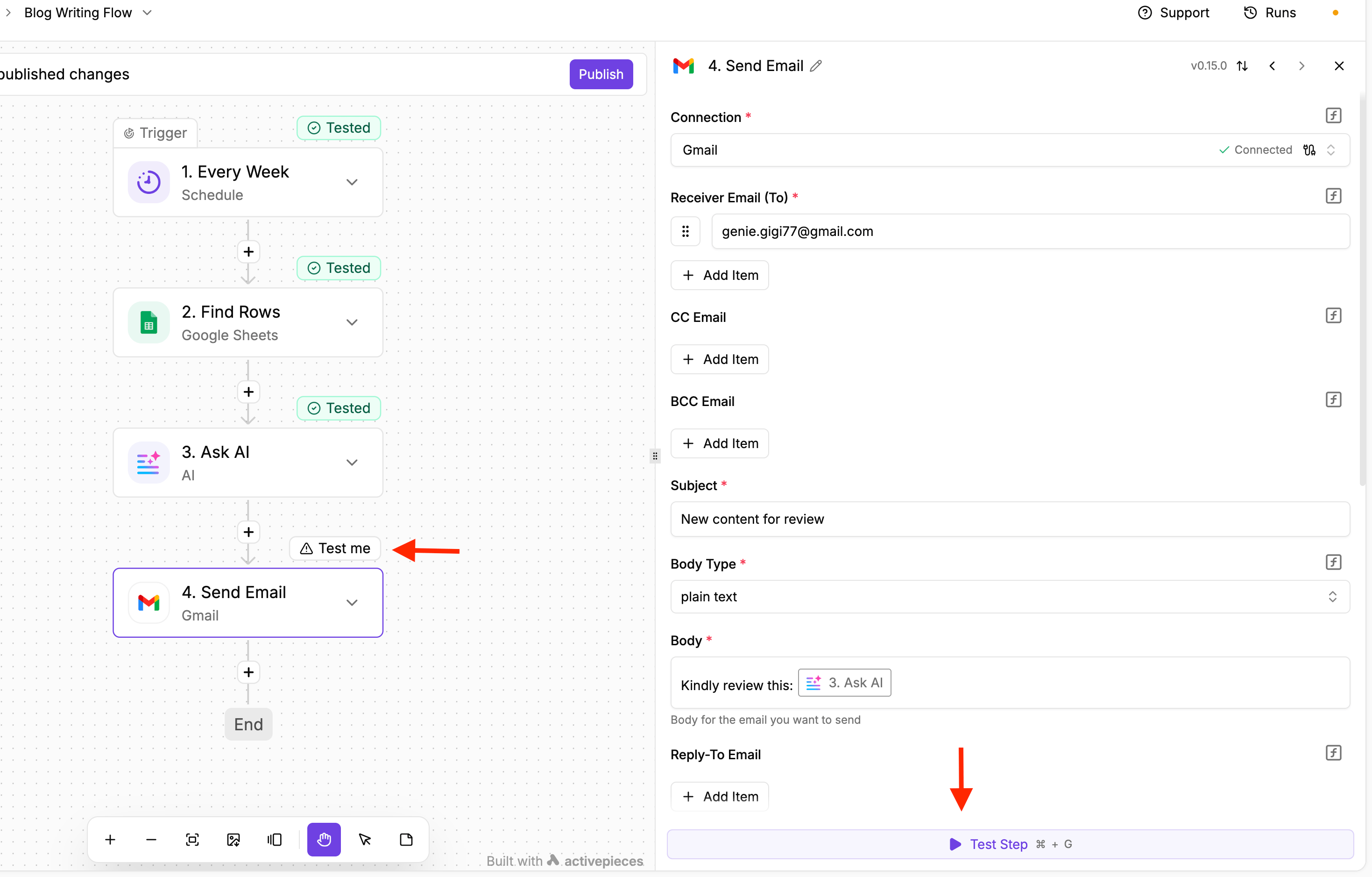
While building flows, we require you to test each step you add before moving to the next step. This enables you to access the data in the previous step and use it in the next step This approach protects you from selecting the wrong data and breaking your flows after publishing them. If a tigger or a step is not tested , you will see a Test me on top of it. Click that step to open the side bar and test the step. For triggers here is what it looks like: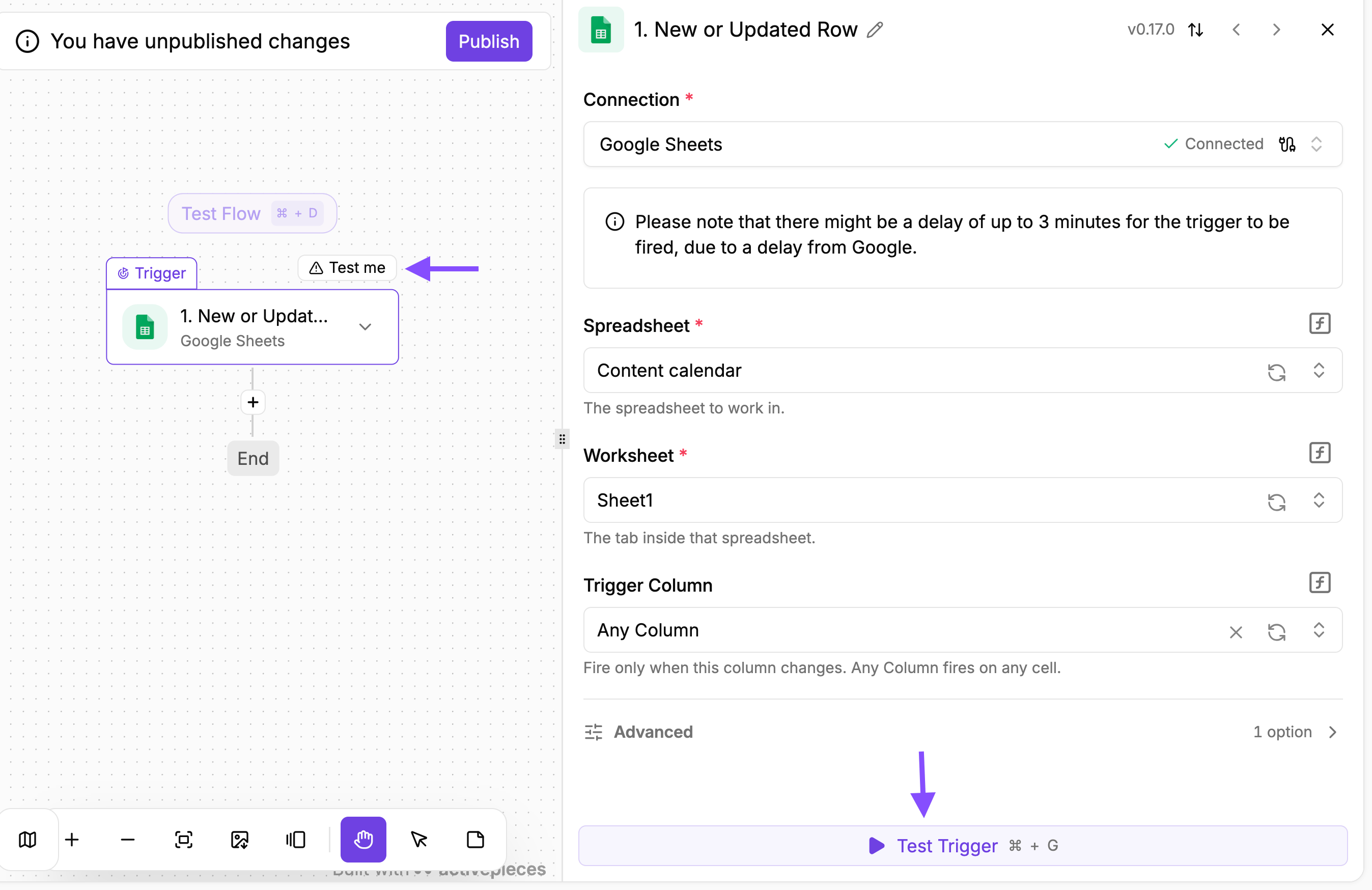
Advanced Tips
Switching to Dynamic Values
Dropdowns and some other input types don’t let you select data from previous steps. If you’d like to bypass this and use data from previous steps instead, switch the input into a dynamic one using this button:Working with large files
When a step produces a file, the file isn’t copied into every step below it — the step passes a reference, and later steps read the file when they need it. For large files (big exports, media, storage-to-storage transfers), some actions stream the file instead of loading it fully into memory, so your flow can move files larger than the worker’s memory budget. This happens automatically — there’s nothing to configure; just pick an action that supports it. On self-hosted installs this requires S3 file storage. See Large File Streaming for the list of supported actions, storage requirements, and size limits.Accessing data by path
If you can’t find the data you’re looking for in the Data to Insert panel but you’d like to use it, you can write a JSON path instead. Use the following syntax to write JSON paths:{{step_name['output']['path']['to']['property']}}
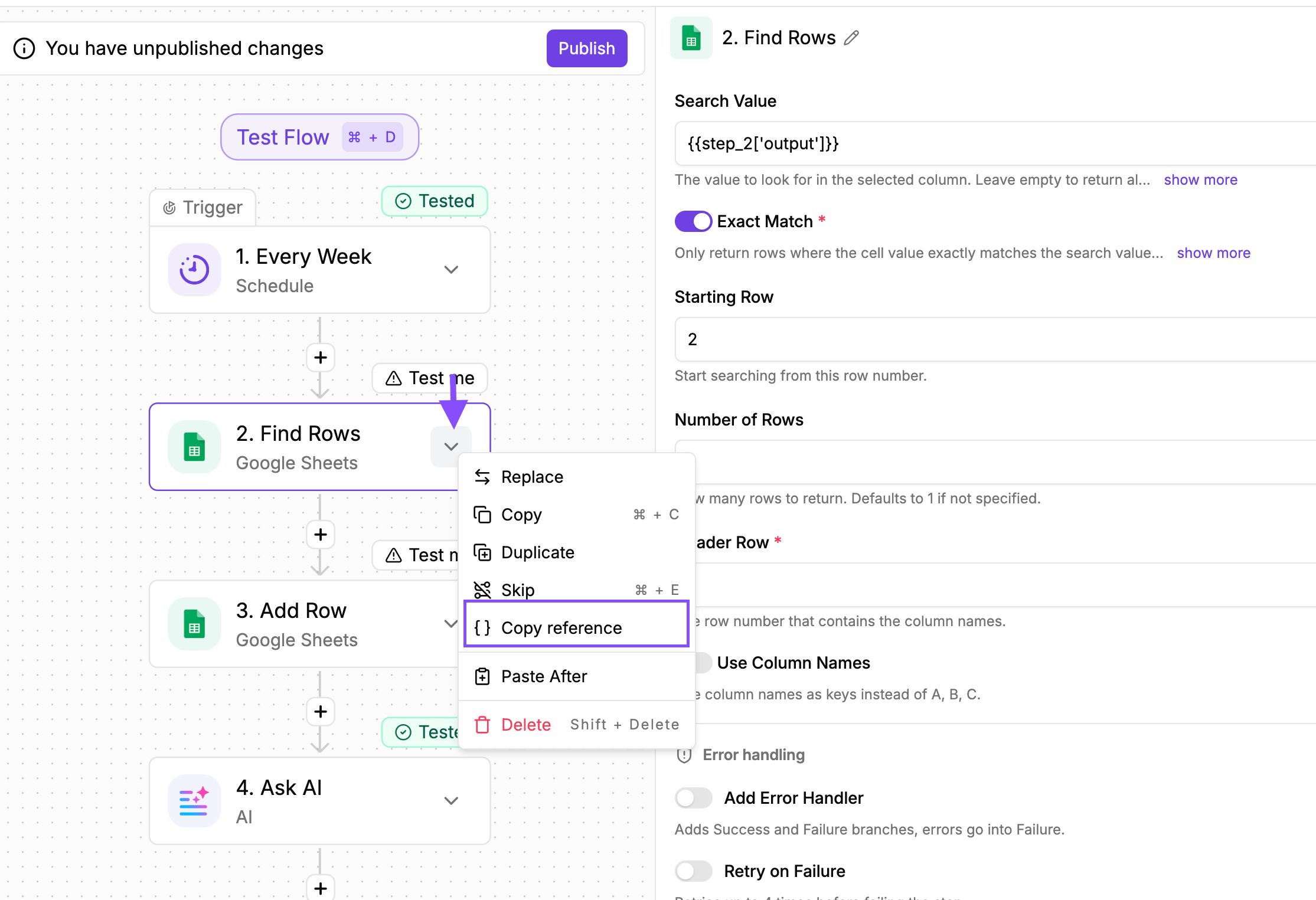
The easiest way to get the step_name['output'] part right is to right-click the step on the canvas and select Copy reference. This copies {{step_name['output']}}to your clipboard, ready to extend with the rest of the path.