
Marketing Automation Benefits: How Workflows Change
Explore marketing automation benefits and learn why you should use it. Discover how Activepieces can help you automate your marketing processes.

Dec 10, 202512 min read
Maybe you like the idea of automation, but you’re unsure if it will help your day-to-day work. You already send emails, track leads, and do social media posting, so you might think, “Why change what sort of works?”
The catch is that your marketing efforts depend on you being there for every step. When you get busy, gaps show up.
Marketing automation works by running those steps for you, in the right order, every time a lead acts. It also supports work from chatbots to social media management to marketing campaigns and automation.
In this article, you’ll learn how these workflows change and what you gain.
TL;DR
- Marketing automation benefits center on saving time, reducing errors, and creating consistent, scalable workflows that move leads forward without manual effort.
- It captures, scores, segments, and nurtures leads automatically across all channels, improving lead quality and accelerating sales-ready handoffs.
- Personalization becomes easier with behavior-based triggers, dynamic segmentation, and unified cross-channel journeys that boost customer experience.
- Teams launch campaigns faster with reusable templates, integrated data, and automated execution that maintains accuracy even during busy periods.
- Activepieces enhances these gains with AI agents, deep integrations, and open-source flexibility so workflows run reliably across your entire stack.
Everything below works on Activepieces' free plan. Start without code or a credit card.
What Marketing Automation Includes Today
You might see marketing automation as a simple “set and run” system, but there’s more under the surface. Below, you’ll see how each piece functions and how it supports the changes you want in your day-to-day work.
Email Marketing Automation
Email automation covers the flows behind your email marketing, from first touch to long-term follow-up.
You build email campaigns with triggers, such as a new signup or a visit to your pricing page. Once you set the rules, the automation platform sends the right message without you doing manual tasks each time.
Lead Nurturing
Lead nurturing keeps leads warm. You map a set of steps that guide people through the various stages of the sales funnel, based on what they do next.
A person downloads a guide, so they get a short set of emails, then a case study, then an invite to a demo if they click again. The system runs this flow all day, even when your marketing teams are busy with other tasks.
You keep contact steady, and you move more qualified leads toward a real buying talk.
Lead Scoring and Routing
Lead scoring gives points for actions that show intent, including repeat site visits, email clicks, or demo views. Routing, on the other hand, takes the best leads and sends them to the sales team or a rep that fits the account.
You pick the rules. The system then tracks behavior and updates the score in real time.
When someone hits your “ready” level, the automation software flags them and passes them over with the full history.
Customer Segmentation
Segmentation lets you group people based on who they are and what they do. For instance, you can group users by “trial users who opened three emails,” or “buyers who used Feature A but not Feature B.”
The automation platform updates these groups on its own as people change behavior. That way, you send more relevant content to each group without sorting lists every week.
Ad Campaigns and Retargeting Triggers
Ad campaigns and retargeting triggers run ads based on real actions. These triggers are rules that use customer data to display targeted advertisements after someone visits a key page or takes a step you care about.
As a visitor reads your pricing page, the system adds them to an audience and shows targeted ads later. For past buyers who go quiet, the flow starts re-engagement campaigns with a new offer.
It only works, though, when you have strong data quality, since bad data creates bad targeting. When the data stays clean, you can serve personalized content that fits what people have already shown interest in.
Reporting and Attribution
Reporting and attribution show what works and what needs a fix.
Many tools now add predictive analytics, which help you spot patterns and predict likely next actions. With that view, you shift from gut calls to data-driven decision-making, based on key insights like which channel brings the qualified leads.
Marketing Automation Benefits for Sales Productivity and Speed
You gain more time and better output when a system runs the steps that once slowed you down and improves operational efficiency by streamlining processes you used to handle alone.
Benefit #1: Saves Time on Repetitive Marketing Tasks
First up, time. Marketing automation takes over repetitive tasks, such as capturing new leads. You build that flow once, then the platform runs it for every contact without you checking lists all day.
Lead scores update on their own, and segments refresh automatically, so you stop sorting spreadsheets and start acting sooner.
In plain terms, the system executes the logistics and timing of your marketing strategy, which leads to increased efficiency across the week.
Benefit #2: Faster Marketing Campaign Launches
Launches get quicker because you’re not rebuilding from zero every time. With templates, lists, and triggers in one place, you can clone a past flow, swap the offer, and go live the same day.
Built-in tests also help you tune subject lines or landing pages as the campaign runs, so you end up with optimized campaigns.
Once you hit publish, automated campaigns push lead data straight to your CRM, and they can fire social media campaigns in the right order too.
Benefit #3: Fewer Human Errors in Execution
Errors drop when you take manual tasks out of the flow.
Forms feed data straight into your system, so no one retypes emails or mislabels a lead. Rules stay steady, which means timing, routing, and list updates happen the same way every time, even on busy days.
That consistency keeps marketing activities clean and helps sales and marketing teams trust what they see in the pipeline.
Marketing Automation Benefits for Lead Generation and Nurturing
Once you set up marketing flows, lead generation stops feeling like a daily scramble and turns into steady lead management that runs in the background.
Benefit #4: Captures Leads Automatically Across Channels
Leads can come from everywhere, and you don’t want to miss any of them.
With marketing automation, every entry point feeds into one system the moment it happens. Someone signs up through a webinar tool, and they enter your workflow without you exporting anything.
Even social lead ads can push new contacts into your database the second they click. You can also link social media automation to those same flows, so a lead who engages with a post can get routed into the right track.
Benefit #5: Builds Always on Lead Nurturing
Marketing automation nurtures a path the moment someone joins your list, be it a Tuesday morning or a Saturday night. From there, it follows the steps you planned. Let’s say someone opens an email. The next message can go deeper.
Over time, people move forward based on what they do. You end up with a funnel that keeps running even when you step away, and your leads stay warm.
Benefit #6: Improves Lead Quality
More leads don’t help if the wrong people hit sales. Automation fixes that by sorting fit and intent before anyone gets a call. You score actions like pricing page visits, demo clicks, or repeat opens, then let the system total those points in real time.
Low-intent contacts remain in nurture until they show real interest. High-intent contacts move out quickly with full context attached.
Easier to see it running than to read about it: set it up free, no card.
Marketing Automation Benefits for Personalization and Customer Experience
Personalization gets easier when your system learns from real actions and uses that info to shape what each person sees next.
Benefit #7: Better Segmentation and Targeting

Better targeting starts with knowing who you’re talking to and what they care about. Marketing automation collects signals from clicks, page visits, email replies, and form fills, then groups people by patterns you choose.
You can segment audiences based on behavior and demographics, like “first-time visitors who viewed pricing” or “trial users in SaaS who opened two emails.”
Over time, those patterns help with predicting consumer behavior, so you don’t have to guess what people want next. That’s where data-driven insights come in. You can use them to shape your content strategy, send more relevant content, and avoid blasting the same message to everyone.
Benefit #8: Consistent Cross-Channel Journeys
People read an email, click an ad, and then check your site on their phone later. Marketing automation keeps that path steady by tracking each action in one place and triggering the next step across every digital channel you use.
If someone clicks a product link in an email, the system can follow with a matching retargeting ad, then pause sales outreach until they show more intent. The message feels connected, and your customer experience stays smooth no matter where they engage.
Marketing Automation Benefits for Revenue and ROI
When your workflows run on time and stay personal, you see better results that support business growth.
Benefit #9: Higher Conversion Rates
Conversion lifts happen when people get the right message at the right moment. Through automation, you can react to real behavior.
A lead, for instance, clicks a pricing page, they’ll get a follow-up the same day. Then, past buyers who go quiet can enter a win-back path with a fresh offer.
Overall, you spend less on wasted touches and get a higher return on marketing investments, which ultimately boosts revenue over time. The marketing analytics you get further impacts return on investment by giving you detailed analytics on what drives replies, signups, and revenue growth.
How Activepieces Makes Marketing Automation Benefits Real
A lot of marketing automation tools promise big wins, but the benefits only show up when your workflows can actually run across your whole stack without breaking.
Activepieces is an open-source automation platform that allows small businesses and enterprises alike to gain all the benefits of marketing automation.
You build your automation strategy once, then run everything from the same platform, with full control over how each step works. Below are some of the advanced features it offers.
AI Agents That Execute Workflows End to End
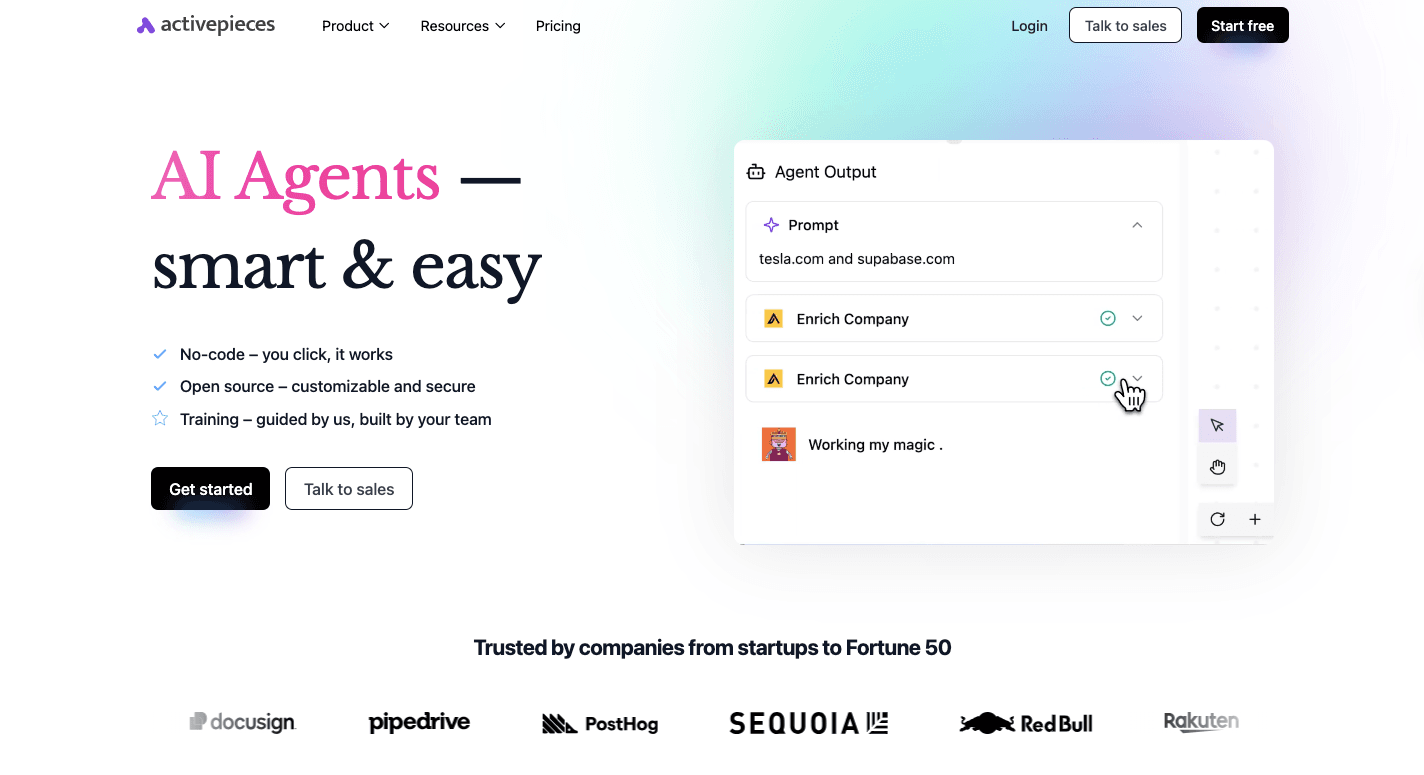
Many platforms stop at “if this, then that.” Activepieces goes further by letting AI agents handle full automated workflows.
Let’s say a lead signs up through your site. The agent pulls their details, checks the company size, reads what they downloaded, and decides what comes next.
When the lead fits your best customer type, the agent raises their score, drafts a personal email, and alerts your rep. Otherwise, the agent places them in a softer nurture flow instead.
Deep Integrations Across Your Entire Stack
Your stack is every tool your marketing runs on, like your email system, ads platform, forms, analytics, and customer relationship management (CRM). When those tools don’t share data well, you get gaps.
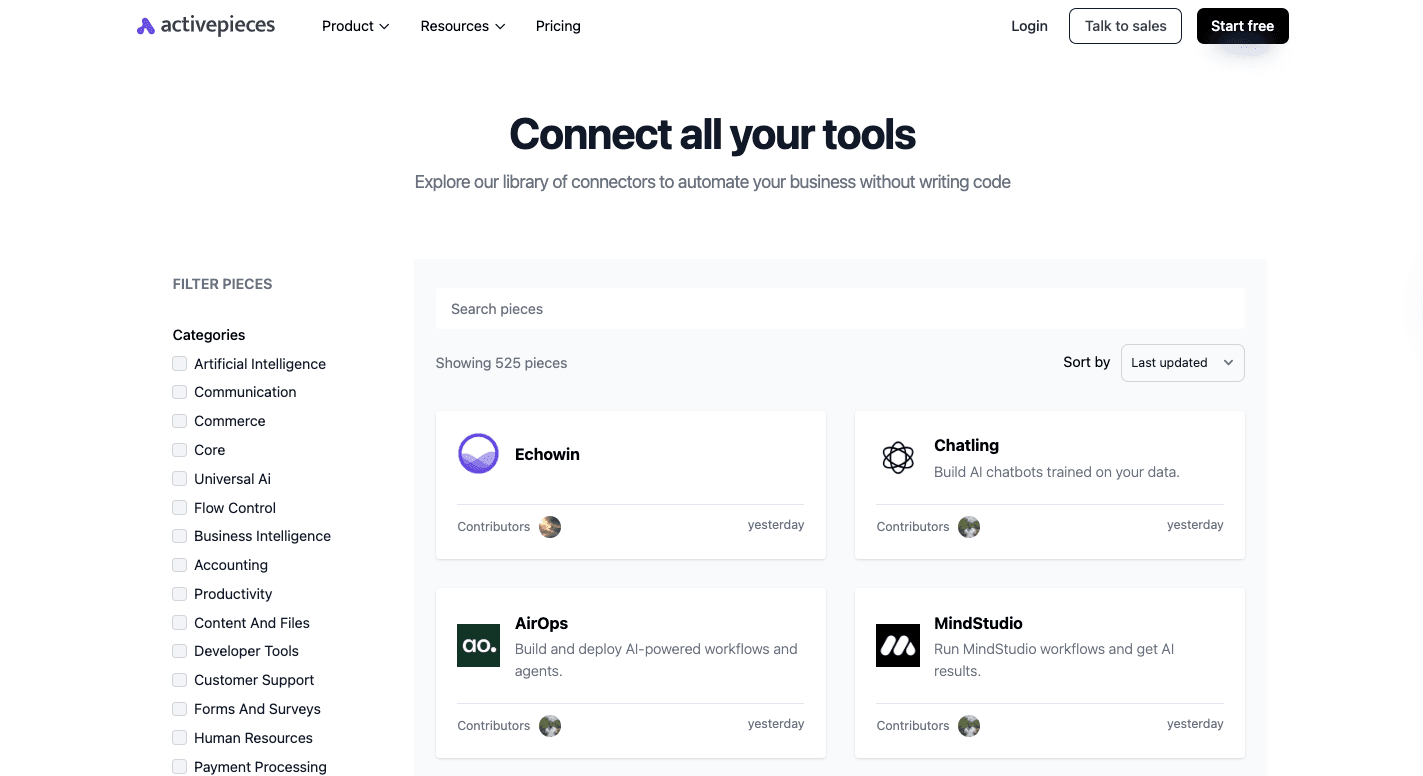
Activepieces connects to all of them through its pieces, so data can move both ways. Currently, there are 525 pre-built integrations, and that number keeps on increasing every week through community contributions.
Build Workflows Quickly Without the Usual Marketing Automation Platform Limits
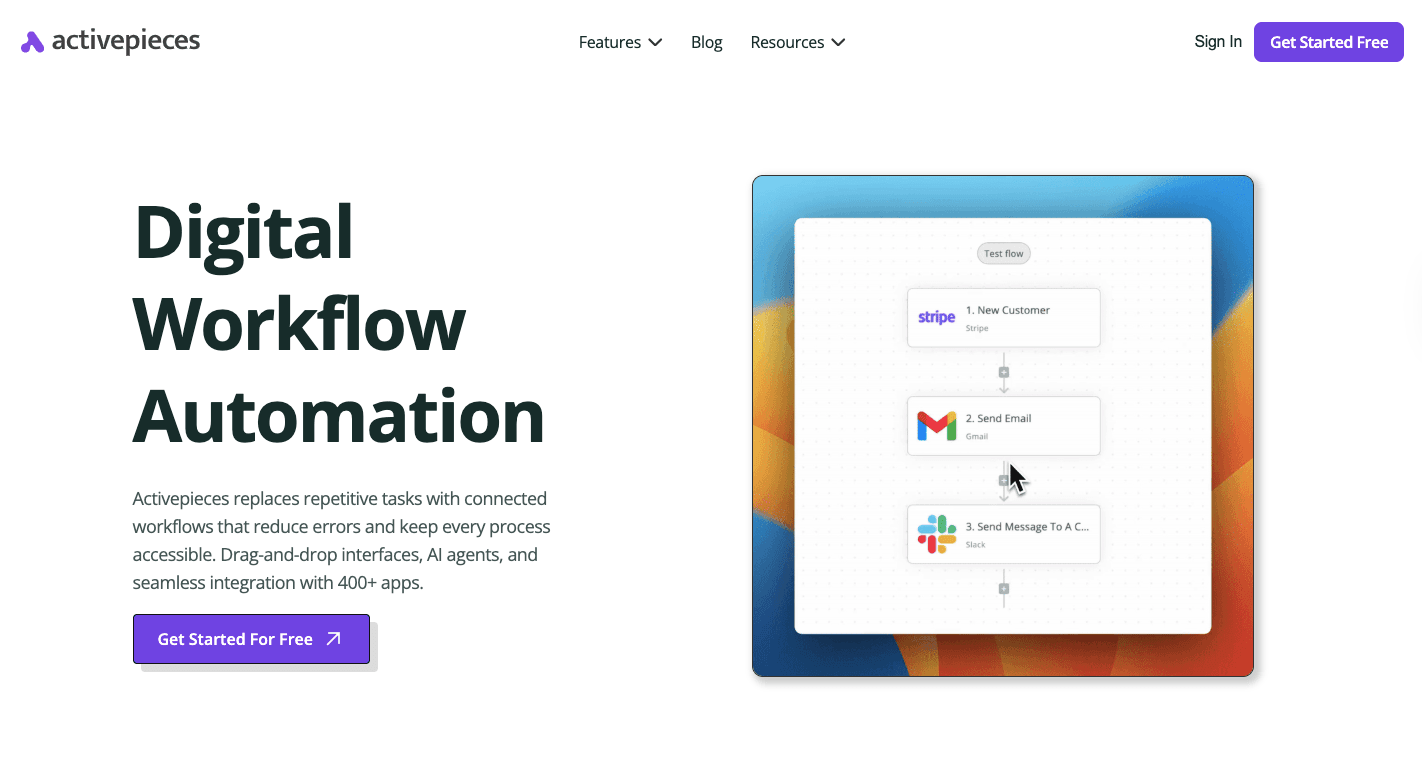
Activepieces lets you build flows fast with a visual builder, ready templates, and a way to connect any app with an API. You’re not stuck waiting for a vendor to add a connector or paying extra just to scale runs.
When you want full control, you can self-host the open-source version and grow without task caps. If you want a quick start, you can use the cloud plan and go live in minutes.
Either way, you get the freedom to build what your team needs.
Do not wait months to feel the impact. Contact sales and launch a high-impact workflow this week!
Get the Full Value of Effective Marketing Automation With Activepieces
You’ve seen the benefits. The next step is making sure you actually get them in real workflows. Activepieces helps you do that.
You can start with the pre-built data integrations for the apps you already use, then add custom ones if your stack needs it. Everything stays open, so you don’t hit a wall when your team grows or your needs change.
Other than that, all your marketing data, such as leads, events, scores, lists, and campaign results, live in one place, and then move across tools without breakage. You can also plug in AI tools for tasks like drafting follow-ups or choosing next steps based on behavior.
The result is simple: You spend less time on setup, get more control over what runs, and keep your automation strong as volume climbs.
FAQs About Marketing Automation Benefits
What are the benefits of marketing automation?
You get faster follow-ups and steadier campaigns. Besides that, you can see a boost in sales productivity, improved customer retention, and a decrease in marketing overhead because the system takes repetitive work off your plate.
What is the main goal of marketing automation?
The main goal is to run your workflows on time and at scale, so every lead and customer gets the right next step.
What are the pros and cons of marketing automation?
Pros: Marketing automation helps you stay consistent, personalize at scale, and track results end to end.
Cons: If your data is messy or your rules are weak, you can send the wrong message or over-automate and lose the human touch.
What is the biggest benefit of automation?
The biggest benefit is that marketing automation can give you a detailed picture of potential customer behavior, so you can act based on signals.
How to know if marketing automation is working?
You’ll know it’s working when your comprehensive analytics show better key metrics like conversion rate, lead quality, and time-to-follow-up, since the system can collect vast amounts of data regarding customer interactions and behaviors and turn that into clear industry insights.