Migrating Your Prompt Library Out of Vellum With Automation

Oct 1, 202613 min read
Strategic bottlenecks are created by managed prompt platforms when they wrap your logic in proprietary formats that prevent seamless migration between infrastructure providers, whereas open-source alternatives like Activepieces allow for greater flexibility in how these workflows are structured.
While these tools promise a low-code shortcut to production, they often store the instructions that drive your business logic in black-box databases rather than your own version control system.
Avoid hidden costs of prompt platforms
The trap of proprietary metadata
Prompt management platforms function as a middleman. They separate the raw text of a prompt from the execution parameters required to make it work.
When you define a task for Claude Sonnet 5.5, the specific temperature and stop sequences are often stored in a vendor’s internal schema rather than alongside your code.
Moving to a different provider requires a manual reconstruction of every experiment you have ever run. The following diagram illustrates a Portable Prompt Object, which decouples these elements into a standardized format so that logic remains independent of the delivery platform.
By adopting this three-layer structure, teams ensure that the intent of the prompt isn't obscured by the specific tooling used to trigger it.
Why prompt engineering is your new intellectual property
The core value of an AI application is the specific sequence of instructions that steers a model like GPT-6 Astra.
If your prompts live exclusively inside a third-party dashboard, you're renting your intellectual property rather than owning it. Using Activepieces to automate the flow of data is a tactical choice, but the prompt itself must remain a first-class citizen in your repository.
If your prompts live exclusively inside a third-party dashboard, you're renting your intellectual property rather than owning it.
Auditing changes, rolling back failures, and maintaining a clear history of how their AI's personality and accuracy have evolved over time is only possible for teams that treat prompts as code.
Why manual prompt extraction is so hard
Attempting to leave a managed platform often reveals a lack of bulk export tools, forcing engineers to copy and paste individual templates into a new system. This friction is a deliberate design choice. It turns a simple architectural shift into a weeks-long migration project.
Non-standard variable syntax requires regex rewrites across the entire prompt library. Hidden logs of previous model performance stay behind, stripping the team of the historical data needed to benchmark Gemini 3.8 Flash against earlier iterations.
Everything below works on Activepieces' free plan. Start without code or a credit card.
What a prompt library represents business-wise
A prompt library is a centralized repository of structured natural language instructions, versioned and optimized for specific LLM tasks, that exists independently of the application code.
This separation ensures that non-technical domain experts can refine the core business logic without waiting for a full deployment cycle from the engineering team.
Separating logic from orchestration
Treating prompts as external assets prevents the "hardcoded string" anti-pattern. When a Python function buries instructions for a model like Claude Sonnet 5.5, changing a single word requires a pull request and a full deployment.

Decoupling the specific reasoning instructions from the API calls and error handling code allows the team to manage them separately.
The anatomy of a portable prompt template
A portable prompt template consists of the raw instruction text, a schema for dynamic variables, and the specific model parameters required for execution. Rather than a flat text file, this structure includes:
| Component | Description |
|---|---|
| The system message | defines the persona and constraints. |
| Placeholder tags | the application populates with runtime data. |
| Configuration metadata | such as temperature and top-p settings. |
A standard portable prompt object follows a strict three-layer schema to ensure interoperability. The System layer provides the foundational context and behavioral rules. The User layer contains the dynamic template text with placeholders.
Finally, the Metadata layer stores execution parameters like model version and temperature, ensuring the prompt behaves identically regardless of the orchestration tool.
{
 "system": "You are a senior financial analyst. Use professional tone.",
 "user": "Analyze the following quarterly report: `{{report_text}}`",
 "metadata": {
 "model": "claude-3-5-sonnet",
 "temperature": 0.2,
 "max_tokens": 1000
 }
}
Version control vs. platform history
True version control provides a traceable lineage of changes tied to specific business outcomes, whereas platform history is often just a chronological log of edits.
Implementing a library within a Git-based workflow allows teams to tag a specific version of a prompt to a specific release of the application.
A clear audit trail is created where a regression in a model like GPT-6 Astra can be traced back to a specific commit. The commit provides more context than a timestamp in a proprietary dashboard.
**A clear audit trail is created where a regression in a model like GPT-6 Astra can be traced back to a specific commit.
Benefits of managed prompt environments
Managed prompt platforms trade long-term architectural control for the immediate ability to ship AI features without building a custom deployment pipeline. Proponents argue that the reduction in initial engineering overhead allows teams to validate product ideas before worrying about the complexities of portable code.
Faster launches for non-technical product teams
Product managers can move from a rough idea to a live production endpoint without waiting for a developer to merge code into the main repository.
Companies reduce the time spent in internal feedback loops by removing the technical gatekeeper from the prompt engineering cycle.
Built-in prompt testing and playground tools
Built-in testing suites allow teams to run side-by-side comparisons between models like Claude Fable 5.1 and GPT-6 Astra without writing custom benchmarking scripts. These environments provide a visual interface to catch regressions in model behavior before they reach the end user.
The convenience of managed API wrappers
A single standardized interface abstracts away the different authentication methods and payload structures required by various AI providers. Instead of maintaining separate integrations for the Gemini 3.8 Flash API and the Grok 4.7 endpoint, developers call a one-size-fits-all function provided by the platform.
Why managed platform trade-offs fail
The convenience of a single interface fails when pricing models change, platform latency spikes, or your team needs to move prompts into a more secure, self-hosted environment.
How middleware adds latency to prompts
Managed platforms add an unavoidable network hop for every request. When you route a prompt through a third-party dashboard to reach GPT-6 Astra, you're adding the platform’s internal processing time to the model’s native inference time.
There are four primary signals that this middleware is failing your scale:
- API rate limits that cap throughput on entry-level tiers.
- Latency spikes caused by the platform’s internal logging and transformation logic.
- Lack of EU data residency options for enterprise contracts.
- Vendor-specific downtime that disconnects you from the underlying models.
Why pricing punishes high-volume prompt users
Managed platforms typically charge a premium on top of the raw token costs from providers like Google or Anthropic. This markup means that as your application successfully scales, your margins shrink faster than if you were hitting the Gemini 3.8 Flash API directly.
Security needs for self-hosted language models
Enterprise security teams often require that sensitive data never leaves a controlled perimeter. Managed SaaS platforms can't satisfy this demand.
If you need to transition from a public model to a self-hosted instance of Mistral Large 3 for privacy reasons, a managed platform acts as a cage.
Easier to see it running than to read about it: set it up free, no card.
The technical steps for extracting prompts from Vellum
Migrating prompts from a managed platform like Vellum into a local codebase involves exporting raw templates, normalizing variable interpolation, and establishing a version-controlled evaluation pipeline.
Significant architectural drag results from a failure to decouple these assets. Research on arXiv shows that OpenAI-specific integrations account for 54.49% of self-admitted technical debt instances, which means the majority of maintenance burdens are tied to a single vendor's ecosystem.

Navigating the Vellum interface for export
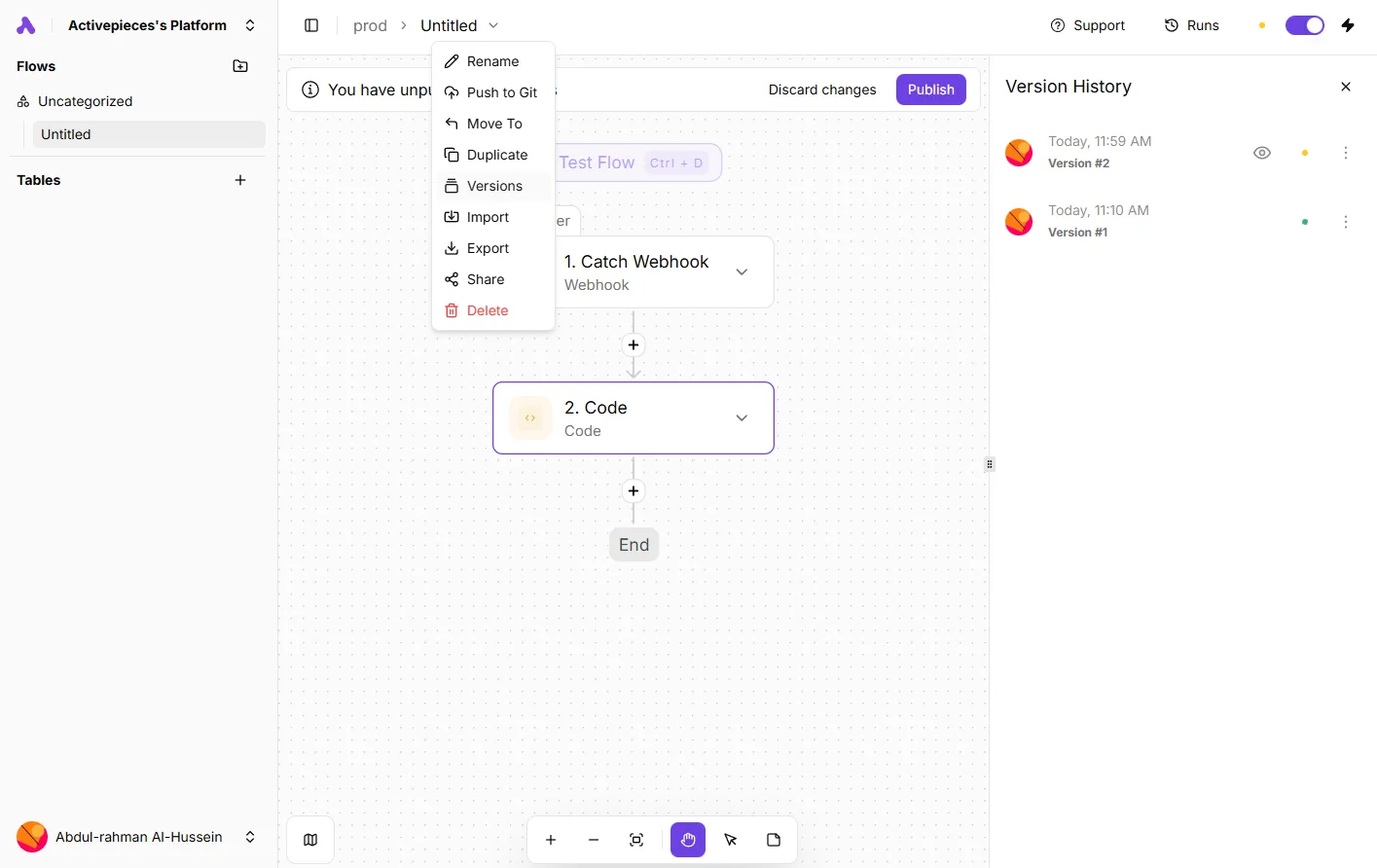
To begin the extraction process, navigate to the Prompt Sandboxes or Deployments section within the Vellum dashboard. Locate the specific prompt you wish to export and look for the Download icon or the three-dot menu in the top right corner of the template view.
The CSV export option is found under the Workspace settings or within specific Sandbox views, allowing you to download a table of all prompt versions. This manual step is the first move toward reclaiming ownership of the instructions that drive your application logic.
Programmatic retrieval via API endpoints
For teams with large libraries, the Vellum API provides a more scalable way to fetch templates. You should target the Retrieve Prompt Sandbox or Retrieve Deployment endpoints to pull the raw JSON representation of your logic.
The specific endpoint for template retrieval is GET /v1/prompt-sandboxes/{id}. By iterating through your sandbox IDs, you can programmatically build a local repository that mirrors the platform's state without the risk of manual transcription errors.
Standardizing prompt variable syntax for portability
Managed platforms often use proprietary double-bracket or Jinja-lite syntax. This must be converted to standard Python f-strings or JavaScript template literals to run in a private backend.
Standardizing this syntax reduces the 12.35% of technical debt attributed to LangChain-style abstractions, which means developers can spend significantly less time refactoring legacy code. It ensures that a prompt written for Gemini 3.8 Flash can be swapped to Grok 4.7 without rewriting the logic layer.
- Replace
{{user_input}}with${user_input}for Node.js environments. - Map Vellum "Input Variables" to a central JSON schema.
- Hardcode fallback values directly into the template to prevent runtime crashes.
Rebuilding prompt evaluation in your own stack
Maintaining performance after migration requires a local testing harness that mirrors the platform’s original scoring logic. Since 33.16% of AI technical debt stems from miscellaneous external dependencies, owning your evaluation loop ensures that accuracy checks for GPT-6 Astra remain consistent, effectively insulating your performance metrics from third-party volatility, which means you avoid the risk of sudden, unmanaged model drift.
How Activepieces handles prompt portability and orchestration
Activepieces provides an open-source alternative for prompt execution, allowing teams to trigger prompts via webhooks and store templates in git-backed repositories rather than proprietary silos.
Activepieces runs the same codebase on your own infrastructure via Docker or Kubernetes as it does on managed cloud, ensuring that deployment choice never creates a permanent lock-in.
Because the platform ships the same product for both cloud and self-hosted environments (including RBAC and audit logs) teams can move their entire prompt execution layer to their own hardware without losing governance.

This ensures that where a flow runs never decides whether a team can leave, as the same security controls apply to both environments.
Connecting your prompt store to the LLM step
Activepieces allows you to pull prompt templates directly from external sources like GitHub or a private API before passing them to the model. This means your "Golden Prompt" lives in your version-controlled repository where it can be peer-reviewed.

Activepieces syncs flows to git and promotes them through Release Management, moving them from test environments to production as versioned software rather than private in-app history.
Check Activepieces' own documentation for Git Sync and Release Management to see how this works across both self-hosted and cloud instances. This allows teams like MoneyGram and FundingSocieties to run complex automations in production with the same rigor applied to their core application code.
Replacing Vellum workflows with open-source workflows
Transitioning from a managed black box to a transparent execution environment requires a visual way to debug how data flows between your database and the LLM. This is demonstrated by the screenshot of the Activepieces flow run:
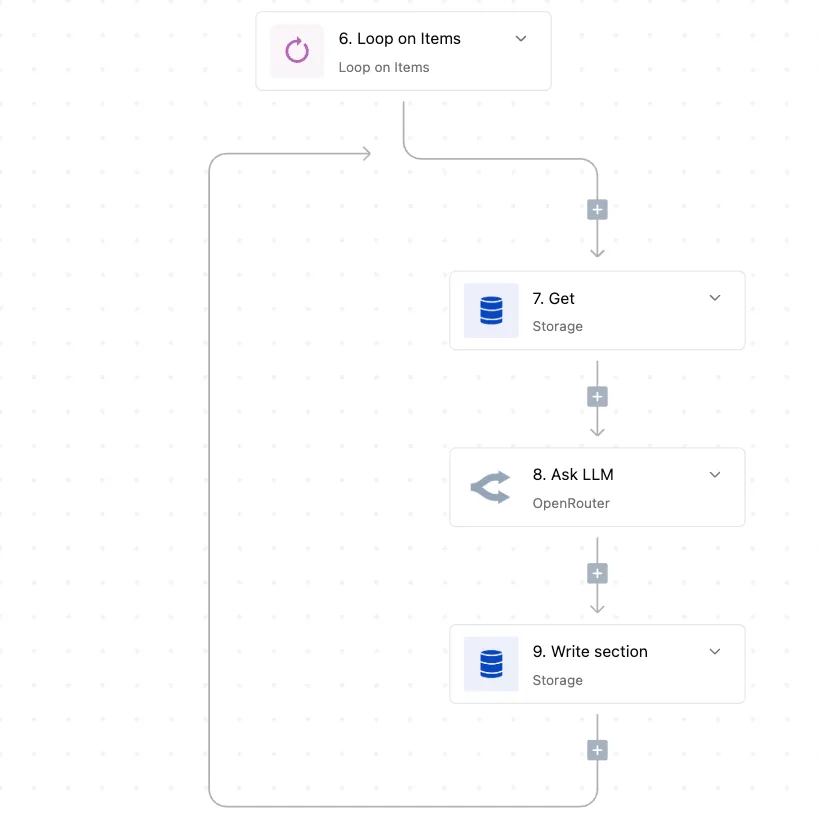
Green checkmarks on the "Instance Stopped" trigger and "Revoke Token" step indicate a successful logic handoff.
The detail panel shows a status 200 response from Square’s API, confirming that the prompt's output successfully triggered a downstream action.
Keeping control over LLM model routing
You can swap providers instantly by changing a single field in the "Send Request" configuration without rewriting your entire business logic.
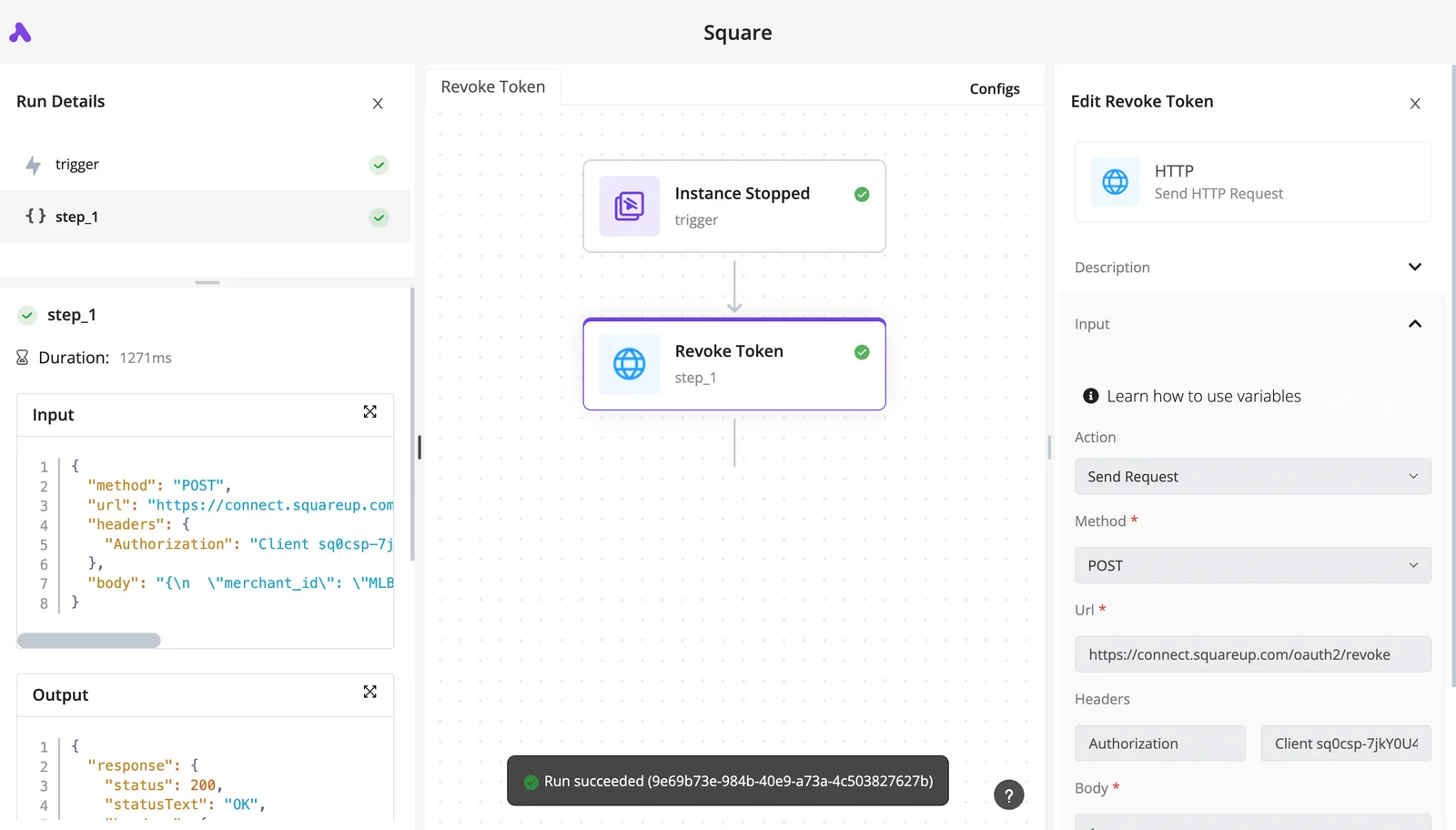
If a specific task requires the advanced reasoning of Claude Fable 5.1 but your daily volume is better suited for Gemini 3.8 Flash, you can build a conditional router within the flow.
The Monday morning plan for prompt independence
Prompt independence begins by moving every natural language instruction out of proprietary black boxes and into a version-controlled environment managed by your own engineering team.
Auditing your current prompt dependency level
Mapping where your logic lives reveals how much of your intellectual property is trapped behind a vendor’s dashboard.
You must identify every instance where a prompt is stored in a third-party UI rather than your codebase.
Setting up a Git-based prompt repository
A dedicated repository for prompts is the single source of truth for the entire organization. By using a structured format like YAML or JSON within a GitHub repository, non-technical stakeholders can propose edits via Pull Requests while developers maintain control over the deployment pipeline.
Migrating your first high-volume prompt workflow
Moving a live production flow requires a side-by-side comparison to ensure the new architecture maintains output quality. Start by mirroring the inputs from a high-traffic task, such as customer support classification.
Route them to a local script that calls GPT-6 Astra directly using the versioned prompt from your new repository.
Common questions about prompt migration?
Does Vellum own the prompts I create on their platform?
Ownership remains with the user under standard enterprise agreements, but the platform retains the operational history required to execute those prompts. While you own the intellectual property of a specific instruction set for Claude Sonnet 5.5, the platform holds the version history and execution metadata.
The connective tissue has no representation outside the platform, even if you can legally copy your text. The specific variable mappings and historical performance data stay locked in their database. This makes a clean break difficult without a manual export strategy.
What is the best format for storing prompts in a database?
Prompts function most effectively when stored as structured JSON objects containing the template and model parameters. Treating a prompt as a raw string leads to errors where temperature or top-p settings are lost during a migration.
A robust schema includes the template string with standardized double-curly-brace placeholders for variables.
It also includes a configuration object specifying the target model, such as Gemini 3.8 Flash, and its hyper-parameters. Finally, it requires an array of input schemas to validate data before it hits the LLM.
How does moving prompts out of Vellum affect API latency?
Removing the intermediary platform layer typically reduces total round-trip time because your application communicates directly with the model provider's endpoint.
When you call GPT-6 Astra through a managed wrapper, you add the overhead of their internal routing and logging.
Eliminating that middle-hop latency is the result of moving prompts into your own infrastructure. This ensures faster responses for real-time user interfaces.