
Reverse Logistics Automation Tools for Operations Teams
Reverse logistics software streamlines the processing of returned inventory to minimize handling costs and improve warehouse efficiency.

Covers workflow automation for fintech and health-tech: tenant isolation, audit trails, and the failure modes that leak data across tenants.
ContributorSeptember 23, 202615 min read
This article was researched and fact-checked by an advanced research system.
Managing the influx of returned goods requires a sophisticated blend of warehouse management systems and workflow orchestration to ensure profitability. Modern operations teams are increasingly turning to specialized software to handle the complex routing of items, whether they are destined for refurbishment, liquidation, or restocking.
By integrating these platforms with existing tech stacks, perhaps through a workflow engine like Activepieces to sync data across departments, companies can significantly reduce the manual labor typically associated with processing claims.
This automation not only accelerates the refund cycle for customers but also provides real-time visibility into inventory levels, allowing managers to make data-driven decisions about stock recovery and waste reduction. Ultimately, the right automation tool transforms a costly bottleneck
What reverse logistics automation tools actually do
To minimize the manual overhead of restoring inventory to a sellable state, reverse logistics automation tools standardize the intake, validation, and routing of returned goods.
These platforms act as a translation layer between the customer's intent to return an item and the warehouse management system (WMS) that must eventually receive it.
The core capabilities of return automation
By replacing manual verification with rule-based workflows, return automation reduces the time an item spends in transit and processing.
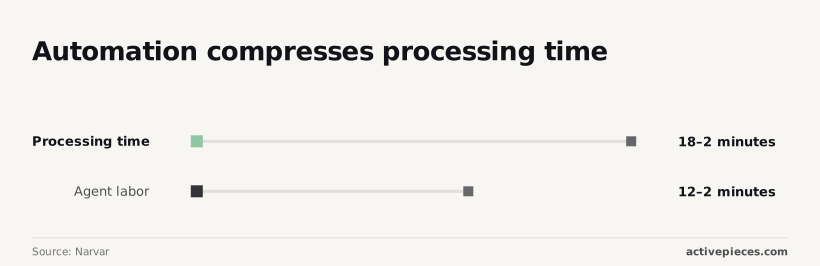
According to data from Narvar, automation compresses the total processing time from 18 minutes down to 2 minutes, which means retailers can finalize customer refunds nearly nine times faster.
This allows retailers to issue refunds or credits almost instantly rather than forcing customers to wait days for a manual inspection.
12 minutes of agent labor per return is reduced to just 2 minutes according to Narvar. This means a small support team can handle peak seasonal volumes without a linear increase in headcount.

By integrating these workflows through Activepieces, organizations can bridge the gap between front-end portals and legacy inventory databases without manual data entry.
Return rates vary by product category
Because high-frequency categories demand more aggressive automated filtering, the specific volume of returns dictates the complexity of the required backend logic. The following benchmarks for 2024 illustrate how return rates fluctuate based on the nature of the goods:
- Apparel: 23% to 26%
- Home goods: 8% to 20%
- Electronics: 10% to 11%
- Beauty: 4% to 10%
Higher return percentages increase the probability of return fraud, where a customer sends back a different item than the one purchased, requiring the automation tool to trigger secondary inspection flags.
The data privacy requirements of return data
As it moves from a public-facing web portal to internal fulfillment systems, return data contains sensitive Personally Identifiable Information (PII) that systems must isolate.
According to Ustechautomations, tools like Zapier store task history data for up to 90 days by default. This means customer addresses and phone numbers persist on third-party servers long after the warehouse processes a return.
To maintain compliance with GDPR or CCPA, backend workflows must ensure that systems either encrypt PII at rest or programmatically scrub it once the WMS finalizes the transaction.
Failure to secure these pipelines creates a vulnerability where a breach of the automation layer exposes the entire purchase history of a customer base.
Everything below works on Activepieces' free plan. Start without code or a credit card.
Returnly and Loop Returns optimize the consumer experience
To convert potential losses into new sales through instant credit and seamless Shopify exchanges, consumer-facing portals like Loop Returns and Returnly prioritize the front-end interface.
These platforms function as a specialized abstraction layer over the messy reality of reverse logistics. This ensures the customer never sees the friction of the warehouse.
How instant credit and exchange workflows work
By offering "Instant Credit," front-end return platforms focus on retaining revenue. This feature allows a shopper to spend their refund before they drop the physical item at a carrier.
This immediacy is critical for high-churn sectors like Apparel, which suffers a 26% return rate according to EightX. This means one in four sales is at risk of vanishing without an immediate exchange incentive.
While Home Goods sees a 20% return rate and Electronics sits at 11%, EightX notes that the financial impact remains high across the board.
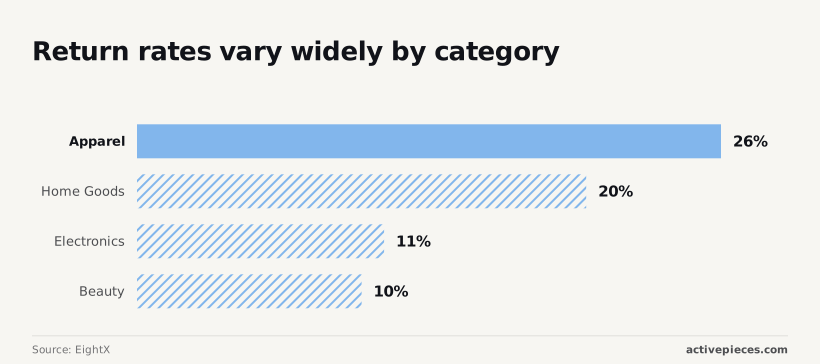
Even the relatively low 10% return rate in Beauty represents a significant volume of small-parcel logistics that these portals must automate, forcing retailers to absorb substantial overhead costs on every returned unit.
Manual processing costs between $9.00 and $17.00 per item according to USTechAutomations.
By automating the "Shop Now" flow, these tools reduce that cost to $1.20 to $3.40 per item. This shift effectively recovers profit margins that would otherwise be lost to administrative labor.
This shift ensures that a customer service representative is not manually verifying every tracking number before authorizing a replacement.
How return portals grade and route items
When a customer initiates a return, these portals use conditional logic to determine the item's destination based on its condition and value.
The following visualization tracks the lifecycle of a return and shows how a single QR code scan triggers a cascade of data updates across disparate systems. It shows a consumer scanning a code at a drop-off point to trigger a "received" status.
After a warehouse worker scans that same item into a Warehouse Management System (WMS) to verify its condition, a finance dashboard finally updates the refund status to "settled."
This chain of events ensures that the warehouse team knows exactly which bin a "Grade A" sweater belongs in versus a damaged one.
However, the logic often stops at the warehouse door, leaving a gap between the portal's "disposition" and the actual inventory update in the legacy WMS.
Avoiding platform lock-in with Loop Returns
While these portals excel at the Shopify-to-consumer link, they often create a dependency on their proprietary ecosystems for data handling. Loop Returns requires a Shopify Plus subscription for certain advanced automation features. A brand's return logic is therefore tied to their specific e-commerce tier.
For brands attempting to scale into multi-carrier or multi-warehouse configurations, this creates a bottleneck where a simple Shopify integration no longer covers the full operational scope.
When a brand outgrows the basic API limits of these portals, they face a choice between manual data entry or building custom middleware to bridge the gap to their backend systems.
ReverseLogix manages end-to-end enterprise supply chains
By integrating deeply with warehouse floor operations, enterprise-grade tools mitigate the high cost of manual processing to automate the physical movement and disposition of goods.
Unlike basic front-end portals that stop at label generation, these platforms synchronize the digital return request with the specific capabilities of a distribution center's equipment and labor.
Multi-location warehouse routing logic
By directing returns to the facility best equipped to handle the specific product type or current inventory demand, intelligent routing reduces shipping overhead. When a return is initiated, the system evaluates the stock levels across the network and the specialized refurbishment capabilities of each site.
High-value electronics are sent to a facility with testing benches rather than a general apparel warehouse where they would sit idle. The ReverseLogix deployment sequence defines how these physical constraints are mapped into the digital workflow:

- WMS/ERP API discovery
- Warehouse floor layout mapping
- Grading logic configuration
- Carrier contract integration
- Staff training on handhelds
This structured onboarding ensures that the software logic reflects the actual physical constraints of the loading dock. Following this setup, the system can autonomously assign return destinations based on real-time capacity and labor availability.
The cost of manual vs automated returns
By providing binary instructions for every returned item, automated workflows eliminate the cognitive load on warehouse staff.
In a manual environment, a receiver must identify the item, look up the original order, and guess the appropriate disposition, which leads to inconsistent grading and lost resale value.
Guesswork is replaced by guided workflows on handheld devices. This means a seasonal worker can process a return in seconds by following on-screen prompts, reducing the time an item spends in "quarantine" before it can be listed for sale again.
Guesswork is replaced by guided workflows on handheld devices.
Total cost of ownership for enterprise deployment
The ability to maintain data integrity across disparate legacy systems without constant developer intervention defines the long-term expense of an enterprise return system.
While lightweight plugins carry lower monthly fees, they often lack the network isolation required by global IT departments. Security audits and custom firewalls become an added expense for brands in this situation.
ReverseLogix is a centralized record for the entire lifecycle of a return, which prevents the data siloing that occurs when customer service teams and warehouse managers use unconnected tools to track the same package.
Easier to see it running than to read about it: set it up free, no card.
Activepieces automates return processing securely
Activepieces is the connectivity layer that synchronizes disparate warehouse management systems and customer databases through a self-hosted automation engine.
By acting as a private bridge between legacy stacks and modern return portals, it allows engineers to orchestrate complex data flows without the security trade-offs inherent in multi-tenant cloud integrators.
Self-hosting for strict data privacy compliance
Sensitive Return Merchandise Authorization (RMA) data never leaves the controlled environment when operating Activepieces as a self-hosted instance within a company's own Virtual Private Cloud (VPC).
In a standard third-party integration, the integrator's servers decrypt a customer's home address and purchase history for routing. A centralized point of failure for a data breach is created by this process.
By keeping the execution engine behind the corporate firewall, the enterprise maintains an air-gapped workflow where even the automation tool itself has no access to the underlying data at rest.
This architecture is necessary to generate a secure return log, which provides a verifiable audit trail for every item entering the warehouse:
| Field | Description |
|---|---|
| Customer ID | Masked identifier for the consumer. |
| Original Order Hash | Encrypted link to the purchase record. |
| Return Reason Code | Categorization of the return intent. |
| Warehouse Received Timestamp | Precise time of physical intake. |
| Disposition Status | Current state covering restock, liquidation, or repair. |
These specific fields allow the finance team to reconcile refunds against inventory without ever exposing the customer's plain-text identity to the broader warehouse staff.
Automation compresses processing time
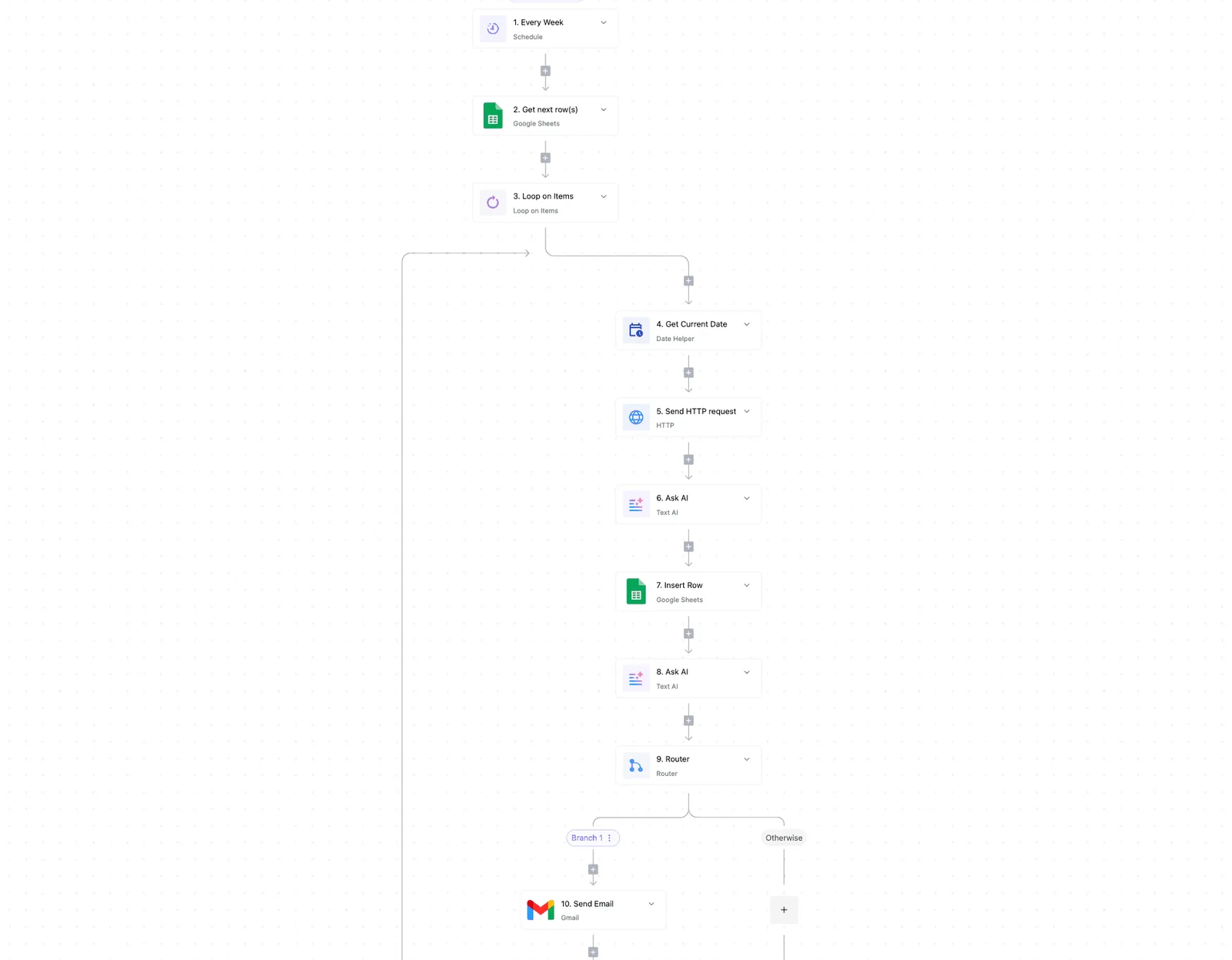
To eliminate the manual data entry that typically stalls the reverse logistics chain, the platform utilizes a visual flow builder to map logic between a front-end portal and a legacy ERP.
A codebase you can read closes reviews faster than a vendor's word. Activepieces provides an MIT-licensed core that security teams can clone to inspect the worker architecture or load-test in an air-gapped environment before go-live.
This transparency removes the need for blind trust in a vendor's maturity.
Because these flows are built with pre-coded integrations for common enterprise tools, teams can deploy new routing logic for seasonal promotions in hours rather than waiting for a custom sprint from the engineering department.
Cost-per-execution efficiency at high seasonal volumes
A decoupled scaling strategy is possible due to the open-source nature of the platform, where the cost of processing returns does not scale linearly with the number of tasks performed.
Traditional SaaS automation tools often charge per task or execution. A surge in holiday returns results in a direct and unpredictable spike in software licensing fees under that model.
By deploying Activepieces on internal infrastructure, a business can handle a massive influx of return requests by simply scaling their own compute resources, ensuring that the operational cost of processing a return remains flat regardless of how many automated steps are required to restock the item.

For engineering teams who prioritize architectural transparency and strict data sovereignty, Activepieces is the better choice. By providing a readable codebase that can be audited and deployed within a private cloud, it eliminates the security risks associated with opaque, multi-tenant vendors.
Activepieces is the better fit for organizations that require the ability to verify their automation infrastructure through direct repository access before committing to a production environment.
The Monday morning reverse logistics action plan
Audit your return cycle time metrics
Operations leaders must begin by measuring the gap between a return shipment’s arrival at the warehouse and the moment the refund is triggered in the ERP.
If this duration exceeds the shipping time itself, the bottleneck is likely a manual data entry requirement or a synchronization delay between the warehouse management system and the financial ledger.
Every hour a returned item sits unprocessed is an hour its resale value depreciates. Tracking the "dock-to-stock" time specifically for returns reveals where labor costs are highest.
Every hour a returned item sits unprocessed is an hour its resale value depreciates.
By identifying the specific return reasons (such as "damaged" versus "wrong size") that take the longest to clear, teams can prioritize which workflows require immediate automated routing to specialized inspection stations.
Finding customer PII exposure in return portals
Mapping the flow of Personally Identifiable Information (PII) across third-party return portals is the only way to verify that customer addresses and credit card tokens are not being stored in unencrypted logs.
When a return label is generated, data often passes through several intermediaries, including shipping aggregators and external API connectors.
The surface area for a potential breach increases with each step.
If a cloud-based automation tool like Zapier is used, the data is processed on their shared infrastructure, meaning the business relies on a third-party's multi-tenant security isolation to keep customer records private.
Auditing these touchpoints allows the engineering team to swap public endpoints for private, self-hosted execution environments where data never leaves the corporate firewall.
Deploy a single-line automation pilot
Starting with a narrow, single-trigger workflow allows the team to validate the integration between the returns portal and the inventory database without risking the entire logistics chain.
The initial pilot should focus on the most frequent, low-risk event, such as sending a Slack notification to the warehouse manager the moment a high-value item is scanned by the carrier.
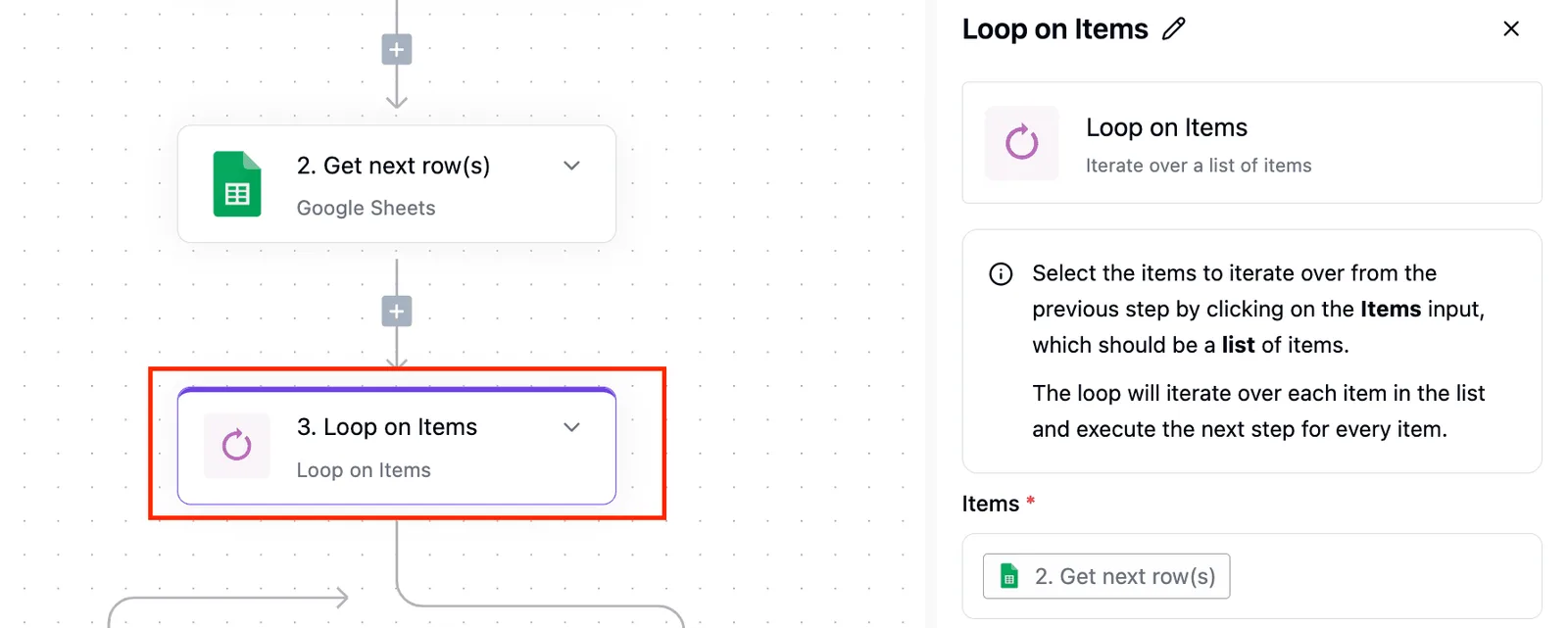
A specific event, in this case a new entry in a product database, initiates the sequence in the following configuration. By isolating a single action, engineers can test the connection stability and data mapping before adding complex branching logic.
Once this single-step connection is verified, the team can safely introduce secondary actions, such as updating a Shopify customer note or generating a restock task in Jira.
Frequently asked questions
Can these tools handle international returns?
By dynamically generating localized shipping labels and customs documentation based on the customer’s geographic IP or shipping origin, automation platforms facilitate international returns.
This logic ensures that a customer in the European Union receives a label compliant with local carrier standards, preventing the package from being rejected at a regional sorting facility. To manage the cross-border flow, these tools typically connect to:
- Global shipping aggregators
- Tax and duty calculation engines
- Translation services
How do automation tools integrate with legacy WMS?
Integration with a legacy Warehouse Management System (WMS) occurs through middleware layers or webhooks that translate modern JSON payloads into the specific flat-file or XML formats required by older databases.
Because many legacy systems lack a REST API, automation tools often use a Secure File Transfer Protocol (SFTP) server as a staging area.
A formatted CSV file is dropped into a watched folder by the automation platform, which the WMS then polls and ingests during its next scheduled batch cycle.
This asynchronous method prevents a slow legacy database from bottlenecking the real-time front-end portal. It ensures that a customer's return remains responsive even if the warehouse server is under heavy load.

What is the average ROI timeline for return automation?
The timeline for realizing a return on investment depends on the reduction of manual touches per return and the recovery of resale value through faster processing.
Organizations typically see a shift in operational costs once the system automates the "triage" phase, where items are diverted to liquidation, repair, or restock without human intervention.
| Factor | Impact on ROI |
|---|---|
| Labor Costs | Decreases as customer service agents spend less time manually approving RMAs. |
| Inventory Velocity | Increases as items are flagged for resale the moment the carrier scans the return label. |
| Data Accuracy | Improves as automated SKU validation eliminates the shipping of incorrect replacement items. |