
Air-Gapped Workflow Automation: A Guide for Secure Networks

Oct 13, 202612 min read
Air-gapped workflow automation is the execution of logic and data movement within a network physically or logically severed from the public internet to ensure zero external data leakage.
This architecture replaces the "phone-home" telemetry of standard integration platforms with local sovereignty. Sensitive triggers never cross a perimeter boundary.
Air-gapped workflow automation defined for secure environments
The three pillars of total isolation
True sovereignty in automation rests on three non-negotiable architectural requirements that move the entire stack behind the firewall.
Every instruction must execute on hardware you own. The execution engine must run as a containerized instance within your private infrastructure rather than relying on a vendor’s hosted runner.
Activepieces provides this sovereign runtime, allowing organizations to maintain the same SSO, SCIM, and audit log capabilities in an air-gapped build as they would in a managed cloud.
The system operates without a Default Gateway to the internet. This forces all API calls to resolve to internal endpoints like a private GitHub Enterprise server or a local Jira Data Center instance.
High-security environments often utilize a one-way hardware gateway to move data from a "Low Side" internet-connected network to a "High Side" isolated network.
Because of this diode configuration, updates or threat intelligence can flow into the secure zone, but no packet can physically travel back to the internet.
Consequently, an automated agent on the High Side can ingest data for processing but remains physically incapable of exfiltrating that data to a command-and-control server.
Why cloud-based automation fails in regulated environments
Standard SaaS automation tools are built on the assumption of persistent connectivity, a luxury that disappears in regulated environments.
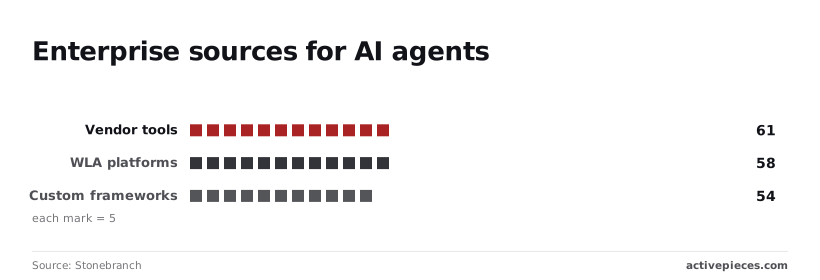
According to Stonebranch, you're currently juggling 61 different vendor tools. This creates a massive attack surface if each tool requires its own cloud-punched hole in the firewall.
Standard SaaS automation tools are built on the assumption of persistent connectivity, a luxury that disappears in regulated environments.
58 Workload Automation (WLA) platforms are in use across the market according to Linkedin's study, yet most fail when their heartbeat signal to a central cloud is severed.
Stonebranch identifies 54 custom frameworks that you maintain even when you attempt to bypass these platforms. You're wasting hundreds of hours writing "glue code" for isolated systems instead of shipping actual features.
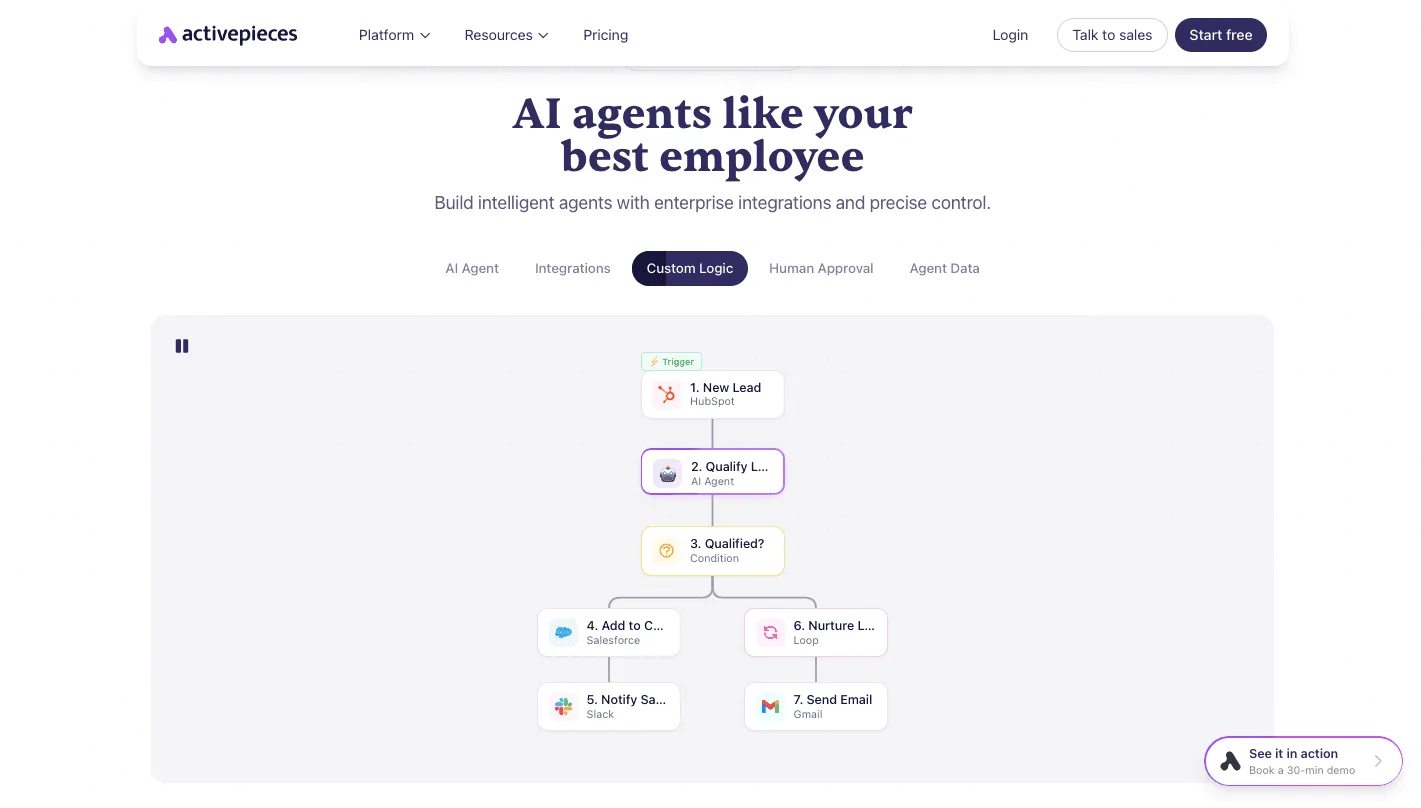
When you deploy a frontier model like OpenAI’s GPT-6 Astra or Anthropic’s Claude Opus 5.5, a cloud-dependent orchestrator will fail. The failure occurs the moment it attempts to verify a license or stream a log.
In these zones, the "99.9% uptime" promised by a Cloud SLA is irrelevant, as the infrastructure remains unreachable regardless of provider performance.
The local network's security policy is a permanent 0% external availability, effectively rendering all cloud-based remote management tools useless, so administrators are forced to manage every device physically on-site.
This takes minutes, not a project: automate it in Activepieces free.
Deploying self-hosted automation with Activepieces
Activepieces provides a sovereign automation engine that executes workflows entirely within a private infrastructure, eliminating the requirement for external telemetry or third-party cloud triggers.
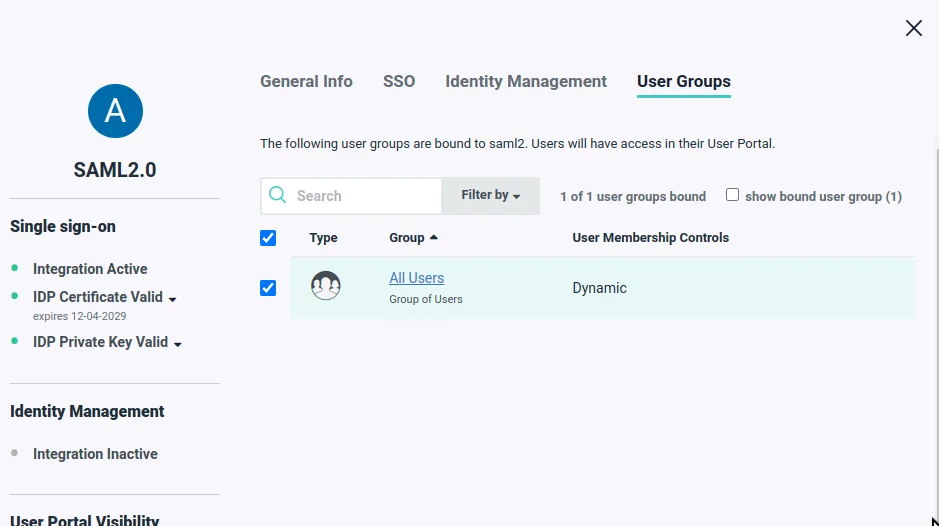
A stripped self-hosted build is how most vendors monetise control, but Activepieces does not sell a smaller product to the buyers who need the most control; SSO, SCIM, custom RBAC, audit logs, release management and secret manager integration run in the air-gapped build exactly as they do in the managed cloud.
Deploying the engine using docker compose
To instantiate the core engine, a standard Docker Compose configuration is all that is required to run Activepieces on-premise, alongside a Postgres database for persistence and a Redis instance for task queuing.
Because the core is MIT-licensed, you can inspect the source code to verify that no "phone-home" beacons exist.
Internal mission-critical triggers, such as a local GitLab webhook, never leave the perimeter. This architectural autonomy means you aren't beholden to a SaaS provider’s maintenance window.
As the local administrator, the security of the underlying host remains your primary responsibility. This is a significant undertaking given the 650 Critical CVEs documented by the Linux CVE Tracker. 6,519 High CVEs and 9,489 Medium CVEs are also reported by the tracker.
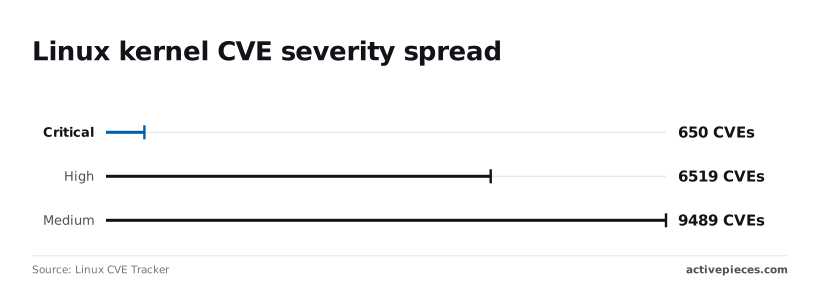
For the local administrator, a rigorous, automated patching cycle is the only way to maintain the integrity of the air-gap.
Managing secrets and local integrations without the cloud
Every credential Activepieces touches (API keys, OAuth tokens, and connection secrets) can be routed to your own secret manager instead of a vendor database. This ensures that in the self-hosted edition, no third party ever holds the credentials your business runs on.
This allows the engine to interface with local LLMs, such as Mistral Large 4 or GPT-6 Astra via a private proxy, without exposing API keys to the open internet.
You will find 739 integrations available for local installation within the Activepieces "Integrations" library view, roughly 60% of which are community-contributed, meaning the majority of your automation support relies on volunteer maintenance rather than official vendor backing.
This modularity ensures that you can drag a connector for a local SQL Server or a private instance of Mattermost into a flow without the connector ever reaching out to a public package registry.
Enterprise governance: SSO and audit logs for regulated teams
While the Community edition supports unlimited local runs, regulated teams typically require the Enterprise tier to satisfy specific compliance controls like AC-2 and AU-2.
Activepieces provides the same governance features (SSO, SCIM, custom RBAC, audit logs, and release management) in the air-gapped build as it does in the managed cloud. Detailed audit logs capture every execution and configuration change, providing the "who, what, and when" necessary for forensic review.
Regulated organizations like MoneyGram and FundingSocieties run this architecture in production today to ensure air-gapped environments maintain full control rather than a fraction of the platform's capability.
Four stages of establishing an isolated automation stack
Establishing an air-gapped automation stack requires a sequential transition from external network reliance to a purely internal, verified infrastructure.
- Establishing the secure baseline hardware: A secure baseline requires physical or cryptographic isolation of the host environment. The server must exist within a network segment where the default gateway leads to no external route. You must verify that the underlying BIOS and firmware come from known-good media before the OS installation.
- Mirroring container registries and dependencies: Because a standard "docker pull" command will fail, true isolation necessitates a local mirror of all software artifacts. This process involves a "pull-through" proxy or private registry, such as Harbor or Nexus. Finally, you use a manual "data air-lock" procedure where a networked machine scans signed image tars for vulnerabilities before they're physically moved to the isolated segment.
- Deploying the orchestration engine via Docker or Kubernetes: You must install the orchestration engine using local configuration files that point exclusively to the internal registry. Because the engine can't reach a global license server, the deployment must support offline license activation or use an open-source core that doesn't require a persistent heartbeat to a SaaS vendor.
- Configuring local LLMs and internal API endpoints: The final stage replaces external AI services with locally hosted models. An internal inference server ensures that local GPUs process sensitive corporate data. Using an internal vault ensures that API keys and secrets are injected into the automation at runtime without ever being stored in a cloud-based database.

You can follow the rest of this with the builder open. Start free, no card.
Infrastructure and maintenance requirements for disconnected systems
The operational burden of a disconnected system shifts from paying for a managed service to financing the continuous integrity of a local environment.
Managing software updates in air-gapped systems
Maintaining an air-gapped system requires a dedicated "mirroring" infrastructure to vet and transfer software updates across the physical gap.
Because the system can't execute a standard npm install to fetch libraries from public repositories, you must maintain a local artifact repository. This ensures that every node in the automation workflow is running on a validated version of the software.

If the vendor’s license agreement stipulates that the software must periodically connect to servers to validate the license key, an air-gapped deployment is technically impossible without a specific "offline" license tier.
Hardware specs for local AI and automation engines
High-density GPU clusters, rather than standard commodity CPU servers, are required for local execution of frontier models like Mistral Large 4 or GPT-6 Astra-level reasoning tasks.
While basic automation logic can run on minimal virtual machine resources, the moment an LLM is introduced, the hardware requirements escalate to enterprise-grade accelerators with high VRAM capacity.
The following table compares the typical resource and fiscal commitments across different deployment models for n8n, a popular workflow tool, and AirgapAI.
| Model | Initial Setup Time | Monthly Infrastructure Cost | License Model |
|---|---|---|---|
| n8n Cloud | Minutes | Fixed subscription | SaaS (Proprietary) |
| n8n Self-Hosted | Hours | Variable | Fair-code (Limited) |
| AirgapAI | Days | High | Enterprise (Perpetual/Offline) |
Personnel requirements for air-gapped oversight
An air-gapped automation stack demands a specialized "Human-in-the-Loop" for administrative tasks. You must manually review logs to satisfy compliance controls like NIST 800-53.
This necessitates a staff of systems administrators who are cleared to handle sensitive data and trained in "sneakernet" protocols involving the physical movement of data via secure media.
Common failures in air-gapped automation management
Failure in air-gapped environments stems from the paradox of maintaining a static perimeter while business logic and security threats remain dynamic.
Risks of manual data transfer between security zones
Unmonitored entry points are introduced by manual data transfers between high-trust and low-trust zones. Because automated triggers can't reach across the air gap, you often rely on physical media to move configuration files.
A single corrupted USB drive can introduce lateral movement threats without triggering a single alert in a centralized SIEM platform.
Dependency drift and the patch gap risk
Isolating a system from the internet prevents automated package managers from retrieving critical security updates. While cloud-native vendors can push hotfixes in minutes, you must manually verify and transit every update through a unidirectional security gateway.
While major vendors like Microsoft maintain a median patch time of 185 hours, the chart demonstrates that third-party software providers often resolve vulnerabilities in 136 hours, suggesting that smaller developers are actually faster at closing security gaps than industry giants.
However, the "P90 tail" for air-gapped systems extends significantly further. The most critical 10% of vulnerabilities remain unpatched for weeks or months longer than in connected environments.
Least privilege for automation service accounts
Automation engines in restricted zones frequently run under broad administrative permissions to avoid the complexity of granular credential management without a central identity provider.
This violates the principle of least privilege. A compromise of a single automated task gives the attacker the same standing as a system architect.
Frequently asked questions about air-gapped automation
Can air-gapped systems use generative AI?
By deploying large language models on local hardware or private clusters that lack an outbound path to the public internet, generative AI functions within air-gapped environments. While popular consumer interfaces rely on external APIs, enterprise-grade reasoning is achievable through local model weights.
Claude Opus 5.5 or GPT-6 Astra are inaccessible in true air-gaps because their weights are proprietary and hosted exclusively on vendor-controlled infrastructure. Any request to them constitutes a data egress event.

Mistral Large 4 and Z.ai GLM 5.3 provide open-weight architectures. This allows you to host the model on internal GPU clusters so that sensitive prompts never leave the physical premises.
DeepSeek-V4-Pro-0813 is a flagship reasoning engine for high-logic tasks, provided the local environment has the specialized compute density required to execute its parameter count without external offloading.
What is the difference between on-premise and air-gapped?
The distinction lies in the presence of a "default gateway" to the internet, which determines whether the system is merely self-hosted or physically isolated.
On-Premise: The software runs on a company-owned server. This might be a Linux distribution managed by your internal IT team, but it maintains a connection to the internet for telemetry, license validation, and external API calls.
Air-Gapped: The system is deployed on a "dark" network with no physical or logical path to the outside world. All dependencies, container images, and security patches must be moved into the environment via secure, audited physical media.
How do you update connectors in a disconnected environment?
Updating integrations for tools like Jira or PostgreSQL requires a "side-loading" process. The code is vetted on a networked machine before being transferred.
In a standard SaaS environment, the vendor pushes updates automatically, which forces you to accept new code sight-unseen.
In an air-gapped workflow, you must manually mirror the container registry or download the specific package bundles. This ensures that no unauthorized code enters the secure zone, satisfying the strict supply-chain integrity controls required by frameworks like NIST SP 800-53.
Is the system truly air-gap compatible?
Activepieces supports true air-gapped deployment. Its architecture allows the entire execution engine and its dependencies to reside on local Docker or Kubernetes clusters without requiring a heartbeat to a central cloud.
The MIT-licensed core enables you to run unlimited automations on your own hardware. This ensures that if the vendor’s cloud goes down, your internal business logic remains operational.
For teams requiring enterprise governance features like SSO for identity management, SCIM for user provisioning, and RBAC for granular permissioning, the platform offers a specialized tier.
Every credential Activepieces touches can be routed to your own secret manager instead of a vendor database, ensuring that in an air-gapped build, no external entity ever holds the keys to your internal infrastructure.
Related reading
References
Build it
Set this up in minutes.
No code required. Connect your accounts, and Activepieces runs it from there.
Start free Talk to sales