
Air-Gapped Integration Platform for Government (2026)

Sep 20, 202613 min read
When the token expires on the Saturday of a long weekend, nothing alerts anyone until the Monday invoice run. A critical database synchronization failure occurs the moment an integration platform attempts to validate its operational status against an external server it can't see.
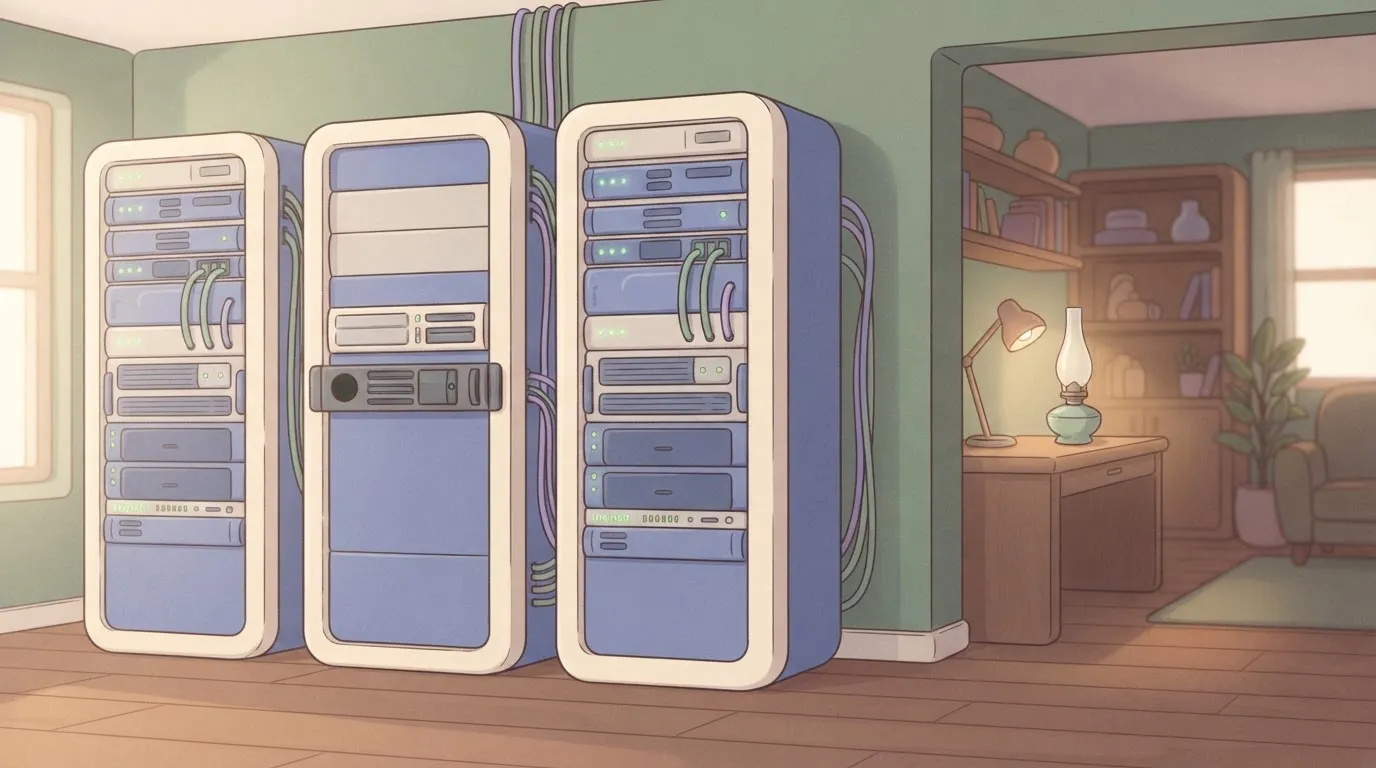
While the system may appear functional during initial deployment, any architecture that relies on a "phone home" mechanism for license verification or telemetry will inevitably lock down when you move it behind a physical or logical air gap.
Integration failure on a disconnected network
How heartbeat signals disable cloud integration software
Integration platforms designed for the public cloud frequently utilize a hidden heartbeat signal to verify active subscriptions. This means the software will intentionally disable its own execution engine if it misses a check-in window.
In a classified environment, this creates a catastrophic point of failure where a perfectly healthy server stops processing data because it can't reach a vendor’s billing endpoint.
A workflow triggers an ECONNREFUSED error because it's trying to reach a licensing URL from an isolated subnet. This failure confirms that the software isn't truly self-contained, as it prioritizes vendor compliance over mission availability.
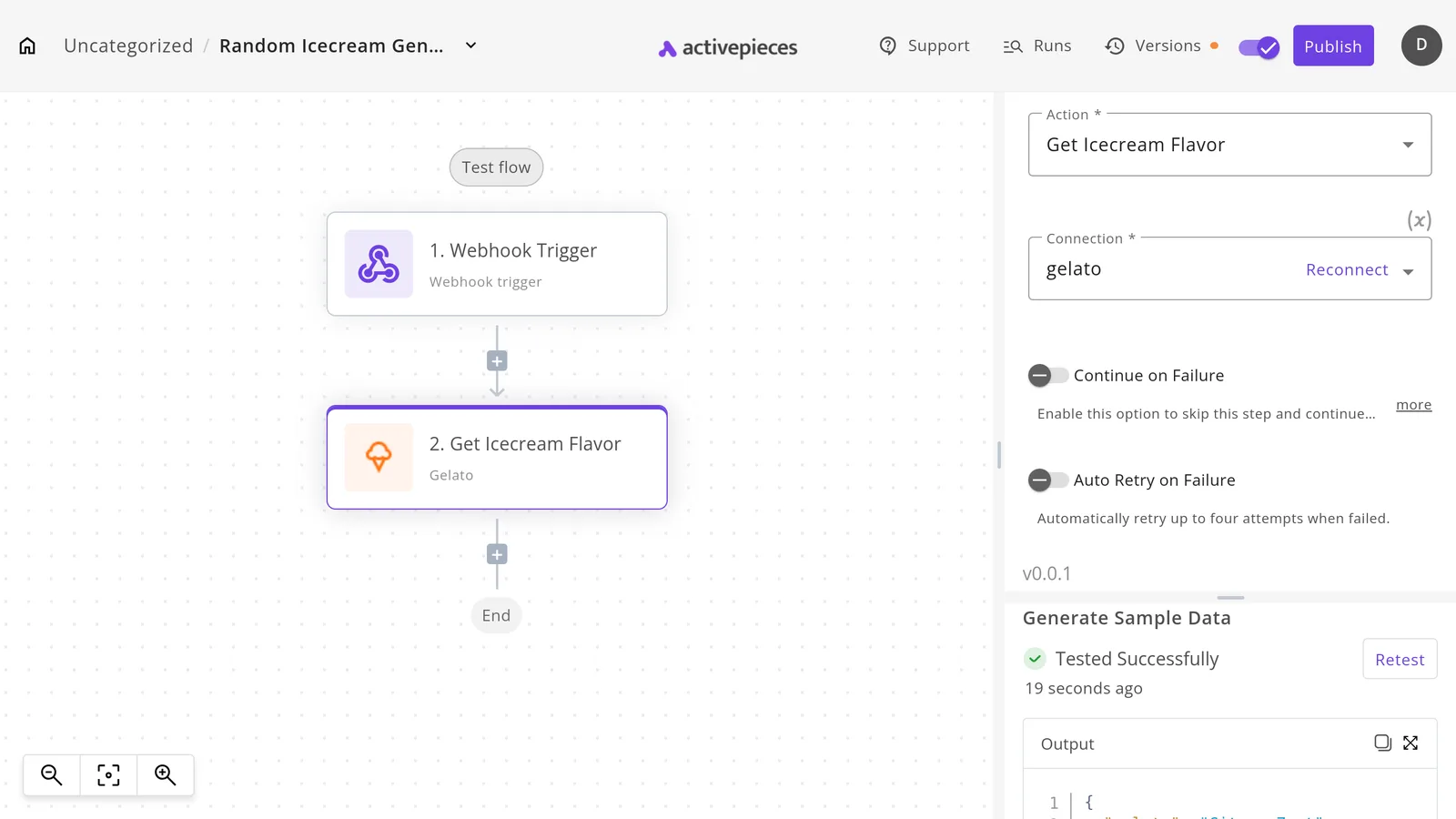
A system designed to automate intelligence transfers instead becomes a static brick during the hours when human oversight is at its lowest.
Why vendor offline modes fail FISMA audits
FISMA High requirements reject these designs because most "offline" modes from mainstream vendors are merely cached states that expire after a set duration. The system’s integrity depends on an eventual external connection.
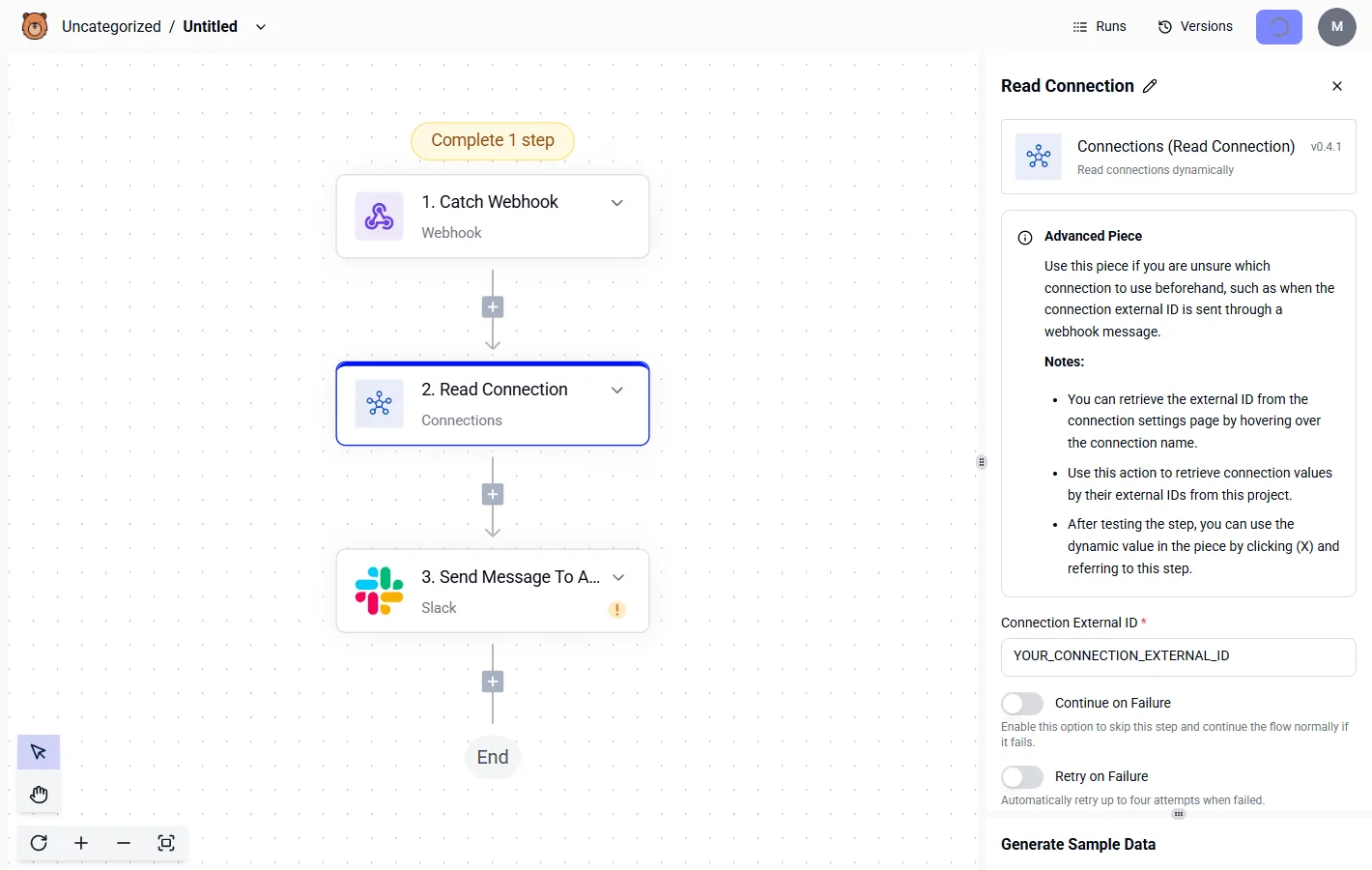
The federal government is currently recalibrating its investment in these architectures, as seen in the Fiscal Receipts data for program 0604122D8Z.
359.1 million dollars was the peak of legacy integration spending in FY24, which often ignored true isolation. FY25 projections drop to 301.3 million dollars, meaning you're beginning to divest from platforms that can't prove total network independence.
FY26 estimates sit at 297.8 million dollars, which represents a sustained shift toward lean, self-hosted stacks.
While many vendors monetize control by stripping features from their self-hosted builds, Activepieces maintains parity between its managed cloud and its air-gapped edition.
Regulated and public-sector organizations like MoneyGram and FundingSocieties run this architecture in production today, where governance tools like custom RBAC, SCIM, and audit logs function without an external connection.
Comparing the enterprise feature set in the self-hosted documentation against the SOC 2 Type II managed cloud confirms that air-gapped deployment provides the full platform rather than a fraction.
Error rates from manual data re-entry
The immediate consequence of a licensing lockout is the transition to manual data entry. This introduces a 15% error rate into the dataset according to standard human-factor engineering metrics, which means the resulting information is fundamentally unreliable for decision-making.
For every 1,000 records you process by hand during a network isolation event, 150 will contain inaccuracies that could compromise downstream analysis, so your final reports will be riddled with hidden flaws. The labor cost to remediate these errors often exceeds the original implementation budget.
True air-gapped security exists only when the software is incapable of knowing, or caring, if the internet exists.
Everything below works on Activepieces' free plan. Start without code or a credit card.
Air-gapped integration platforms must function without external dependencies
Reliable integration platforms in high-security environments must adhere to the following requirements:
- They must operate as self-contained binaries.
- They must treat external network calls as system failures rather than optional features.
- Collibra reports that as government agencies move toward the Office of Management and Budget (OMB) mandate for IPv6-only infrastructure, the margin for "hybrid" connectivity has disappeared.
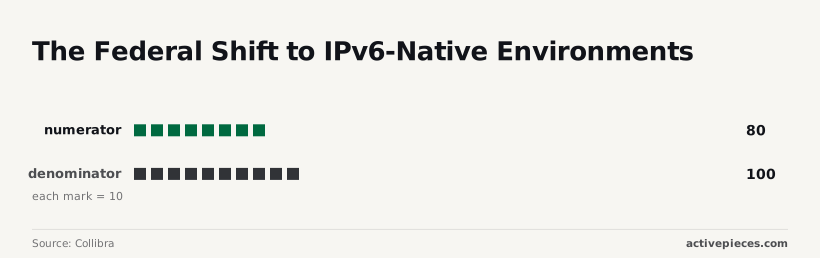
- According to Collibra, federal mandates now require 80 out of 100 IT assets to be IPv6-native by 2025, meaning legacy systems that rely on IPv4-based cloud tunneling will face immediate decommissioning or isolation.
True air-gapped security exists only when the software is incapable of knowing, or caring, if the internet exists.
Physical air gaps versus logical network segmentation
True air-gapping requires a physical separation of the network from the public internet. Logical segmentation merely uses software-defined boundaries like Virtual Local Area Networks (VLANs) to mimic isolation. In a FISMA High environment, relying on logical segmentation is a single misconfiguration away from data exfiltration.
By deleting a firewall rule by accident, you expose the entire integration layer to the open web. You must therefore install an integration platform via physical media or a secure cross-domain solution.

This ensures that even a total failure of the network’s logical routing can't result in a call back to a vendor’s server.
Why cloud agents are not truly air-gapped
The platform stops working if the umbilical cord to the vendor is severed, yet many modern integration tools claim "air-gap compatibility" while utilizing agents that require periodic heartbeats to a central SaaS controller.
A self-contained stack internalizes these functions. The self-contained model hosts its own authentication and update repositories, so the system remains 100% operational during a kinetic conflict or total ISP failure.
For satisfying the most stringent FISMA requirements, this independence is the only way. Any external dependency represents an unmanaged risk vector. An integration platform that requires an external "phone home" to validate a license key isn't a security tool; it's a liability.
Challenges of deploying integration middleware in silent environments
Silent environments require every byte of integration middleware to be accounted for and physically present before the first service starts. When a system can't reach the public internet, the standard convenience of modern software delivery becomes a primary failure point.
An integration platform that requires an external "phone home" to validate a license key isn't a security tool; it's a liability.
The impossibility of external NPM or Docker pulls
Because there's no path to reach external package registries, middleware that relies on dynamic fetching of dependencies fails instantly in air-gapped zones.
In a disconnected state, a missing sub-dependency results in a total system halt. This operational friction is compounded by vulnerability management. According to the NFLO CVSS vulnerability severity tiers, a "Critical" threat carries a 9.0 score.
This means you must execute an emergency manual update or risk a catastrophic breach of sensitive data. A "High" threat, which carries a 7.0 score, requires a rapid response. The physical limitations of the "Sneakernet" patch process hinder this:
- Download signed update on internet-facing workstation;
- Scan file for malware in DMZ sandbox;
- Transfer to encrypted physical media;
- Physically move to the secure air-gapped server.
NFLO's analysis puts the resolution time for a "Medium" vulnerability with a 4.0 score at hours rather than seconds. Lower-tier issues, such as a "Low" threat with a 0.1 score or a "None" threat at a 0.0 score, often remain unpatched for months.
The labor cost of the physical transfer outweighs the immediate risk to the mission.
License activation without a phone-home connection
To avoid the "kill-switch" effect inherent in cloud-tethered SaaS platforms, you must select middleware that supports local license activation files.
Most commercial integration software attempts to contact a vendor’s server every 24 to 72 hours to validate an active subscription, meaning your system risks a sudden lockout if the connection fails during that window.
In a secure facility, this outbound request will be dropped by the firewall, causing the software to enter a restricted mode or shut down entirely. To maintain continuity, the platform must accept a cryptographically signed license file that you upload manually.
Easier to see it running than to read about it: set it up free, no card.
Methods for moving data across secure boundaries
Data mobility across air-gapped boundaries requires an architectural choice between manual labor, legacy middleware, or self-contained automation platforms.
Custom Python scripts and the maintenance trap micro-services create
Hard-coded scripts frequently devolve into a "maintenance trap" where the logic is understood only by the original author. When a developer writes a bespoke Python script, the lack of a standardized interface means that any upstream schema change breaks the entire pipeline.
This results in immediate data stagnation until a cleared engineer can manually patch the code. Because these scripts lack built-in logging frameworks, a failure in a background cron job can go undetected for weeks.
Legacy Enterprise Service Buses (ESB) in government stacks
Enterprise Service Buses (ESB) provide a centralized communication layer. They often require specialized XML-based configurations that slow down deployment cycles. While these systems offer robust security by centralizing traffic through a single gateway, their complexity necessitates a dedicated team of middleware specialists.
| Data Transfer Method | Security Level | Deployment Speed | Maintenance Overhead |
|---|---|---|---|
| Manual Scripting | High | Low | High |
| Enterprise Service Bus | Medium | Medium | High |
| Self-Hosted Automation | High | High | Low |
The trade-offs shown here indicate that while manual scripts offer the highest isolation, they fail to scale. Legacy ESBs provide structure at the cost of extreme administrative burden.
Modern self-hosted automation engines for rapid response
By providing a visual logic layer that runs entirely within the perimeter of a FISMA-compliant environment, modern self-hosted automation engines offer a middle ground. These platforms allow non-developers to build and audit workflows.
This reduces the reliance on a small pool of senior engineers. By utilizing a containerized architecture, these engines can be deployed via a private registry. This ensures that the entire orchestration logic remains functional even when the facility is completely disconnected.
How Activepieces secures air-gapped automation workflows
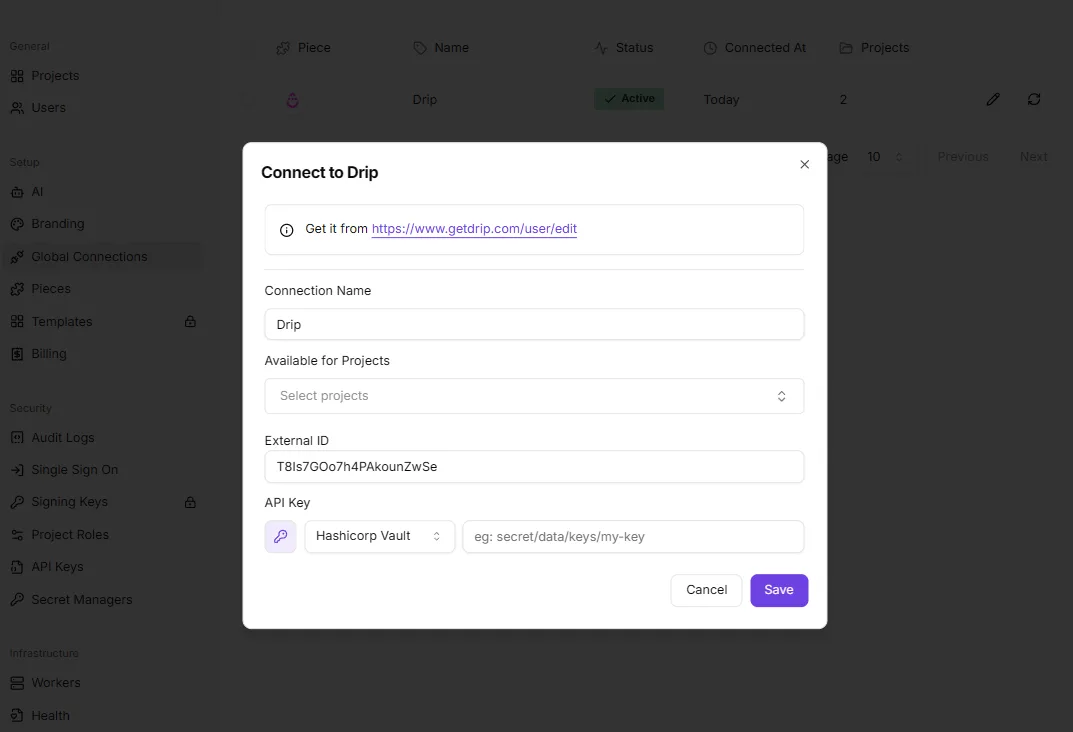
Activepieces routes every credential it touches (from OAuth tokens to connection secrets) to your own local secret manager instead of an internal database, ensuring that no vendor holds the keys to your isolated infrastructure.
Every credential the platform touches (from OAuth tokens to connection secrets) can be routed to a local secret manager instead of an internal database. By configuring the self-hosted instance against an external secret manager, you ensure that no vendor ever holds the credentials your mission runs on.
This capability is listed alongside SSO/SAML and release management in the enterprise governance set, providing a level of secret sovereignty that cloud-only tools cannot match.
Docker and Kubernetes deployment for air-gapped clouds
Delivered as a set of Docker images, the platform allows your security teams to verify the entire software stack before it enters a disconnected environment. By deploying via Kubernetes or Docker Compose, you can run the automation designer and the execution workers as isolated microservices.
To ensure the system remains truly isolated, the core requirements for air-gapped automation must be met:
- Fully containerized (Docker/K8s) core
- Local NPM/Python registry support
- Zero-telemetry configuration (telemetry.enabled=false)
- Localized documentation and asset hosting
These requirements guarantee that the system doesn't attempt to reach out to public repositories for updates or validation.
Local asset hosting for custom integrations and connectors
Activepieces utilizes a modular "integration" system that you can point to a private NPM registry rather than the public internet.
Because the platform allows for the manual sideloading of custom connectors, you can build integrations for legacy on-premises databases without exposing the schema to a third-party cloud. This localized hosting prevents the "dependency hell" often found in air-gapped systems.
Role-based access control for multi-tenant government agencies
The system implements a granular permission model that restricts workflow visibility to specific organizational units. By mapping these roles to existing identity providers through local authentication protocols, the platform maintains a single source of truth for access.
This prevents the credential leakage that occurs when managing separate, siloed login databases.
Monday morning checklist for hardening disconnected integrations
Hardening a disconnected integration architecture requires the systematic severance of all outbound calls to external vendor endpoints. Without this rigorous decoupling, a single "phone home" check for a license or a schema update will cause the entire integration engine to hang.
Auditing third-party API dependencies in existing workflows
Every integration flow must be scanned for hardcoded URLs that point to external software-as-a-service providers. These hidden dependencies represent immediate points of failure.
In many legacy configurations, developers rely on public CDNs to load JavaScript frameworks. In a hardened environment, this causes the user interface to break entirely. You must identify every external call and redirect it to a local repository or an internal mirror.
Implementing a sneaker-net update protocol for security patches
True air-gapped security replaces automated, real-time patch management with a manual, verified transfer process to ensure no malicious code bypasses the perimeter.
The checklist requires setting TelemetryLevel to 0/Off and configuring local environment variables for all API endpoints. You must also disable auto-update cron jobs, map internal DNS for all service hooks, and verify local mirror synchronization for vulnerability databases. This establishes a baseline of "zero-trust" connectivity.
Common questions about air-gapped integrations
Air-gapped integration platforms maintain their security posture through physical media transfers or unidirectional security gateways rather than persistent external polling.
Within strict compliance frameworks like FedRAMP High or FISMA, the absence of a live socket to a vendor’s update server necessitates a shift toward manual, verified patch cycles and local credential management.
Can air-gapped platforms receive security updates?
Through a "human-in-the-loop" transfer process involving a secure staging environment and scanned portable media, security updates reach air-gapped platforms.
Because the system can't reach out to a public repository, you must manually pull signed update packages into a low-side environment for malware inspection. Your internal security team becomes the primary guarantor of the system's patch currency.
Do integration platforms require high-performance hardware?
Integration platforms demand high-performance hardware primarily for the overhead of local data transformation and the intensive cryptographic requirements of internal traffic.
Unlike cloud-tethered systems that offload heavy processing to scalable serverless functions, an air-gapped node must handle every computation within its own localized CPU and RAM allocation.
This requirement scales based on three specific technical burdens:
- The volume of concurrent data transformations occurring in the execution engine.
- The frequency of high-entropy encryption tasks required to secure data-at-rest across the internal storage array.
- The memory overhead of running local containers that simulate services usually found in the public cloud.
How do you handle third-party API keys in a disconnected state?
Third-party API keys are stored in a local, hardened vault and used exclusively for internal service-to-service communication or connections to other isolated network segments.
In a truly disconnected architecture, a key for a public SaaS tool is non-functional. These keys are instead mapped to local "digital twins" or on-premises instances of those tools.
This ensures that the integration logic remains intact while the data path is restricted to the secure, local perimeter.