
Claude Sonnet 5.5 API Pricing for Developers (2026)

Oct 11, 202616 min read
Anthropic’s latest release, Claude Sonnet 5.5, has quickly become a favorite for developers seeking a balance between high-level reasoning and operational efficiency.
When integrating this model into production environments, perhaps by using a workflow automation tool like Activepieces to handle the API calls, understanding the cost structure is essential for maintaining a sustainable budget.
This guide provides a comprehensive breakdown of the current pricing for input and output tokens, compares these rates against previous Claude iterations, and offers a detailed cost analysis to help you project expenses for various scales of implementation.
Claude Sonnet 5.5 API pricing refers to the usage-based cost structure established by Anthropic, where developers are billed at specific rates per million input and output tokens for accessing the model's advanced reasoning and coding capabilities.
TITLE: Claude Sonnet 5.5 API Pricing: Full Rate Table and Cost Analysis
THE ARTICLE:
Understand Claude Sonnet 5.5 unit costs
A consumption-based pricing model governs Claude Sonnet 5.5. Users pay $2.00 per million input tokens and $10.00 per million output tokens, so your total bill scales linearly with the volume of text processed.
Granular logic improves reliability, but many platforms tax this discipline by charging for every individual step. Activepieces removes this penalty by billing one credit per flow run regardless of complexity, ensuring that a robust ten-step process costs the same as a two-step workaround.
Standard token rates for input and output
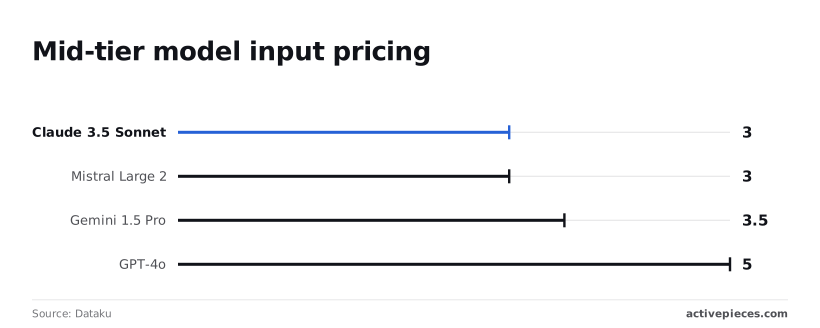
The rate for Claude Sonnet 5.5 is $2.00 per million input tokens, which positions it competitively for developers prioritizing cost-efficiency.
While this matched Mistral, Gemini 1.5 Pro cost $3.50 and GPT-4o reached $5.00 per million tokens, meaning these alternatives required a larger budget for the same amount of data.
Consequently, developers who switched from GPT-4o to Sonnet saw their upfront processing costs reduced by 40% per request, which significantly lowered the barrier to entry for large-scale deployments and allowed for more ambitious project scaling.
Output tokens cost $10.00 per million, creating a higher financial burden for tasks that generate long-form responses, so budget planning requires careful estimation of expected response lengths.
Prompt caching discounts for Claude API calls
When users store frequently used context, prompt caching lowers the cost of long-context queries. This is useful for long technical manuals or system instructions.
| Usage Type | Standard Price (per MTok) | Cache Write Price (per MTok) | Cache Read Price (per MTok) |
|---|---|---|---|
| Input Tokens | $2.00 | $3.75 | $0.30 |
| Output Tokens | $10.00 | N/A | N/A |
| Total Savings | N/A | 25% Premium | 90% Discount |
Prices and plan limits checked against docs.claude.com and claude.com and openai.com and gemini.google on October 10, 2026.
Writing a cache costs $3.75 per million tokens, which is a 25% premium over standard input, indicating that you pay extra for the convenience of faster subsequent retrieval. Subsequent reads from that cache drop to $0.30 per million tokens.
This means a recurring 100,000-token prompt costs only $0.03 after the first run instead of the usual $0.30.
Claude API rate limits and usage tiers
How many requests a user can send per minute (RPM) and how many tokens they can process per minute (TPM) is dictated by usage tiers.
The Claude.com Pro plan has a flat $20 monthly fee for individual use, meaning users enjoy unlimited access without tracking variable per-token expenses.
API users navigate five tiers, which dictates the specific rate limits and usage quotas applied to their account. The Free tier is for testing, while Tier 5 has the highest capacity for production.

Organizations monitor usage to stay within their bracket. An enterprise must maintain a positive balance and history to unlock the volume required for real-time customer-facing tools.
If you are running this arithmetic for your own team, see what the same workload costs on Activepieces.
Cheaper commodity models versus Sonnet 5.5
Deploying Claude Sonnet 5.5 for simple data extraction or sentiment analysis forces an enterprise to pay a premium for cognitive overhead that remains entirely unused.
While its intelligence is undeniable, the model is an expensive overkill for basic classification tasks that do not require frontier-level reasoning.
For these high-volume, low-complexity workflows, commodity models offer a significantly more sustainable cost-per-run profile. Claude Haiku 5.5 handles high-volume tasks like routing and extraction.
GPT-6 Luna is a cheaper alternative for high-volume workloads when deep reasoning is unnecessary. Gemini 3.5 Flash-Lite processes visual and text data at a lower price point.
Choosing the right Claude model for the task
When a reasoning-heavy model like Claude Fable 5.1 is used to identify a "yes" or "no" in an email, a failure of resource allocation occurs.
The price-per-token gap between these tiers is large enough that a misconfigured agent can quickly erode the ROI of an entire automation project.
By shifting these tasks to commodity models, developers reserve their credits for the long-horizon agentic work that only the most advanced models can reliably execute.
Why reasoning density justifies Sonnet pricing
Claude Sonnet 5.5 has a higher ratio of logic per character than budget alternatives. It solves multi-step problems without the extensive prompt engineering that inflates token counts.
While frontier models command a higher price per million tokens, the ability to reach a correct output in a single pass minimizes the total volume of data processed.
Reduced token overhead in complex prompting
Because Claude Sonnet 5.5 often achieves reasoning through zero-shot prompts, it avoids the bloat of ten-shot examples and manual "think step by step" instructions. Models like GPT-6 Luna require extensive few-shot examples to maintain logic, whereas Sonnet creates a "Reasoning Density" effect.
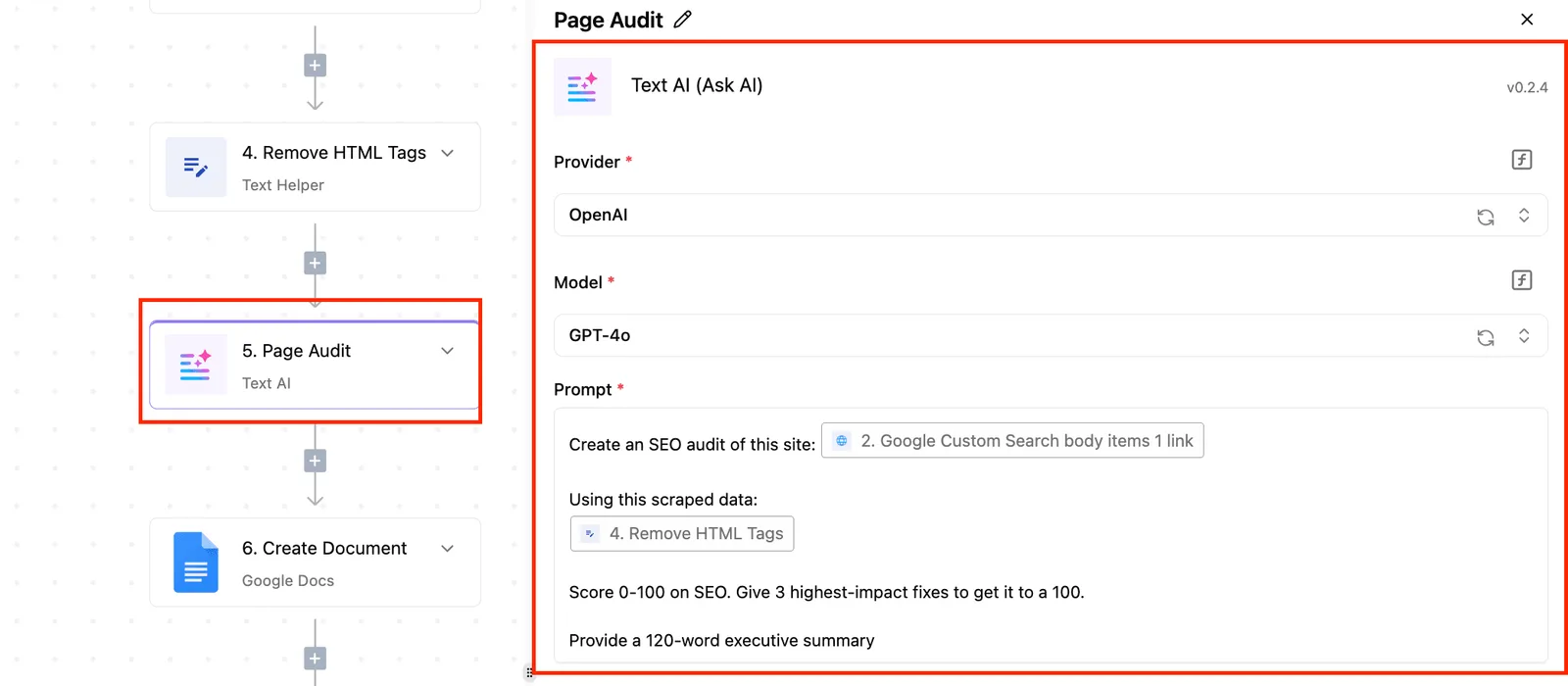
You pay for intelligence rather than repeating instructions that a smaller model would forget.
How Claude Sonnet reduces retry costs
Every failed execution in an automated pipeline is a double expense consisting of the initial wasted tokens and the cost of the subsequent retry.
Claude Sonnet 5.5 maintains high accuracy in agentic workflows, which prevents the recursive cost spirals common when Gemini 3.5 Flash-Lite misses a logical constraint.
By getting the logic right the first time, Sonnet eliminates the hidden overhead of error-handling loops and manual human intervention.
Comparing cost-to-accuracy ratios across providers
The cost of an LLM depends on the price of a successful outcome rather than the price per thousand tokens.
| Model | Prompt Strategy | Cost Impact |
|---|---|---|
| Claude Sonnet 5.5 | Zero-shot / Direct | Lowers total token volume per task. |
| GPT-6 Luna | High-shot / Verbose | Increases input costs to maintain accuracy. |
| Gemini 3.1 Flash-Lite | Recursive / Chain-of-Thought | Risks high retry costs on logic failures. |
Choosing a model based solely on the lowest API rate often results in a higher monthly invoice. The "cheap" model requires three times the prompt length to achieve the same reliability.
Claude Sonnet 5.5 represents the most predictable unit cost for developers who value logical precision over raw character volume.
Hidden expenses in scaling Claude API implementations
Monthly Claude API bills are rarely just the sum of successful tokens; they include hidden costs like high-latency retries, prompt engineering labor, and the context window tax.
A $1,000 Claude bill represents a complex split between productive output and the operational friction of maintaining an autonomous agent, making it difficult to isolate the true cost of individual tasks.
The Anatomy of a $1,000 Claude Bill: $650 for successful production tokens, $180 for failed/retried agent loops, $120 for prompt engineering/testing, $50 for context window overhead.
Nearly a third of the budget goes toward reliability rather than the final delivery of value. Developers must optimize the infrastructure surrounding the model to prevent these auxiliary costs from eclipsing the primary utility of the logic.
**Nearly a third of the budget goes toward reliability rather than the final delivery of value.
Managing conversation context in Claude API
Maintaining state across multi-turn conversations requires resending the entire history with every new message, which compounds the cost of each subsequent interaction.
Because Claude Sonnet 5.5 processes the full context to maintain coherence, an agent that reaches its tenth turn is significantly more expensive than the first.
Long-running sessions can deplete budgets faster than high-frequency, short-duration tasks. Forcing a model to follow a specific schema for downstream processing requires verbose system instructions and validation loops.
When Claude Fable 5.1 repeats a complex JSON object because of a single missing bracket, the developer pays for both the initial failure and the correction. Rigid formatting requirements act as a multiplier on total token consumption.
Claude API monitoring and observability tool costs
Tracing the decision-making process of an agent requires third-party logging tools to capture every prompt and response for later audit.
LangSmith is a platform for debugging and testing LLM applications. Helicone is an open-source observability proxy for tracking API spend and latency. DataDog is a monitoring service that integrates LLM metrics with broader infrastructure health.
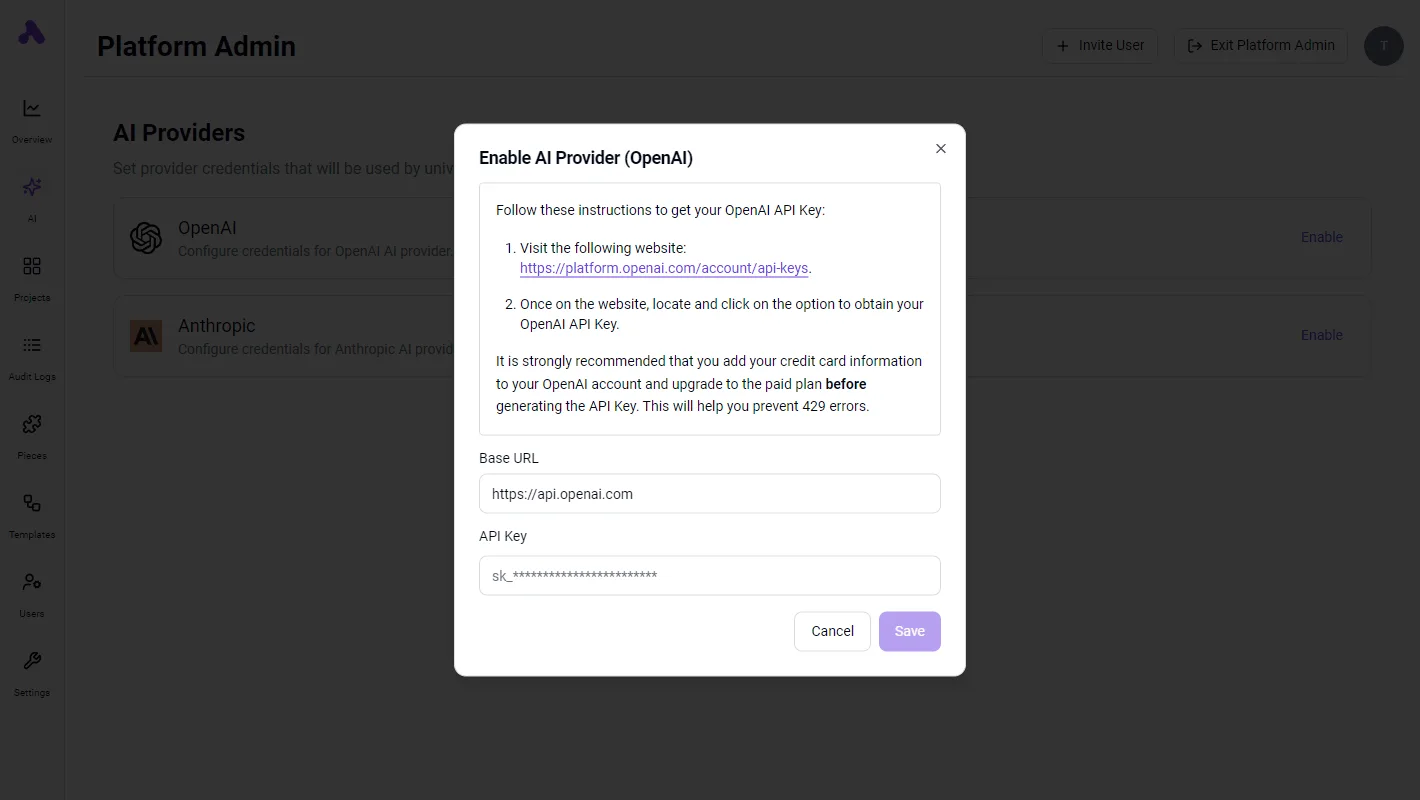
Because these tools often charge based on the volume of spans or logs generated, a high-reasoning agent produces a secondary bill that grows in direct proportion to its API usage.
Worth checking against a plan that does not meter every step: one credit covers a whole run on Activepieces.
Reducing Claude API costs through architectural efficiency
Controlling Claude costs requires moving logic out of the prompt and into the workflow platform to ensure the model only processes high-value tokens.
When an automation platform is the logic engine, it acts as a gatekeeper that evaluates data before it ever reaches the Anthropic API.
This architectural shift prevents the "reasoning tax" incurred when a high-intelligence model like Claude Sonnet 5.5 performs basic data cleaning or conditional routing.
Standard code scripts can handle these tasks. By offloading pre-processing to the workflow layer, you minimize the input token count that would otherwise be wasted on context setting.
Using filters to cut Claude API calls
Implementing specific filters and transformations achieves this efficiency. Conditional filters halt the execution of a flow if the incoming webhook data does not meet specific criteria, which means the model is never invoked for irrelevant tasks.
Data transformation steps strip HTML tags or metadata from a source, so the model receives only the core text rather than paying for thousands of structural tokens.
Router branches direct simple requests to a lower-cost model like Claude Haiku 5.5. This reserves the reasoning capabilities of Claude Fable 5.1 for complex, multi-step logic. This approach transforms the automation platform from a simple connector into a cost-containment layer.

By verifying data integrity at the edge of the workflow, you ensure that every cent spent on the API is dedicated to synthesis and decision-making.
Claude Sonnet 5.5 vs the competitive landscape
Claude Sonnet 5.5 pricing incentivizes high-frequency reasoning without flagship-class premiums.
Developers often default to OpenAI due to the familiarity of their $20 per month Plus plan, but the real economic delta is found in API throughput rather than seat licenses, which leads many to overlook the long-term savings of switching providers.
Claude Sonnet 5.5 is positioned to compete directly with GPT-6 Astra and Gemini 2.5 Pro, particularly for users who require large context windows but cannot justify the latency of a larger model.
The following table illustrates how these frontier models compare across the primary levers of operational expense.
| Dimension | Claude Sonnet 5.5 | GPT-6 Astra | Gemini 2.5 Pro |
|---|---|---|---|
| Input Price (MTok) | Competitive Mid-Tier | Standard Enterprise | Tiered Usage |
| Output Price (MTok) | Optimized for Logic | Standard Enterprise | Tiered Usage |
| Context Window | 200k Tokens | 128k Tokens | 2M Tokens |
| Prompt Caching | Native Support | Partial Support | Native Support |
Gemini 2.5 Pro has a larger raw context window, but Claude Sonnet 5.5’s native prompt caching reduces the cost of repetitive multi-step logic by up to 90% in high-volume workflows.
This makes it the most viable candidate for agentic loops where the system state must be re-read constantly. The financial advantage of this efficiency becomes clear when evaluating the total cost of ownership for a production-grade autonomous agent.
Weekly Claude API cost audit routine
Auditing API expenditure ensures that Claude 5.5 Sonnet does not become an unmonitored liability.
The recursive nature of multi-step tools can inflate token counts if the logic is not refined weekly. This routine review identifies where architectural inefficiencies are draining the budget without improving output quality.
Step 1: Enable prompt caching for static headers
Prompt caching reduces costs by allowing the API to reuse frequently sent context rather than re-processing it at full price. Large system instructions, complex API schemas, or multi-hundred-page documentation sets often remain identical across thousands of calls.
By designating these blocks as cacheable, you ensure the model only bills you the full input rate for the unique, changing parts of the query.
The Monday Morning Audit provides a clear sequence for immediate optimization.
- Export usage logs from Anthropic Console to see the raw request history.
- Identify the top 3 'chattiest' prompts by token volume to find the most expensive workflows.
- Enable Prompt Caching for static system instructions to lower the cost of repetitive context.
- Set a recurring calendar reminder to verify that these cached hits are actually occurring.
Finally, set a recurring calendar reminder to verify that these cached hits are actually occurring.
Step 2: Set organization-wide spend alerts
Hard spend limits prevent a runaway recursive loop or a misconfigured script from exhausting your entire monthly budget in a single weekend. The Anthropic Console allows for granular notifications at specific dollar thresholds, providing a safety net for experimental agentic workflows.

Without these alerts, a logic error in a "while-loop" could trigger thousands of redundant calls to Claude 5.5 Sonnet before a human notices the anomaly.
Step 3: Identify 'over-reasoned' low-value tasks
Matching the model's intelligence to the task's complexity prevents you from paying a premium for basic data entry. If the audit reveals that Claude 5.5 Sonnet is being used for simple boolean classification or basic JSON formatting, those specific steps should be rerouted.
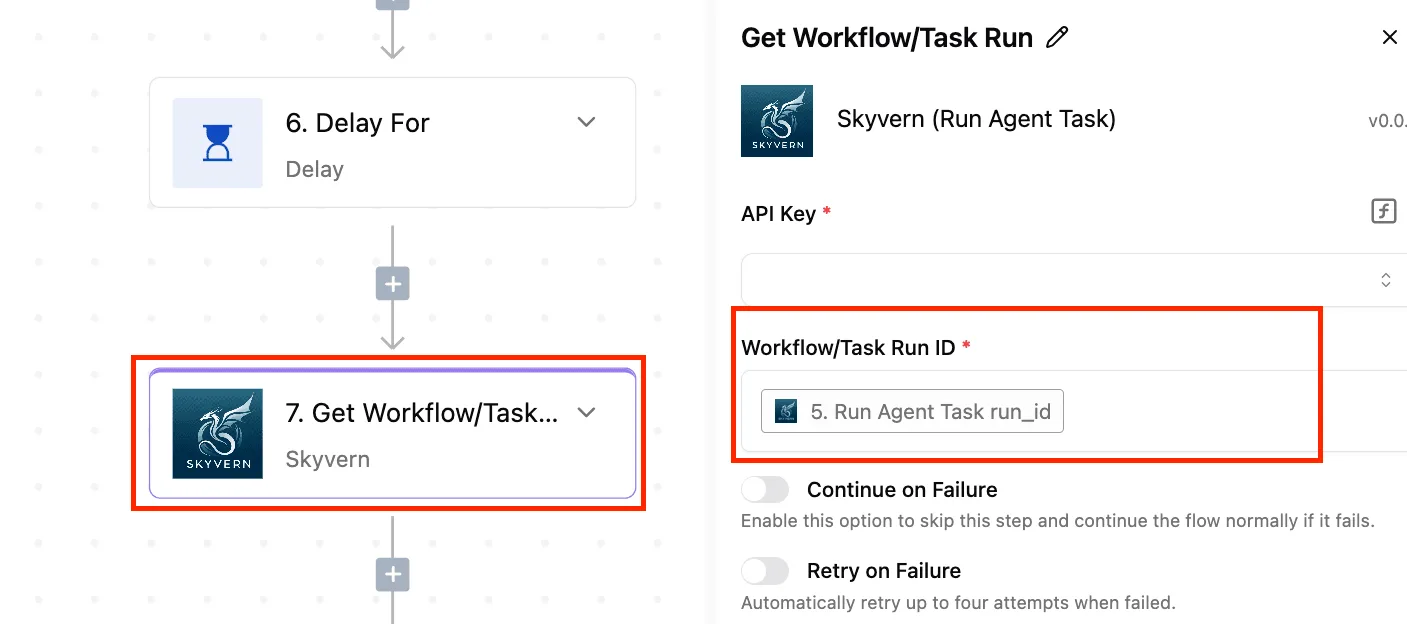
Claude Haiku 5.5 is for high-volume routing, sentiment analysis, or initial data cleaning. Claude 5.5 Sonnet is reserved for multi-step reasoning, complex code generation, and nuanced tool use. Claude Fable 5.1 is deployed only for long-horizon strategic planning that requires maximum logical depth.
Downshifting these low-stakes tasks preserves your budget for the complex reasoning where Sonnet truly excels.
Are Claude API credits refundable?
Do Anthropic API credits expire?
After a set period from the date of purchase, Anthropic API credits expire. This means unused balances represent a sunk cost for businesses that over-provision their accounts.
If you fail to utilize your prepaid balance within this timeframe, the remaining funds are forfeited to the provider rather than rolling over into the next billing cycle.
This policy necessitates a precise calculation of monthly token consumption to ensure that capital is not tied up in expiring digital assets.
Is there a free tier for the Claude API?
The Claude API does not offer a permanent free tier for production use. Developers must attach a valid payment method to move beyond initial evaluation phases.
While some accounts may receive a small amount of starting credit for testing, these are temporary grants intended for sanity-checking integration logic rather than sustaining a live workflow. Every request sent during the development of a pipeline incurs a direct marginal cost.
Does Claude Sonnet 5.5 pricing vary by region?
Standardized across all supported geographic locations, pricing for Claude Sonnet 5.5 allows global teams to forecast their operational expenses without accounting for regional currency fluctuations or local surcharges.
This uniformity simplifies the financial modeling for distributed applications, as a request processed in one territory costs the same as a request processed in another. The lack of regional price discrimination allows for simplified billing reconciliation across international departments.
It also provides predictable scaling costs regardless of where the end-user is located and uniform budget allocation for global API infrastructure.
What Activepieces does about this
Activepieces provides the infrastructure to execute these multi-step Claude Sonnet 5.5 workflows without the compounding costs typical of traditional automation tools.
While other platforms charge for every individual step in a sequence, Activepieces bills one credit per flow run regardless of how many logical branches or data transformations you include.
This allows developers to build the granular, high-reliability logic that Sonnet excels at (such as recursive error handling or multi-stage verification) without being penalized for the complexity required to get the output right.
The platform acts as a cost-containment layer by allowing you to offload non-cognitive tasks to local code steps or built-in filters.
Instead of sending raw, messy data to the Anthropic API and paying for the model to clean it, you can use Activepieces to strip HTML, filter out irrelevant webhooks, and format JSON at the edge.
This architectural shift ensures that every token sent to Claude Sonnet 5.5 is a high-value reasoning token, directly reducing the input volume that would otherwise be wasted on structural overhead.
For teams managing large-scale deployments, Activepieces offers a self-hosted version under an MIT license, providing total control over the execution environment and data privacy. This is particularly valuable for enterprises like Rakuten, who use the platform to scale their internal operations.
By decoupling the cost of the workflow from the number of steps, Activepieces enables the "Reasoning Density" strategy, where you can afford to build the most robust version of an agent without worrying about the per-step tax on your operational budget.
Related reading
References
Running the numbers
See what the same workload costs here.
Free forever plan, and every paid plan self-hosts at no extra cost.
See pricing Talk to sales