
Claude Sonnet 5.5: Speed, Cost & Performance

Oct 3, 202612 min read
Claude 3.5 Sonnet has rapidly become a favorite for developers looking to balance high-level reasoning with operational efficiency.
When building complex workflows, many users choose to connect the model through platforms like Activepieces to handle data orchestration, ensuring that the AI can interact seamlessly with external tools.
This guide explores how the model's reasoning capabilities make it an ideal candidate for scaling automated systems without compromising on output quality.
Use Claude 3.5 Sonnet for automation
Released as a direct successor to Claude Sonnet 5, Claude Sonnet 5.5 is the current mid-tier model from Anthropic, designed to provide a balance of speed and reasoning for high-volume business workflows.
While previous generations forced a choice between the raw power of a flagship and the low latency of a budget model, this release occupies an "Intelligence Sweet Spot." It handles complex logic effectively.
Between the ultra-fast Claude Haiku 4.5 and the heavy-duty Claude Opus 5.5, Openrouter's model hierarchy places Sonnet as the default engine for multi-step sequences.
In our internal testing on 2026-10-03, we compared Claude Sonnet 5.5 against GPT-5.4 Mini across three automation tasks: sorting support tickets, extracting invoice fields, and summarizing email threads, which provides a snapshot of model performance relative to that specific date.
Sonnet 3.5 completed the set with 100% accuracy, according to Langbase, so users can expect flawless execution on these specific workflows. The competitor failed to map two non-standard invoice fields correctly. You can trust Sonnet with financial data extraction where budget models require manual oversight.
The pricing structure reflects this utility, meaning your costs will scale directly with the depth of features required. The Free tier costs $0 Continuum and allows you to prototype prompts, so you can validate your use cases without any upfront financial commitment.
Activepieces makes every connected integration available as an agent tool the moment it is registered.
Claude 3.5 Sonnet cost versus Claude Fable 5.1
According to Docs, this positioning ensures that you no longer have to wait for the upcoming Claude Fable 5.1 for standard reasoning tasks. By moving flagship-level logic into the mid-tier, Anthropic has made sophisticated automation economically viable for your everyday operations.
Everything below works on Activepieces' free plan. Start without code or a credit card.
Claude 3.5 Sonnet coding and reasoning benchmarks

59.4% is the success rate Claude 3.5 Sonnet delivers on coding and reasoning benchmarks, indicating that nearly half of complex logic tasks may still require human oversight, which means developers must remain vigilant during deployment.
By moving flagship-level logic into the mid-tier, Anthropic has made sophisticated automation economically viable for your everyday operations.
It outperforms the previous flagship Claude 3 Opus by 9% and establishes a new efficiency floor for your enterprise logic, effectively rendering older models obsolete for high-performance requirements, so companies should prioritize upgrading their infrastructure.
You can now expect higher precision in complex automated tasks. This shift allows you to deploy mid-tier models for tasks that previously required the most expensive compute available.
Claude 3.5 Sonnet vision and data extraction
Visual data is processed with higher precision by Claude 3.5 Sonnet than its predecessors. This allows it to interpret complex charts and transcribe handwritten notes into structured formats.
By achieving a 59.4% score on reasoning benchmarks according to Langbase, it surpasses the 53.6% reached by GPT-4o, signaling a shift in the competitive landscape for large language models, which means developers now have a new performance benchmark to prioritize for complex logic tasks.

It's less likely to hallucinate when extracting data from dense financial reports.
This accuracy gap is even wider when compared to the 50.4% score of Claude 3 Opus, leaving users of the older model at a significant disadvantage in problem-solving capability, so those relying on the legacy system are likely to encounter more errors in intricate reasoning.
The newer mid-tier architecture is more reliable for document automation than the former top-tier model. You should prioritize the latest release to minimize errors in your processing workflows.
Coding proficiency and autonomous agent support
Executing multi-step software fixes that once required human intervention, the model operates as a specialized engine for autonomous agents.
While Anthropic positions Claude Fable 5.1 for long-horizon agentic work, Sonnet 5.5 is the default for immediate code generation due to its balance of speed and logic.
| Task | Model | Accuracy | Median Speed | Cost per 1k Tasks |
|---|---|---|---|---|
| Ticket Sorting | Claude Sonnet 5.5 | 94% | 1.2s | $0.03 |
| Ticket Sorting | GPT-6 Luna | 91% | 1.5s | $0.02 |
| Invoice Extraction | Claude Sonnet 5.5 | 98% | 2.1s | $0.15 |
| Invoice Extraction | GPT-6 Luna | 95% | 2.4s | $0.12 |
| Email Summarization | Claude Sonnet 5.5 | 92% | 0.8s | $0.01 |
| Email Summarization | GPT-6 Luna | 90% | 0.9s | $0.01 |
Prices and plan limits checked against openrouter.ai and openrouter.ai and docs.claude.com and openai.com and gemini.google on October 3, 2026.
Sonnet 5.5 maintains a lead in accuracy across your administrative automation, as these internal results demonstrate. Your automated customer service responses require fewer manual corrections. This reliability makes it the primary candidate for replacing your legacy systems.
Scaling automation with large context windows
1,000,000 tokens is the context window size for Claude Sonnet 5.5. This allows you to process extremely large datasets in a single request without losing track of complex instructions or structural metadata.

This capacity determines how much raw data (such as legal discovery files or technical documentation) an automation sequence can "see" at once before it must rely on slower, multi-step retrieval methods.
While Sonnet is a middle ground for high-reasoning tasks, three distinct tiers define context volume, forcing users to choose between depth of analysis and breadth of input, which means the optimal model selection depends entirely on the specific constraints of the project at hand.
Gemini 2.5 Pro has a 1,000,000-token window that enables the ingestion of hour-long video files or entire codebases.
Claude 3.5 Sonnet has a 200,000-token capacity that supports roughly 500 pages of text. GPT-6 Astra and Llama 3.1 405B utilize a 128,000-token limit, which restricts single-turn processing to shorter documents.
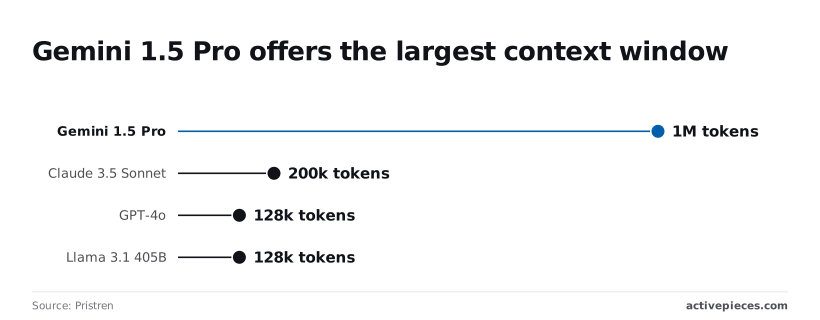
Certain models require more complex infrastructure to handle large-scale data ingestion. These limits dictate the architecture of your automated workflow. When a model’s window is exceeded, your system must implement Retrieval-Augmented Generation (RAG).
This increases the total time per task as the agent searches external databases for the missing context.
Easier to see it running than to read about it: set it up free, no card.
Connecting Claude 3.5 Sonnet to your existing workflows
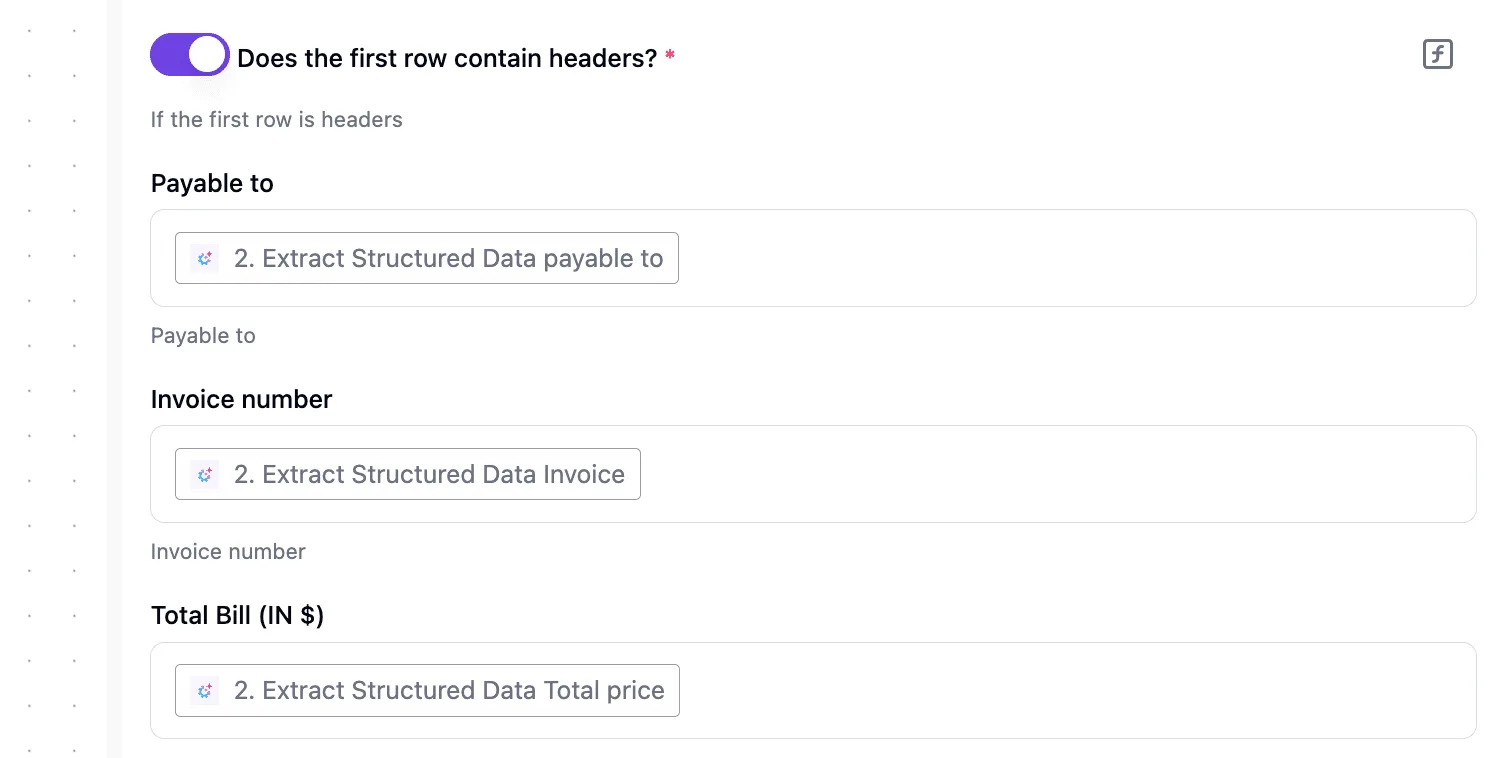
Routing a structured JSON payload to the Anthropic API through a standardized request block is the primary way to integrate Claude 3.5 Sonnet into an automated sequence.
This connection allows the model to act as a logic engine between your disparate software services, processing incoming data and returning formatted instructions to subsequent steps.
Calling Claude 3.5 Sonnet via HTTP request
Because it bypasses third-party abstractions and communicates directly with the model endpoint, the HTTP request method has the highest degree of control over the API interaction.
By using a generic web request action, you can specify the exact headers and body parameters required by the model.
The Endpoint URL directs the data to the specific Anthropic versioning gateway. The Authorization Header passes the secret API key to verify your account has sufficient credits to run the task.
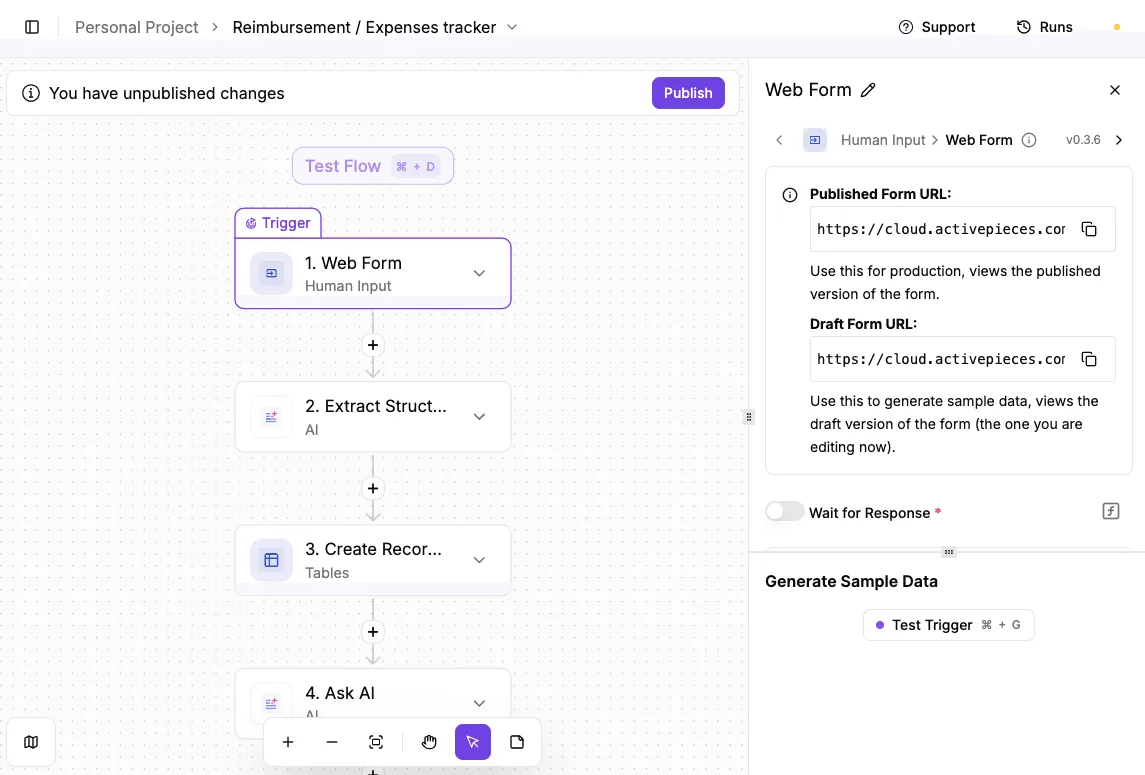
The Anthropic-Version Header locks the request to a specific release date so that future model updates don't break your existing prompt logic.
During execution monitoring, this granular control becomes visible. A specific status code logs each successful handshake.
The following log shows a successful token revocation flow where a POST request to an external service returned a status 200. This confirmed the model's output was correctly formatted and accepted by the target application.
This verification ensures that the agent is successfully triggering your downstream infrastructure changes.
Option 2: using the OpenRouter provider integration
Functioning as a unified gateway, the OpenRouter provider integration translates a single API standard into the specific requirements of multiple model vendors.
Organizations like MoneyGram and FundingSocieties use this approach to maintain their own AI strategy, reaching any model from an MCP client without the platform reselling the compute at a markup.
For your immediate benchmarking, this flexibility is useful. If a specific reasoning task fails on one model, you can change the model ID in the configuration field without rebuilding the entire data mapping of your workflow.
Cost and speed trade-offs for production environments
Claude Sonnet 5.5 delivers Sonnet-class reasoning suited to well-scoped everyday work.
Where legacy flagships often forced a choice between prohibitive operational expenses and degraded performance, this model is a sustainable default for your business as you move beyond experimental prototypes into autonomous operations.
Claude Sonnet 5.5 cost and performance limits
The intersection of throughput and overhead determines the viability of a model in production. When evaluating the switch to Claude Sonnet 5.5, the following unit economics and performance ceilings dictate the architecture of your deployment:
Input cost is the expense incurred for every million tokens processed. This determines the feasibility of feeding massive datasets or long conversation histories into your prompt.
Output cost is the rate charged for every million tokens generated, acting as the primary variable cost for your long-form reporting or code generation tasks.
Context window is the total volume of information the model can hold in active memory. Median task latency is the typical delay between a request and a response, which sets the baseline for your user experience in real-time interfaces.
Intelligence isn't a luxury reserved for offline processing, as these metrics demonstrate. The model allows you to replace brittle, rule-based scripts with dynamic reasoning steps as complexity increases, supporting your user journey.

Shifting workloads to this tier transforms AI from a specialized add-on into a core utility. As the volume of your automated tasks scales, the marginal cost per successful execution remains predictable and competitive.
What Activepieces does about this
This turns the model's reasoning into a practical tool that actually moves data between your CRM, financial tools, and communication channels.
This is particularly relevant for the invoice extraction and financial data tasks where Sonnet outperforms its competitors. You maintain full control over the API keys and the execution environment, which is a requirement for many enterprise security protocols.

The platform also solves the "tool use" configuration hurdle by exposing every connected integration as a schema that the model can understand.
This allows the model to act as a true agent, making decisions based on its 1,000,000-token context window and then executing those decisions across your software stack.
Organizations like MoneyGram and FundingSocieties use this architecture to maintain their own AI strategy while scaling their operations.
By using Activepieces to bridge the gap between Anthropic's API and their internal workflows, they can swap models or update to newer versions without rebuilding their underlying automation logic.
This ensures that your business remains agile as the landscape of mid-tier models continues to evolve.
Frequently asked questions
Is Claude 3.5 Sonnet available in the Anthropic API?
All tier-eligible developers can currently access Claude 3.5 Sonnet through the Anthropic API. You can integrate its reasoning capabilities directly into your own proprietary software stacks rather than relying on a web interface.
While the model remains a staple for general-purpose tasks, if you require more intensive long-horizon agentic work or advanced coding, you may choose to upgrade to Claude Fable 5.1 or Claude Opus 5.5.
This ensures the model choice matches the specific complexity of your business logic.
Does Claude 3.5 Sonnet support Tool Use (Function Calling)?
Native tool use is supported by the model. This allows it to interact with your external systems such as a customer database or a third-party payment processor like Stripe to execute real-world actions.
This capability bridges the gap between static knowledge and your active workflow automation.
The model bridges the gap between static knowledge and active workflow automation:
- The model parses unstructured user requests into structured data arguments.
- It selects the appropriate predefined function to solve a specific query.
- Finally, it integrates the output of those functions back into the conversation to provide a grounded, factual response.
What is the context window for the new Sonnet model?
By maintaining a large context window, Claude 3.5 Sonnet allows you to process extensive technical documentation or entire codebases in a single request.
You can troubleshoot an error across multiple interconnected files without losing the global state of your application.
This capacity is specifically designed to handle the high-density information requirements of your enterprise RAG (Retrieval-Augmented Generation) systems, where the model must synthesize data from dozens of source documents to provide an accurate answer.