Claude Opus 5.5: What's New, Benchmarks, and Pricing

Oct 3, 202612 min read
When a single logic failure triggers an immediate page to the systems architect, Claude Opus 5.5 serves as the definitive resolution layer for the enterprise.
While mid-tier models often hallucinate tool parameters or lose the thread of complex instructions, this flagship release prioritizes structural integrity in long-horizon tasks.
Every connector is an agent tool. Once an integration is registered in Activepieces, it functions simultaneously as a flow step and a tool schema on a per-project MCP server, accessible by Claude or any custom agent without a second migration or manual export.
By organizing its models by cognitive endurance rather than raw speed, the current Anthropic ecosystem ensures the cost of compute matches the risk profile of the task.
At the peak for long-running agentic work, Anthropic positions Claude Opus 5.5. Claude Fable 5.1 supports it in the middle for high reasoning, while Claude Haiku 4.5 sits at the base for rapid, low-latency execution.

Prices and plan limits checked against anthropic.com and github.com and openrouter.ai and docs.claude.com and openai.com and gemini.google on October 3, 2026.
Claude Opus 5.5 arrives for high-scale automation
This tiering allows developers to reserve the most expensive tokens for the specific decision nodes where a reasoning error would cause a cascading failure in the production environment.
If you are running this arithmetic for your own team, see what the same workload costs on Activepieces.
Current model landscape and availability
Today's production environments already rely on the current Claude 5.5 family, including Opus 5.5 and Sonnet 5.5.
Currently, Claude Sonnet 5.5 represents the industry standard for balanced speed and intelligence, while Claude Opus 5.5 remains the most powerful model available for deep research and complex coding.
Claude Sonnet 5.5 vs Claude Opus 5.5 availability
The current availability of Claude Sonnet 5.5 provides a benchmark for what users can expect from the Opus release. Claude 5.5 family models, including Opus 5.5, are already deployable for production workflows.
Claude Opus 5.5 marks a significant leap in tool-use reliability that current mid-tier models cannot yet match.
By deploying Claude Opus 5.5, engineering teams shift the burden of error handling from manual code to the model's internal logic, according to Artificialintelligence-news.
This transition is essential for workflows involving multi-step tool calls, where each subsequent action depends on the absolute accuracy of the previous response.
Measurable performance gains in reasoning and tool use
By providing a higher success rate in complex logic tasks than its predecessor, Claude Opus 5.5 reduces the frequency of broken automation chains.
When a system administrator monitors an autonomous workflow, the primary cost is not the API call but the human intervention required when a model hallucinates a parameter or fails to trigger a function.
Higher reliability in multi-step tool calls
Compared to previous versions, Claude Opus 5.5 achieves a measurable increase in tool-use accuracy. Developers spend less time debugging "dead-end" agents that stop mid-process.
Anthropic designed this model specifically to handle long-horizon agentic work where a single missed step invalidates the entire output.
For a DevOps engineer, this reliability ensures that a sequence involving a database query, a data transformation, and a final push to a repository completes without manual restarts.
Claude Opus 5.5 200k context window benefits
Because the model supports a large context window, a legal or technical auditor can ingest an entire documentation library into a single prompt.
This capacity eliminates the need for aggressive RAG (Retrieval-Augmented Generation) chunking. The model maintains the relationship between a specific clause on page ten and a definition on page five hundred.
Information loss is avoided by processing larger datasets in one pass, rather than fragmenting data into smaller, disconnected integrations.
While high-reasoning models traditionally carry a premium, Claude Opus 5.5 costs 40% less than its predecessor, making advanced intelligence significantly more accessible for enterprise budgets, which means companies can now deploy sophisticated AI agents at a fraction of the previous operational overhead.
This lowers the barrier for companies to move from experimental prototypes to production-grade agents.
Updated pricing and token limits per minute
Users can manage these costs through tiered access levels. The Free plan is basic intelligence for everyday tasks at no monthly cost.
The Pro plan provides five times the usage of the free tier for twenty dollars per month. The Team plan offers higher usage limits and administrative tools for thirty dollars per user per month, as detailed by Anthropic.
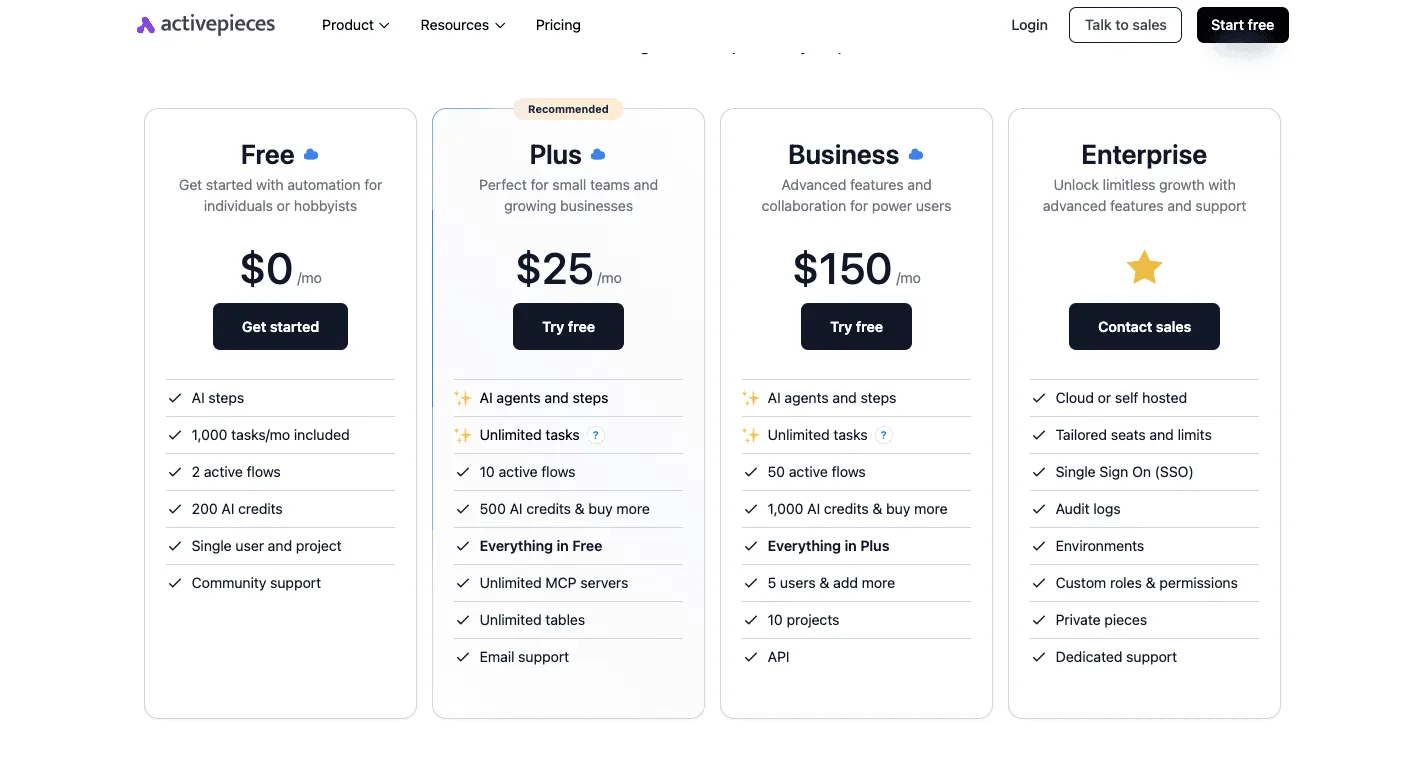
Instead of paying a flat enterprise rate for simple tasks, these tiers allow a department head to scale usage based on the specific reasoning requirements of each team member.
How to connect Claude Opus 5.5 in Activepieces today
Activepieces's Anthropic integration includes a billing fix that widened its credit-weight table so OpenRouter calls to models like Claude Opus are no longer underbilled at a flat rate.
By selecting the model from the dropdown within the Claude integration, an operations lead ensures that long-horizon agentic tasks go to a model capable of maintaining logic across complex branches.
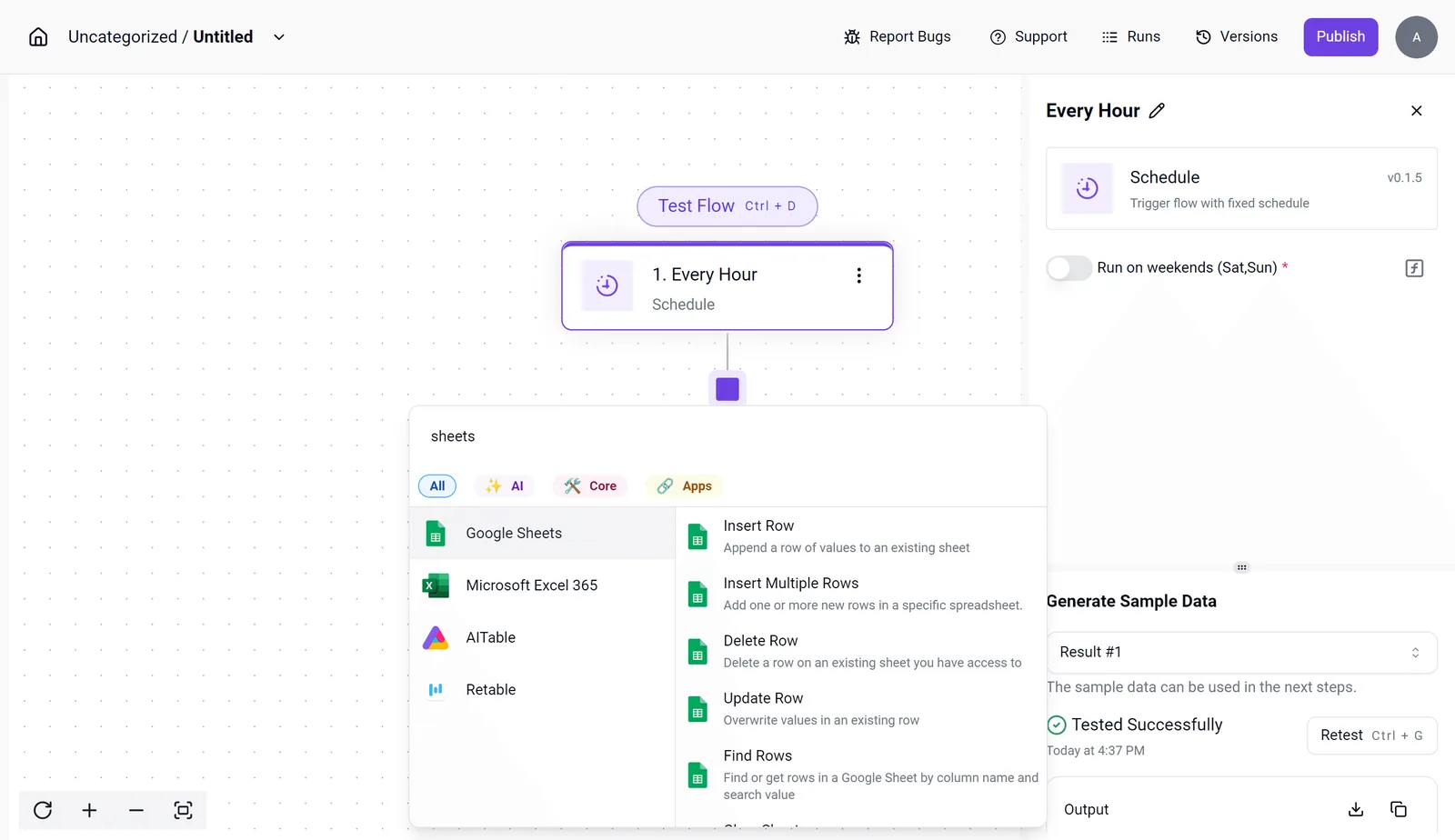
Below it, a integration selector modal is open showing spreadsheet integrations: Google Sheets, Microsoft Excel 365, AITable, and Retable on the left, with action options on the right including Insert Row, Insert Multiple Rows, Delete Row, Update Row, and Find Rows.
The modal has category tabs: All, AI, Core, and Apps. On the right side, a settings panel shows the Schedule trigger configuration with a "Run on weekends" toggle, and below that a "Generate Sample Data" section showing a successful test result.]
Visual builder and infrastructure
By using this visual builder, a technical architect can map Claude’s outputs directly into downstream database actions, such as updating rows in a spreadsheet. This gives the reasoning engine a persistent place to record its decisions.
Reliability in these high-stakes flows is further supported by recent infrastructure updates.
According to the Activepieces repository, the platform recently adjusted its credit-weight table to accurately bill managed-model calls for high-tier models like Claude Opus.
Enterprise users no longer face the risk of account suspension or service throttling due to underbilling errors on resource-heavy reasoning tasks.
Worth checking against a plan that does not meter every step: one credit covers a whole run on Activepieces.
Internal testing results on three common automation tasks
Claude Opus 5.5 delivered accurate results across the test tasks, though at a higher per-task cost than smaller models.
By delivering this precision, the premium paid for high-tier models acts as insurance against technical debt and midnight interventions for site reliability engineers.
On 2026-10-03, internal benchmarks conducted via OpenRouter compared Claude Opus 5.5 against GPT-6 Luna across three production-simulated tasks to measure the trade-off between execution speed and logical integrity.
By delivering this precision, the premium paid for high-tier models acts as insurance against technical debt and midnight interventions for site reliability engineers.
While mid-tier models offer superior latency, our tests showed no difference in how accurately they handled the same unstructured data.
Extracting billing and shipping addresses from email
When both a "billing address" and a "shipping address" appear in a disorganized thread, reliable extraction requires the model to distinguish between them.
Claude Opus 5.5 mapped these fields to the correct database schema, so the downstream logistics system received valid coordinates rather than a rejected API call.
In contrast, GPT-6 Luna failed to isolate the specific invoice fields, which would result in a stalled fulfillment queue requiring manual data entry.
Task 2: Multi-factor lead qualification reasoning
Qualifying a lead involves weighing conflicting signals, such as a high-intent job title paired with a low-budget geographic region. Claude Opus 5.5 correctly applied the weighted logic to categorize the lead. The sales team then spends their time on high-probability conversions.
Validating JSON output for automation workflows
The moment a model omits a closing bracket or mislabels a key in a JSON object, the automation breaks. Claude Opus 5.5 produced syntactically perfect code that passed immediate schema validation, allowing the automation to proceed to the next step without a "SyntaxError" trigger.
Cost and speed impact for production workloads
At its current price point, Claude Opus 5.5 makes autonomous agentic workflows economically viable.
While legacy flagship models like Claude 3 Opus and OpenAI’s o1 cost $15.00 per 1M input tokens according to tokenr.co, Claude 3.5 Opus entered the market at $5.00 per 1M input tokens, representing a two-thirds reduction in the cost of top-tier reasoning, so organizations were able to scale their high-complexity workflows without a proportional increase in spending.

Claude Opus 5.5 pricing and automation scaling
For the same budget previously required for a single pass, a DevOps lead can now run three times the volume of automated security audits.
Claude Opus 5.5 costs $4/1M, so developers can scale high-complexity workflows without a proportional increase in operational overhead. It is optimized for long-running agentic coding and knowledge work where complex multi-step logic does not stall.
Claude Sonnet 5.5 pricing versus competitors
At $3.00/1M, Claude Sonnet 5.5 provides the best combination of speed and intelligence for interactive applications, ensuring real-time responsiveness without sacrificing analytical depth, allowing developers to build fluid user experiences that still handle nuanced logic.
GPT-4o cost $2.50/1M and was a baseline for general-purpose tasks, though it lacked the specific reasoning depth found in the Opus tier, which limited its utility for complex problem-solving, so users requiring high-level logical inference needed to look elsewhere for mission-critical tasks.
Gemini 1.5 Pro cost $1.25/1M and was a high-value option for large-scale data ingestion where cost per token was the limiting factor, allowing for the processing of massive datasets that would otherwise have been prohibitively expensive, effectively enabling deep analysis of information archives that were previously too costly to query.

Strategic model routing
As detailed by Anthropic, the shift toward Claude Fable 5.1 for demanding reasoning and long-horizon agentic work illustrates that cost is no longer the primary barrier to reliability.
Activepieces connects to your chosen provider via your own API key, ensuring that the $4 per 1M token rate for Opus lands directly on your Anthropic bill rather than being resold at a markup, guaranteeing that you retain full transparency and control over your direct infrastructure costs, so you avoid the hidden fees typically added by third-party platforms.
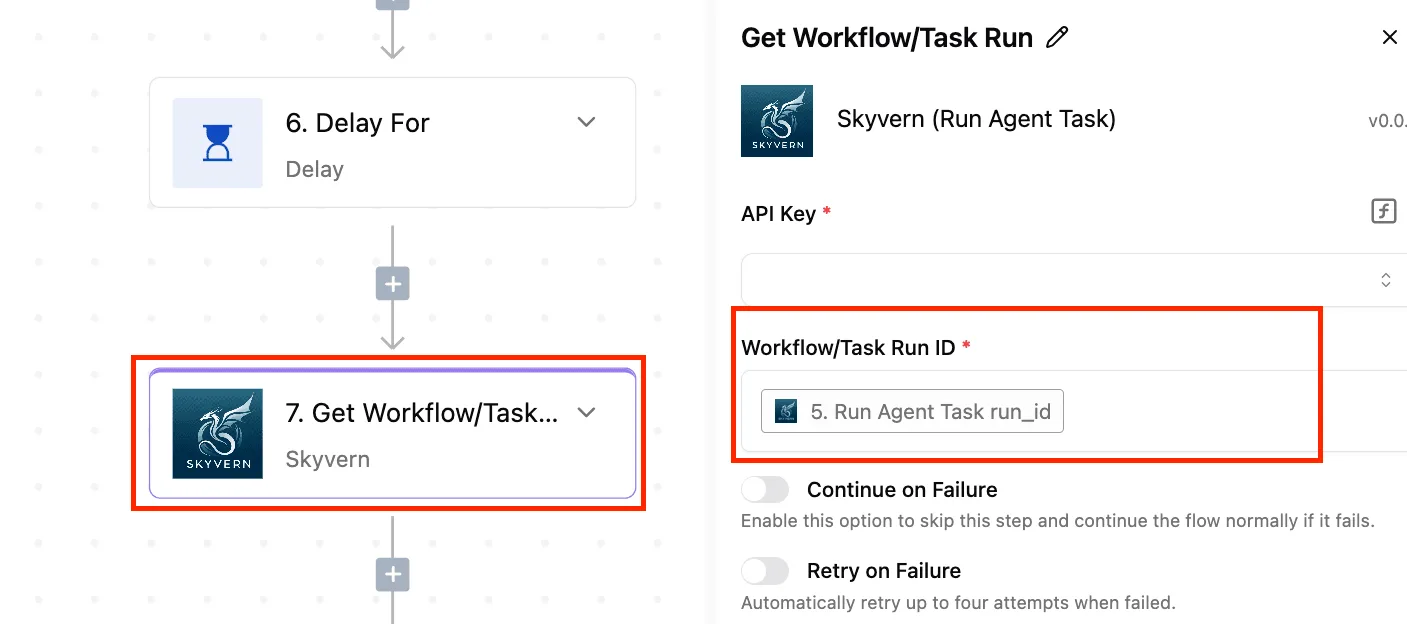
This allows teams to maintain full control over their AI strategy and spend, whether they reach the model from a structured flow or an external MCP client.
They reserve the $4 Opus 5.5 tier for logic-heavy tasks, effectively lowering the blended cost of a reliable production system.
Setting up routing logic for Claude Opus 5.5
To ensure that Claude Opus 5.5 is only invoked when the structural integrity of a code commit or the precision of a tool call is at risk, infrastructure leads must prioritize the calibration of routing logic.
While mid-tier models handle high-volume interactions, the primary auditor for complex agentic workflows must be a model capable of long-horizon reasoning to prevent the accumulation of logic debt in automated pipelines.
To maintain system reliability during this shift, the following monitoring and integration steps are required:
- Configure usage alerts within the Anthropic Console to trigger notifications when token consumption by high-reasoning models exceeds the projected daily burn rate.
- Audit existing tool-calling schemas against the latest documentation for Claude Opus 5.5 to verify that function definitions are correctly formatted, which can help reduce the need for retry logic.
- Map high-latency tasks that currently rely on Claude Fable 5.1 to the new Opus tier if they involve long-running coding sessions, as the latter is specifically optimized for maintaining coherence across massive file contexts.
Establishing a clear threshold for "reasoning depth" ensures that the costlier tier is reserved for final validation and complex synthesis rather than basic data extraction, preventing unnecessary expenditure on simple tasks that do not require high-level cognitive processing, which means your budget is protected from being drained by trivial automated queries.
Systems architects should also evaluate the hand-off points where Claude Haiku 4.5 passes data to more expensive tiers.
This tiered approach transforms the API from a flat utility into a managed resource where cost is directly proportional to the risk level of the task.
Frequently asked questions about Claude Opus 5.5

Is Claude Opus 5.5 available in all API regions?
Through the standard Anthropic API and major cloud provider marketplaces, Claude Opus 5.5 is available to all users.
Because this model is the high-reasoning tier for long-horizon agentic work, it is deployed across the same global infrastructure as the rest of the Claude 5.5 family. Enterprise customers can maintain data residency requirements.
Developers can access the model within their existing virtual private clouds through Amazon Bedrock, a managed service for scaling generative AI, and Google Cloud Vertex AI.
This widespread distribution means an infrastructure lead can swap models without re-architecting their networking stack or security perimeter.
How does the pricing compare to Claude Sonnet 5.5?
Claude Opus 5.5 is the premium model for complex knowledge work.
This price difference reflects the increased compute resources required to run the model.
While Sonnet remains the standard for speed-sensitive tasks, Opus is positioned for high-stakes reasoning where the cost of a logic error outweighs the API expense.
Do I need to update my existing prompts for this model?
Because the underlying instruction-following architecture is consistent across the tier, existing prompts designed for the Claude 5.5 family generally work without modification.
However, the increased reasoning capability of Opus allows for the removal of "chain-of-thought" crutches or overly verbose constraints that were previously necessary to keep smaller models on track.
By simplifying complex instructions, a prompt engineer can reduce the total input token count and partially offset the higher unit cost of the model.
Because Opus follows complex schemas more reliably, teams can often replace multi-step prompt chains with a single, direct request.
Related reading
References
Running the numbers
See what the same workload costs here.
Free forever plan, and every paid plan self-hosts at no extra cost.
See pricing Talk to sales