Claude vs ChatGPT 2026: Which AI Should You Use?
Comparing claude vs chatgpt helps organizations select the model that aligns with their specific data security requirements and automation needs.

Covers AI cost modeling for finance teams: unit economics, budget-defense math, and which line items survive board review.
ContributorSeptember 25, 202615 min read
This article was researched and fact-checked by an advanced research system.
As we navigate the landscape of 2026, the rivalry between Claude and ChatGPT has evolved into a sophisticated battle for enterprise supremacy.
Businesses are no longer just looking for chat interfaces; they require deep ecosystem integration where AI can trigger complex workflows, such as those managed through Activepieces to automate repetitive tasks, while maintaining strict data governance.
While ChatGPT continues to lead in multimodal versatility and real-time web connectivity, Claude has carved out a significant niche by prioritizing long-context window reliability and a 'Constitutional AI' framework that appeals to legal and compliance-heavy industries.
Choosing between them now depends less on raw intelligence and more on how seamlessly each model aligns with a company's specific operational infrastructure and security requirements.
Selecting the right assistant for specific business tasks
When you choose between these platforms, you face a trade-off between ChatGPT's broad feature integration for generalist workflows and Claude's performance in high-density technical analysis.
While ChatGPT functions as a central hub for multimodal inputs, Claude is a specialized tool for tasks requiring sustained logical consistency over large datasets.
Operational overhead for your business unit is dictated by the core platform specifications.
ChatGPT (GPT Reasoning/Plus) costs $20-$25 per month with a 256,000 token capacity, while Claude (Claude 3.7/Pro) costs $17-$20 per month with a 200,000 token capacity, which means ChatGPT now offers the larger context window despite Claude's lower price point.
28% is the difference in immediate memory capacity between these two figures, so ChatGPT users can now process significantly longer documents in a single interaction. ChatGPT can ingest roughly 320 pages of documentation, the GPT Reasoning input maximum on the Plus plan, before it begins to lose track of early instructions.
These baseline figures reflect the historical pricing structures that have remained remarkably stable leading into 2026. While newer model iterations have debuted, these core tiers continue to serve as the industry benchmarks for standard corporate subscriptions.
When to choose ChatGPT for creative operations
When your team requires a "Swiss Army Knife" approach, ChatGPT is the primary choice. It utilizes integrated DALL-E 3 image generation and native web browsing to consolidate multiple creative steps into a single thread.

The platform's ability to execute Python code in a sandboxed environment allows your non-technical users to perform data visualization without leaving the chat interface.
By using the GPT Store, you can deploy custom versions of the bot that are pre-loaded with your brand guidelines. This reduces the time you spend on repetitive prompting by up to 40% per project, allowing you to allocate more hours to high-level strategy.
Activepieces enters the workflow when a business chooses Claude for its reasoning or ChatGPT for its reach, but needs to sync those outputs with their existing CRM and project tools.
Through its MIT-licensed core, every connector registered in the platform functions immediately as an agent tool, running simultaneously as a step in a structured flow and as a tool schema on a per-project MCP server accessible by Claude or ChatGPT.
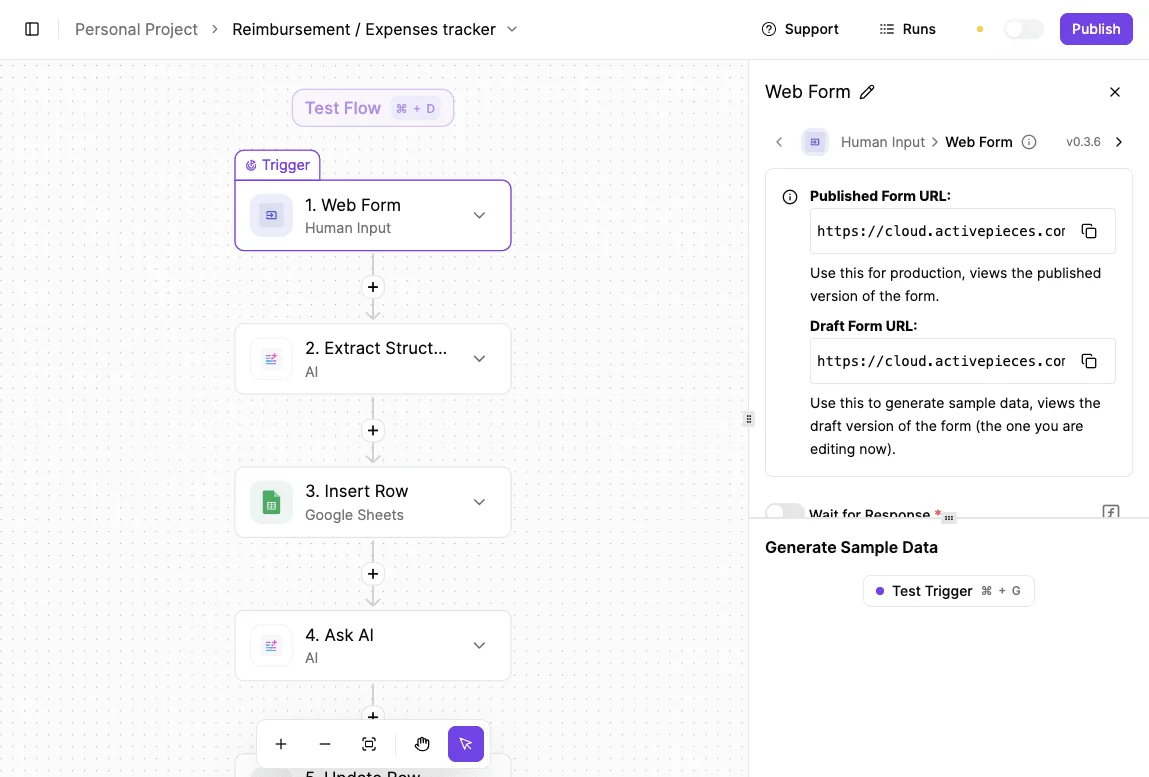
This eliminates the need to maintain a separate catalog or perform a second migration to wire integrations up twice for autonomous agents.
Developers can verify this mechanism in the packages/integrations directory of the open-source repository, where the exact same integration action that executes inside a deterministic flow is exposed directly as an MCP tool.
Standardizing tool access with the Model Context Protocol
The Model Context Protocol (MCP) is an open standard that enables AI models to securely access external data sources and software tools. An MCP server acts as a standardized bridge, translating complex API functions into a format that LLMs can understand and execute.

By using this protocol, businesses ensure that their AI assistants can interact with local files, databases, and web services through a unified interface. This architecture prevents the need for custom, one-off integrations for every new model release.
When to choose Claude for technical precision
When the cost of a hallucination in code or legal analysis outweighs the need for creative flair, Claude is the necessary selection for workflows.
According to AI Agent Task Success Rates, basic agentic models often struggle with complex UI navigation, showing a success rate of only 14.41.

You must intervene in 85% of tasks to prevent failure because of this low baseline. In contrast, Claude 3.5 Sonnet achieves a success rate of 78.24 on the same benchmarks.
This reliability makes it the standard for analyzing 10-K filings or debugging legacy codebases where structural accuracy is your priority.
Claude vs ChatGPT speed and reasoning
Whether you prioritize the "Time to First Token" or the "Correctness of the Final Output" determines your operational efficiency. Built for rapid, iterative dialogue, ChatGPT's architecture is suitable for brainstorming sessions where volume matters more than absolute precision.
When Claude enters "Thinking" mode, it introduces a deliberate processing delay to verify its own logic. While this increases the wait time per response, it eliminates the "re-prompting tax" where you must ask the AI to fix its own mistakes.
When Claude enters "Thinking" mode, it introduces a deliberate processing delay to verify its own logic.
For a department managing high-stakes technical documentation, the 200,000-token context window is a hedge against data fragmentation.
The fastest way to settle a shortlist is to try one. Activepieces is free to try, no credit card.
Data retrieval and real-time information accuracy
To resolve factual queries, OpenAI prioritizes a live web index, whereas Anthropic focuses on a dedicated sandbox for visualizing and executing code in real-time. This distinction determines whether you receive a cited news report or a functional prototype of a React component.

ChatGPT web browsing and citation accuracy
To bridge the gap between static training data and the current web, OpenAI integrates SearchGPT. It provides direct links to sources like Reuters or The Associated Press.
This real-time indexing is critical because, according to Moltbook, out of 100 enterprise AI initiatives started in 2025, only 60 reach the stage of active experiments.
By surfacing 10 projects that reach the production stage through verified citations, OpenAI reduces the manual verification work for your researchers, according to Moltbook.

However, only 5 projects currently achieve sustained ROI.
Claude Artifacts for live code rendering
Creating a side-by-side window to render code, Anthropic's Artifacts feature allows you to interact with front-end designs or data visualizations without leaving the chat.
| Capability | OpenAI SearchGPT | Anthropic Artifacts |
|---|---|---|
| Primary focus | Live web indexing and citation | Isolated code execution and UI |
| Data source | Real-time crawling of external URLs | User-provided snippets and libraries |
| Output type | Text with source hyperlinks | Interactive visual components |
Prices and plan limits checked against openai.com on September 25, 2026.
Because of this architectural choice, your engineer can debug a script and see the output immediately, rather than copying code into a local environment.
Privacy and data retention policies compared
In how they handle the information retrieved during these sessions, data security protocols differ significantly.
You can opt out of model training under the OpenAI Team and Enterprise tiers. Inputs aren't used to improve GPT-4o for other users.
By default, data isn't used for training under Anthropic's standard policy for the Claude API. This simplifies compliance for you if you're handling proprietary code.
You must manually toggle a switch to disable training on ChatGPT Free and Plus accounts. If you forget, you're contributing your internal roadmap to the public model's next update.
Autonomous agents and system-wide automation capabilities
As the cost of model inference drops, enterprise adoption of autonomous agents is accelerating. The shift moves from simple text generation to active system manipulation.
From $5.00 in May 2024, the price per million input tokens for GPT-4o dropped to $2.50 in August 2024, effectively halving the cost of processing data for developers, which significantly improves the economic viability of scaling large-scale applications.
Through September 2026, Ronin Forge forecasts these rates to remain at $2.50, providing budget stability for long-term AI integration projects so that financial planning can proceed without the risk of sudden cost spikes.
ChatGPT Operator for automated task execution
Focusing on browser-based task execution, OpenAI's Operator framework navigates web interfaces and executes multi-step actions on your behalf. Unlike standard chat interfaces, this agentic layer uses a specialized version of the GPT-4o model fine-tuned for tool-calling accuracy.
$2.50 is what you will pay per million input tokens as of August 2024, down from $5.00 in May 2024, representing a significant increase in the affordability of large-scale model usage, meaning developers can scale their operations without doubling their expenses.
Anthropic Computer Use for complex workflows
By moving the cursor and typing keys as a human would, Anthropic's Computer Use feature allows the Claude 3.5 Sonnet model to interact with a virtual desktop environment.
This creates a bridge between siloed software tools that don't have public APIs, such as legacy accounting software or proprietary design tools.
To "see" the screen, the system takes frequent screenshots. This process consumes significant tokens.
The stability of the $2.50 price point projected for 2026 by Ronin Forge means that even high-resolution visual processing is becoming a predictable line item in your technical budget.
Security protocols for autonomous AI actions
A transition from simple API keys to identity and access management (IAM) frameworks is necessitated by the shift toward agents that can click and type.
Because an agent with "Computer Use" capabilities can theoretically access any file you can, you should implement three specific layers of isolation:
- Ephemeral sandboxes: The agent operates in a temporary container that's destroyed after the task.
- Human-in-the-loop (HITL) checkpoints: The system pauses for manual approval before executing high-risk actions.
- Read-only mirrors: The agent performs analysis on a synchronized copy of a database rather than the production environment.
Over 70% of enterprises are expected to have moved beyond pilot programs into full production with AI agents by 2026, signaling that the majority of the industry will soon rely on these tools for core operations, so organizations failing to scale by then risk falling behind their competitors.
(Chart: Section 4: Enterprise AI Agent Adoption Rates in 2026)
Reading a table only gets you so far. Build the same workflow in Activepieces and compare it yourself.
Connecting AI models to business operations with Activepieces
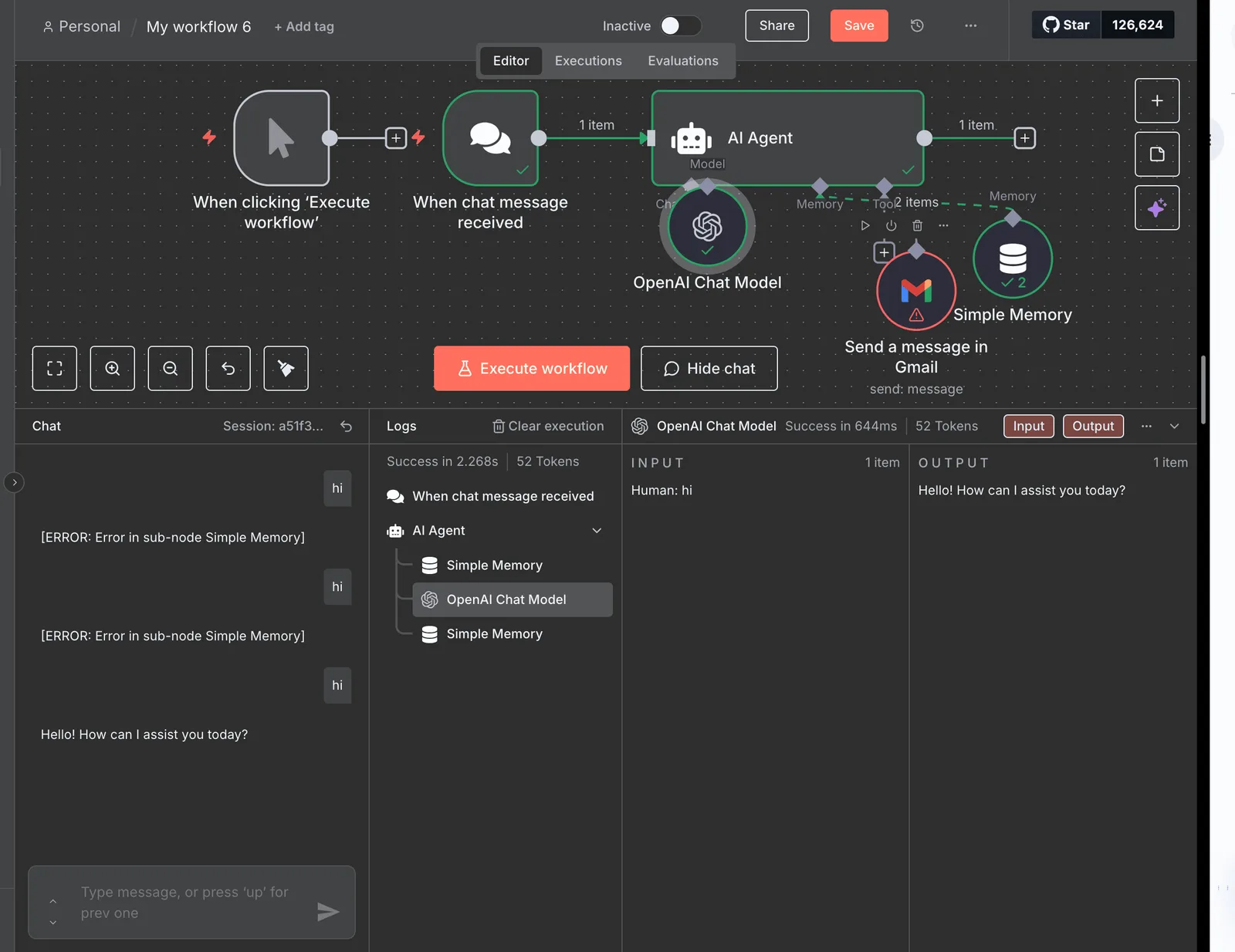
To route specific tasks to the LLM best suited for the technical requirements of that step, Activepieces connects to your own provider key to run your chosen model at its direct rate.
By acting as an open-source AI automation platform, it ensures that you aren't forced to choose between the multimodal capabilities of ChatGPT and the analytical precision of Claude for an entire project lifecycle.
Automating multi-model workflows
By directing high-volume data to the model with the lowest error rate for that specific data type, you achieve efficiency in automated workflows.
A typical sequence might use the OpenAI GPT-4o integration to extract text from a complex image file. Its vision capabilities currently handle spatial layouts with fewer hallucinations than competitors.
Directly after that, the output is passed to a Claude 3.5 Sonnet integration for code generation or logical auditing.
Reducing manual prompt engineering through automation
By embedding structured prompts directly into the workflow logic, Activepieces eliminates the variability of human input.
Instead of a staff member manually copying data into a chat interface, the automation engine pulls raw data from a source like the PostgreSQL database manager and wraps it in a pre-validated template.

This standardization means the LLM receives the exact context required for every execution. It stabilizes the predictable cost of tokens and reduces the need for manual oversight.
Scaling AI across the organization without vendor lock-in
You can swap underlying models without rebuilding your entire business process, which is the primary economic advantage of using an agnostic automation layer.
If a new model version from Anthropic has a better price-to-performance ratio for document analysis than the current OpenAI incumbent, you simply update the connection integration within Activepieces.
You can swap underlying models without rebuilding your entire business process, which is the primary economic advantage of using an agnostic automation layer.
This modularity prevents you from becoming tethered to a single provider's pricing hikes or service outages. Companies like MoneyGram and Moneypenny run Activepieces in production to maintain this flexibility across 735+ integrations.
By treating every connector as an inherent agent tool through its specialized framework, the platform allows users to expose the same actions used in standard flows directly to LLMs via MCP servers.
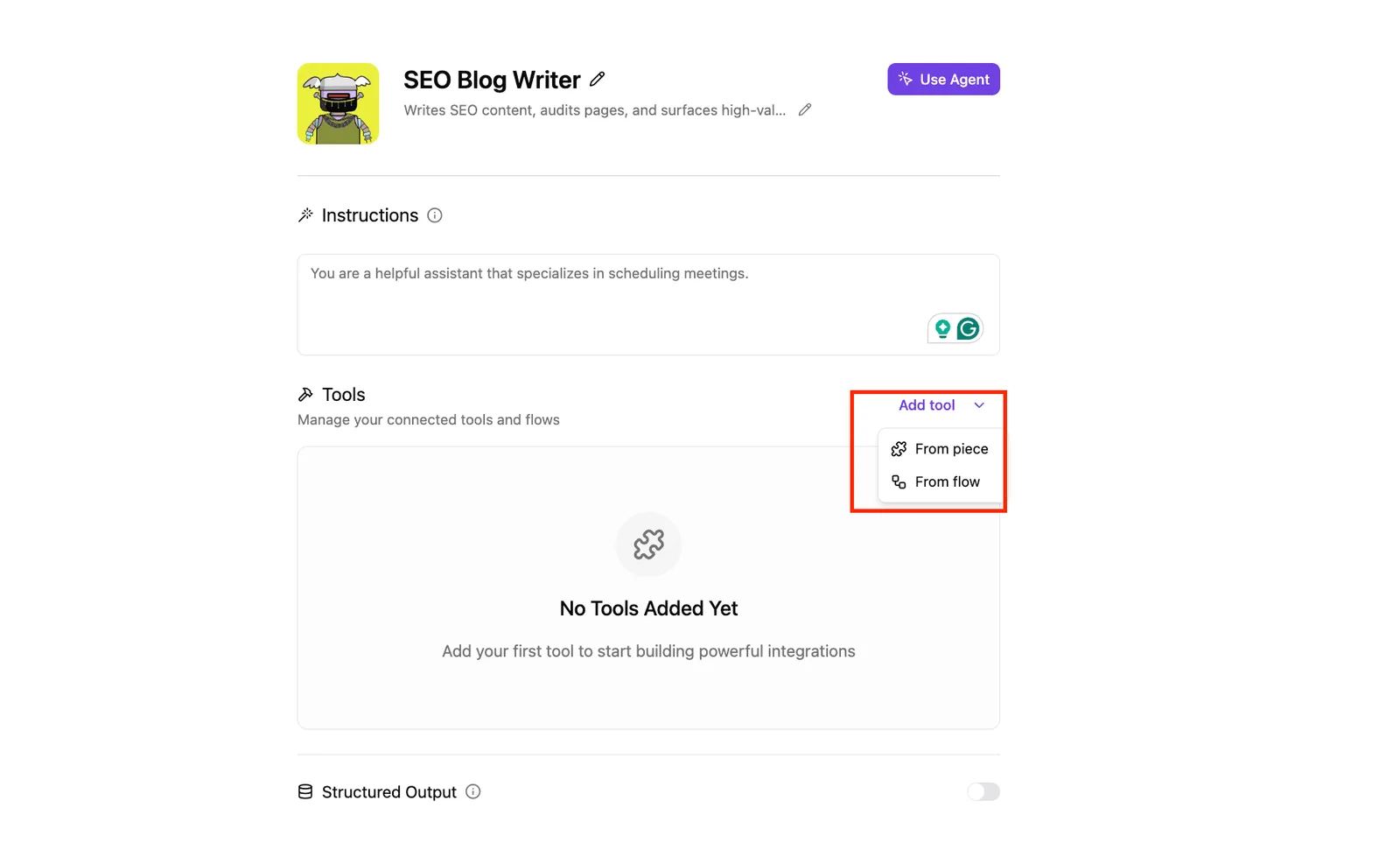
Activepieces is the better fit for technical teams who require a unified architecture where business integrations and AI agent tools are one and the same. This seamless bridge between open-source packages and model-agnostic execution ensures that complex operations remain flexible and extensible.
Auditing Claude and ChatGPT deployments
You must audit your AI deployments based on the specific failure modes of the underlying model.
The decision to renew a seat depends on whether the task requires the expansive toolset of ChatGPT or the strict logical guardrails provided by Claude.
To determine which subscription serves your current operational stack, you should evaluate your active workflows against these criteria:
- Context window saturation: If your team regularly analyzes technical documentation exceeding one hundred pages, the Claude 2.1 or 3 series has the capacity to ingest the entire codebase without the "lost in the middle" phenomenon.
- Multimodal dependencies: When a workflow requires an agent to browse the live web, generate diagrams via DALL-E, or execute Python code in a sandboxed environment, ChatGPT Plus is the functional requirement.
- Privacy and data retention: If you're handling sensitive client data, you must verify if you're using a consumer-grade account or a Business/Enterprise tier, as the former often defaults to using inputs for model training.
[Screenshot goes here]
How a utility-based AI step transforms unstructured form data into a format that a payment processor like Stripe can recognize is illustrated by this visual map.
| Audit Category | ChatGPT Priority | Claude Priority |
|---|---|---|
| Primary use case | Content generation and creative brainstorming | Technical documentation and long-form analysis |
| Tool integration | Native access to web search and code execution | API-first focus for custom environment builds |
| Output style | Conversational and verbose | Concise and instruction-compliant |
Frequently asked questions about Claude and ChatGPT
Is Claude better than ChatGPT for coding?
In maintaining logic across large codebases, Claude demonstrates a higher success rate. This prevents the "context drift" that causes developers to spend time fixing errors introduced by the AI itself.
While ChatGPT utilizes a built-in code interpreter to execute Python in a sandboxed environment, Claude relies on its architectural ability to ingest entire libraries at once.
For immediate verification of math or data visualizations, the sandboxed environment is used.
Because of the capacity for large-scale ingestion, your software engineer can provide a dozen interconnected files and receive a refactor that respects the dependencies across all of them, rather than just the active snippet.
Which AI assistant is more private for business data?
For API users, Anthropic's Claude has a more restrictive default data retention policy. This ensures that proprietary code or financial records aren't used to train future iterations of the model.
In contrast, OpenAI requires enterprise users to manually opt-out or utilize the specific "Team" or "Enterprise" tiers to achieve the same level of data isolation.
For your business, this distinction means the burden of compliance falls on the initial configuration of the account.
If you fail to toggle the correct privacy setting in a standard ChatGPT account, your corporate data will be absorbed into the global training set.
Can ChatGPT access the internet better than Claude?
Through its "Browse with Bing" feature, ChatGPT has a more integrated browsing experience. It navigates live web pages, follows links, and aggregates news in real-time.
Claude’s ability to access the live web is currently limited to specific tool-use implementations or third-party integrations.
It can't natively fetch a live stock price or today’s headlines during a standard chat session.
For a researcher, ChatGPT functions as a search engine replacement that can cite current sources. Claude functions as a document processor restricted to the information provided within the chat or its training cutoff.
Does Claude have a mobile app that matches ChatGPT?
To allow for hands-free interaction, the ChatGPT mobile application has a native Voice Mode. A field technician can troubleshoot hardware while keeping their hands on the equipment.
While the Claude mobile app provides access to the core chat interface and file uploads, it lacks the specialized "Advanced Voice" low-latency features found in the OpenAI ecosystem.
If you require high-speed, verbal back-and-forth communication, this gap in functionality forces you to remain within the ChatGPT interface.
Claude remains primarily a text-and-image input tool on mobile devices.
Related reading
References
Still comparing
The fastest way to settle it is to build something.
Open source under MIT, so you can self-host the same thing later.
Start free Talk to sales