
Common Pitfalls in Agent Harness Design and How

Oct 2, 202614 min read
Think of an agent harness as a restrictive shell that dictates how a model interacts with external data. It prevents the LLM from executing arbitrary or unvalidated commands.
By enforcing schemas and authentication before any packet leaves the network, this infrastructure turns a statistical engine into a predictable enterprise tool.
Definition of an agent harness environment
The difference between an API call and a harness
While a standard API call is a stateless request-response cycle, a harness acts as a persistent supervisor. It manages state, retries, and rate limits across multiple turns.
Without this boundary, a model like Gemini 3.5 Flash-Lite might hallucinate a non-existent parameter, causing the entire integration to fail silently.
When you use Activepieces to coordinate these movements, the harness ensures that every exchange follows a rigid contract.
The moment a integration is connected, it runs two ways at once: as a step inside a flow, and as a tool schema on the Activepieces per-project MCP server, reachable from Claude, ChatGPT, or a custom agent.
This prevents a transient network error from resulting in a corrupted database record.
Bridging tools and models with MCP servers
The Model Context Protocol (MCP) server acts as a standardized translator between your tool library and the LLM. It exposes the specific capabilities of your Activepieces connectors as a machine-readable catalog that external models can instantly understand and invoke.
By hosting a per-project MCP server, the harness provides a secure gateway where the LLM can discover available functions without having direct access to the underlying code.
The server handles the heavy lifting of converting natural language intent into the precise JSON schemas required by each integration.
This bridge ensures that when a model like Claude Sonnet 5.5 attempts to use a tool, it is interacting with a controlled proxy rather than the raw API.
The MCP server validates the model's request against the tool's definition before passing it to the harness for execution.
Why the harness must own the system prompt and tools
The harness is the single source of truth for what a model is permitted to do. It strips the model's ability to self-define its capabilities. This ownership is critical because even top-tier models struggle with high-volume tool selection.

80% of the ideas do not survive the pilot if the toolset is too large, which means the majority of innovation is stifled by unnecessary complexity.
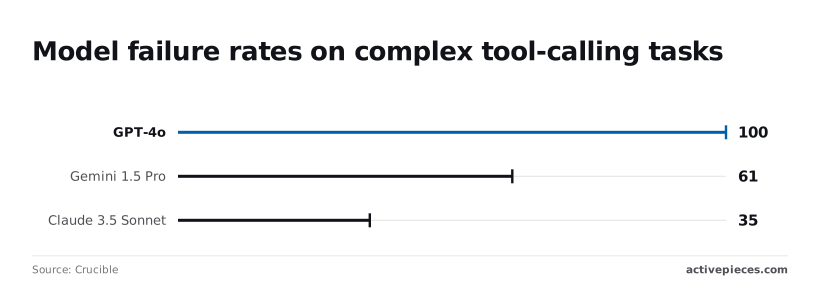
Internal benchmarks suggested that GPT-4o saw increased latency and selection errors when handling 100 concurrent tools effectively. You must prune toolsets to avoid logic collisions. The performance drop is sharp across the board:
| Model | Concurrent Tool Capacity | | :--- | :--- | :--- | | GPT-4o | 100 tools | | Gemini 1.5 Pro | 61 tools | | Claude 3.5 Sonnet | 35 tools |
Because of these limits, the harness must dynamically swap tool definitions based on the current task, or the agent will begin invoking the wrong functions.
The 'black box' trap in agent architecture
Treating an agent as a black box creates an unobservable failure point. This happens when you feed in a prompt and hope for a valid JSON output.
If you rely solely on the internal reasoning of a model like Claude Fable 5.1 for long-horizon work, you lose the ability to audit why a specific Slack message was sent or a GitHub PR was closed.
By using a robust harness, you log every specific field mapping and transformation. You can then identify exactly which step in a twenty-step chain deviated from the spec.
Everything below works on Activepieces' free plan. Start without code or a credit card.
Bypassing the harness middleware creates critical security vulnerabilities
Directly exposing raw API endpoints to an LLM removes the protective abstraction layer required to prevent system compromise. Without a connector acting as a formal agent harness, the model operates in a privileged vacuum.
A single prompt injection can then translate into an unvalidated database command.
The boundary between a prototype and a production-grade autonomous system is defined by the difference between raw access and mediated execution. A harness is a security firewall that prevents the model from exceeding its intended operational scope.
Direct access allows infinite loops through recursive calls, whereas a harness enforces token and time quotas at the gate. If you bypass this, you surrender the ability to intercept a compromised instruction before it hits the backend.
**A harness is a security firewall that prevents the model from exceeding its intended operational scope.
The danger of direct tool access
Granting an agent direct access to system tools without a middleware validator allows the model to generate and execute payloads that bypass standard application logic. Industry benchmarks show that Claude 3.5 Sonnet scores 100 in Web Search, Multilingual Search, and EU License Research.
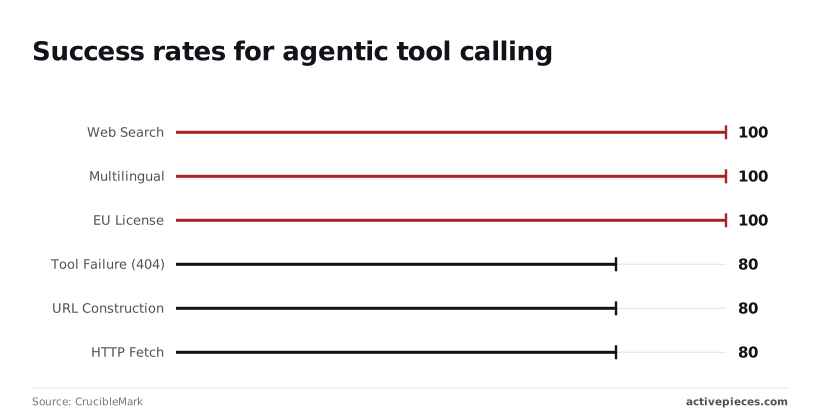
Reliability drops significantly in other areas, however. Claude 3.5 Sonnet falls to a score of 80 in Tool Failure handling, URL Construction, and HTTP Fetching.
This 20-point drop means that in 20% of cases, the model will attempt to interact with broken or incorrectly formatted resources. These attempts can trigger unhandled exceptions in your underlying infrastructure if a harness isn't there to catch the malformed request.
Rate limits preventing agent hallucination loops
When an agent encounters a 404 error or a permission denial without a harness-enforced rate limit, it often enters a "hallucination loop." It repeatedly retries the failing action with slight variations. Gemini 3.5 Flash-Lite can execute hundreds of calls per minute.
Seconds are all it takes for an unthrottled loop to exhaust an entire month's API quota, resulting in immediate service denial for all other users.
The middleware layer must track state and inject a "stop" signal after three failed attempts. The agent perceives the error as a reasoning puzzle to be solved through sheer volume.
Why hardcoded credentials inside agents fail at scale
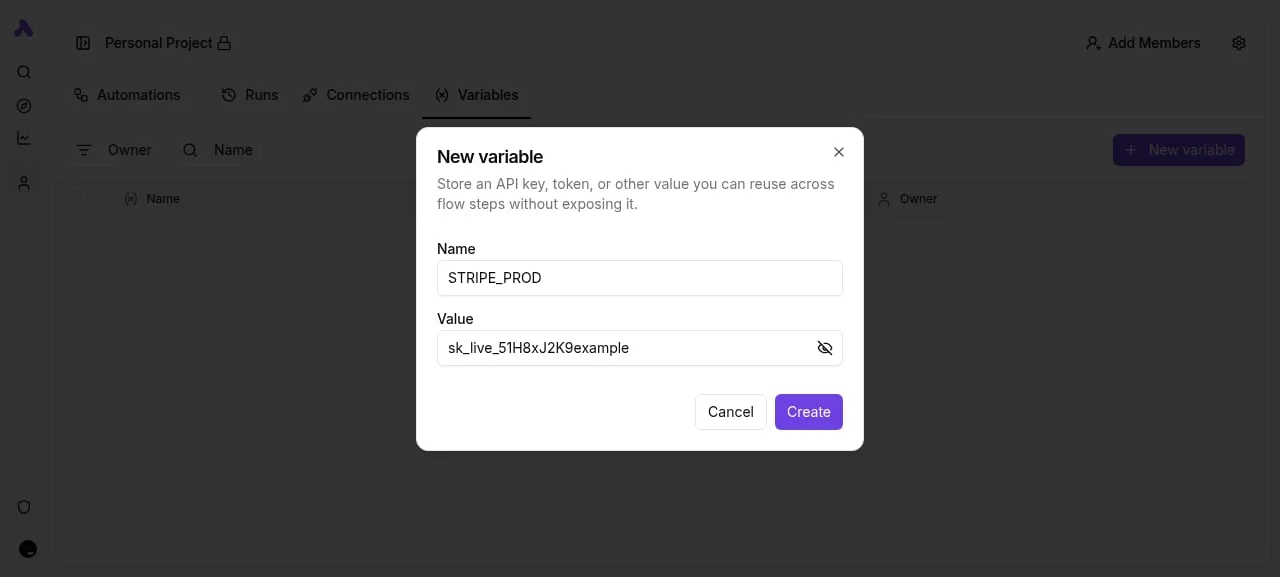
Storing API keys or OAuth tokens directly within the environment variables of an agent creates a single point of failure. In a harnessed environment, the connector manages identity on your behalf.
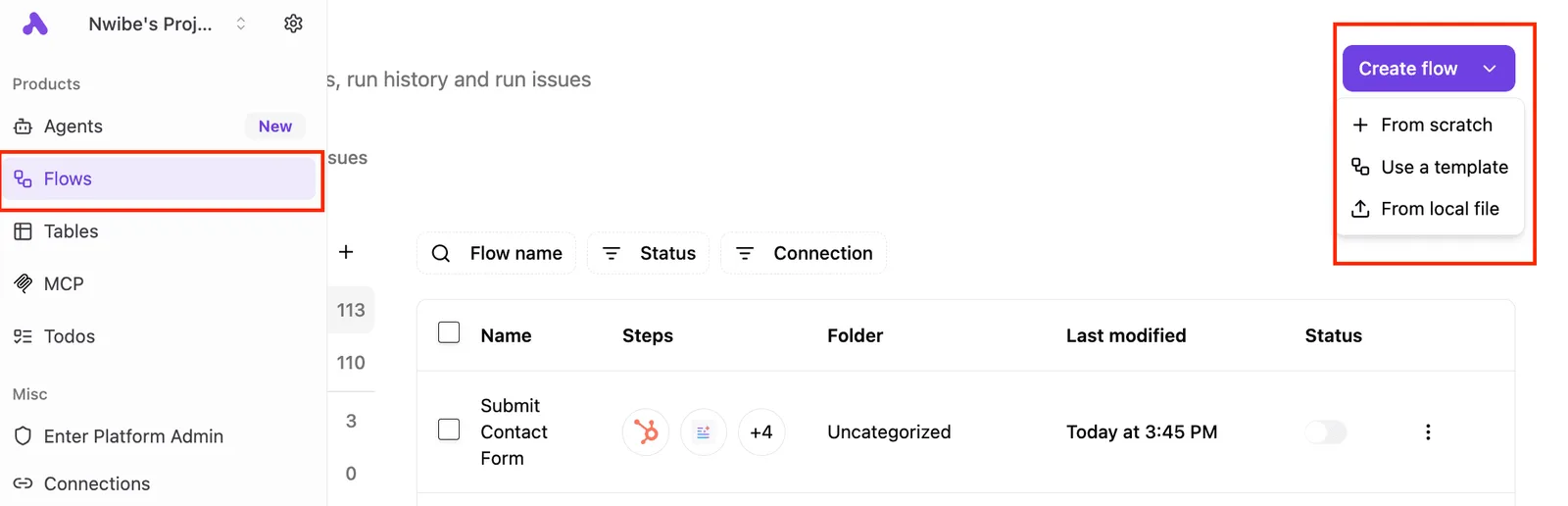
Activepieces places every agent call inside a unified access model where RBAC, SSO and SCIM govern the connection rather than the model itself.
By checking the enterprise RBAC documentation, you can see how access policies apply to what an agent may connect to, ensuring that a user's permissions are mirrored in the agent's environment.
This prevents the model from seeing the secret key and stops prompt injection attacks from exfiltrating credentials.
As you scale to dozens of specialized agents using Gemini 3.1 Pro for coding or Claude Opus 5.5 for knowledge work, managing individual secrets becomes impossible. Credential rot occurs where expired tokens cause silent failures across your entire automated workflow.
Validating inputs before they reach the model
A robust agent harness is a mandatory checkpoint that intercepts every raw request. It ensures only safe, structured data reaches the model. This architectural boundary prevents the reasoning engine from acting on malicious injections or malformed instructions that would otherwise trigger expensive, failed API calls.
Sanitizing user prompts before model processing
Effective sanitization requires a pre-processing layer that strips sensitive patterns and injection attempts from the user string. This ensures the model never processes instructions that contradict its system prompt.
Using a specialized moderation model like Llama Guard 3 allows your system to identify and block jailbreak attempts in real-time. This shields the agent from adversarial attacks that could leak internal database schemas.
This layer should also include a regex-based PII scrubber to redact social security numbers or credit card strings.
Configuring temperature and token limits for Gemini
Predictable agent behavior depends on strict inference parameters. These prevent the model from drifting into creative but inaccurate hallucinations during tool execution.
When deploying Gemini 3.5 Flash-Lite for enterprise workflows, setting a low temperature ensures the model selects the exact function call required for a task. Hard token limits must be enforced at the harness level.
This prevents a runaway recursive loop from consuming your entire monthly compute budget in a single session.
Testing the input-output workflow with a single tool
Validation is verified by connecting the harness to one isolated utility, such as a Slack notification action.
- Send a deliberate "prompt injection" attempt to the harness to verify the policy filter blocks the request before it hits the brain.
- Trigger a successful tool call and capture the raw output from the model to ensure the harness correctly maps the response to the Slack API fields.
- Review the execution logs to confirm that the session history was updated without including redacted PII.
By confirming this flow with one tool, you ensure the security boundaries are holding before scaling to complex multi-tool environments.
Easier to see it running than to read about it: set it up free, no card.
Implement a parser for tool calls
A structured output parser prevents the agent from executing malformed commands. It validates every model response against a strict JSON schema before the harness initiates a network request.
This validation layer is a firewall between the reasoning engine and your production data. It prevents an agent from passing a string into a date field or omitting a required primary key.
Why agents fail without JSON schema enforcement
Unstructured tool calls force the integration layer to guess the intent of the model. This frequently results in 400 Bad Request errors or the silent corruption of database records.
When using a reasoning model like Gemini 3.5 Flash-Lite to orchestrate complex workflows, the model may attempt to include conversational filler or markdown formatting inside the function arguments.
Extra characters like these break the API contract of the destination service if the harness doesn't enforce a schema. By defining a strict schema for actions like "Insert Row" or "Update Row," you ensure the harness rejects any output that doesn't match the expected types.

Handling agent refusals and missing data gracefully
Refusal handling prevents the agent from hallucinating fake parameters when it lacks the specific data required to fulfill a tool call.
If a user asks to update a record in Microsoft Excel 365 but provides an ambiguous identifier, a model like GPT-6.1 Sol might attempt to invent a Row ID to satisfy the prompt.
To mitigate this, the parser must recognize "refusal" tokens or null responses as valid states. The schema should allow for optional fields so the model can leave them blank instead of guessing values.
Instructions must explicitly permit the model to return a "Missing Information" status code. When the parser fails to find a required unique identifier, the harness should trigger a clarifying question to the user.
Human-in-the-loop approval for high-risk agent actions
High-risk actions require a manual checkpoint where a human verifies the parsed data. The harness then commits the change to a system of record.
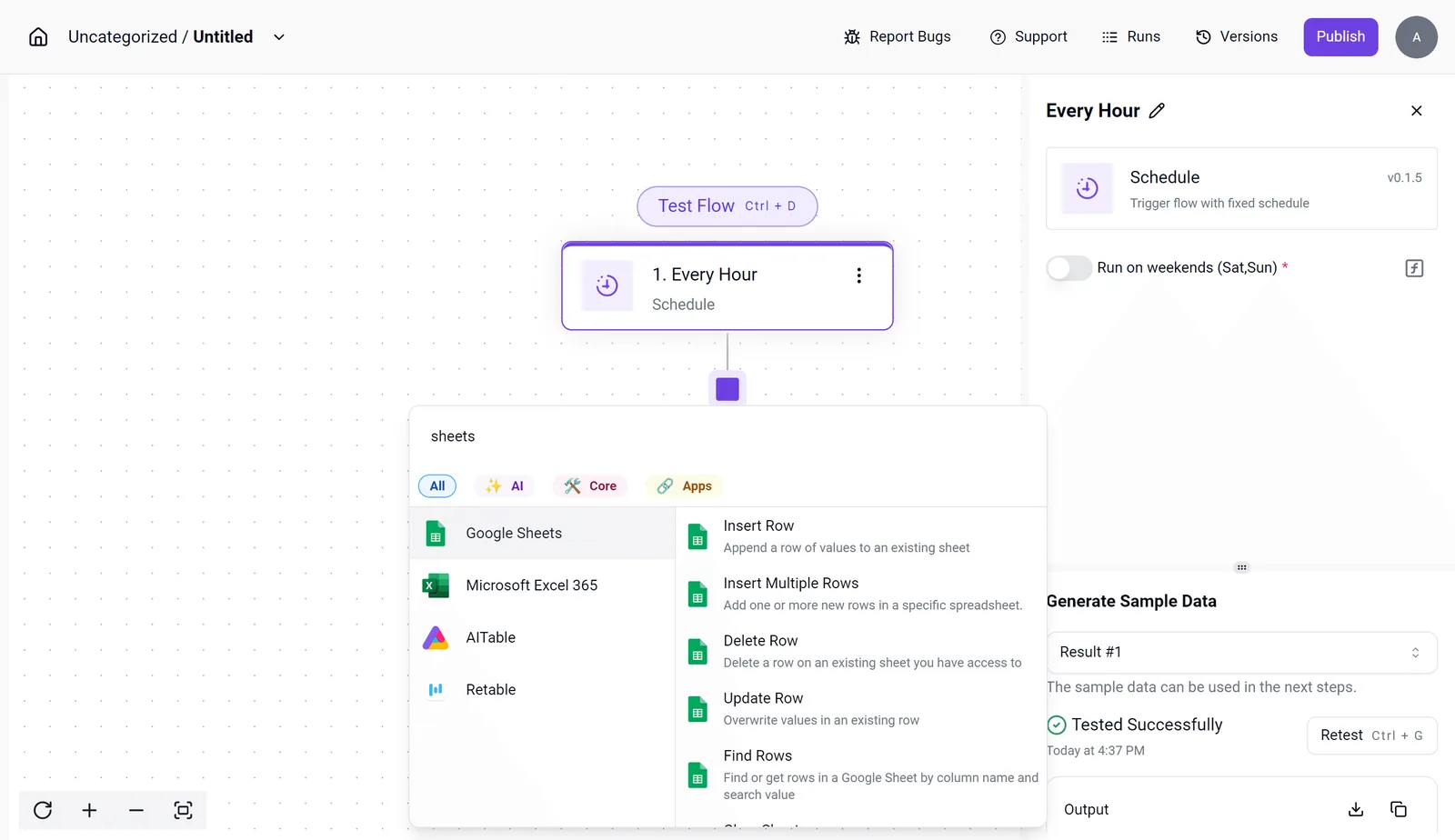
While a trigger might run "Every Hour," the actual "Delete Row" or "Update Row" action remains in a pending state until an authorized user signs off.
This provides a final sanity check against logic errors that a schema parser cannot catch. Implementing this in the harness ensures that even if the model reasoning is flawed, the integrity of the underlying data remains protected by human judgment.
Standardize your agent harness architecture using Activepieces
Activepieces provides an MIT-licensed core that decouples the decision-making logic of a model from the mechanical execution of API calls.
By treating every integration as a discrete step in a flow rather than a hard-coded script, you prevent the "spaghetti code" that typically emerges when an agent's memory and its tool-calling logic are intertwined.
Managing agent execution state effectively
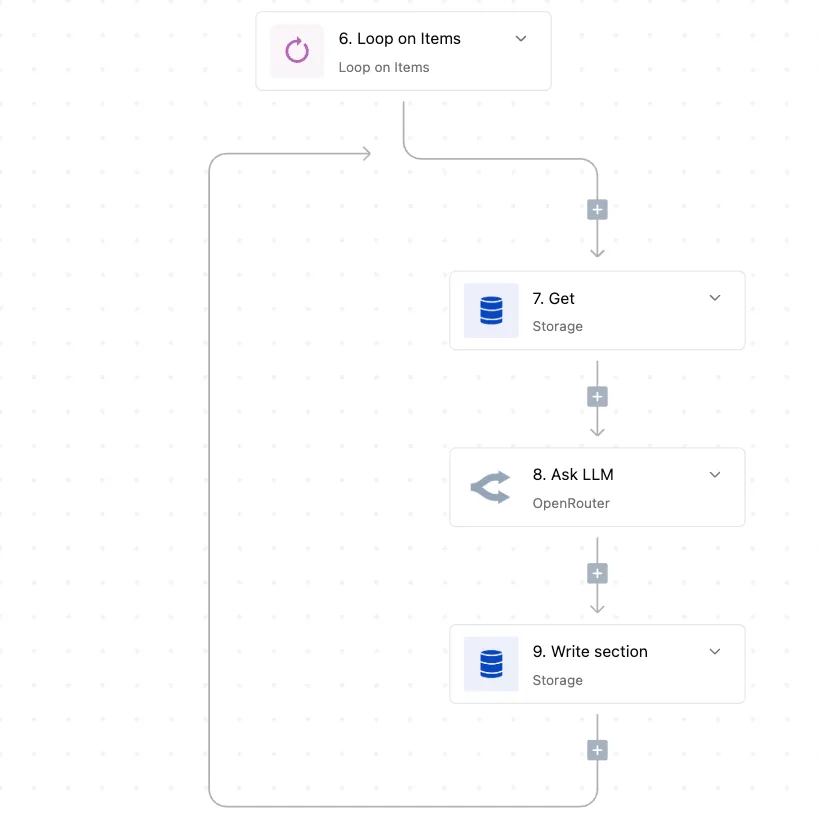
Activepieces manages the execution state by logging each tool call individually with its own input and output, rather than collapsing them into one opaque result.
When an agent built on Gemini 3.5 Flash-Lite triggers a workflow, the platform holds the session variables in a persistent state. The model doesn't have to re-read the entire conversation history just to remember a previous API response.
Intent degradation in long-running tasks is directly addressed by this architecture. A harnessed agent shows only 6.3% personality drift over 50 turns, compared to 24.8% for structured chain-of-thought methods, meaning the former maintains a significantly more consistent persona during extended interactions.
Building reusable toolsets for multiple LLM models
A standardized harness allows you to swap the underlying model without rebuilding the authentication or data mapping for your business applications.
Activepieces abstracts the connection to 738+ integrations, including community-contributed integrations that make up roughly 60% of the catalog, which means users have access to a vast ecosystem of tools maintained by a diverse group of developers.
The Integrations Framework and MCP Server documentation show how any action registered in the monorepo is immediately available as a tool schema for external agents. For demanding reasoning in high-stakes financial approvals, Claude Fable 5.1 handles the task using a specific toolset.
GPT-6 Luna utilizes the same toolset for high-volume, low-cost data entry tasks. Mistral Large 3 runs the identical workflow for localized, private data processing, which means the model maintains consistent performance across all secure environments.
Monitoring agent performance and error rates in one dashboard
Consolidating agent activity into a single dashboard provides a granular view of where a workflow fails before it impacts your production environment. Companies like MoneyGram and FundingSocieties run these automations in production to maintain visibility over complex agentic behaviors.
Instead of digging through raw cloud logs, you see the exact step where a model failed to provide a valid JSON payload for a specific API.
This visibility means you can identify if a failure was caused by a model hallucination or a change in the third-party API’s schema. This allows for a targeted fix rather than a blind prompt iteration.

Frequently asked questions about agent harness implementation
Does every LLM call need a full harness?
A full harness is required only when the model is granted agency to interact with external systems or perform multi-step reasoning. Simple text transformations using a model like Gemini 3.5 Flash-Lite don't require a harness because they lack the tool-calling permissions that create security risks.
Once a model is tasked with updating a record in a CRM like Salesforce or querying a database, the harness is the necessary sandbox and audit trail to prevent unauthorized data egress.
How do I prevent my agent from running up a massive bill?
Cost management is enforced through hard token limits and mandatory human-in-the-loop triggers for high-resource models. If an agentic workflow using Gemini 3.1 Pro enters a recursive loop, the harness terminates the execution before the context window consumes your entire project budget.
Setting a maximum iteration count on every task ensures that a stalled reasoning process doesn't continue indefinitely.
Can one harness support multiple different LLM providers?
A robust harness utilizes a standardized abstraction layer to route tasks between different providers based on the specific requirements of the job. This allows you to use Anthropic’s Claude Opus 5.5 for complex agentic coding that requires deep reasoning.
You can also use OpenAI’s GPT-6 Luna for high-volume, cost-sensitive classification tasks, or DeepSeek-V4.1-Flash for fast, code-heavy inspections of UI elements.
What is the difference between an agent harness and an orchestrator?
The orchestrator manages the logic and sequencing of the task, while the harness is the secure environment and standardized interface for the model to execute that logic. The orchestrator decides that a ticket needs to be opened in a project management tool like Jira.
The harness is the authenticated connector that sanitizes the model's input and logs the resulting API call. Without the harness, the orchestrator is merely a script with no protection against prompt injection or malformed tool outputs.