Gemini API Pricing 2026: Every Model, Tokens & Limits

Oct 12, 202611 min read
Google separates its API access into a Free of Charge tier for prototyping and a Pay-as-you-go tier for production, which allows developers to scale their projects using tools like Activepieces without incurring immediate costs during the initial build phase.
Gemini API pricing refers to the tiered cost structure applied to Google’s generative models, where expenses are calculated based on token volume, model capability, and context window utilization.
The primary distinction is how Google handles your data. While both tiers offer access to the Gemini 3.x model ecosystem, the privacy cost of the free tier often outweighs the financial cost of the paid one.

Compare Gemini API free and paid tiers
Gemini API free tier data privacy trade-offs
$0 per month is the cost of the Free of Charge tier for anyone with a Google Account, which means users can access these capabilities without any financial commitment.
When you use this entry point, you grant Google the right to use your input and output data to improve its models. Sensitive proprietary code or customer data shouldn't go through this tier.
Gemini's analysis puts this tier at 15 GB of unified cloud storage, so if you're using the API for heavy multimodal testing, you'll quickly hit a ceiling if you're storing large video files in Drive.

$4.99 per month for the Google AI Plus plan offers a middle ground for individual users needing slightly more headroom, which means they can access advanced features without committing to enterprise-level expenses. It allows a transition to advanced tools without committing to enterprise-level costs.
Pay-as-you-go pricing for Gemini 3.5 Flash-Lite and Pro
Data training permissions are removed in the Pay-as-you-go model. The run is the meter for these production workloads, not the steps inside it.
This is why Activepieces bills 1 credit per flow run regardless of how many steps it contains, ensuring that breaking a complex Gemini prompt into a more reliable ten-step process doesn't lead to an uncapped billing surprise.
| Dimension | Free of Charge Tier | Pay-as-you-go Tier |
|---|---|---|
| Rate Limits (RPM/RPD) | 15 RPM / 1,500 RPD | 2,000 RPM / 4M RPD |
| Data Privacy | Data used for training | No data training |
| Model Availability | Flash & Pro (Limited) | Flash & Pro (Full) |

Prices and plan limits checked against gemini.google and docs.claude.com and claude.com and openai.com on October 12, 2026.
Moving a tool from a local script to a shared service forces a transition to paid credits.
Context caching and long-context storage costs
Gemini 1.5 Pro implemented a "context tax" where the price per million tokens doubled once a prompt exceeded a specific length.
For prompts under 128K tokens, the cost is $1.25 USD per million tokens, making it competitive for standard RAG tasks, so developers can scale their applications without immediate budget concerns.
Once a prompt exceeds 128K tokens, the price jumps to $2.50 USD per million tokens.
To mitigate these expenses, Google has context caching. This allows you to store frequently used data at a lower storage fee.
This pricing cliff makes efficient token management the most critical variable in your monthly bill.
If you are running this arithmetic for your own team, see what the same workload costs on Activepieces.
Compare Gemini 3.1 Pro input costs
Gemini 1.5 Pro had a base input cost of $1.25 per 1M tokens, which made it a price-disruptor at the time compared with the premium charged by legacy flagship models.
$1.25 per 1M tokens was exactly half the $2.50 per 1M tokens charged for GPT-4o. This rate, verified by Compute Comparison, meant you could double your prompt volume for the same capital outlay.
When compared to Claude 3.5 Sonnet, which carried a $3.00 per 1M token price tag according to Compute Comparison, Gemini 1.5 Pro had a 58% discount.
Gemini 3.1 Pro vs. GPT-6 Astra for reasoning tasks
Gemini 1.5 Pro undercut GPT-4o by 50% on input costs at the time, meaning companies could process twice the amount of information for the same budget.
While GPT-4o remained a standard for many enterprise integrations at the time, its $2.50 per 1M tokens cost meant that high-reasoning workloads scaled poorly compared to the $1.25 cost of Gemini 1.5 Pro.
If you're building long-horizon agents, this price gap determines whether a feature is a profitable product or a subsidized experiment.
Gemini 3.5 Flash-Lite pricing for high-frequency tasks
Gemini 1.5 Flash had the absolute lowest entry point for high-volume automation at the time, yet you must account for four hidden billing drivers:
- Grounding fees ($14/1k searches after 5k free)
- Image/Video tokenization overhead
- Context caching storage fees ($0.01/GB/hour)
- Multi-modal input rounding
The "sticker price" is rarely the final cost, so you must calculate storage duration for cached prompts to avoid surprise line items.
Price-to-performance benchmarks for 2026 models
The current landscape for 2026 models reflects a stratified market where Gemini 3.1 Pro and Gemini 3.8 Flash compete against specialized offerings from Anthropic and OpenAI.
Claude Fable 5.1, designed by Anthropic for demanding reasoning and long-horizon agentic work, targets the high-end tier.
Claude Haiku 5.5, the Anthropic model for high-volume, latency-sensitive tasks like classification and routing, competes directly with the Gemini Flash-Lite series on speed.
GPT-6 Astra, the flagship from OpenAI, maintains a premium pricing structure for complex reasoning and coding.
Gemini 3.1 Pro remains the economic leader for standard context. Specialized tasks like agentic coding or real-time routing require you to choose models based on their specific architectural strengths.
Gemini 3.1 Pro context window pricing
Gemini 1.5 Pro used a tiered pricing structure where the cost per token doubled once a prompt exceeded 128,000 tokens.
This threshold creates a distinct financial boundary between standard retrieval tasks and deep-context analysis.
Understanding the 128K token price jump
The pricing model for Gemini 1.5 Pro splits by the volume of data you process in a single call.
$1.25 is the input cost per million tokens for prompts under 128K. Prompts over that limit jump to $2.50, effectively doubling the financial risk of exceeding the context threshold.
Prompts over that limit jump to $2.50, effectively doubling the financial risk of exceeding the context threshold, so users must carefully monitor their input sizes to prevent costs from spiraling.
Accidentally including redundant metadata or unoptimized logs can instantly double the operational cost of a run.
Gemini API context caching cost savings
To mitigate the escalating costs of massive windows, Google has Context Caching. This allows you to store frequently used data at a reduced storage rate rather than paying the full input fee on every turn.
Accidentally including redundant metadata or unoptimized logs can instantly double the operational cost of a run.
By paying for the initial cache and a subsequent storage fee, you avoid the full $2.50 per million token rate on repeated queries. This effectively lowers the break-even point for deploying long-context agents.
Gemini 3.1 Pro long document analysis costs
Navigating the cost structure of Gemini 1.5 Pro requires a strategy for document ingestion.
- Token trimming: Stripping HTML tags and boilerplate ensures that actual semantic content fills the 128K limit.
- Selective tiering: Routing simpler queries to Gemini 3.5 Flash-Lite or Gemini 3.1 Flash-Lite keeps the Pro context window free for high-reasoning tasks.
- Cache invalidation: Setting aggressive TTL (Time to Live) on cached contexts prevents paying storage fees for stale data.
Worth checking against a plan that does not meter every step: one credit covers a whole run on Activepieces.
Calculate Gemini API total ownership costs
Determining the monthly expenditure for Gemini requires balancing token throughput against specific intelligence requirements.
Gemini 3.1 Flash-Lite customer support chatbot costs
A support bot built on Gemini 3.1 Flash-Lite prioritizes speed and minimal overhead. Because these interactions typically involve low token counts per session, the primary cost driver is the volume of requests.
By utilizing Gemini 3.1 Flash-Lite, you minimize the "time to first token." This tier represents the lowest financial barrier for high-concurrency applications.
Gemini 3.1 Pro document processing with caching
Processing massive PDF libraries with Gemini 3.1 Pro necessitates a strategy for managing long-term memory.
This scenario relies heavily on context caching, a feature that stores frequently accessed data in the model's active memory for a reduced fee.
| Scenario | Primary Model | Cost Driver | Economic Strategy |
|---|---|---|---|
| Support Bot | Gemini 3.1 Flash-Lite | High request frequency | Low per-token unit pricing |
| Doc Analyzer | Gemini 3.1 Pro | Massive input context | Aggressive context caching |
| Content Engine | Gemini 3 Flash | High output generation | Balanced input/output ratios |
Gemini 3 Flash content generation pricing
A content engine using Gemini 3 Flash strikes a middle ground by handling large batches of creative output without the premium price of the Pro tier.
In this workflow, output tokens drive the cost. Gemini 3 Flash offers frontier-class performance, handling complex formatting that would cause cheaper models to fail.
How Activepieces manages Gemini API consumption at scale
Activepieces provides an MIT-licensed core for orchestrating these flows, allowing teams to decouple data ingestion from model execution.
This separation ensures that high-volume triggers don't immediately hammer the Gemini 3.1 Pro endpoint with concurrent requests that trigger 429 rate-limit errors.
Visual workflow orchestration for cost control
The platform utilizes a visual flow builder to define the logic of these buffers. This allows you to set specific intervals for API interaction.
Workflow configuration and sample data
A modal panel is open showing available integrations for the next step, with tabs for All, AI, Core, and Apps.
The Core tab is active, displaying spreadsheet applications including Google Sheets, Microsoft Excel 365, AITable, and Retable. It shows action options like Insert Row, Insert Multiple Rows, Delete Row, Update Row, and Find Rows.
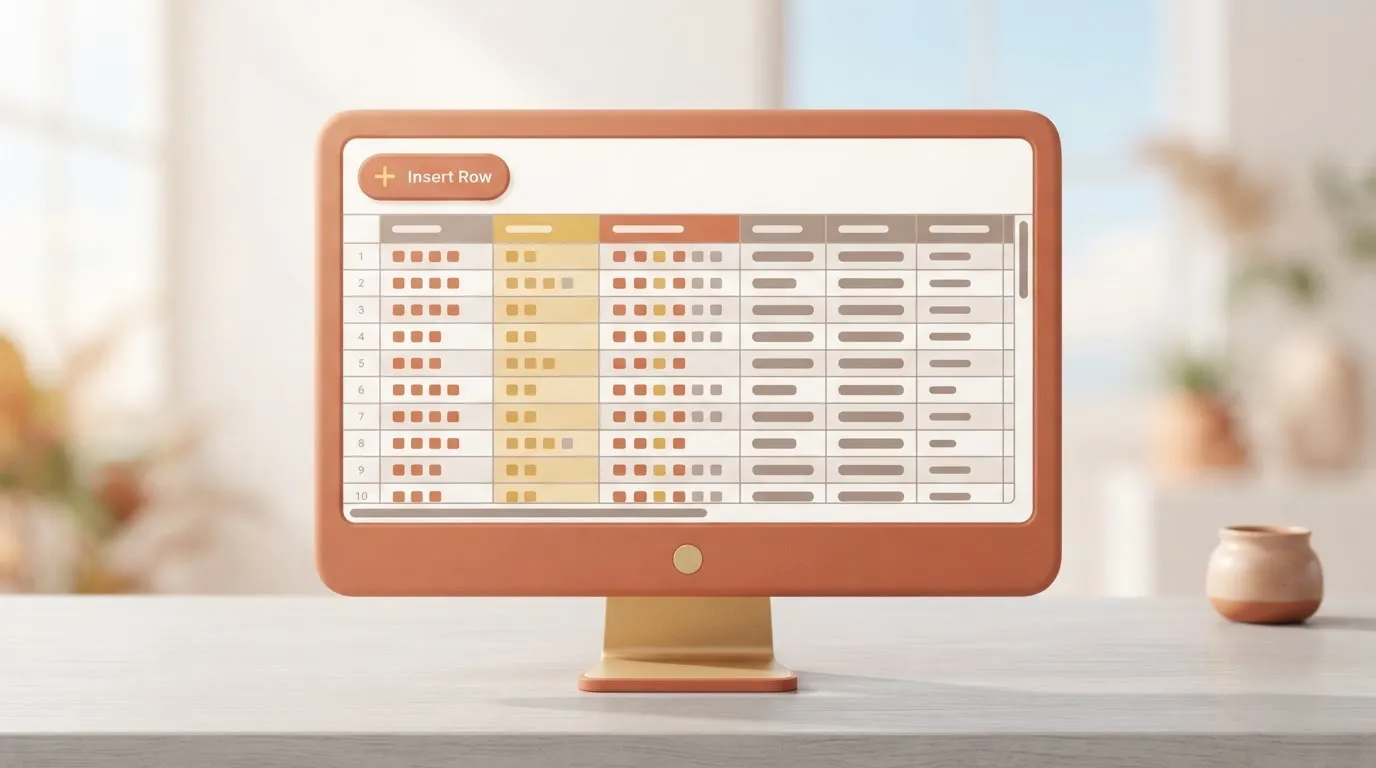
On the right side, a settings panel shows the Schedule trigger configuration with an option to "Run on weekends (Sat,Sun)". Below that is a "Generate Sample Data" section showing "Result #1" with a "Tested Successfully" status and a Reset button.]
Batching strategies for token efficiency
Smaller inputs are collected into a centralized store before sending a single, massive prompt to Gemini 3.1 Pro.
It reduces the overhead of repeated system instructions and leverages the model's massive context window more efficiently than isolated, smaller calls.
Regulated organizations like MoneyGram and FundingSocieties run Activepieces in production to maintain this level of control over their AI infrastructure.
Frequently asked questions about Gemini API billing
Gemini API costs are determined by the specific model tier you select and the volume of tokens you process. These costs aren't determined by the geographic location of the requester.
While data residency requirements might force you to use specific regional endpoints, the underlying rate per million tokens remains consistent across all global zones.
Does Gemini API pricing vary by geographic region?
Google maintains a unified pricing structure for the Gemini 3.1 Pro and Gemini 3.1 Flash-Lite models across its global infrastructure. The cost is tethered to the model version and the input/output volume.
Standardizing a budget is possible for a multinational firm regardless of where its API calls originate.
Can I set hard billing limits to prevent overages?
Hard caps are managed through the Google Cloud Console, which is a centralized management interface where you can define budget alerts and absolute quotas. Setting a quota limit ensures the API returns an error once the threshold is met.
Is there a discount for committed use or enterprise volume?
Discounts are typically structured through Committed Use Discounts (CUDs), which require a formal agreement to spend a specific amount over a one- or three-year term.
By guaranteeing this baseline revenue to the provider, your enterprise receives a lower effective rate per token compared to the standard pay-as-you-go pricing.
How does Google Cloud Vertex AI pricing differ from AI Studio?
The pricing difference is defined by the service layer and integrated features rather than the raw model performance.
Google AI Studio is a rapid prototyping environment. It offers a free tier for testing with higher rate limits but subjects data to model training cycles.
Vertex AI is the enterprise machine learning platform. It bills based on a strictly private, pay-as-you-go model where data is never used for training.
Vertex AI also includes costs for ancillary services like persistent storage and private endpoints.
Related reading
References
Running the numbers
See what the same workload costs here.
Free forever plan, and every paid plan self-hosts at no extra cost.
See pricing Talk to sales